 COPPER
Traditional food of Belgium: 13 dishes to know
Traditional Belgian food combines French technique with hearty Flemish cooking: potatoes, beef, mussels, grey shrimp, leeks and endive, with local beer used in the pot as often as in the glass. Fries are fried twice and served with mayonnaise. The most emblematic dishes are moules-frites, carbonnade flamande, waterzooi and the Belgian waffle.
What Belgian food is built on
Belgian cuisine sits between its neighbours: it is usually described as French cooking combined with heartier Flemish fare, with plenty shared with the Netherlands and Germany. Typical ingredients are potatoes, leeks, grey North Sea shrimp, white asparagus, Belgian endive and local beer, alongside meat, butter and cheese. Potatoes were first seen as pig feed, but by 1830 they had become the staple food of the poor. Many dishes are named after a town, such as waterzooi from Ghent or the rice tart of Verviers, but they are eaten across the country.
Beer is an ingredient as well as a drink. Belgium was producing 1,132 different beers in 2011, six Trappist monasteries still brew, and stews are often cooked with the local style, lambic in Brussels or De Koninck in Antwerp. Belgian beer culture has been on UNESCO's intangible heritage list since 2016.
Chocolate is the other national industry. Belgium has more than 2,000 chocolatiers, the praline was invented there, and the composition of Belgian chocolate has been regulated by law since 1884.
Main dishes and stews
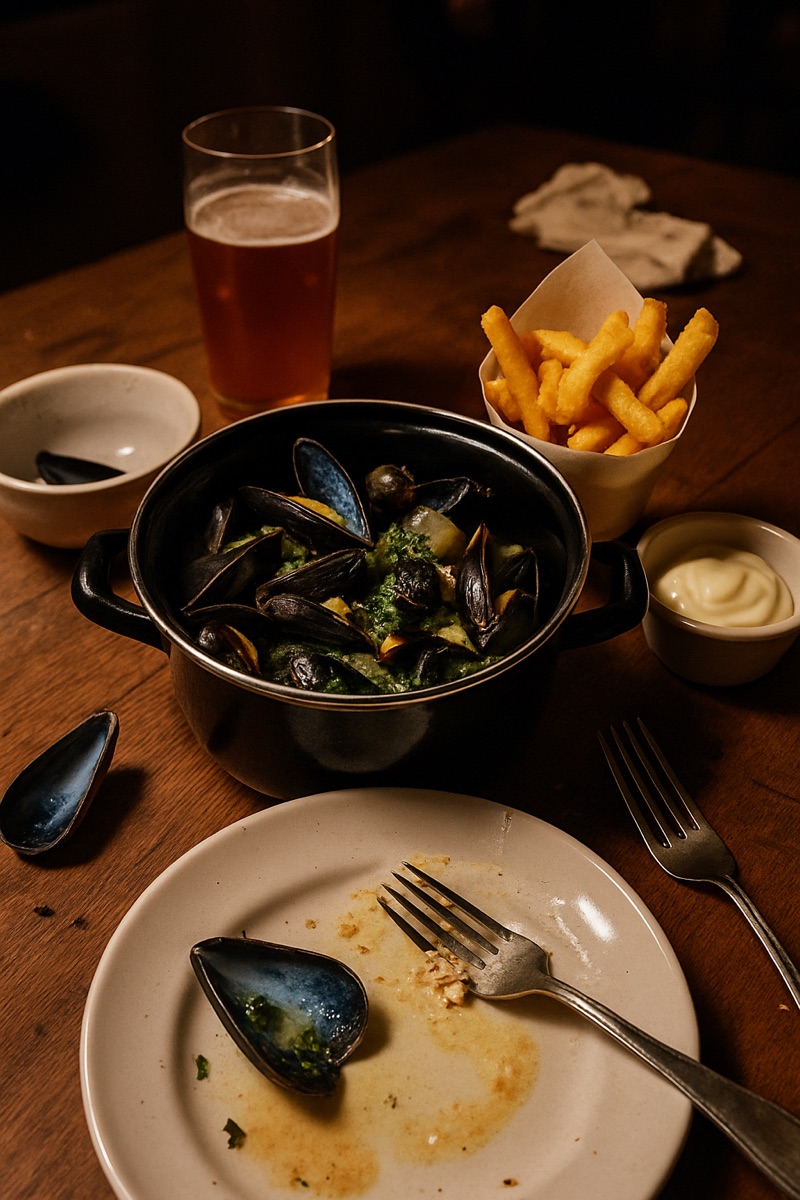
- Moules-frites — Mussels steamed in a covered pot with onion, celery and butter, served beside a separate dish of fries so they stay crisp. The common versions are marinière, with white wine and shallots, nature, à la crème and à la bière. It is the dish most often called the national dish of Belgium; see our moules-frites recipe.
- Carbonnade flamande — Beef braised slowly in brown Belgian beer with onions, close to a beef bourguignon made with beer instead of wine. Slices of gingerbread spread with mustard often thicken the sauce, and it is served with fries or bread and mustard. In Flemish it is called stoofvlees or stoverij. Our carbonnade recipe shows how.
- Waterzooi — A Ghent stew-soup of chicken (originally fish) poached over julienned vegetables, then bound with egg yolks and cream instead of flour. The switch from fish to chicken is usually explained by the rivers around Ghent becoming too polluted. Try our waterzooi recipe.
- Boulets à la liégeoise — One or two large pork and beef meatballs simmered in *sauce lapin*, a sweet-sour sauce of onions, vinegar, brown sugar, Liège syrup and raisins. A fixture of brasseries in Liège, it is usually served with fries and mayonnaise.
- Vol-au-vent — A puff pastry case filled with chicken, mushrooms and small meatballs in a white sauce. In Belgium it is a main course found on most restaurant menus, served with fries or mashed potatoes.
- Stoemp — Potatoes mashed with other vegetables such as carrots, leeks, spinach or cabbage, seasoned with thyme or nutmeg. It is a simple Flemish home dish, its name taken from the Brabant dialect, served with sausage, bacon, black pudding or fried eggs.
Vegetables, shrimp and eel
- Chicons au gratin — Belgian endives (chicons in French, witloof in Dutch) wrapped in ham, covered with béchamel and cheese and baked. The technique for growing the pale, blanched endive was discovered by chance in the 1850s at the Botanical Garden of Brussels.
- Shrimp croquettes (garnaalkroketten) — Croquettes with a thick, creamy béchamel filling full of tiny grey North Sea shrimp, breaded and fried. They are served as a starter with a wedge of lemon and fried parsley.
- Paling in 't groen (anguilles au vert) — Eel cooked in a green sauce of mixed herbs, including chervil and parsley. It is eaten with bread or fries and usually a beer.
Fries, waffles and sweets
- Frites — Belgians generally cut Bintje potatoes and fry them twice, first to cook them through, then to crisp them, traditionally in beef fat. Belgium has more than 4,600 fry stands (frietkot or friterie), and the classic order is a paper cone topped with mayonnaise. Fry shops offer a dozen or more sauces, from andalouse to samurai, and sell snacks such as the frikandel and the kroket alongside.
- Waffles — Belgium has over a dozen regional waffles. The Brussels waffle is light and rectangular, made from a liquid batter and served with toppings; the Liège waffle is a smaller, dense brioche dough studded with pearl sugar that caramelises in the iron, eaten plain from street stalls. According to Visit Belgium, the Liège waffle was invented in the 18th century by the chef to the Prince-Bishop of Liège.
- Speculoos — A crisp, caramelised cinnamon shortcrust biscuit, traditionally baked for Saint Nicholas Day on 6 December. Its name is the Brabant pronunciation of the Dutch speculaas, and the Belgian firm Lotus made it known worldwide as Biscoff.
- Tarte au riz (rijstevlaai) — A tart filled with creamy rice pudding, native to Verviers in Wallonia and eaten throughout Belgium.
Belgian food region by region
Flanders, in the north, is the land of beer stews, waterzooi, stoemp, North Sea shrimp and eel, and its cooking overlaps with the southern Netherlands; compare with the traditional food of the Netherlands. Brussels adds the blanched endive and rabbit cooked in gueuze, the spontaneously fermented beer of the area.
Wallonia, in the south, leans towards France: Liège has its meatballs, waffles and fruit syrup, Verviers its rice tart, and the forested Ardennes are known for smoked ham and game pâté. Moules-frites itself crosses the border into northern France; see the traditional food of France.
Cook Belgian food at home
Moules-frites, carbonnade flamande and waterzooi all have full step-by-step recipes in Copper, with ingredients, timings and the technique that matters most for each. Find them on our page about the food of Belgium.
For the neighbouring kitchens, see our guide to Western European food.
The recipes
- Moules-frites🇧🇪 Belgium · 1 hour and 20 minutes
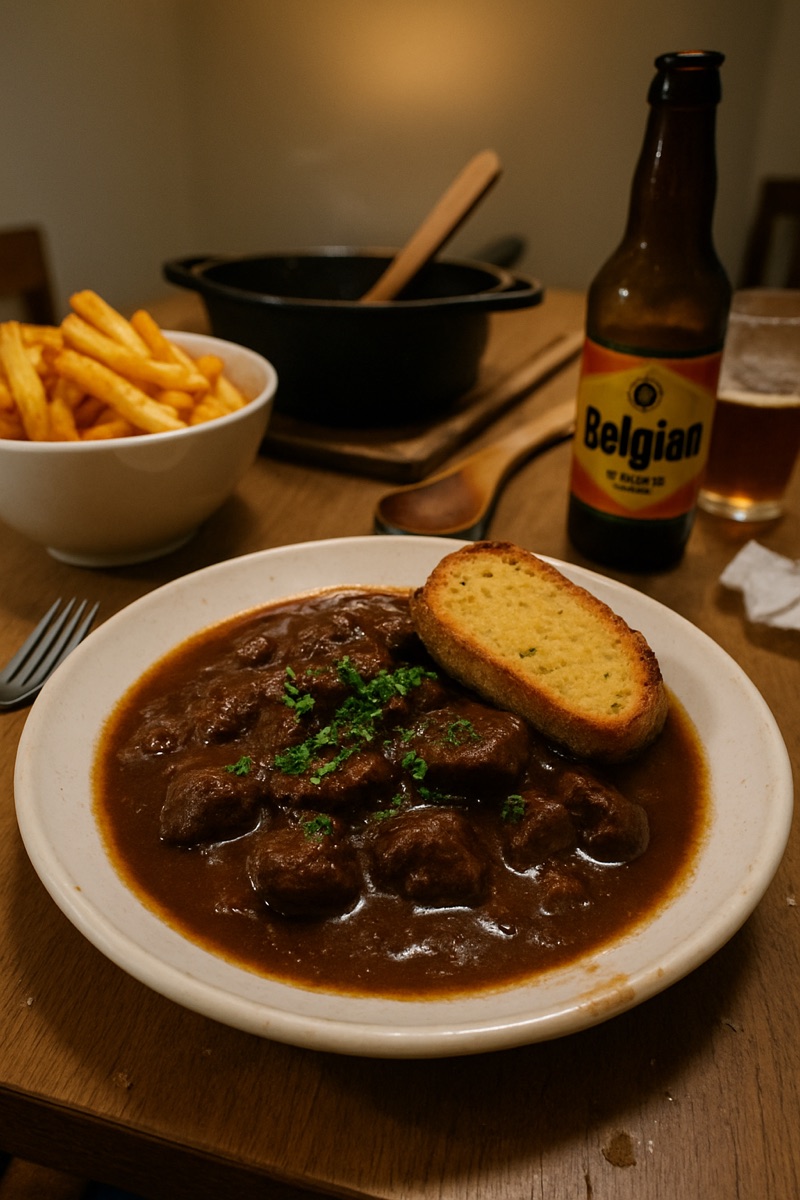 Carbonnade flamande🇧🇪 Belgium · 3 hours and 10 minutes
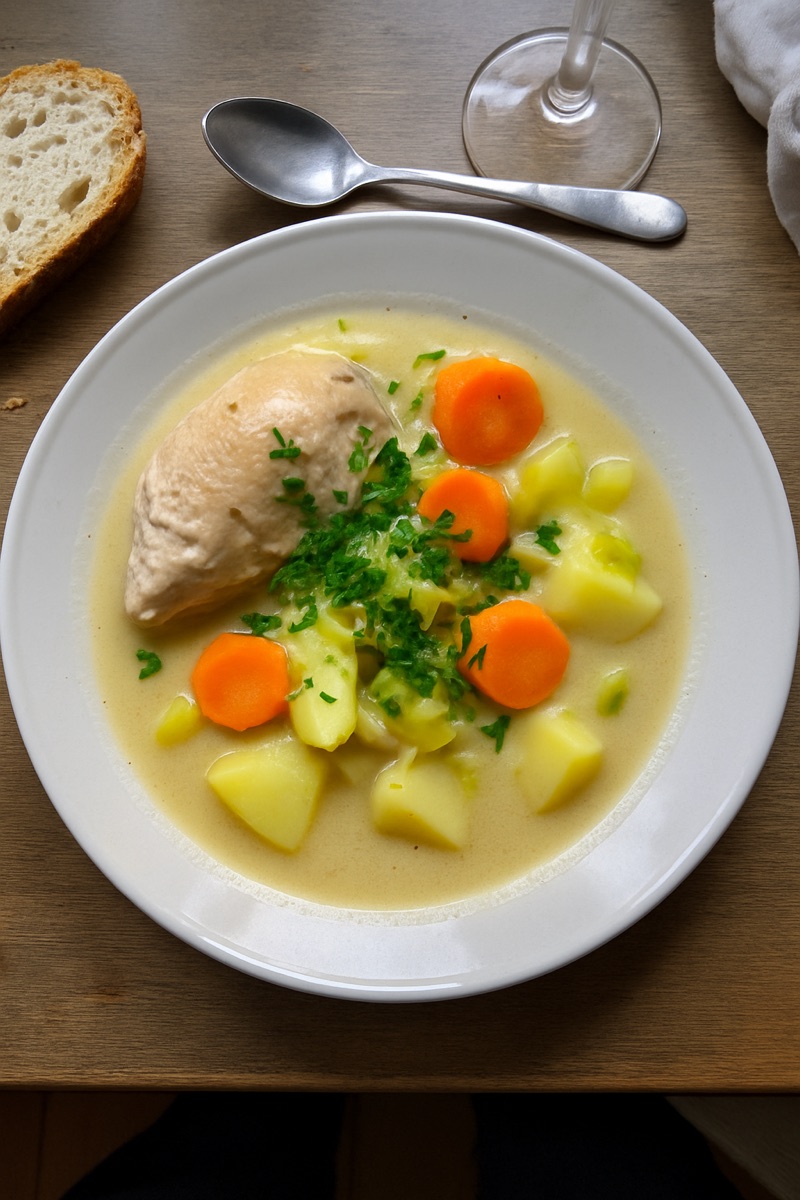 Waterzooi🇧🇪 Belgium · 1 hour and 20 minutes
Questions people ask
What is the most popular food in Belgium?
Fries, moules-frites and carbonnade flamande are the dishes most often named. Waffles, chocolate and beer are the Belgian foods best known abroad.
Are fries Belgian or French?
Belgium claims them. A 1781 book describes people around the Meuse at Namur, Dinant and Andenne frying potatoes since about 1680. One explanation for the American name "French fries" is that soldiers met them through French-speaking Belgian troops in the First World War.
Is Belgian food spicy?
No. Belgian cooking is rich rather than hot, built on butter, cream, beer and mustard. The heat, if any, comes from fry sauces such as samurai or algérienne.
What sauce do Belgians put on fries?
Mayonnaise is the traditional sauce. Fry shops usually offer a dozen or more, most of them mayonnaise-based, and some serve hot carbonnade sauce over the fries.
What is the difference between a Brussels and a Liège waffle?
The Brussels waffle is a light, rectangular waffle made from a liquid batter and served with toppings. The Liège waffle is smaller and made from a dense brioche dough with pearl sugar that caramelises, and is usually eaten plain.
Keep reading
- What is the national dish of Belgium?
- Traditional food of Andorra: 13 dishes to know
- Traditional food of Austria: 13 dishes to know
- Traditional food of Cyprus: 12 dishes to know
- Traditional food of France: 13 dishes to know
- Traditional food of Germany: 13 dishes to know