 COPPER
Traditional food of Spain: 12 dishes to know
Spanish food is built on olive oil, garlic, bread, legumes, paprika and cured pork, cooked simply and often shared as tapas. The most emblematic dishes are paella, the Valencian rice cooked in a wide pan, tortilla de patatas, the potato omelette served in almost every bar, gazpacho, the cold Andalusian soup, and jamón ibérico, cured ham from Iberian pigs.
What Spanish food is built on
Spanish cooking starts with a short list of ingredients used everywhere: olive oil, garlic, onion, tomato, bread and dried legumes such as chickpeas and white beans. Two seasonings give it its colour: pimentón, smoked or sweet paprika, which flavours chorizo and many stews, and saffron, which tints rice dishes yellow. Pork is central, from fresh chorizo and morcilla blood sausage to long-cured ham.
The techniques are rarely complicated. Rice is cooked uncovered in a wide pan, stews simmer slowly in one pot, and soups are often thickened with stale bread rather than flour. Much of the food is eaten in small portions called tapas, served in bars with a drink, a way of eating that turns many of the dishes below into shared plates.
Rice, eggs and bar classics
These are the dishes most Spaniards eat every week, at home or standing at a bar counter.
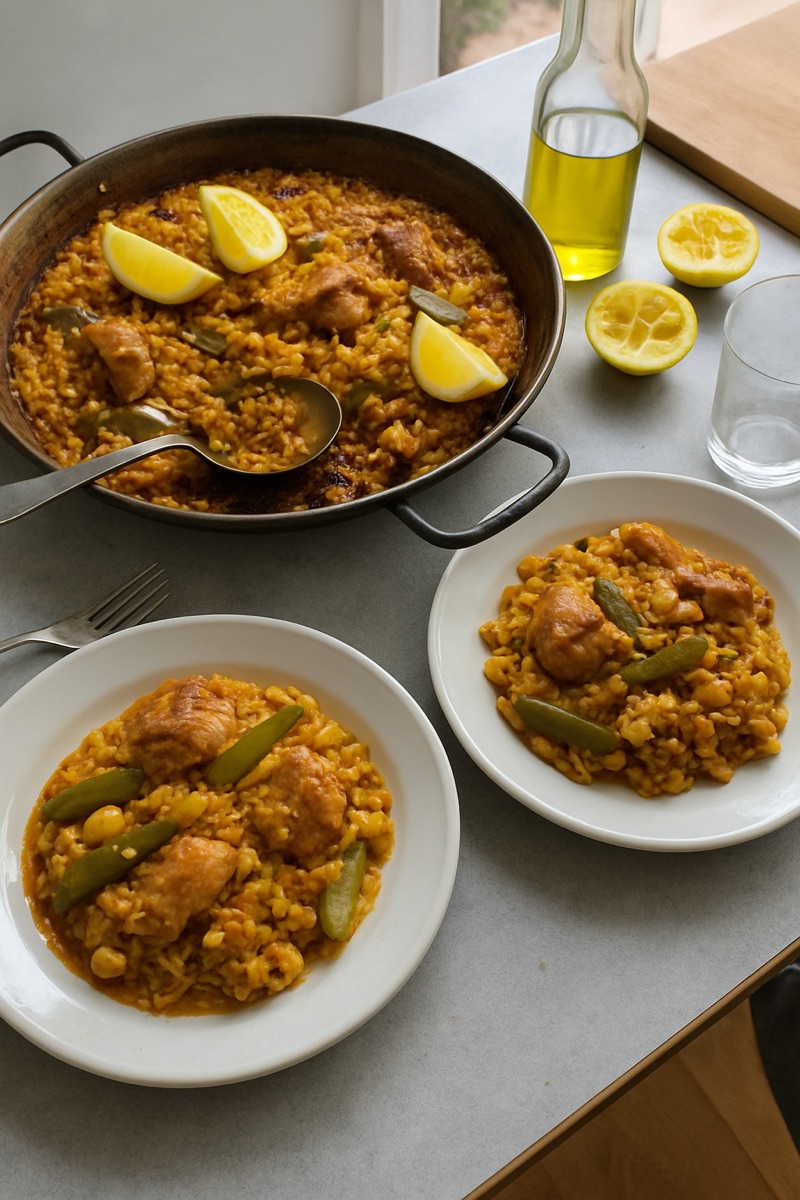
- Paella valenciana — The original paella from the Valencia region: rice cooked in a wide, shallow pan with chicken, rabbit, flat green beans and garrofó, large white butter beans, coloured with saffron. It began as a lunch for farm workers, cooked over an open fire of orange and pine wood and eaten straight from the pan. The layer of rice toasted on the bottom, the socarrat, is the prized part.
- Tortilla española — A thick omelette of eggs and potatoes slowly cooked in olive oil, with or without onion, a debate Spaniards take seriously. It is eaten warm or cold, by the wedge on bread or as a tapa, and is sold in nearly every bar in the country.
- Croquetas — Small rolls of thick béchamel mixed with ham, chicken or salt cod, breaded and deep-fried. They are a standard tapa and a classic way of using up leftover meat from a stew.
- Patatas bravas — Cubes of fried potato served hot with salsa brava, a spicy sauce based on paprika and olive oil. It is one of the most common tapas in bars across Spain and one of the few Spanish dishes with real heat. A bar portion is usually about a quarter of a kilo.
Soups and slow stews
Spain has two kinds of soup: cold ones from the hot south and heavy one-pot stews from the cooler centre and north. The cold soups are not cooked at all: raw vegetables, bread and oil are blended and chilled. The stews are the opposite, simmered for hours and usually eaten at lunch, the main meal of the day.
- Gazpacho — A cold soup from Andalusia made from raw tomatoes, green pepper, cucumber, garlic, vinegar, bread and olive oil, blended until smooth. It is drunk from a glass or eaten from a bowl through the summer.
- Salmorejo — The thicker cousin of gazpacho, from Córdoba: tomato, bread, garlic and olive oil blended into a cream, topped with chopped hard-boiled egg and jamón. It is eaten as a starter or a tapa.
- Cocido madrileño — Madrid's winter stew of chickpeas, cabbage, potatoes, carrots, beef shank, chicken, pork belly, chorizo and morcilla. It is served in three courses, the vuelcos: first the broth with fine noodles, then the chickpeas and vegetables, then the meats.
- Fabada asturiana — A rich stew from Asturias made with fabes, large white beans, simmered with chorizo, morcilla and pork shoulder. It is a cold-weather dish, usually eaten at lunch with crusty bread and cider.
From the sea and the pig
- Pulpo a la gallega — Galician octopus, called polbo á feira in Galician, boiled in a copper pot, cut with scissors and dressed with coarse salt, sweet and hot paprika and olive oil, often over boiled potatoes. It was traditionally sold at rural fairs and is now served in specialised restaurants called pulperías. Tradition says you drink wine with it rather than water, once a young red and now often an Albariño white.
- Jamón ibérico — Cured ham from Iberian pigs, the top grade being from animals finished on acorns, aged typically between 24 and 36 months. It is sliced thin by hand and eaten on its own, with bread, or as a tapa.
Spanish sweets
Spanish sweets are often tied to a time of day or a date in the calendar rather than served after every meal: churros belong to breakfast and the afternoon, crema catalana to a saint's day.
- Churros con chocolate — Lengths of fried dough, crisp outside and soft inside, dipped into thick hot chocolate. They are eaten for breakfast, often dipped in coffee, or with hot chocolate as an afternoon snack, and are sold fresh from street stands and cafés. In Seville a thicker version is fried in one long spiral and cut into pieces.
- Crema catalana — A Catalan custard flavoured with lemon zest and cinnamon, covered with sugar caramelised into a thin, hard crust. It was traditionally made for Saint Joseph's Day, on 19 March, and is now eaten all year.
Spain region by region
Spanish food changes a great deal from one region to the next. Andalusia is the home of cold soups, fried fish and cured ham; Valencia of rice dishes; Galicia of octopus and shellfish; Asturias of bean stews and cider. Castile is known for roast meats such as cochinillo asado, suckling pig cooked in a wood oven, while Catalonia and the Basque Country have their own cuisines, with crema catalana in the first and small bar snacks called pintxos in the second.
Because no dish covers the whole country, Spain has no official national dish. We look at the two strongest candidates in our article on the national dish of Spain.
Cook Spanish food at home
Gazpacho, paella valenciana and tortilla española are on Copper with step-by-step methods and the details that matter, from emulsifying the gazpacho to leaving the paella alone so the socarrat forms. You will find them on our food of Spain page.
Spain's neighbours share some of its ingredients but cook them differently: compare with the traditional food of Portugal, with its salt cod and custard tarts, and the traditional food of France.
For the neighbouring kitchens, see our guide to Western European food.
The recipes
- Paella valenciana🇪🇸 Spain · 1 hour and 50 minutes
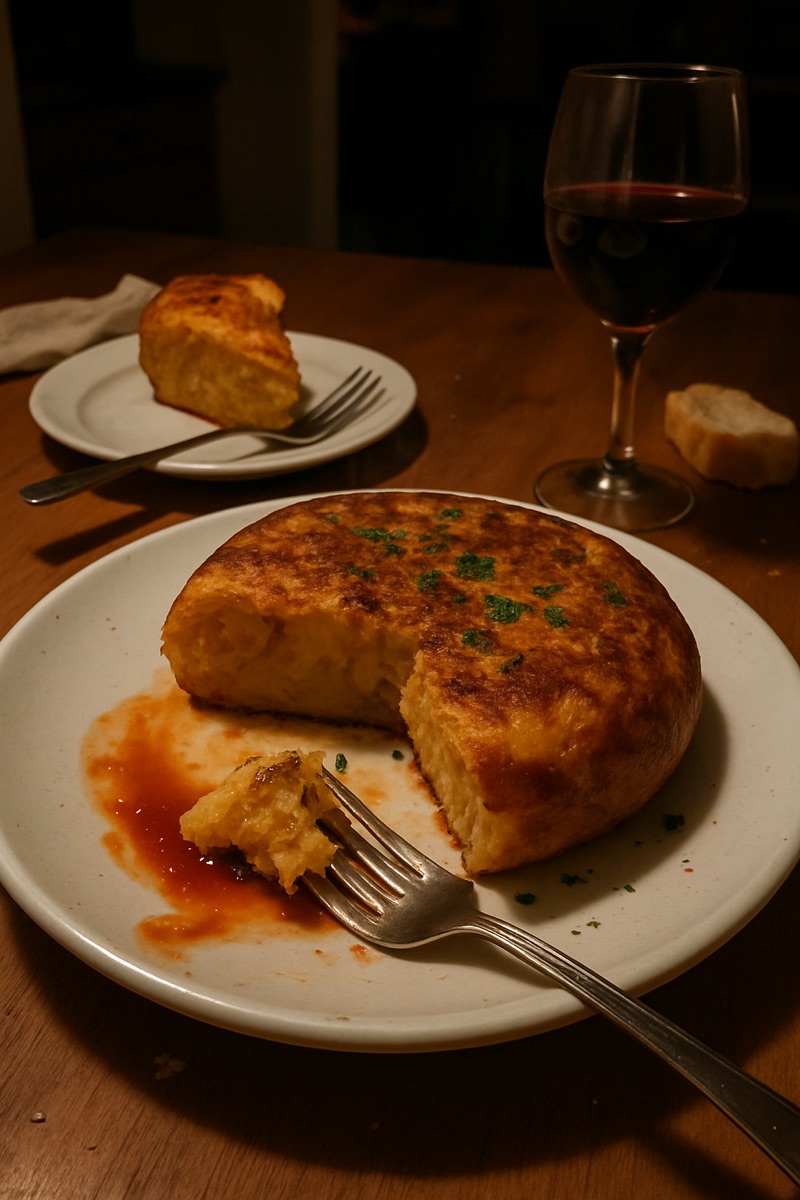 Tortilla española🇪🇸 Spain · 40 minutes
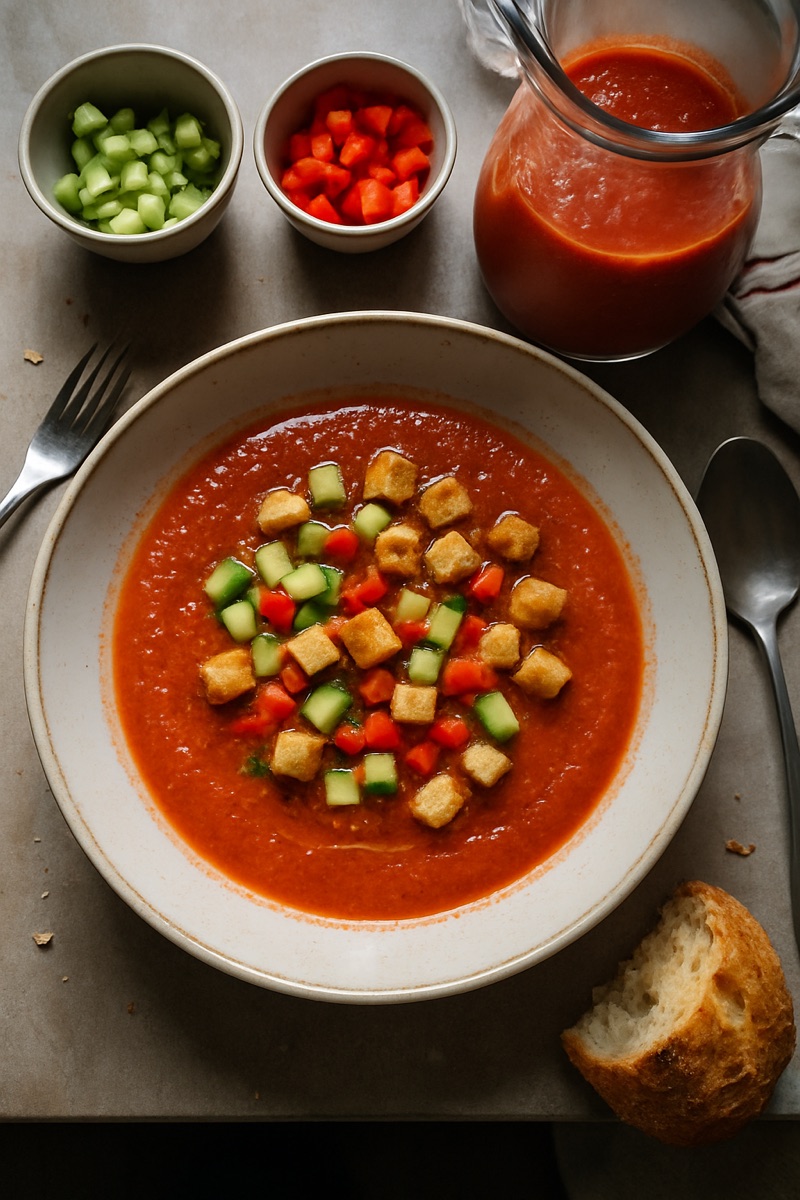 Gazpacho🇪🇸 Spain · 3 hours and 35 minutes
Questions people ask
What is the most popular food in Spain?
Paella and tortilla de patatas are the two most popular. Paella is the best known abroad; the potato omelette is the one eaten everywhere in Spain, at home and in bars.
What do people in Spain eat for breakfast?
Breakfast is usually light: coffee with toast, often rubbed with tomato and olive oil, a slice of tortilla, or churros dipped in coffee or hot chocolate.
Is Spanish food spicy?
Generally not. Spanish cooking relies on garlic, olive oil and sweet or smoked paprika rather than chilli. Patatas bravas and dishes made with hot paprika are the main exceptions.
What are tapas?
Tapas are small portions of food served in bars with a drink, such as croquetas, patatas bravas, tortilla or jamón. Ordering several and sharing them is a common way to eat in Spain.
Is gazpacho served cold?
Yes. Gazpacho is a raw, blended soup from Andalusia served chilled, mostly in summer. Salmorejo, its thicker cousin from Córdoba, is also served cold.
Keep reading
- What is the national dish of Spain?
- Traditional food of Andorra: 13 dishes to know
- Traditional food of Austria: 13 dishes to know
- Traditional food of Belgium: 13 dishes to know
- Traditional food of Cyprus: 12 dishes to know
- Traditional food of France: 13 dishes to know