 COPPER
Traditional food of Portugal: 11 dishes to know
Portuguese food is built on olive oil, garlic, bread, pork and the sea, above all bacalhau, dried salted cod said to have a recipe for every day of the year. Cooking is slow and simple rather than spicy. The most emblematic dishes are bacalhau à Brás, the kale and potato soup caldo verde, the boiled feast cozido à portuguesa and the custard tart pastel de nata.
What Portuguese food is built on
Olive oil is the base of Portuguese cooking, used both to cook and to dress finished dishes, with garlic and onion close behind. Bread, potatoes and rice fill out the plate, pork is the most important meat, and a long Atlantic coastline puts fresh sardines, octopus, clams and shellfish on menus everywhere.
The defining ingredient, though, is one that is never eaten fresh: bacalhau, cod that has been salted and dried, then soaked for a day or more before cooking. Portuguese fishermen were salting cod off Newfoundland by the late 1500s, and by the 1700s it was a staple across the country. Portugal is said to have 365 ways to cook it, and some sources count over a thousand recipes. It is the traditional Christmas Eve dinner in many families.
Spices arrived through Portugal's trading empire, but the food at home stays mild: cinnamon in desserts, paprika and red pepper paste in pork marinades, and piri-piri chili kept mostly for grilled chicken. For the one dish Portugal is most associated with, see our article on the national dish of Portugal.
Bacalhau and fish
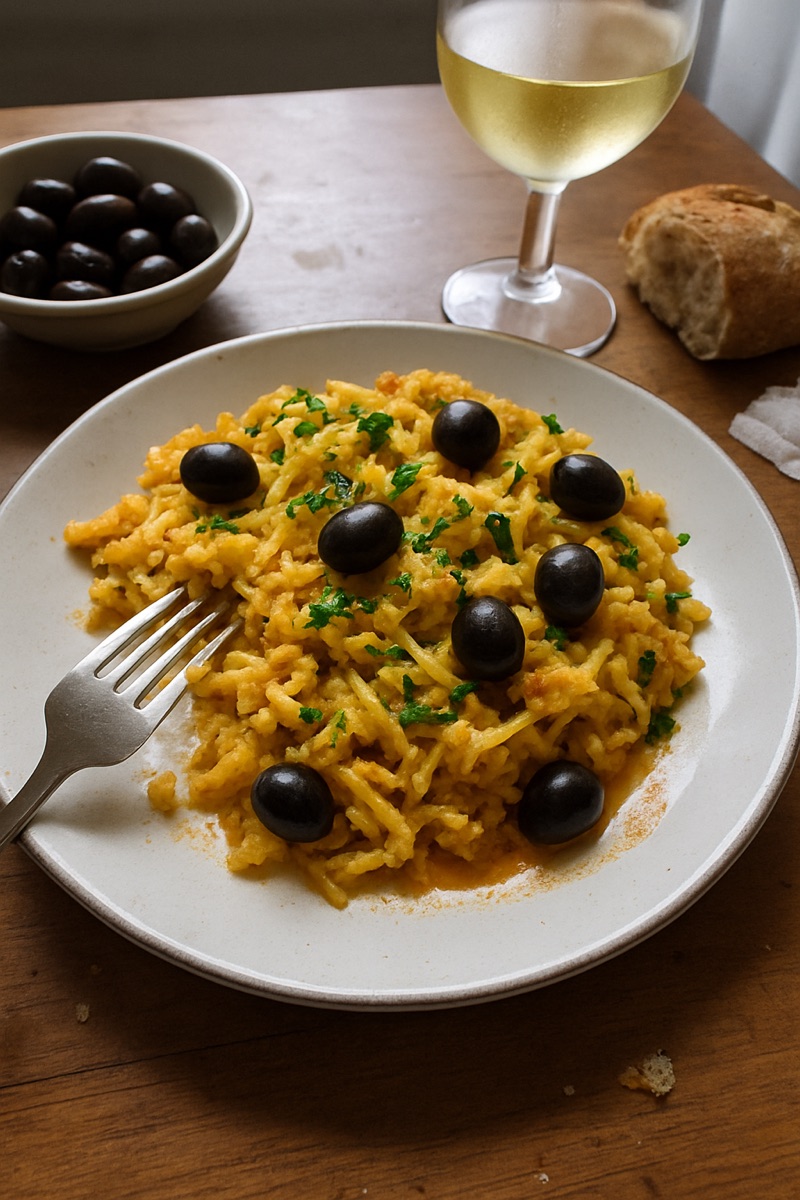
- Bacalhau à Brás — Shreds of salt cod cooked with onions and matchstick fried potatoes, then bound with eggs pulled off the heat while still soft. It was probably created in the second half of the 19th century in Lisbon's Bairro Alto. It is finished with black olives and chopped parsley.
- Sardinhas assadas — Fresh sardines grilled whole over charcoal, a summer tradition along the whole coast and inland. They are the street food of the Santo António festivities in Lisbon around 13 June. They are usually served simply, with potatoes and salad.
- Arroz de marisco — Rice cooked with shellfish, squid, fish and white wine, the seafood rice of Portugal's coastal restaurants. It is often compared to paella but is a distinct Portuguese dish. It is usually brought to the table in the pot it was cooked in.
Soups, stews and pork
- Caldo verde — A soup from the Minho in the north: potatoes, onion and garlic cooked and puréed, then finished with couve galega, a Portuguese cabbage, cut into very thin threads. It is served with a slice of chouriço and cornbread (broa) at weddings, birthdays and popular festivals, often late at night. It was voted one of the Seven Wonders of Portuguese Gastronomy in 2011.
- Cozido à portuguesa — A boiled feast of beef, chicken, pork ribs, pig's ears and trotters, smoked sausages such as chouriço, farinheira and morcela, with cabbage, potatoes, carrots, turnips and rice. Everything simmers for around four hours and is served together on one platter. On São Miguel in the Azores, a local version is cooked underground, using the heat and steam of the island's volcanic ground.
- Carne de porco à alentejana — Pork marinated in white wine, paprika, red pepper paste, garlic and bay leaf, fried until golden, then tossed with clams and coriander. It comes with cubed fried potatoes. Despite the name, its origin is debated, since the Alentejo is mostly inland and clams come from the coast.
- Tripas à moda do Porto — Tripe stewed with white beans, sausage and other meats, served with rice. Legend says that in 1415 Porto gave its best meat to the fleet sailing to conquer Ceuta and kept only the offal, which earned its people the nickname *tripeiros*, tripe eaters.
Sandwiches and snacks
- Francesinha — Porto's sandwich: layers of bread, steak, ham, linguiça sausage and other meats, covered with melted cheese and drowned in a hot tomato and beer sauce. Daniel David da Silva created it in 1953 at the restaurant A Regaleira after returning from France and Belgium, adapting the croque monsieur. It is often topped with a fried egg and served with fries.
- Bifana — A thin pork steak simmered with garlic and white wine and served hot in a bread roll, often with mustard or hot sauce. It is a cheap, quick meal sold at cafés and festivals all over Portugal. The town of Vendas Novas is often given as its birthplace; the north tends to make it with saucier sliced pork.
Desserts
- Pastéis de nata — Small tarts of crisp, spiralled puff pastry filled with egg custard and baked very hot until the top blisters. They were created by monks at the Jerónimos Monastery in Belém, Lisbon; after the monastery closed, the recipe went to a nearby sugar refinery that opened Fábrica de Pastéis de Belém in 1837. They are eaten warm, with cinnamon and powdered sugar, often at breakfast with an espresso.
- Arroz doce — Rice pudding cooked with milk, sugar, egg yolks, lemon peel and cinnamon stick. It is spread on a dish and decorated with patterns of ground cinnamon traced with the fingertips. It is a fixture of the Christmas table and of family celebrations.
From Minho to the Azores: regional food
Portugal is small, but its food changes from region to region. The north, the Minho and Porto, is the land of caldo verde, cornbread, tripe and the francesinha. Lisbon has bacalhau à Brás, pastéis de Belém and the June sardine festivals. The Alentejo, the wide inland south, cooks with pork, bread, olive oil and coriander, while the Algarve coast leans on fish and shellfish. The Azores and Madeira islands have their own dishes, from the volcanic cozido of São Miguel to Madeira's bolo do caco, a sweet-potato flatbread baked on a stone slab and served with garlic butter.
Salt cod, olive oil and pork link Portugal to its only land neighbour; compare with our guide to the traditional food of Spain.
Cook Portuguese food at home
Three of these dishes have full recipes in Copper: creamy bacalhau à Brás, caldo verde with its finely shredded greens, and pastéis de nata baked at maximum oven heat. Find them with ingredients and step-by-step methods on our page about the food of Portugal.
For the neighbouring kitchens, see our guide to Western European food.
The recipes
- Bacalhau à brás🇵🇹 Portugal · 1 day and 7 hours
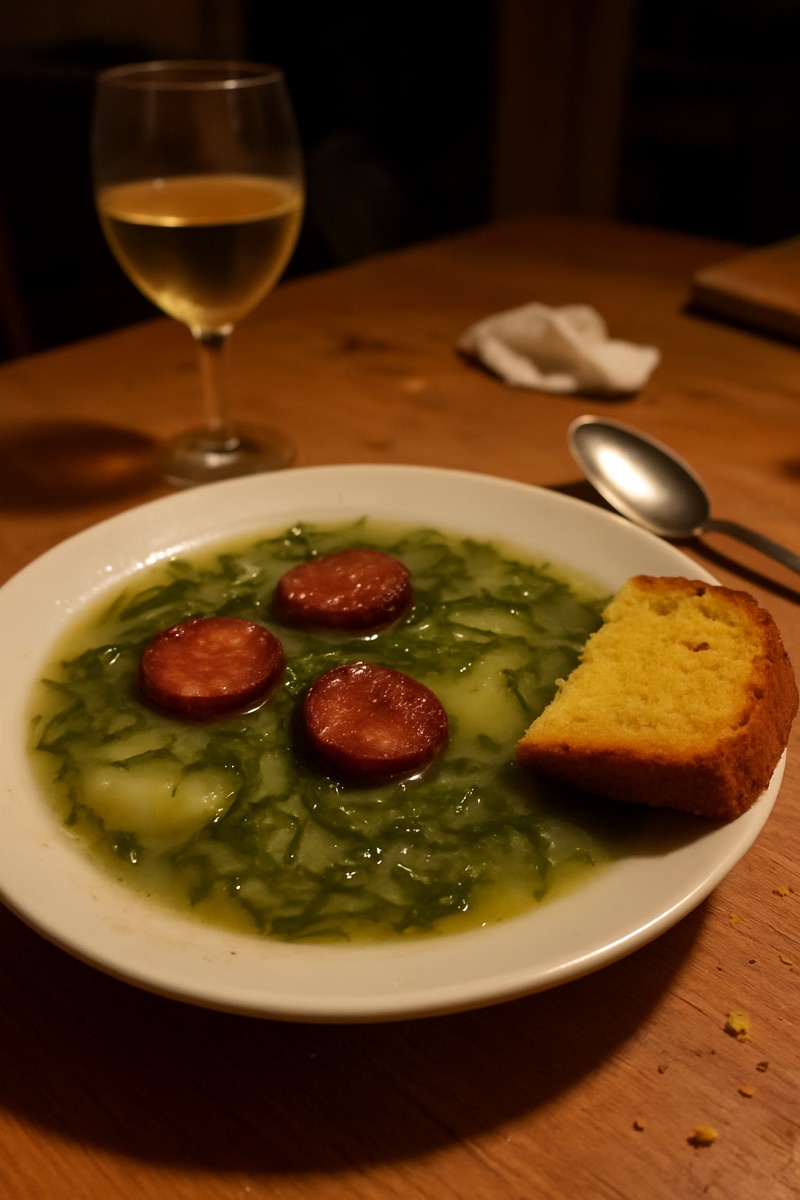 Caldo verde🇵🇹 Portugal · 45 minutes
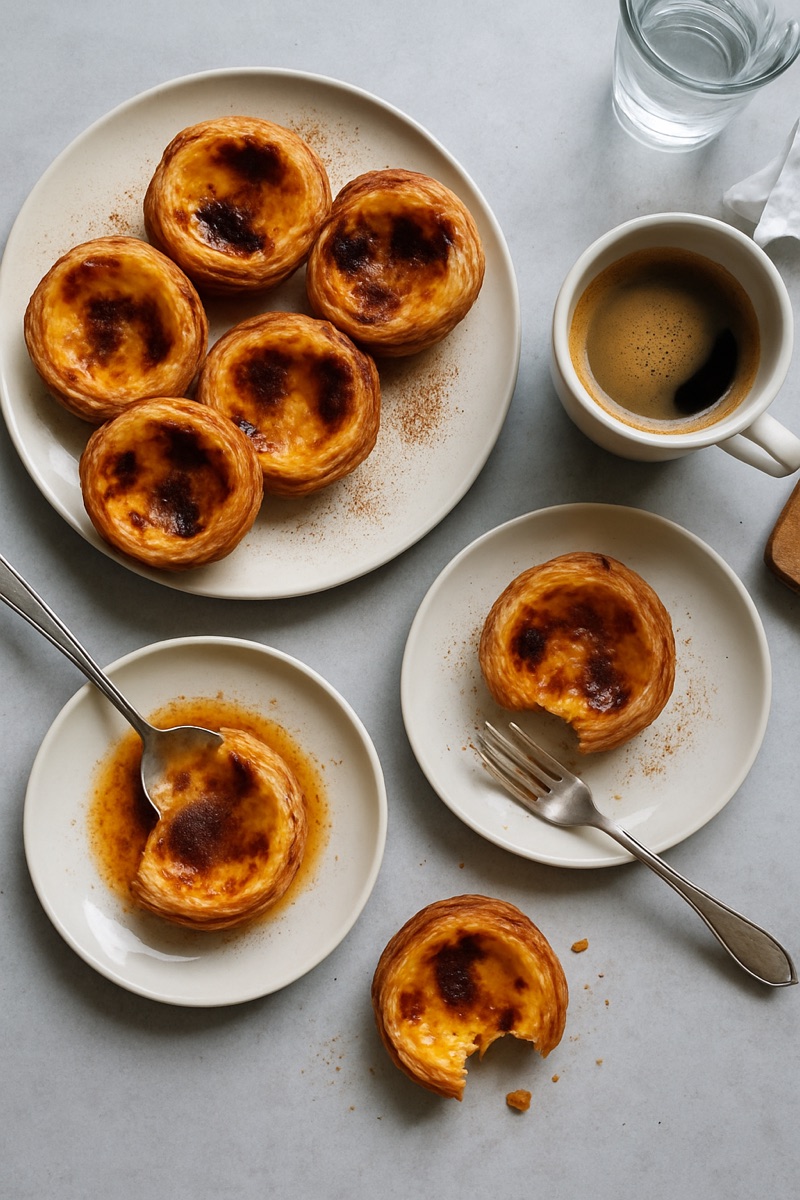 Pastéis de nata🇵🇹 Portugal · 2 hours
Questions people ask
What is the most popular food in Portugal?
Bacalhau, dried salted cod, is the most iconic ingredient, cooked in dishes such as bacalhau à Brás and bacalhau com natas. Grilled sardines, caldo verde, cozido à portuguesa and the pastel de nata are also eaten across the country.
What do Portuguese people eat for breakfast?
Breakfast is usually light: fresh bread with butter, ham, cheese or jam, and coffee, milk or tea. A pastel de nata with a bica (espresso) at a café is a common choice.
Is Portuguese food spicy?
Generally not. Portuguese cooking relies on garlic, olive oil, bay leaf, paprika and cinnamon rather than heat. Piri-piri chili is used mainly for grilled chicken and served as a sauce on the side.
Why do the Portuguese eat so much bacalhau?
Portuguese fishermen were salting and drying cod caught off Newfoundland by the late 1500s, which let the fish keep for months. By the 1700s it was a staple, and it is still the traditional Christmas Eve dinner in many families.
What is Porto's most famous dish?
The francesinha, a meat-filled sandwich covered in melted cheese and a hot tomato and beer sauce, created in Porto in 1953. Tripas à moda do Porto, tripe with white beans, is the city's older signature dish.
Keep reading
- What is the national dish of Portugal?
- Traditional food of Andorra: 13 dishes to know
- Traditional food of Austria: 13 dishes to know
- Traditional food of Belgium: 13 dishes to know
- Traditional food of Cyprus: 12 dishes to know
- Traditional food of France: 13 dishes to know