 COPPER
Traditional food of Poland: 13 dishes to know
Polish food is built on pork, cabbage, potatoes, rye, mushrooms and dairy, with sour notes from sauerkraut, pickled cucumbers and fermented soups. A typical dinner opens with soup. The most emblematic dishes are bigos, a hunter's stew of sauerkraut and meats, pierogi, filled dumplings, żurek, a sour rye soup, and kotlet schabowy, a breaded pork cutlet.
What Polish food is built on
Polish cooking is rich in meat, especially pork, chicken and game, and leans on cabbage, potatoes, root vegetables, groats called kasza, forest mushrooms and herbs such as dill and marjoram. Butter, cream, eggs and twaróg, a fresh curd cheese, run through the whole cuisine, and sourdough rye bread is on the table at almost every meal.
Sourness is the signature. Cabbage becomes sauerkraut, cucumbers are fermented in brine with dill and garlic, and several soups are soured with a fermented flour starter. A traditional dinner has a soup first, then a main course of meat with potatoes or kasza and a raw vegetable salad called surówka. Festive meals, above all Wigilia on Christmas Eve and Easter breakfast, can take several days to prepare.
Soups
Soup is the first course of a Polish dinner, and the country has dozens of them. These three are the ones every Polish kitchen knows:
- Żurek — A sour soup made with zakwas, rye flour and water left to ferment for several days, finished with white sausage, potatoes, horseradish, sour cream and a hard-boiled egg. It is the traditional soup of Easter, and the soured broth must never boil once the zakwas goes in, or it splits.
- Barszcz czerwony — A clear red beetroot soup soured with fermented beet juice. On Christmas Eve it is served with uszka, tiny dumplings filled with mushrooms and onion, as the classic opening of the meatless Wigilia supper.
- Rosół — A clear broth of chicken, or chicken and beef, simmered slowly with root vegetables and served with very thin noodles. It is one of the most popular Polish soups, the usual start of a family dinner and a traditional wedding soup; no pork goes in, so the broth stays clear.
Dumplings and potato dishes
Dough and potatoes feed the country, from boiled dumplings to fried pancakes.
- Pierogi — Half-moon dumplings of unleavened dough, boiled and often finished with fried onion, butter or sour cream. Pierogi ruskie, filled with potato, twaróg and fried onion, are the classic; at Christmas the filling is sauerkraut and forest mushrooms, and sweet versions hold blueberries, strawberries or plums.
- Placki ziemniaczane — Pancakes of raw grated potato mixed with onion, egg, a little flour and salt, fried in oil or lard. They are eaten savoury with sour cream or sweet with sugar, and in Podlasie the batter is seasoned with marjoram.
Meat and main dishes
Pork dominates the main course, slowly stewed, rolled in cabbage or pounded thin and breaded.
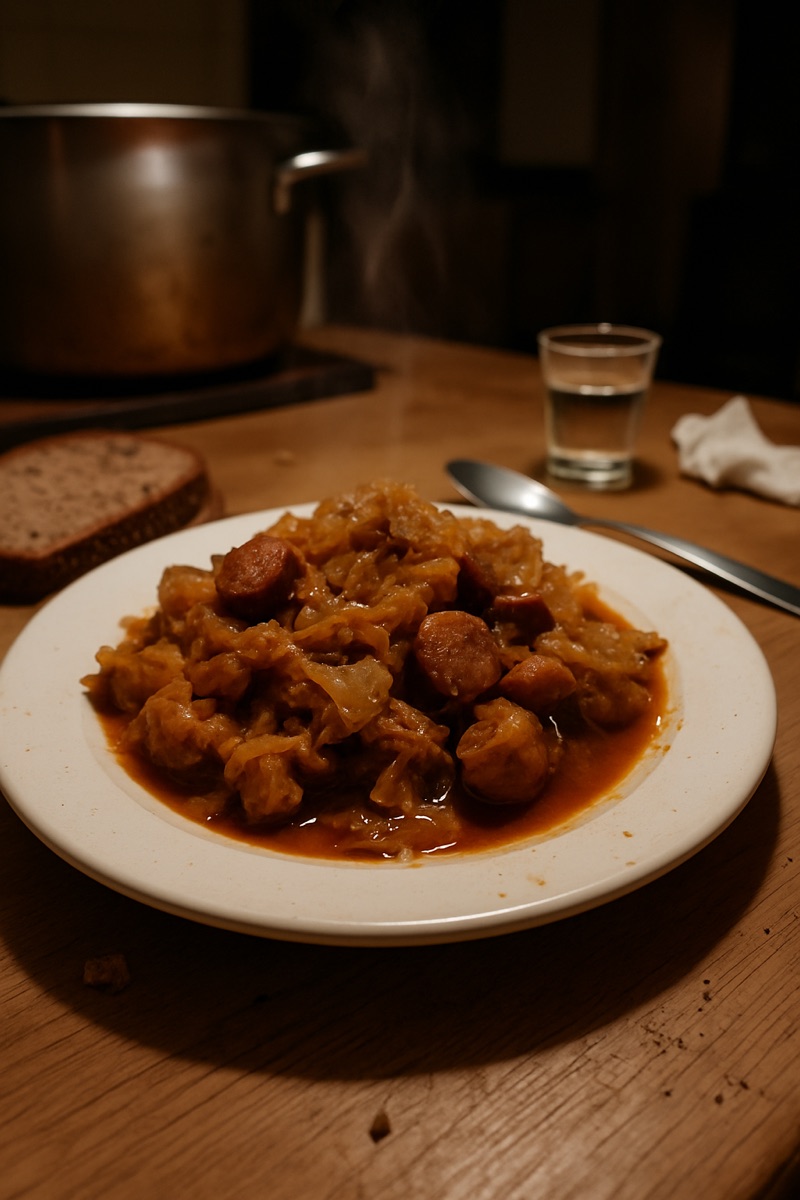
- Bigos — The hunter's stew: sauerkraut and fresh white cabbage cooked for hours with pork, smoked sausage, bacon, dried forest mushrooms and prunes. It is cooled and reheated over two or three days before it is judged ready, and is often named the national dish.
- Kotlet schabowy — A pork loin cutlet pounded thin, coated in flour, egg and breadcrumbs and fried in lard or oil, close to a Viennese schnitzel. Recipes for it appear in Lucyna Ćwierczakiewiczowa's 1860 cookbook, and it is usually served with potatoes and fried cabbage or a salad.
- Gołąbki — Boiled cabbage leaves rolled around minced pork or beef with onion and rice or kasza, then cooked in tomato or mushroom sauce. They are a fixture of weddings, Christmas and family gatherings.
- Kiełbasa — Polish sausage, usually pork, smoked or boiled, made in dozens of varieties. It goes into bigos and żurek, is grilled at street stalls and sliced on bread.
Street food and sweets
Poland's snacks and cakes are as distinctive as its soups:
- Zapiekanka — Half a long roll topped with sautéed white mushrooms and cheese, toasted and served hot with ketchup. It has been a popular street food since the 1970s, and Kraków's Plac Nowy is known for it.
- Oscypek — A smoked cheese of salted sheep's milk made in the Tatra Mountains by a shepherd called a baca. In the mountain resorts it is grilled or pan-fried and served with cranberry jam.
- Pączki — Yeast-dough doughnuts fried to a deep gold and filled with rose petal jam, plum jam or stewed apple, then glazed or dusted with sugar. Poles eat them in large numbers on Tłusty Czwartek, Fat Thursday, the last Thursday before Lent.
- Sernik — Cheesecake made primarily with twaróg, flavoured with vanilla or citrus peel and sometimes raisins, one of the most popular desserts in Poland. It shares the Easter and Christmas table with makowiec, a poppy-seed roll.
Regional flavours
Poland's regions keep their own dishes. The Tatra highlands of Podhale have sheep's cheeses such as oscypek and bryndza, and kwaśnica, a sauerkraut soup with ribs. Silesia, shaped by German, Czech and Austrian influences, is known for rolada, beef roulade served with Silesian dumplings and red cabbage. Kraków has its boiled-then-baked bread rings, obwarzanki, sold from street carts, while the Baltic coast of Kashubia and Pomerania eats herring and fried cod or flounder. In Podlaskie, near Lithuania and Belarus, kartacze, potato dumplings filled with meat, are a speciality, and Greater Poland, around Poznań, is known for pyry z gzikiem: boiled potatoes with twaróg mixed with sour cream, onion and chives.
Cook Polish food at home
Bigos is the usual answer when people ask about the national dish of Poland, and the article explains why. Polish cooking belongs to the wider family of Eastern European cuisine; compare its soups and dumplings with the traditional food of Ukraine and the traditional food of the Czech Republic.
Bigos, pierogi and żurek each have a full recipe, with quantities and step-by-step methods, in the Copper app. You will find them on our page dedicated to Polish recipes.
The recipes
- Bigos🇵🇱 Poland · 2 days and 5 hours
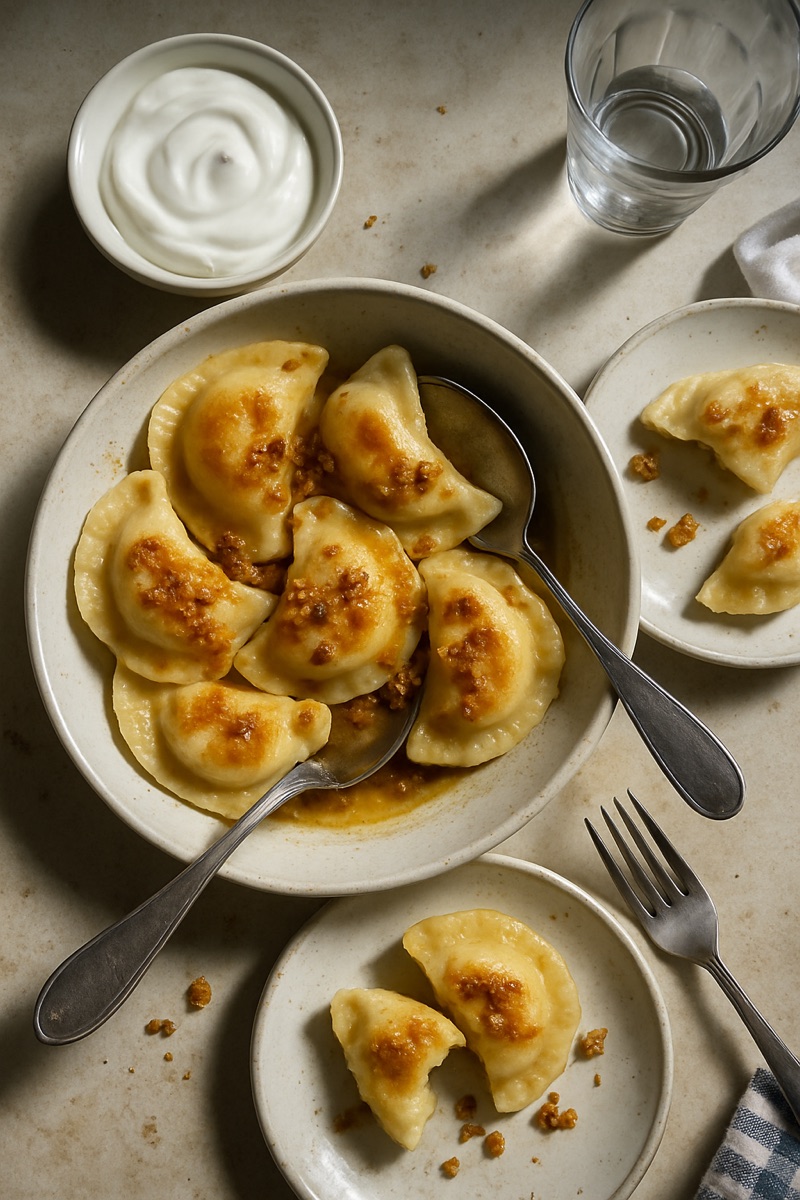 Pierogi🇵🇱 Poland · 1 hour and 50 minutes
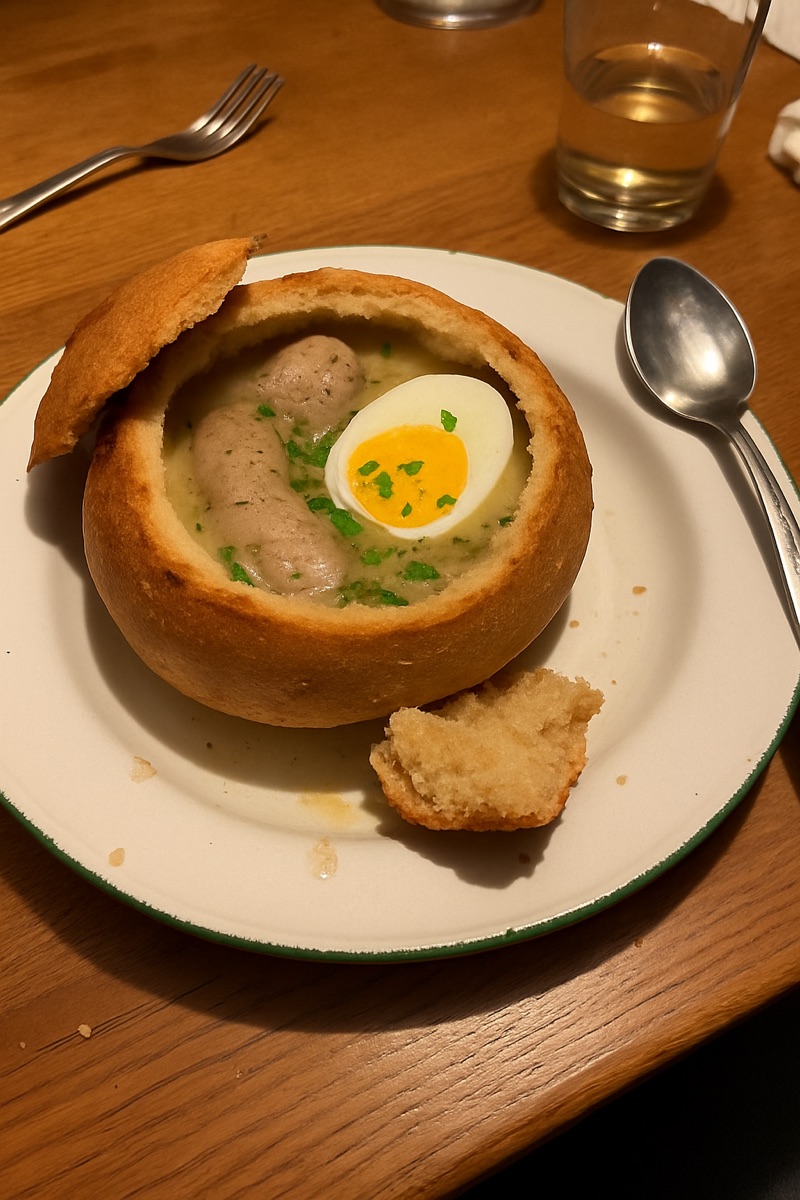 Żurek🇵🇱 Poland · 5 days and 2 hours
Questions people ask
What is the most popular food in Poland?
Pierogi, bigos, kotlet schabowy, gołąbki, kiełbasa and soups such as żurek, rosół and barszcz are the dishes most associated with Poland. Bigos is the one most often called the national dish.
What do Poles eat on Christmas Eve?
Wigilia, the Christmas Eve supper, is meat-free. It usually opens with red barszcz and uszka, mushroom dumplings, followed by carp, herring, pierogi with sauerkraut and mushrooms, and poppy-seed cake. Many families aim for twelve dishes.
Is Polish food spicy?
No, not in the chili sense. Its strong flavours come from sourness, through sauerkraut, pickled cucumbers and fermented soups, and from horseradish, marjoram, dill and smoked meat.
What is a typical Polish dinner?
Soup comes first, often rosół or tomato soup, followed by meat such as a roast or kotlet schabowy with potatoes or kasza and a raw vegetable salad. Dessert may be fruit compote, poppy-seed cake or sernik.
What is Fat Thursday in Poland?
Tłusty Czwartek is the last Thursday before Lent, when Poles eat pączki, filled doughnuts, and faworki, thin fried pastry dusted with sugar, before the fasting season.
Keep reading
- What is the national dish of Poland?
- Traditional food of Belarus: 12 dishes to know
- Traditional food of the Czech Republic: 13 dishes to know
- Traditional food of Estonia: 13 dishes to know
- Traditional food of Hungary: 13 dishes to know
- Traditional food of Latvia: 12 dishes to know