 COPPER
What is the national dish of Poland?
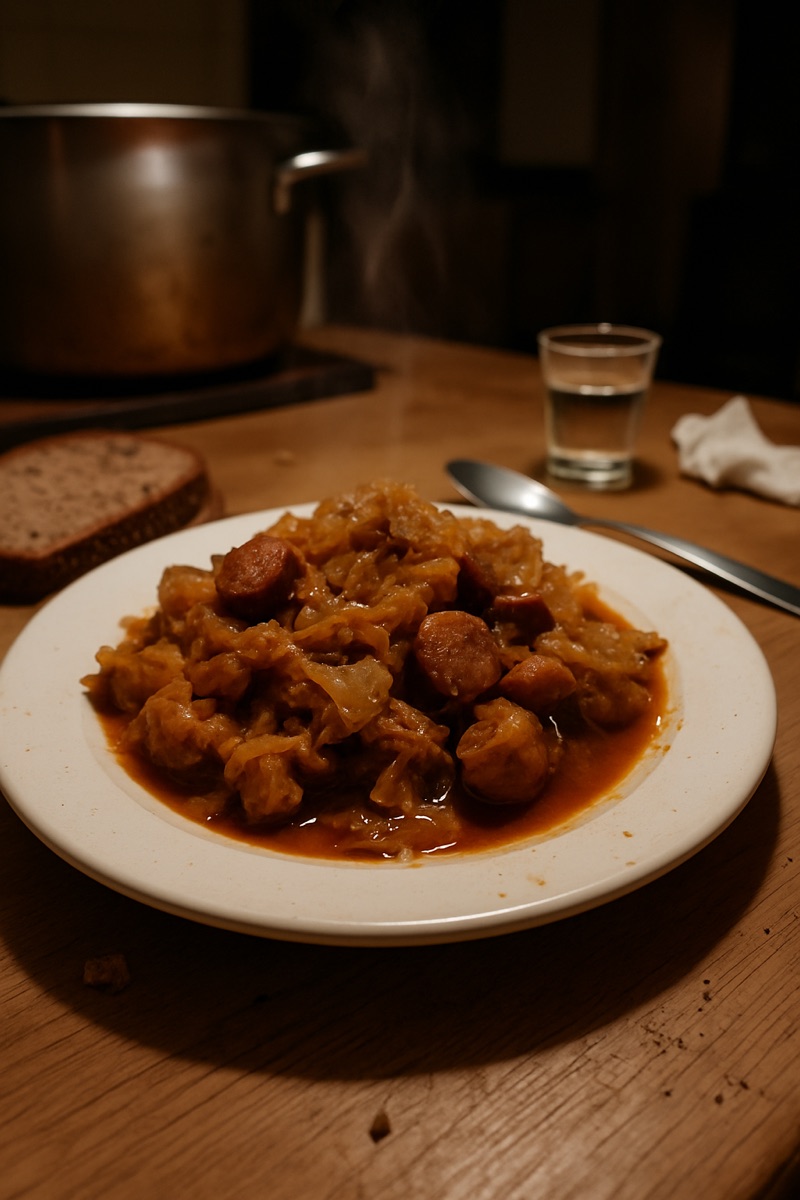
Poland has no official national dish, but bigos is the one most often given that title. It is a hunter's stew of chopped pork, smoked sausage and bacon cooked slowly with sauerkraut, fresh white cabbage and dried forest mushrooms, then cooled and reheated over several days. Pierogi and kotlet schabowy, a breaded pork cutlet, are its usual rivals.
Does Poland have an official national dish?
No. No Polish law or government decision names a national dish. What exists is a short list of dishes that Poles and food writers keep returning to, and bigos sits at the top of it: Wikipedia's article on the stew states plainly that it is considered a Polish national dish.
Two other dishes are regularly put forward. Pierogi, filled dumplings, are also described as a national dish of Poland, with roots in the country's former eastern territories. Kotlet schabowy, a thin pork loin cutlet coated in breadcrumbs, is a variation of schnitzel that spread from Kraków, once part of Austria-Hungary, to the whole country.
Of the three, bigos is the one most tied to Polish history and literature, which is why it is the usual answer to the question. The wider list of popular Polish national dishes is long:
- Bigos, the hunter's stew of cabbage and meats.
- Pierogi, boiled filled dumplings.
- Kotlet schabowy, the breaded pork loin cutlet.
- Gołąbki, stuffed cabbage leaves, and zrazy, beef roulades.
- Soups: żurek (sour rye soup), barszcz (red beetroot soup), rosół (meat broth), flaki (tripe soup), zupa ogórkowa (sour cucumber soup) and zupa grzybowa (mushroom soup).
- Kiełbasa, Polish sausage, which also goes into bigos.
What is in bigos?
Bigos is chopped meat of several kinds stewed with cabbage. The defining detail is the cabbage itself: a mix of sauerkraut and shredded fresh white cabbage. That mix of soured and fresh cabbage is what makes bigos rather than a plain cabbage stew. A typical pot holds:
- Sauerkraut and fresh white cabbage, roughly two parts soured to one part fresh.
- Several meats: pork shoulder, smoked sausage and bacon. In bigos myśliwski, hunter's bigos, at least part of the meat is game.
- Dried forest mushrooms, soaked, with their soaking liquid poured into the pot.
- Prunes, added for the last hour of cooking.
- Juniper berries, allspice and bay leaves for seasoning.
How bigos is made
The bacon is rendered first, the pork and sausage browned in its fat, then onions cooked until golden. Both cabbages go in with the mushrooms, their liquid and the spices, and the pot simmers covered on the lowest heat for about 3 hours.
Prunes are added for a final hour uncovered, so the liquid evaporates and the stew thickens on its own, without flour. Then comes the step that makes bigos what it is: it is cooled completely and reheated the next day, and again the day after. Bigos is considered best after repeated cooling and reheating, which lets the flavours fuse.
It is served very hot with rye bread or boiled potatoes. The full method, with quantities, is in our bigos recipe.
Where bigos comes from
The word bigos is not attested before the 17th century, and the dish may descend from a medieval mixed dish recorded in Latin as compositum, meaning mixture. Originally from Poland, it became traditional across the old Polish–Lithuanian Commonwealth, which is why bigos is also counted among the national dishes of Lithuania; see our article on the national dish of Lithuania.
Its most famous appearance is in literature: Adam Mickiewicz's epic poem Pan Tadeusz describes a pot of bigos served after a bear hunt and praises its wondrous taste, colour and smell. For the neighbouring cuisines, see our page on Eastern European food.
Other dishes to know from Poland
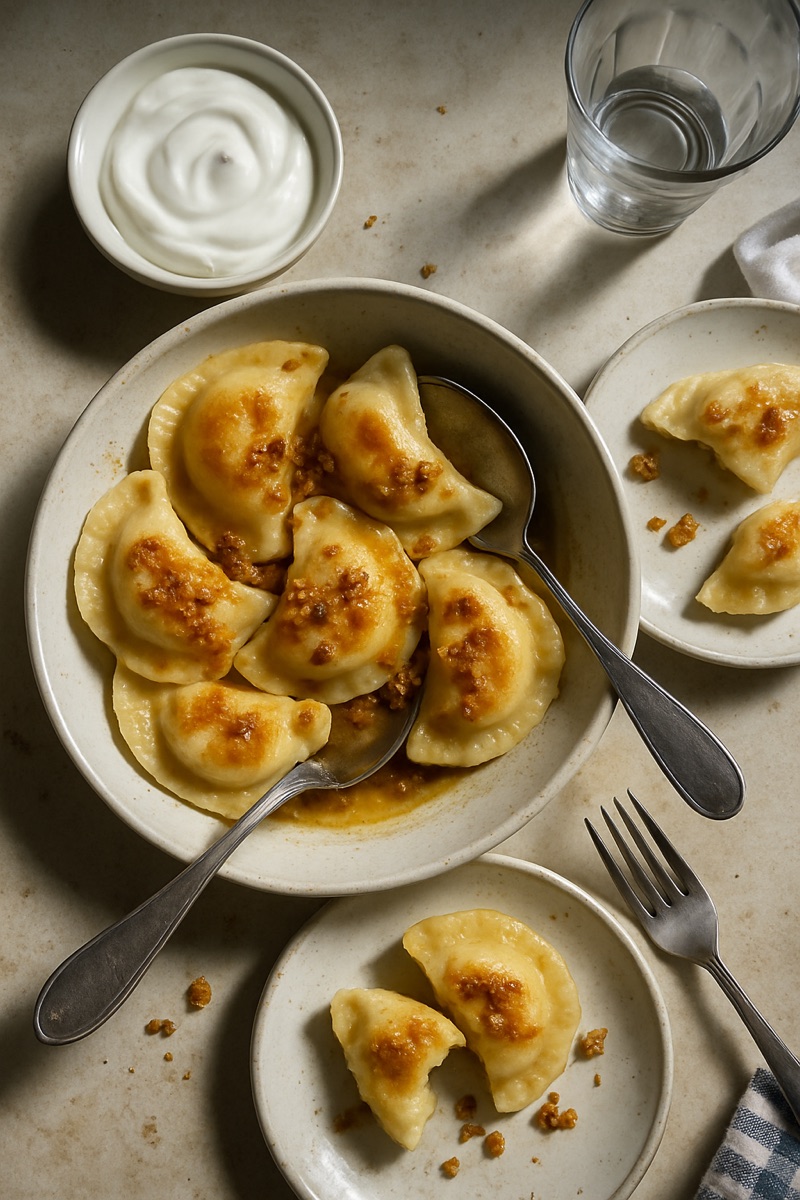
Pierogi come in many fillings, but pierogi ruskie are the classic: mashed potato, twaróg (a crumbly, sour curd cheese) and fried onion. Ruskie means Ruthenian, from the old eastern lands, not Russian, as outsiders often assume. The dough is made with water at about 80 °C so it stretches and seals, and the dumplings are boiled until they float, then 2 to 3 minutes more, and served with fried onion, melted butter and sour cream.
Pierogi follow the Polish calendar. On Christmas Eve, Wigilia, families serve pierogi filled with sauerkraut and dried mushrooms, and tiny mushroom dumplings called uszka float in clear barszcz. Kraków hosts a major pierogi festival; at the 2007 edition, 30,000 pierogi were eaten each day.
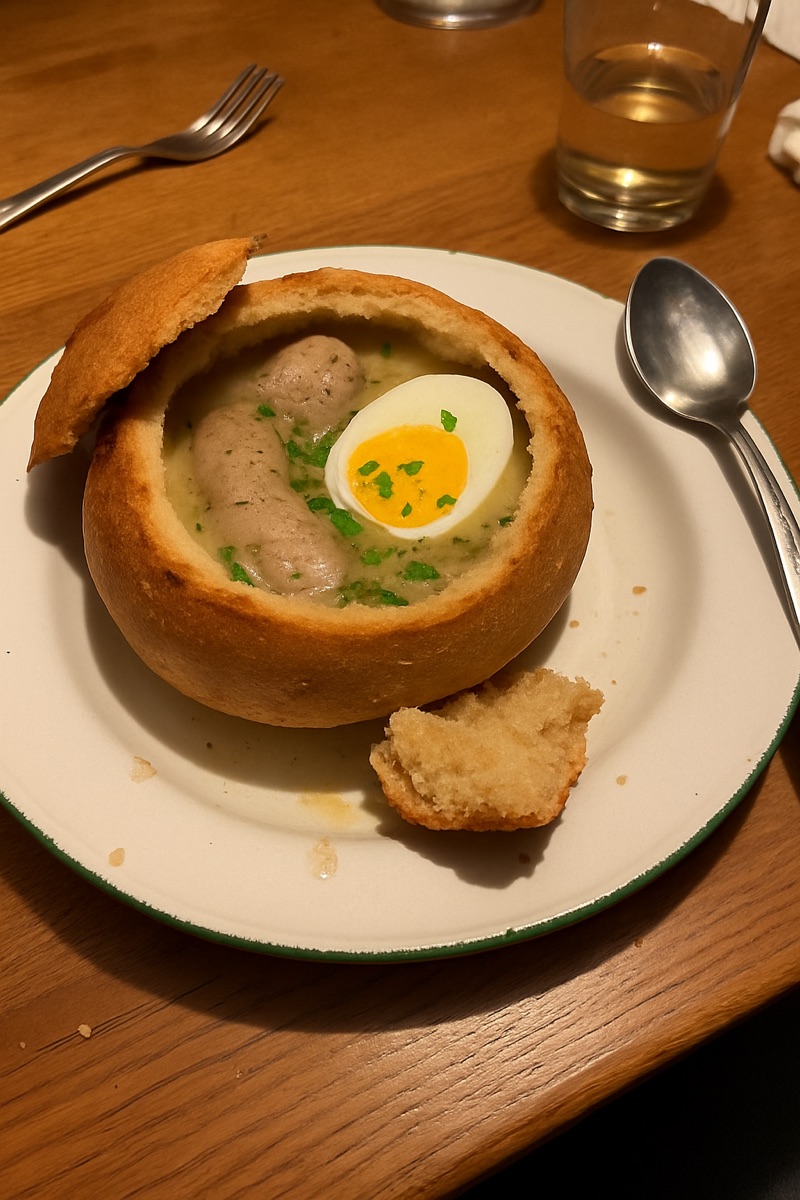
Żurek is a soup soured with zakwas, rye flour and water left to ferment for about five days, finished with white sausage, sour cream, horseradish and half a hard-boiled egg. It is traditionally eaten at Easter, and is sometimes served in an edible bowl made of bread. The one rule: the zakwas goes in off the boil and the soup must never boil again, or it splits.
You will find all three, with ingredients and step-by-step methods, on our page about the food of Poland.
The recipes
- Bigos🇵🇱 Poland · 2 days and 5 hours
 Pierogi🇵🇱 Poland · 1 hour and 50 minutes
 Żurek🇵🇱 Poland · 5 days and 2 hours
Questions people ask
Is bigos Polish or Lithuanian?
Bigos originated in Poland and became traditional across the former Polish–Lithuanian Commonwealth, so it is eaten in both countries today. In Poland it is the dish most often called the national dish.
What is served with bigos?
Bigos is typically served very hot with rye bread or boiled potatoes.
Why is bigos reheated several times?
Cooling and reheating the stew over two or three days lets the flavours of the cabbage, meats, mushrooms and prunes fuse. Bigos is considered best after repeated reheating.
Are pierogi the national dish of Poland?
Pierogi are also described as a national dish of Poland. Bigos is named more often, but there is no official choice between them.
What is hunter's stew?
Hunter's stew is the usual English name for bigos. In hunter's bigos, bigos myśliwski, at least part of the meat comes from game.
Keep reading
- Traditional food of Poland: 13 dishes to know
- What is the national dish of Belarus?
- What is the national dish of the Czech Republic?
- What is the national dish of Estonia?
- What is the national dish of Hungary?
- What is the national dish of Latvia?