 COPPER
What is the national dish of Estonia?
Estonia has no single official national dish. The one most often named is kama: a flour of roasted barley, rye, oats and peas, stirred uncooked into kefir, buttermilk or sour milk to make a thick, nutty cream. Estonia's Folk Culture Centre calls it an Estonian national food. Mulgi dishes, verivorst blood sausage and Baltic herring are the other contenders.
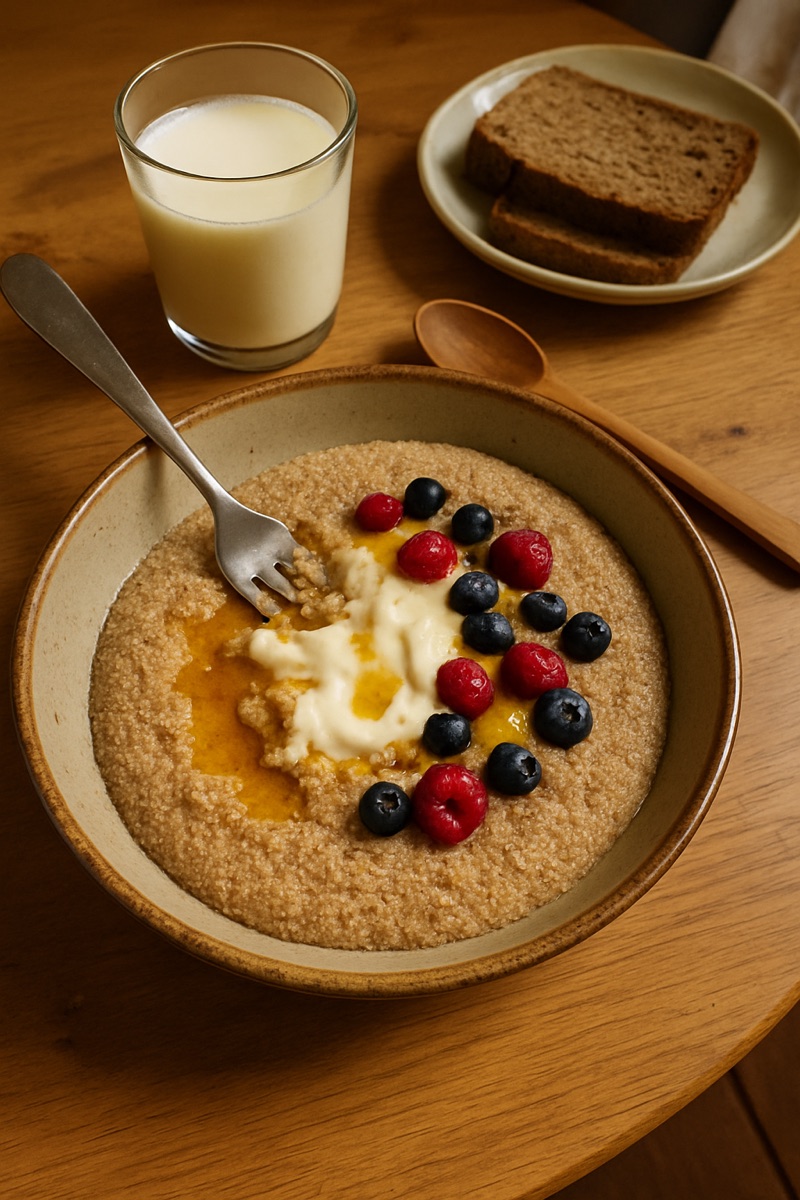
What is kama?
Kama is two things at once. Kamajahu, kama flour, is a mix of grains and pulses that are cooked or roasted, dried and then milled. Today it usually contains barley, rye, oats and dried peas. Kama is also the dish made from that flour: it is stirred into a cold soured-milk product and eaten without any further cooking, because the grain is already roasted.
The flour is roasted until deep brown, so the dish tastes of roasted grain, sharpened by the sour milk. Thin, it is drunk from a glass; thick, it is eaten with a spoon. It was historically a farmer's food from southern Estonia, valued because the flour kept well and could be turned into a filling meal without baking. Farmers carried it as an easy, non-perishable food and could roll it into butter or lard for a quick snack.
Kama has not faded with farm life. The Folk Culture Centre notes that it is made from home-grown grain without additives, is cheap and easy enough for children to prepare, and is widely eaten by young and old alike.
How kama is made
Our kama recipe whisks 100 g of kama flour into 400 ml of cold kefir one spoonful at a time, since the flour lumps instantly if added all at once. Two tablespoons of sugar and a pinch of salt go in, then 100 g of sour cream for the thick version called kamavaht, firm enough to hold a spoon upright.
The bowl rests in the fridge for 30 minutes while the roasted flour swells and sets into a spoonable cream. It is served cold with fresh berries and a drizzle of honey. If you cannot buy kamajahu, you can roast equal weights of barley, rye, oats and dried yellow peas in a dry pan or at 180 °C until deep brown, then grind them fine.
Regional versions of kama
There is no single kama flour. The mix changed from one area to another, and the Estonian Folk Culture Centre describes the Mulgi version from south Estonia as a mixed kama:
- Mulgi kama (segakama): barley, oats, rye, wheat, peas and beans, each cooked separately, dried, milled and then blended;
- Oat kama: in early 18th-century Mulgimaa, kama flour was made from oats;
- Kamakäkk: kama flour mixed with sour cream into small balls, a firmer snack;
- Talkkuna: the Finnish relative, made by steaming, grinding and then roasting the grain.
Why Estonia has several national dishes
No Estonian law names a national dish, and several foods share the title. Kama appears on Wikipedia's list of national dishes, and the Estonian Folk Culture Centre writes that kama is considered an Estonian national food. But others have stronger formal recognition:
- Mulgipuder, mashed potato cooked with barley groats and pork from the Mulgimaa region, was inscribed on the UNESCO Representative List of the Intangible Cultural Heritage of Humanity in 2024.
- Mulgikapsad, sauerkraut stewed with fatty pork and pearl barley, is on the Estonian list of intangible cultural heritage.
- Baltic herring (räim) was elected the national fish of Estonia in 2007, and the sprat sandwich kiluvõileib is a fixture of Independence Day celebrations.
Verivorst, the Christmas dish
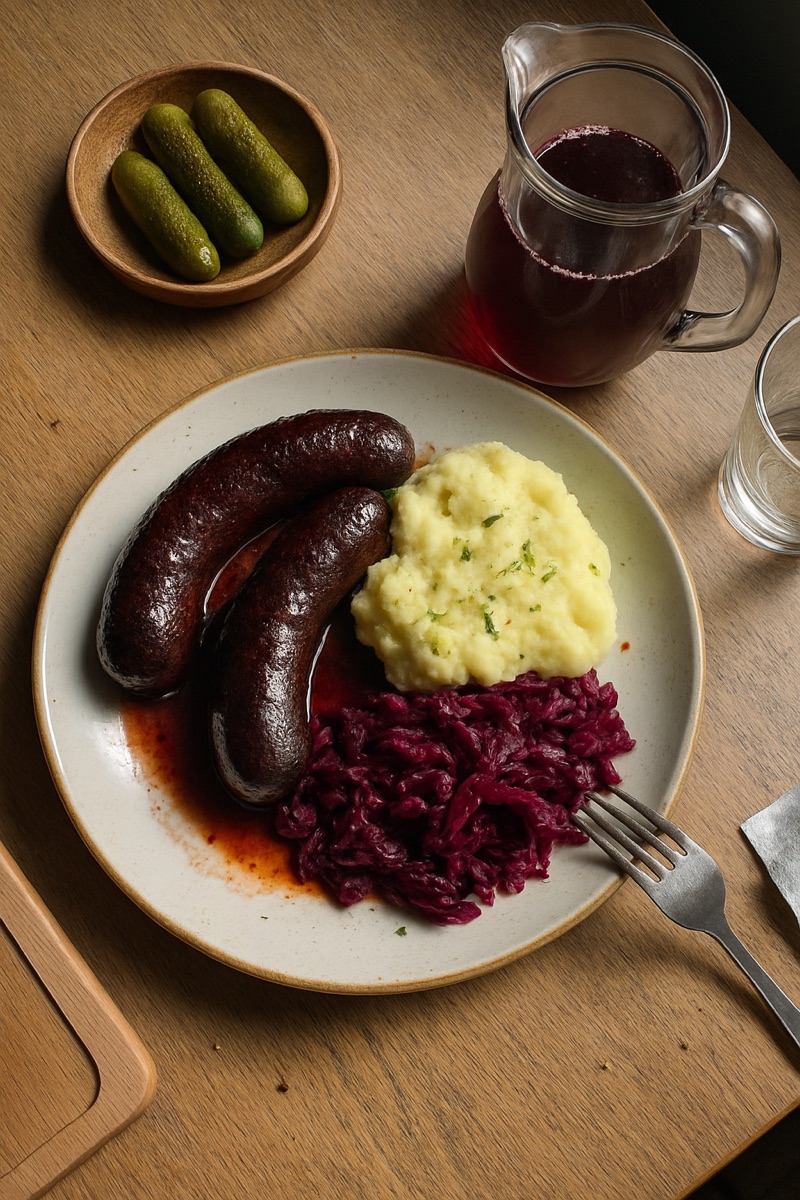
Blood sausage, verivorst, is part of the traditional Estonian Christmas menu with roast pork, sauerkraut and jellied pork. In our verivorst recipe, 400 g of soaked pearl barley is boiled soft and cooled completely, mixed with rendered salt pork, golden onion, marjoram and allspice, then loosened with 700 ml of strained pork blood.
The casings are filled only three quarters full, because the barley swells. The sausages are poached at about 80 °C for 15 to 20 minutes, then roasted at 200 °C for 30 to 40 minutes until the skins crackle, and served with lingonberry jam and sauerkraut.
Other dishes to know from Estonia
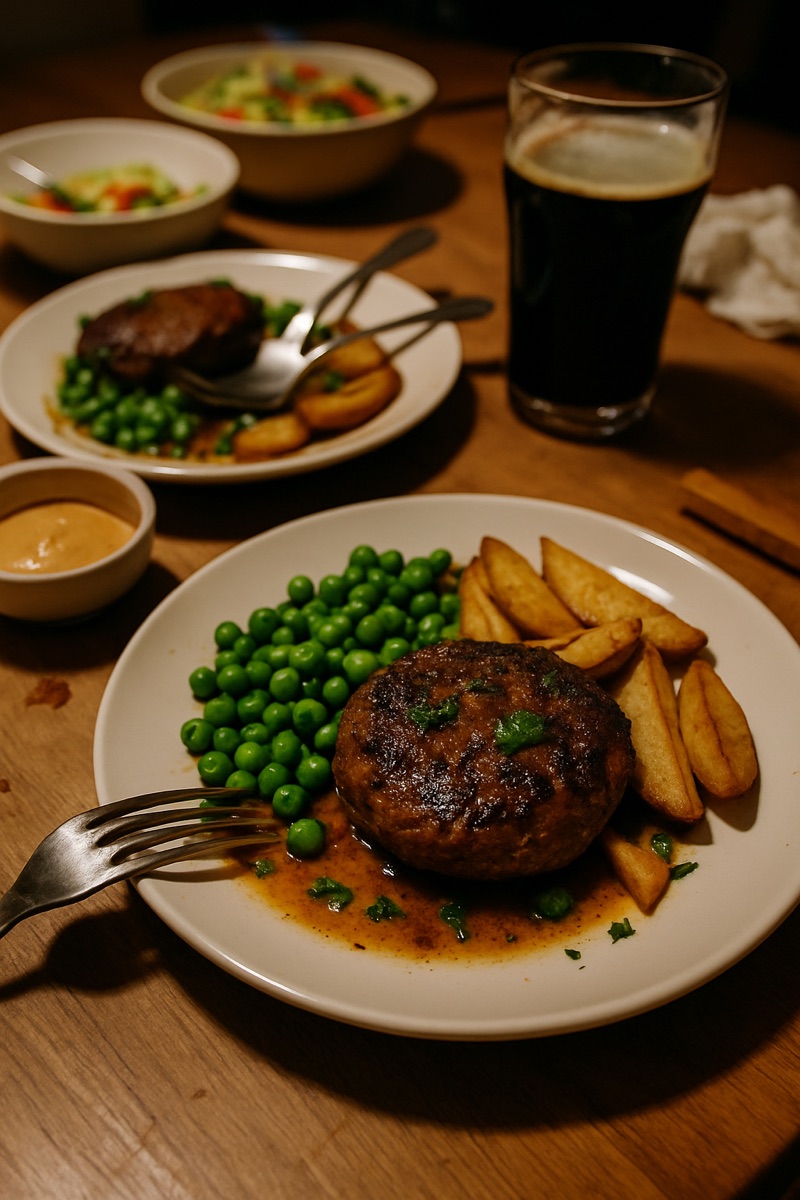
For a weekday meal, Estonians fry pihvid, minced pork and beef patties bound with milk-soaked bread and butter-fried onion, rolled in breadcrumbs and finished with a sour cream pan sauce. Dark rye bread, leib, comes with almost every savoury dish.
Kama has a twin across the Gulf of Finland, talkkuna: see the national dish of Finland. For Estonia's southern neighbour, read about the national dish of Latvia, and for the wider region our guide to Eastern European food. All three recipes are on our page about the food of Estonia.
The recipes
- Kama🇪🇪 Estonia · 40 minutes
 Verivorst🇪🇪 Estonia · 15 hours and 30 minutes
 Pihvi🇪🇪 Estonia · 50 minutes
Questions people ask
Is kama only eaten in Estonia?
Kama is most closely tied to Estonia, but Finland eats a close relative called talkkuna, and similar roasted-grain flours exist in Russia (tolokno) and Sweden (skrädmjöl).
Do you cook kama?
No. The grains in kama flour are already roasted, so kama is simply whisked into cold kefir, buttermilk or sour milk and left to thicken.
What does kama taste like?
Kama flour is roasted until deep brown and nutty, so kama tastes of roasted grain, with the sourness of the kefir or sour milk it is mixed into.
What do Estonians eat at Christmas?
The traditional Christmas table includes blood sausage (verivorst), roast pork, sauerkraut, jellied pork and roast potatoes, with lingonberry jam.
Which Estonian dish is on the UNESCO list?
Mulgi puder, a mash of potatoes and barley from the Mulgimaa region of south Estonia, was inscribed by UNESCO in 2024.
Keep reading
- Traditional food of Estonia: 13 dishes to know
- What is the national dish of Belarus?
- What is the national dish of the Czech Republic?
- What is the national dish of Hungary?
- What is the national dish of Latvia?
- What is the national dish of Lithuania?