 COPPER
What is the national dish of Slovakia?
The national dish of Slovakia is bryndzové halušky: small dumplings of raw grated potato and flour, boiled, then tossed while hot with bryndza, a soft, tangy sheep's milk cheese, and topped with crisp smoked bacon. No law makes it official, but Slovak sources consistently name it the national dish. It is traditionally eaten with a glass of žinčica, sheep's whey.
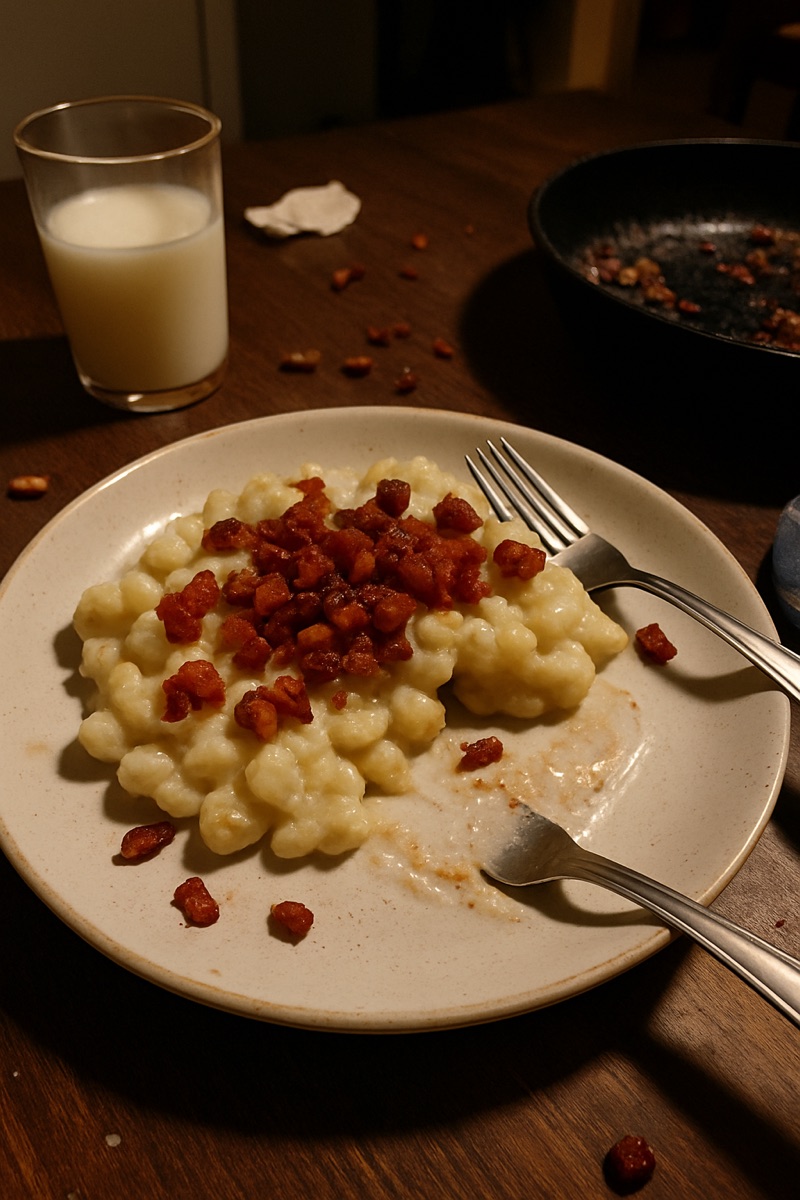
What are bryndzové halušky?
Halušky are small, irregular lumps of potato dough boiled in water, similar in appearance to gnocchi. *Bryndzové* means "with bryndza": the hot dumplings are folded through the cheese until it softens and coats them.
The finished plate is usually topped with:
- Smoked bacon or pork fat, fried crisp, with a spoon of its fat.
- Chives or spring onions, optional.
- On the side, a glass of žinčica (sheep's whey, a by-product of making bryndza), sour milk or plain milk.
How bryndzové halušky are made
The potatoes go in raw. In our bryndzové halušky recipe, 1 kg of peeled potatoes is grated on the fine side of a grater and mixed at once with a teaspoon of salt and about 300 g of flour, until the dough is thick enough for a wooden spoon to stand up in it. The flour is adjusted to how wet the potatoes are.
The dough is pressed through a halušky sieve (*haluškár*) straight into boiling salted water, in batches. Without a sieve, Slovak cooks spread it on a wet board and scrape thin strips into the pot with a knife. The halušky are done in 3 to 5 minutes, when they float.
Meanwhile 150 g of diced smoked bacon is fried in a dry pan for 8 to 10 minutes. The drained halušky are folded into 250 g of bryndza loosened with 3 tablespoons of milk, then served at once. Some cooks add an egg to the dough, but the Slovak recipe notes this makes the halušky harder.
Slovak cooks also loosen the cheese with 3 to 5 spoonfuls of the water the halušky boiled in, and some stir in sour cream to taste.
What is bryndza?
Bryndza is a white, crumbly, slightly moist sheep's milk cheese with a strong smell and a tangy, salty finish. It is made across Central and Eastern Europe, most notably in Slovakia and Poland, and the word itself comes from Romanian *brânză*, cheese, spread by migrating Vlach shepherds. In Slovakia it also goes into other traditional dishes, such as podplamenníky s bryndzou.
In Austrian German the cheese is Brimsen and the dish Brimsennocken. The word was first recorded as *brençe*, "Vlach cheese", in Dubrovnik in 1370. Bryndza itself was first recorded in the Slovak counties of the Kingdom of Hungary in 1470, and in the neighbouring Polish region of Podhale in 1527. The soft, spreadable bryndza used today is believed to have been developed toward the end of the 18th century by entrepreneurs from Stará Turá, in western Slovakia.
Where bryndzové halušky come from
The dish is younger than its cheese. Potatoes only took hold in Slovakia in the 19th century; before that, everyday food was porridge of barley, buckwheat or millet.
In the Kingdom of Hungary two kinds of dumpling developed side by side: potato dumplings in the mountains, where potatoes grew in harsh conditions and saved on flour, and flour-only dumplings on the plains. Local Hungarians call the bryndza version *sztrapacska*; the flour-only cousin is nokedli. See how Hungary's own national dish compares in our article on the national dish of Hungary.
Halušky and bryndza have also spread across the border into Czech kitchens; see the national dish of the Czech Republic. In the village of Turecká, an annual bryndzové halušky festival includes an eating contest.
Other dishes to know from Slovakia
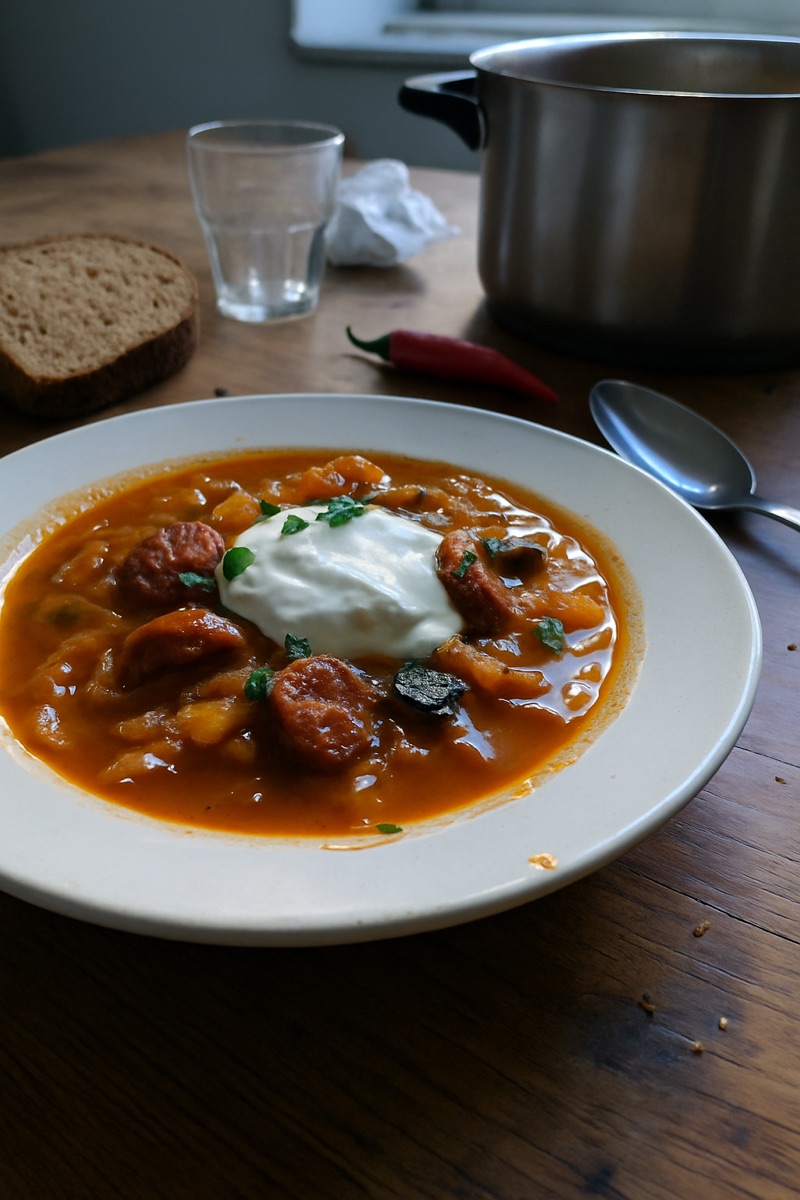
Kapustnica is the Christmas Eve soup: sauerkraut and its juice simmered about 1 hour 30 with smoked pork, dried mushrooms, paprika and caraway, finished with smoked sausage and sour cream, and best reheated the next day. The dried mushrooms soak an hour first and their soaking water goes into the pot; the paprika is stirred into the fried onion off the heat so it does not burn. Slovaks serve it with bread on Christmas Eve.
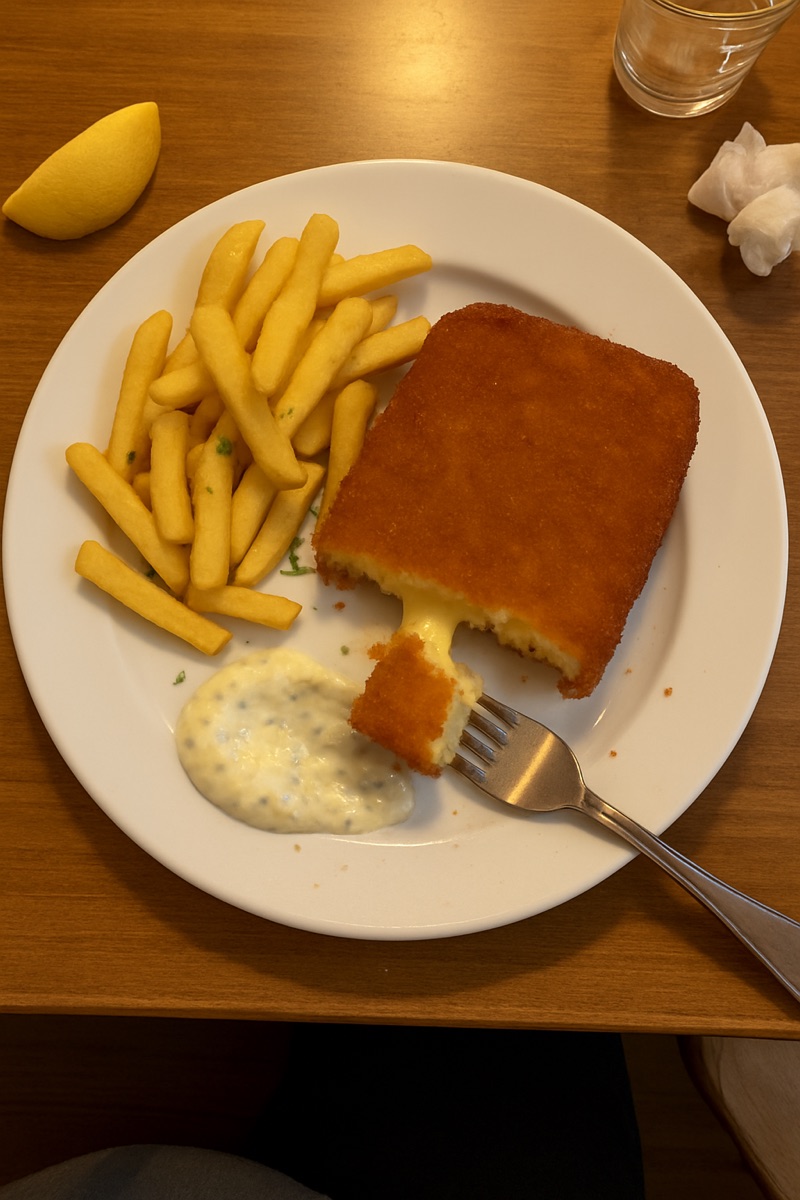
Vyprážaný syr is fried cheese: slices of Edam 1 to 1.5 cm thick, breaded twice, frozen 30 minutes so the crust holds, then fried 1 to 2 minutes per side and served with tartar sauce and potatoes. Other Slovak staples include strapačky (potato dumplings with sauerkraut), pirohy filled with bryndza, lokše (potato pancakes baked directly on the stove) and the goose or duck feast (*husacie* or *kačacie hody*), served with lokše and stewed red cabbage.
You will find all three dishes, with step-by-step methods, on our page about the food of Slovakia, and the neighbouring kitchens in our guide to Eastern European food.
The recipes
- Bryndzove halusky🇸🇰 Slovakia · 45 minutes
 Kapustnica🇸🇰 Slovakia · 15 hours
 Vyprazany syr🇸🇰 Slovakia · 1 hour
Questions people ask
Is bryndzové halušky Slovak or Hungarian?
It is Slovakia's national dish. Potato dumplings developed across the old Kingdom of Hungary, and local Hungarians call the bryndza version sztrapacska, but bryndzové halušky is the name and dish Slovakia claims.
What do you drink with bryndzové halušky?
Traditionally žinčica, the sheep's whey left over from making bryndza, or a glass of sour milk.
What is the difference between halušky and strapačky?
Both use the same potato dumplings. Bryndzové halušky are tossed with bryndza sheep's cheese; strapačky are tossed with sauerkraut.
How do you pronounce bryndzové halušky?
Roughly BRIN-dzo-veh HA-loosh-kee, with the stress on the first syllable of each word.
Are halušky the same as gnocchi?
They look similar, but halušky dough is made from raw grated potato and flour and is pressed through a sieve straight into boiling water.
Keep reading
- Traditional food of Slovakia: 12 dishes to know
- What is the national dish of Belarus?
- What is the national dish of the Czech Republic?
- What is the national dish of Estonia?
- What is the national dish of Hungary?
- What is the national dish of Latvia?