 COPPER
Traditional food of Slovakia: 12 dishes to know
Slovak food grew out of self-sufficient village cooking built on wheat, potatoes, milk, pork, sauerkraut and onion, with lard and butter rather than oil and few spices. Potato dumplings and sheep's cheese are its signature. The most emblematic dishes are bryndzové halušky, kapustnica sauerkraut soup, vyprážaný syr fried cheese and Skalický trdelník, a spit-baked pastry.
What Slovak food is built on
Traditional Slovak cooking goes back to a time when most people lived self-sufficiently in villages, with little trade and no modern way to preserve food. It relied on staples that could survive hot summers and cold winters: wheat, potatoes, milk, pork, sauerkraut and onion. Wheat became bread, dumplings and noodles; potatoes were boiled or worked into potato dough; milk was turned into butter, cream, sour cream, buttermilk and cheese. Pork gave sausages, smoked bacon and lard. Spices were little used, and animal fat and butter replaced cooking oil.
Geography adds a split. The mountainous north, with at least three months of hard winter, leans on smoked meat, potatoes, sauerkraut, dairy, flour and pulses, plus trout, game, wild mushrooms and honey. The lowland south has more beef, goose, duck and turkey, pond-raised carp for Christmas, and plenty of fruit made into jams and preserves. Slovak cooking also shares a great deal with Czech, Austrian and Hungarian kitchens. The full story of the best-known dish is in our article on the national dish of Slovakia.
Dumplings and potato dishes
Halušky, small dumplings of potato dough, are the dish Slovak sources call most typical of the country, and they come in many regional forms.
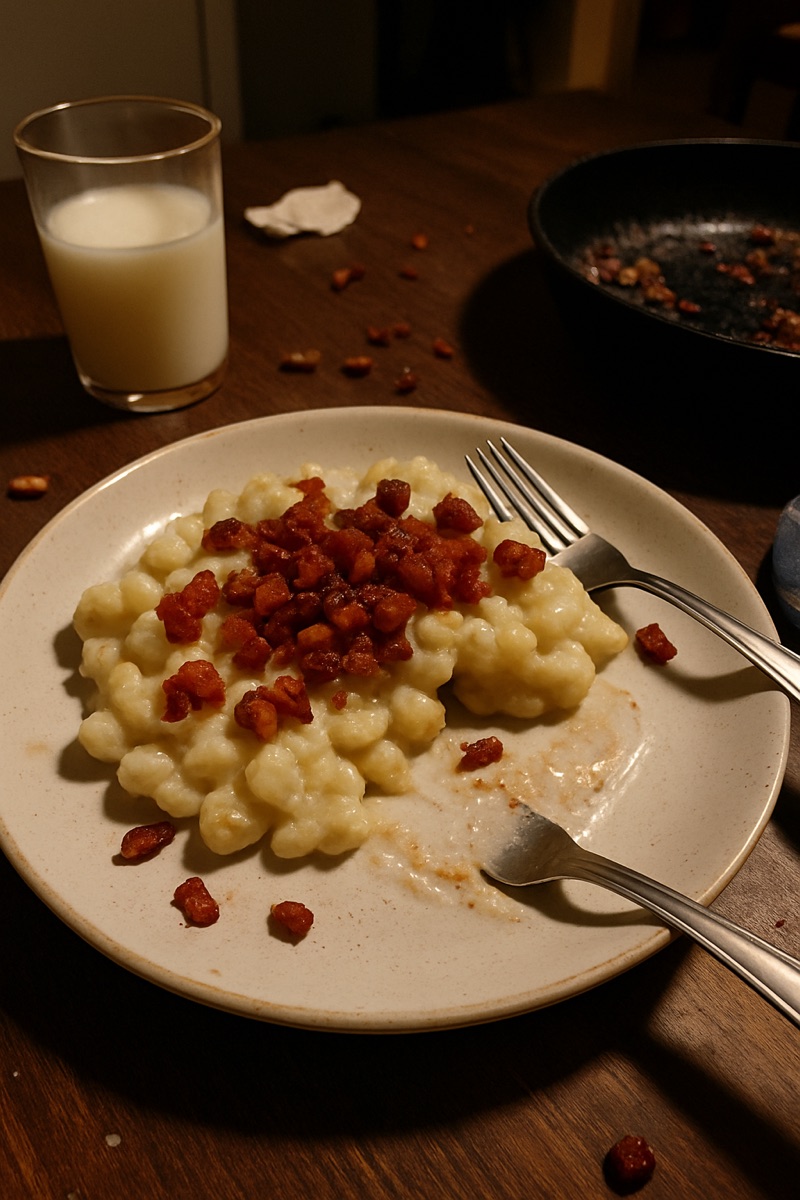
- Bryndzové halušky — Small dumplings of raw grated potato and flour, boiled, then tossed while hot with bryndza, a soft, tangy sheep's milk cheese, and topped with crisp smoked bacon. It is the national dish, traditionally eaten with a glass of žinčica, the sheep's whey left from making the cheese.
- Strapačky — The same potato halušky, tossed with stewed sauerkraut instead of bryndza. Slovak sources call this cabbage version just as popular. Across the border in Hungary the dish is called sztrapacska and is served with juhtúró, the Hungarian counterpart of bryndza.
- Bryndzové pirohy — Pirohy are the Slovak relative of pierogi: dough pockets sealed around a filling and simmered until they float. The classic Slovak filling is bryndza, and a popular Slovak dough is made with curd, eggs and flour. In parts of eastern Slovakia they are also served on Christmas Eve.
- Zemiakové placky — Grated potato pancakes fried in oil. They go by regional names: haruľa in the Horehronie, Pohronie and Kysuce regions, baba or babka in Orava.
Soups and main dishes
Lunch was traditionally the main meal of the day, and it usually means a soup followed by a main course. Slovak main dishes are rich, often cooked with lard, and many are served with knedľa, a large steamed dumpling cut into slices.
- Kapustnica — The most traditional Slovak soup: sauerkraut simmered with smoked meat, dried wild mushrooms, dried plums, sausage, a little flour and sour cream. It is the most common soup on Christmas Eve. The Catholic Christmas Eve version is meatless and thickened with plain halušky, cream or potato, while the festive version always has smoked meat, sausage and dried mushrooms; every region and village makes it a little differently.
- Vyprážaný syr — Fried cheese: thick slices of Edam breaded and fried until the crust sets and the inside melts. It is a street food and canteen staple in Slovakia, as in the Czech Republic, always served with tartar sauce and potatoes or fries.
- Segedínsky guláš — A pork stew cooked with sauerkraut and finished with cream or sour cream, usually served with slices of steamed dumpling. Goulash in general is one of the Hungarian influences on Slovak cooking, given a Slovak touch.
- Husacie hody with lokše — The goose feast: roast goose or duck, goose liver, lokše and stewed red cabbage, followed by a sour cherry and poppy seed strudel. Lokše are thin pancakes of boiled potato, flour and salt, baked dry on a hot plate and spread with goose fat. The feast is the traditional food of the village of Slovenský Grob.
Cheese, pastries and sweets
Slovak baking is built on yeast dough, strudels and filled rolls, with poppy seeds, walnuts and tvaroh (curd cheese) as the usual fillings. Most sweets are baked at home, above all for Christmas and Easter.
- Oštiepok — A traditional smoked sheep's milk cheese, protected in the EU as a geographical indication. The Gorals across the Polish border make a similar cheese called oscypek, but the two differ in their proportions, method and final character. Bryndza, parenica and tvaroh complete the list of traditional Slovak cheeses.
- Skalický trdelník — Yeast dough wound around a wooden roller, the trdlo, and baked while it turns over glowing heat, which gives it a hollow cylinder shape and a golden crust with chopped walnuts and sugar. It comes from Skalica, in the Záhorie region, where local tradition credits the recipe to the cook of the writer József Gvadányi, who lived in the town from 1783 to 1801. In December 2007 it became the first Slovak product registered as an EU protected geographical indication.
- Parené buchty — Steamed yeast dumplings filled with jam, plum, curd or poppy seed, then topped with poppy seeds, sugar, melted butter, sour cream, breadcrumbs or nuts. They are close to the Austrian Germknödel.
- Opekance — Small balls of yeast dough baked in a tray so they press against each other, known in the east as bobáľky. They are a meatless Christmas Eve dish: scalded with hot milk and sprinkled with poppy seeds, ground walnuts or tvaroh mixed with sugar.
Christmas and regional cooking in Slovakia
Christmas Eve gathers many of these dishes in one meal. It traditionally opens with oblátky, thin wafers with honey (in the east also with garlic), then kapustnica or a sour mushroom soup, then fried carp or fish fillet with potato salad. Eastern Slovakia adds pirohy and bobáľky, and the table ends with small Christmas biscuits such as honey medovníky and vanilla rolls.
The north and the mountains are the land of sheep's cheese, smoked meat and potato dumplings; Spiš has džatky, small balls of mashed potato and flour served with bacon, and western Slovakia has the goose feasts of Slovenský Grob and the trdelník of Skalica. Žinčica and sour milk were the traditional drinks with halušky; beer is now everywhere, and borovička, a juniper spirit, and slivovica, a plum brandy, are the typical spirits. Many dishes are shared with the traditional food of the Czech Republic and the traditional food of Hungary.
Cook Slovak food at home
Bryndzové halušky, kapustnica and vyprážaný syr each have a full recipe with quantities and step-by-step methods in the Copper app. You will find all three on our page dedicated to Slovak recipes, and the neighbouring kitchens in our guide to Eastern European food.
The recipes
- Bryndzove halusky🇸🇰 Slovakia · 45 minutes
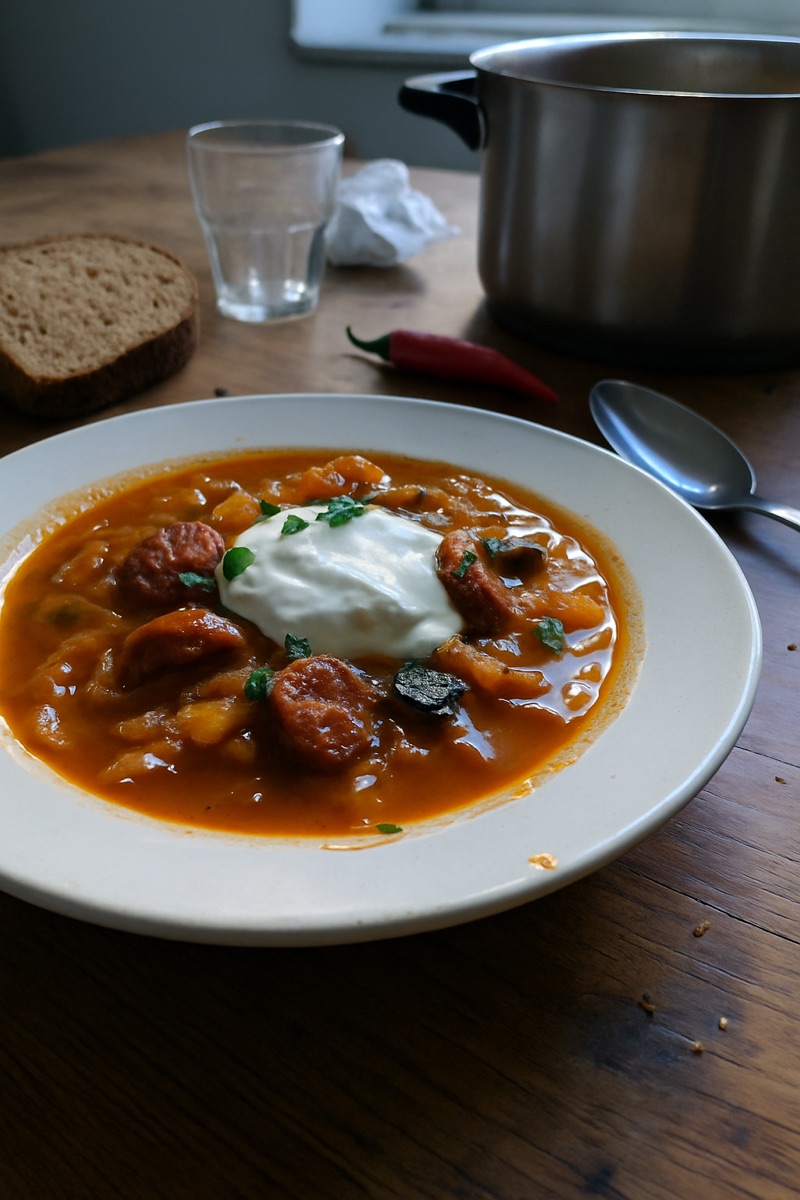 Kapustnica🇸🇰 Slovakia · 15 hours
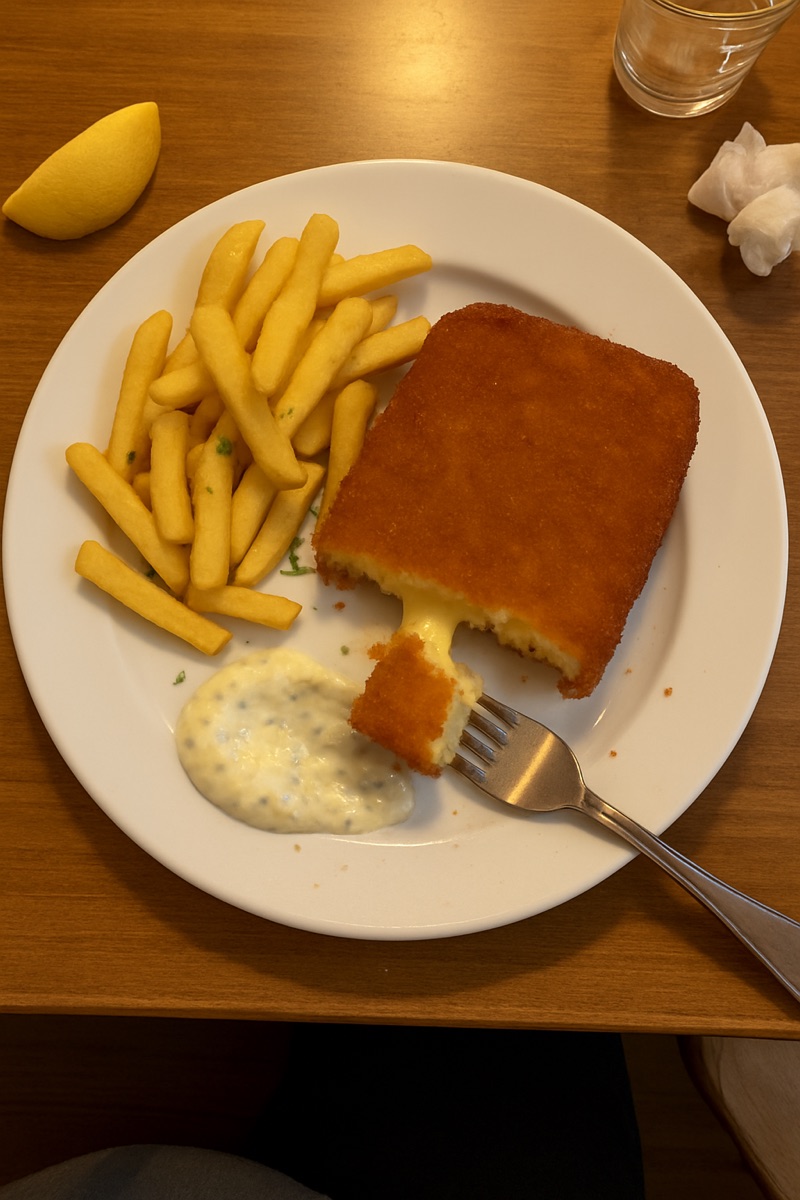 Vyprazany syr🇸🇰 Slovakia · 1 hour
Questions people ask
What is the most popular food in Slovakia?
Bryndzové halušky, potato dumplings with sheep's cheese and bacon, is the national dish. Kapustnica, vyprážaný syr, strapačky and bryndzové pirohy are also among the most common Slovak meals.
What do Slovaks eat at Christmas?
On Christmas Eve, wafers with honey, kapustnica or a sour mushroom soup, then fried carp with potato salad, followed by Christmas biscuits. In eastern Slovakia pirohy and bobáľky, small yeast balls with poppy seeds, are also traditional.
Is Slovak food spicy?
No. Traditional Slovak cooking used few spices and relied on lard, butter, smoked meat and sour cream for flavour. Paprika appears mainly in goulash and other stews that came from Hungarian cooking.
What is a typical Slovak lunch?
Lunch was traditionally the main meal: a soup such as kapustnica or bean soup, followed by a main course such as halušky, a stew with dumplings or a schnitzel. Today many Slovaks eat their main meal in the evening.
What do Slovaks drink with their food?
Žinčica, sheep's whey, and sour milk are the traditional drinks with bryndzové halušky. Beer is the most common drink, wine is served with meals in wine regions, and borovička and slivovica are the classic spirits.
Keep reading
- What is the national dish of Slovakia?
- Traditional food of Belarus: 12 dishes to know
- Traditional food of the Czech Republic: 13 dishes to know
- Traditional food of Estonia: 13 dishes to know
- Traditional food of Hungary: 13 dishes to know
- Traditional food of Latvia: 12 dishes to know