 COPPER
What is the national dish of Romania?
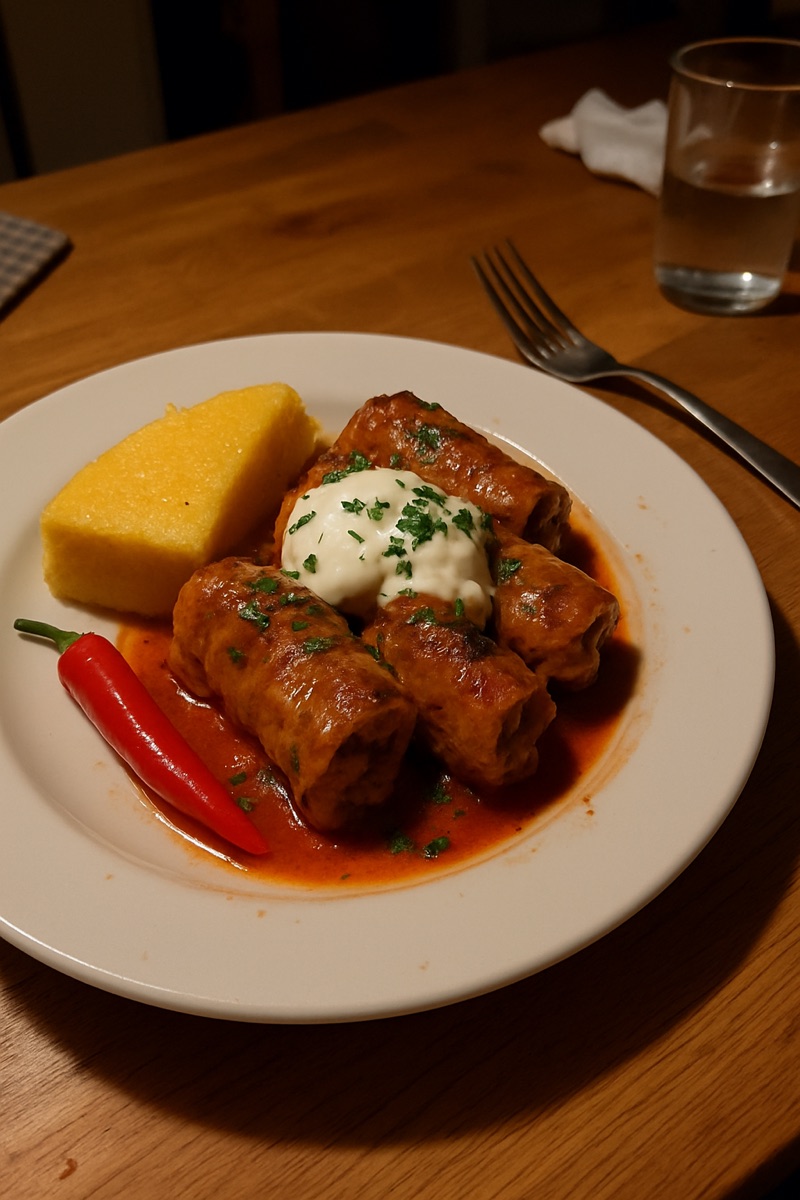
Romania has no official national dish, but sarmale is the one most often named: rolls of pickled cabbage leaves stuffed with minced pork and rice, slow-cooked for hours with smoked pork and served with mămăligă and sour cream. Two other dishes are regularly called national too: mămăligă, a firm cornmeal porridge eaten like bread, and mici, skinless grilled sausages.
Why Romania has three candidates
No Romanian law or decree names a national dish, so the title is decided by usage, and three dishes share it.
Sarmale is the one most sources call the national dish: it is cooked in every historical region, from Moldavia to Transylvania and Wallachia, and is the centrepiece of Christmas and Easter meals. Mămăligă is the staple that sits beside it on the plate; a 2022 book by historian Alex Drace-Francis is titled *The Making of Mămăligă: Transimperial Recipes for a Romanian National Dish*. Mici are the grill favourite, sometimes called the national dish in the press, though, as with the other two, nothing makes it official.
Sarmale also has literary credentials. The poet Mihai Eminescu frequented an inn in Iași called Hanul Trei Sarmale, the inn of the three sarmale, where he met Ion Creangă and Vasile Alecsandri, and Queen Marie of Romania counted sarmale, mici and cozonac among her favourite foods.
What are sarmale?
Sarmale are cabbage rolls, but the Romanian version has a specific sour edge: the leaves come from a whole head of cabbage pickled in brine. The word itself comes from Turkish sarma, meaning wrapped, and the dish reached the region through Ottoman cooking. What usually goes into a pot of sarmale:
Sarmale are valued as much for practical reasons as for taste: they are filling, they are cooked in large batches, and a pot stays good for days. Many Romanian families grow the cabbage themselves, close to the house.
- Pickled cabbage leaves, rinsed only if very salty, with shredded sour cabbage lining the pot.
- Filling: minced pork, often with some beef, rice, onion and dried thyme.
- Smoked pork: ribs, bacon or ham hock layered between the rolls.
- Liquid: water with a little tomato, bay leaves and peppercorns, sometimes cabbage brine.
- On the table: mămăligă and sour cream (smântână).
How sarmale are made
Each pickled leaf has its thick rib shaved down, then gets a heaped tablespoon of the pork, beef and rice filling. The leaf is rolled and both ends tucked in so the rice cannot escape.
The rolls are packed tightly into a heavy pot in layers, with shredded sour cabbage and smoked ribs between them, covered with water and weighed down with a plate. They simmer on the lowest heat for 3 hours, or bake covered at 160 °C. Romanian cooks agree they are better the next day, after the smoke and sourness have soaked in. Our sarmale recipe gives every quantity.
During Lent, when meat is off the table, cooks make sarmale with smoked fish or with mushrooms and grated carrot. In and around Cluj-Napoca there is also a deconstructed form, varză a la Cluj: layers of shredded cabbage, minced pork and rice topped with sour cream.
Sarma in its many forms runs across the region; in Serbia it is one of several dishes called national as well.
Mămăligă, the everyday staple
Before maize reached Europe in the 16th century, mămăligă was made with millet. Corn spread through the Romanian principalities in the 17th and 18th centuries and became the food that kept famine at bay. Historian Nicolae Iorga noted that Romanian farmers had grown it since the early-to-mid-17th century.
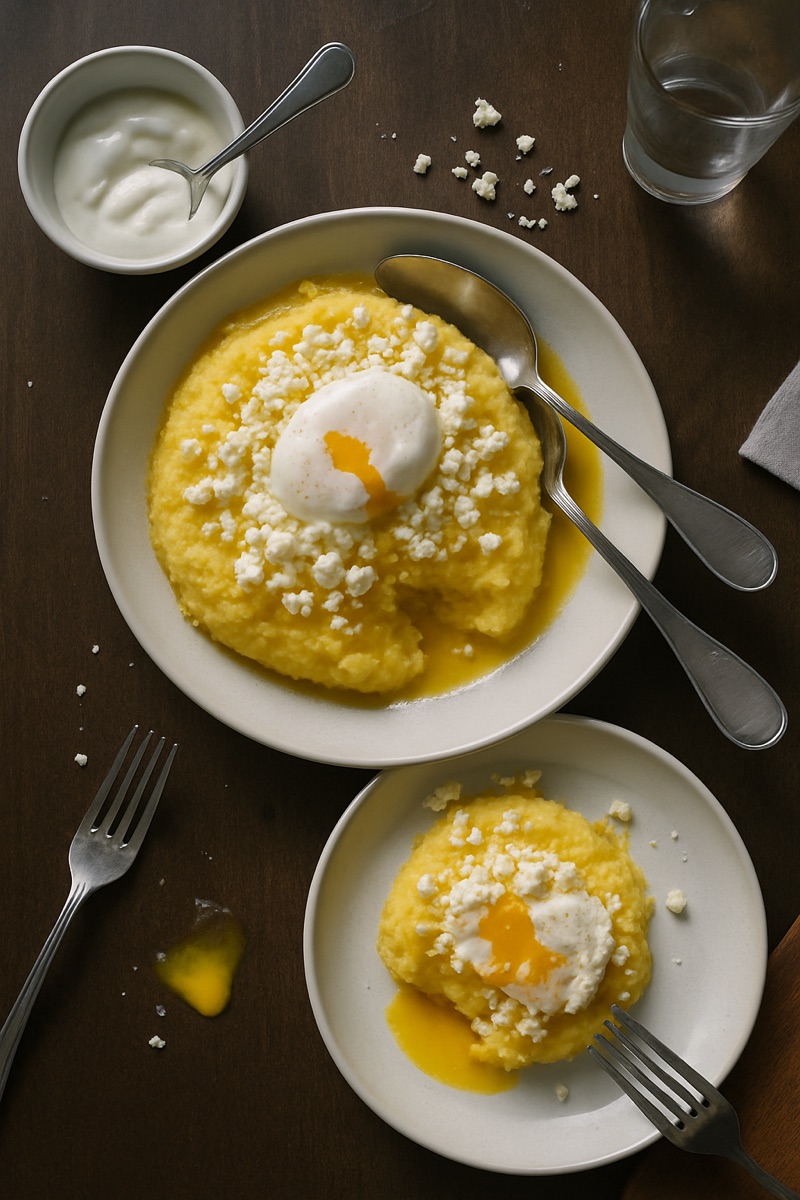
Cooked peasant-style, mămăligă is much firmer than Italian polenta. Cornmeal is rained into salted boiling water and stirred with a wooden stick for 15 to 20 minutes, until it pulls away from the pot. It is turned out onto a board and cut with a thread, because it sticks to a knife, then eaten with crumbled telemea cheese and sour cream. It is just as central next door in Moldova.
Western readers met it early: in the first chapter of Bram Stoker's *Dracula*, Jonathan Harker breakfasts in Transylvania on "a sort of porridge of maize flour which they said was 'mamaliga'".
Mici, the grill favourite
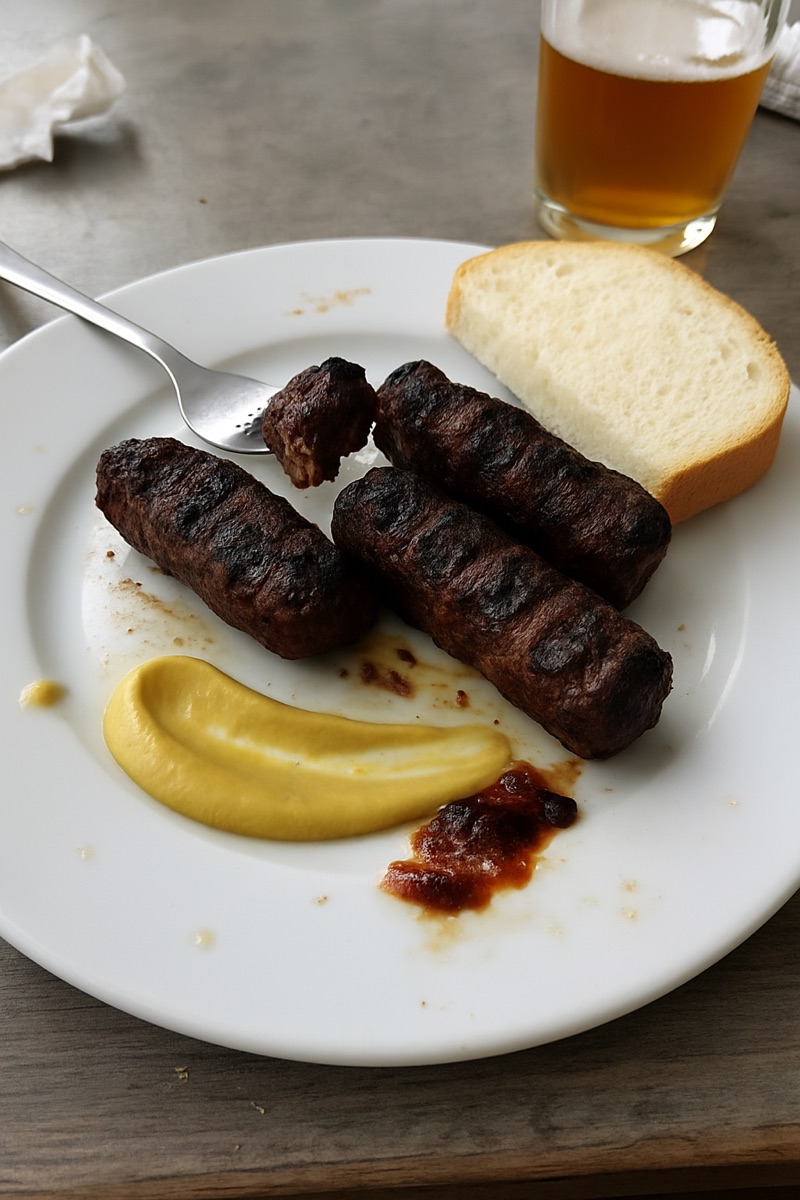
Mici, also called mititei (both mean the little ones), are skinless sausages of ground beef, lamb and pork with garlic, thyme and spices. Baking soda and cold broth kneaded into the meat give them their springy texture, and the paste rests overnight before grilling.
Romanians eat an estimated 440 million mici a year. They are tied above all to 1 May, when much of the country holds barbecues: about 30 million were eaten on that single day in 2019. They come with mustard, bread and pickles.
Romanian food sits at the meeting point of Central Europe and the Balkans. All three dishes, with ingredients and step-by-step methods, are on our page about the food of Romania.
The recipes
 Mămăligă
 Mici
MiciQuestions people ask
Is sarmale Romanian or Turkish?
The dish and its name come from Ottoman cooking (sarma means wrapped in Turkish), but the version made with whole pickled cabbage leaves, pork and smoked meat is distinctly Romanian.
What is served with sarmale?
Sarmale are served with mămăligă (cornmeal porridge) or bread and a spoonful of sour cream.
When do Romanians eat sarmale?
All year, but above all at Christmas and Easter, when they are a traditional part of the festive meal.
How do you pronounce mămăligă?
Roughly muh-muh-LEE-guh (IPA: [məməˈliɡə]).
Is mămăligă the same as polenta?
Both are cornmeal porridge, but traditional mămăligă is cooked much firmer, firm enough to be sliced with a thread and eaten like bread.
Are mici Romania's official national dish?
No. Mici are often called the national dish in the media, but Romania has no official national dish.
Keep reading
- Traditional food of Romania: 13 dishes to know
- What is the national dish of Albania?
- What is the national dish of Bosnia and Herzegovina?
- What is the national dish of Bulgaria?
- What is the national dish of Croatia?
- What is the national dish of Greece?