 COPPER
Traditional food of Romania: 13 dishes to know
Romanian food is built on pork, cornmeal, cabbage, sheep's and cow's cheese and sour soups, with Balkan, Central European and Ottoman influences. Many dishes follow the Orthodox calendar of feasts and fasts. The most emblematic are sarmale, sour cabbage rolls, mămăligă, a firm cornmeal porridge, mici, skinless grilled sausages, and ciorbă, the sour soup that opens a meal.
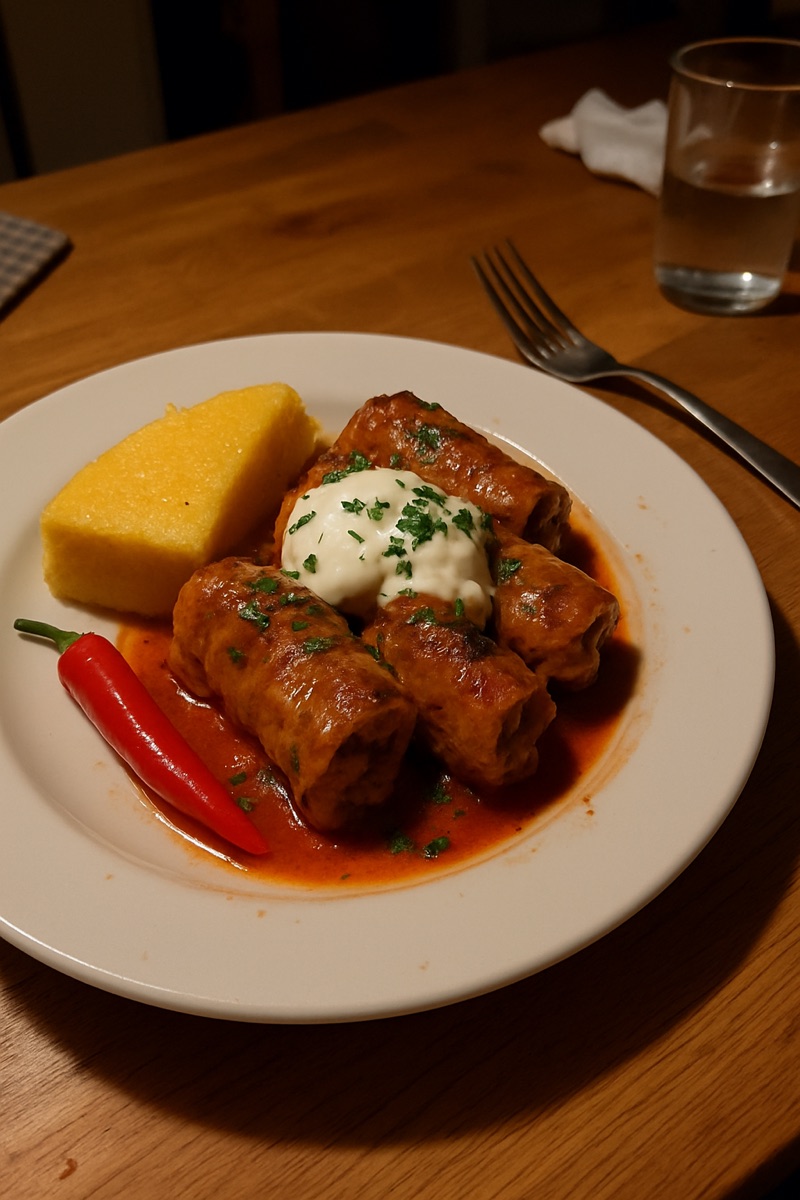
What Romanian food is built on
Romanian cooking grew from the pastoral life of the Carpathians and the farms of the plains. Pork is the main meat, followed by beef, mutton and fish, and cheese, called brânză, has been part of the diet since the beginning: telemea, a brined white cheese, and sheep's cheeses kneaded and packed in bark or skin. Maize, adopted after it reached Europe from the Americas, became the base of mămăligă, still the everyday side dish.
Centuries of contact left their mark. Ottoman cooking brought stuffed vegetables, meatballs and stews, Austria and Hungary brought schnitzel and pastries, and Greece brought moussaka.
The pig year is a ritual of its own. On 20 December, Ignat's Day, rural families traditionally slaughter a pig, and its meat becomes the Christmas food: garlicky cârnați sausages, tobă (head cheese), piftie (pork set in aspic) and tochitură. The Orthodox calendar matters too: fasting periods cover much of the year, so many dishes have a meatless version, while Christmas and Easter have their own menus.
Soups
A Romanian lunch usually starts with ciorbă, a soup soured with borș (fermented wheat bran), vinegar, lemon or unripe fruit. Two are on almost every menu:
- Ciorbă de burtă — Tripe soup enriched with sour cream, egg yolks and plenty of garlic, soured with vinegar or lemon. It takes a long time to prepare, and every region and family has its own recipe.
- Ciorbă de perișoare — Small meatballs of minced pork and rice simmered in a vegetable soup of onion, parsnip and celery soured with borș, then finished with parsley, dill and lovage. It is served with sour cream and hot peppers.
Main dishes
Pork, cornmeal and cabbage carry the main course, from everyday meals to holiday tables.
- Sarmale — Rolls of brine-pickled cabbage leaves stuffed with minced pork, rice and onion, layered with smoked pork and simmered for about three hours. They are the centrepiece of Christmas and Easter, and are served with mămăligă and sour cream.
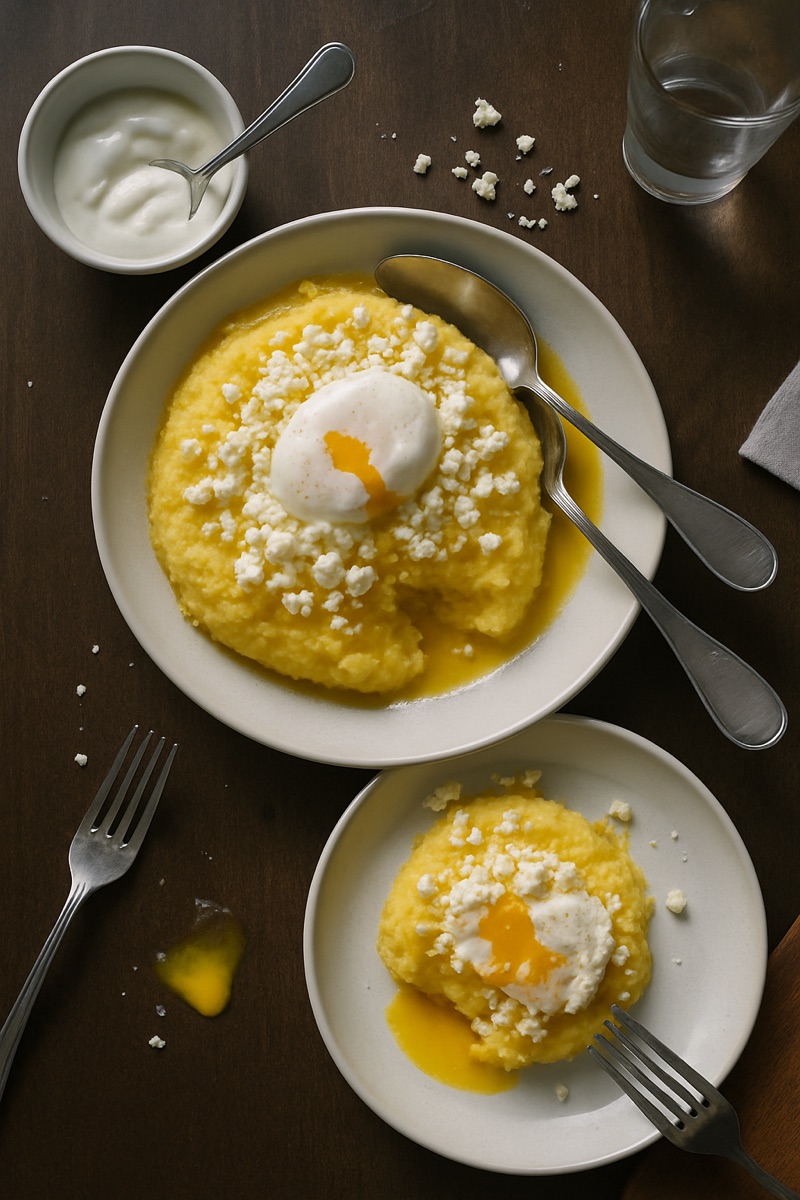
- Mămăligă — Cornmeal stirred into salted boiling water until firm enough to turn out onto a board and slice with a thread. It is eaten like bread with telemea and sour cream, or baked with cheese into bulz.
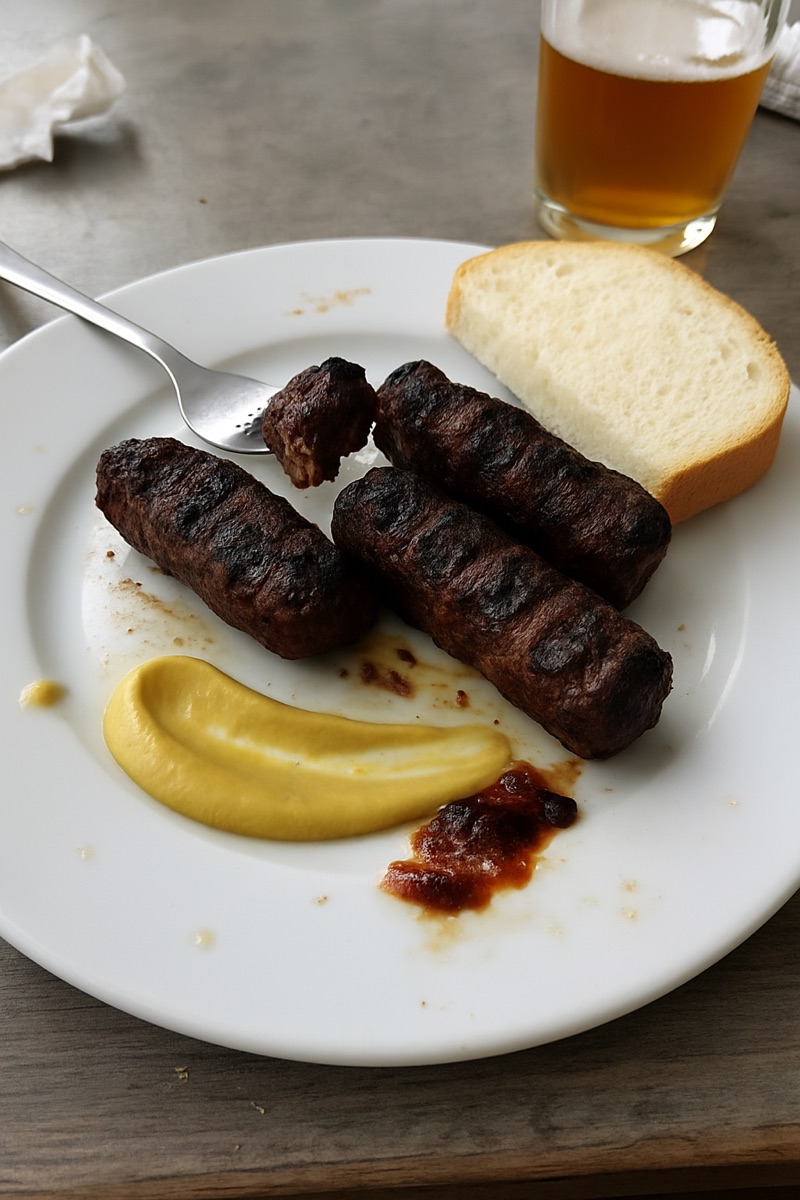
- Mici — Skinless grilled sausages of beef, lamb and pork with garlic, thyme and spices, made springy with broth and baking soda. They come with mustard, bread and pickles, and are the dish of every 1 May barbecue.
- Tochitură — Small cubes of pork cooked slowly in their own fat, often with smoked sausage and some offal, with or without a little tomato. It is served with mămăligă, a fried egg and salty sheep's cheese; Moldavia and Transylvania each have their own version.
- Drob de miel — The Easter lamb dish: chopped lamb offal mixed with green onions, dill, parsley, eggs and soaked bread, wrapped in the caul and baked like a meatloaf, often with whole boiled eggs inside.
Spreads, street food and sweets
Romanians make many cold spreads at home, and the bakery counter is just as busy:
- Salată de vinete — Aubergines roasted over a flame, peeled and chopped fine, then mixed with oil or mayonnaise, onion and salt. It is spread on bread as a starter.
- Zacuscă — A spread of roasted aubergine, roasted red peppers and onion cooked slowly with oil. Many families make it after the autumn harvest and store it in jars for the winter; similar spreads exist across the Balkans, such as ajvar.
- Covrigi — Ring-shaped breads similar to pretzels, topped with poppy seeds, sesame or coarse salt, sold as a snack on city streets. The city of Buzău is known for them.
- Papanași — Doughnuts of fresh cheese, eggs, semolina and flour, fried or boiled, then topped with sour cream and jam. They are a traditional dessert in both Romania and Moldova.
- Cozonac — A sweet yeast bread rich in eggs, milk and butter, rolled with walnuts, poppy seeds or rahat (Turkish delight). It is baked for Christmas and during Holy Week before Easter, and it was the sweet chosen to represent Romania in the EU's Café Europe initiative on Europe Day 2006.
- Țuică — Plum brandy, considered Romania's national drink. Romania is one of the world's largest plum growers, and much of the crop is distilled into țuică; the name is reserved for plum spirit, while brandies from other fruit are called rachiu.
Regional differences
Romanian cooking changes with its historical regions. Transylvania took influences from Hungarian cooking: smoked pig's feet or pork skin go into the pot between the sarmale, and Cluj has its layered varză a la Cluj. Moldavia, in the north-east, shares much with neighbouring Moldova, from its hen ciorbă to poale-n brâu, soft pastries filled with sweet cheese. Wallachia and Dobrogea took more from Turkish, Bulgarian and Greek cooking; Dobrogea drinks ayran and bakes plăcintă dobrogeană, a pastry protected as an EU geographical indication. In the Danube Delta, fish soup is traditionally made with water drawn straight from the river, and in Banat, near Serbia, grilled cevapcici are common.
Cook Romanian food at home
Sarmale, mămăligă and mici all compete for the title of national dish of Romania; our article sets out the case for each. Romanian food sits where Central Europe meets the Balkans; compare it with the traditional food of Moldova, which shares many of the same dishes.
Sarmale, mămăligă and mici each have a full recipe, with quantities and step-by-step methods, in the Copper app. You will find them on our page dedicated to Romanian recipes.
The recipes
 Mămăligă
 Mici
MiciQuestions people ask
What is the most popular food in Romania?
Sarmale, mămăligă and mici are the dishes most associated with Romania, along with ciorbă soups such as ciorbă de burtă and ciorbă de perișoare. Sarmale is the one most often called the national dish.
Is Romanian food spicy?
Not in the chili sense. Its sharp flavours come from sour soups, pickles and garlic, especially mujdei, a crushed garlic sauce. Hot peppers are served on the side with soups.
What do Romanians eat at Christmas and Easter?
At Christmas, pork dominates: sausages, tochitură and sarmale, followed by cozonac. At Easter the table turns to lamb, with lamb sour soup, roast lamb and drob, plus cozonac and pască, a sweet cheese pie.
What is the national drink of Romania?
Țuică, a plum brandy, is considered Romania's national drink. Pălincă, a stronger double-distilled fruit brandy, is made in Transylvania.
Is Romanian food vegetarian-friendly?
More than it looks. Orthodox fasting periods cover much of the year and exclude animal products, so meatless versions of sarmale, stews and spreads such as zacuscă and salată de vinete are widely available.
Keep reading
- What is the national dish of Romania?
- Traditional food of Albania: 13 dishes to know
- Traditional food of Bosnia and Herzegovina: 13 dishes to know
- Traditional food of Bulgaria: 13 dishes to know
- Traditional food of Croatia: 13 dishes to know
- Traditional food of Greece: 13 dishes to know