 COPPER
Traditional food of Moldova: 12 dishes to know
Moldovan food is close to Romanian cooking, with Ukrainian, Russian and Ottoman touches. Cornmeal, cabbage, potatoes, pork, poultry, brânză sheep's cheese and sour cream are the base, soups are soured with fermented bran, and local wine comes with most meals. The most emblematic dishes are mămăligă, a firm cornmeal loaf, sarmale, zeamă chicken soup and plăcinte.
What Moldovan food is built on
Moldova sits on chernozem, black soil that grows grapes, fruit, vegetables and grain, and its food follows the farm year. Maize became mămăligă, cabbage became sarmale and sauerkraut, and milk became brânză, a brined cheese, and sour cream. Tomatoes, peppers, aubergines, beans, onions, garlic and leeks are eaten fresh in salads and sauces, or baked, salted, marinated and pickled.
Moldovans share a language and most of their recipes with Romania. The first cookbook in Romanian was written in 1841 in Iași, in the old Principality of Moldavia, by Costache Negruzzi and Mihail Kogălniceanu. Moldova's own history added Ukrainian, Russian and Greek influences on top of an Ottoman layer.
Pickling is a winter art. Markets sell sauerkraut, cucumbers and tomatoes, but also pickled apples and whole pickled watermelons, and no winter table is complete without them. Fresh herbs, especially lovage, dill, parsley and tarragon, and crushed garlic give the food its sharpness.
Mămăligă and the main dishes
Cornmeal sits at the centre of the plate, with pork and cabbage around it:
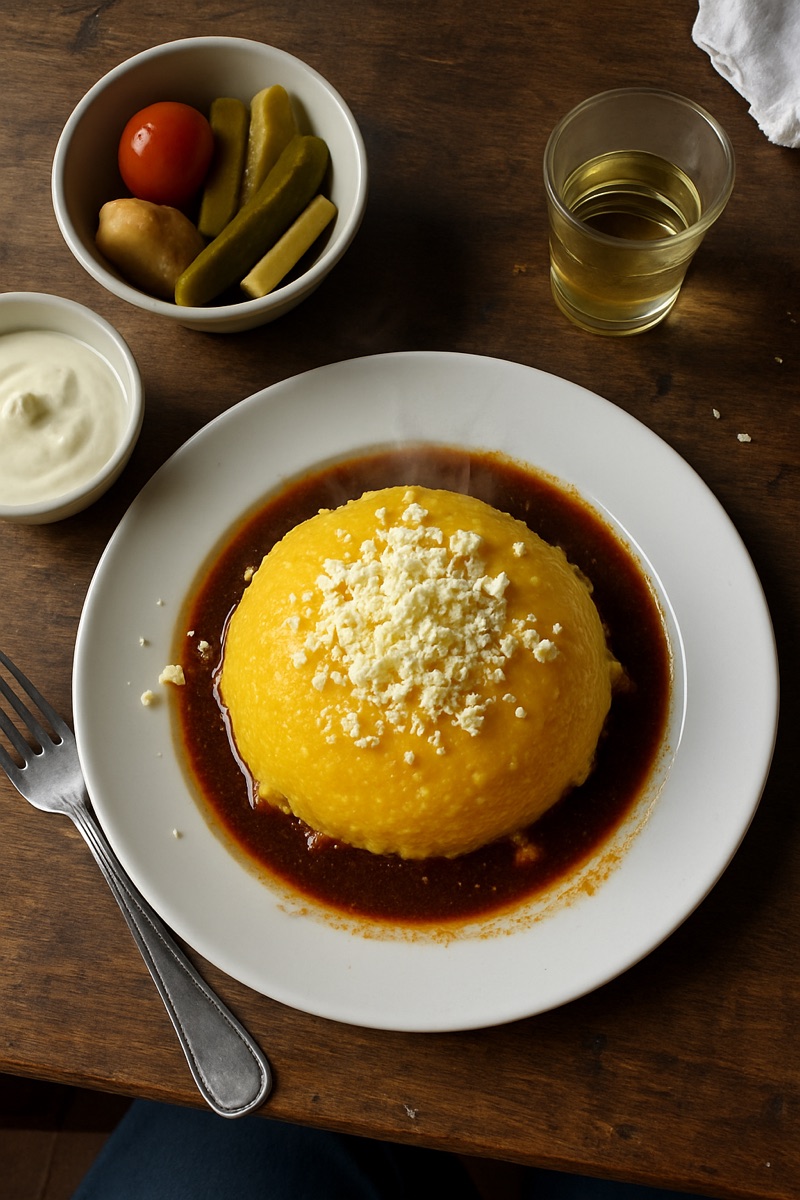
- Mămăligă — Coarse cornmeal boiled with water and salt in a cast-iron pot until firm enough to turn out in one piece and cut with a thread. It is eaten instead of bread, with brânză and sour cream, or alongside stews, fried fish and mujdei, a crushed garlic sauce. It is the dish most often cited as Moldova's national dish.
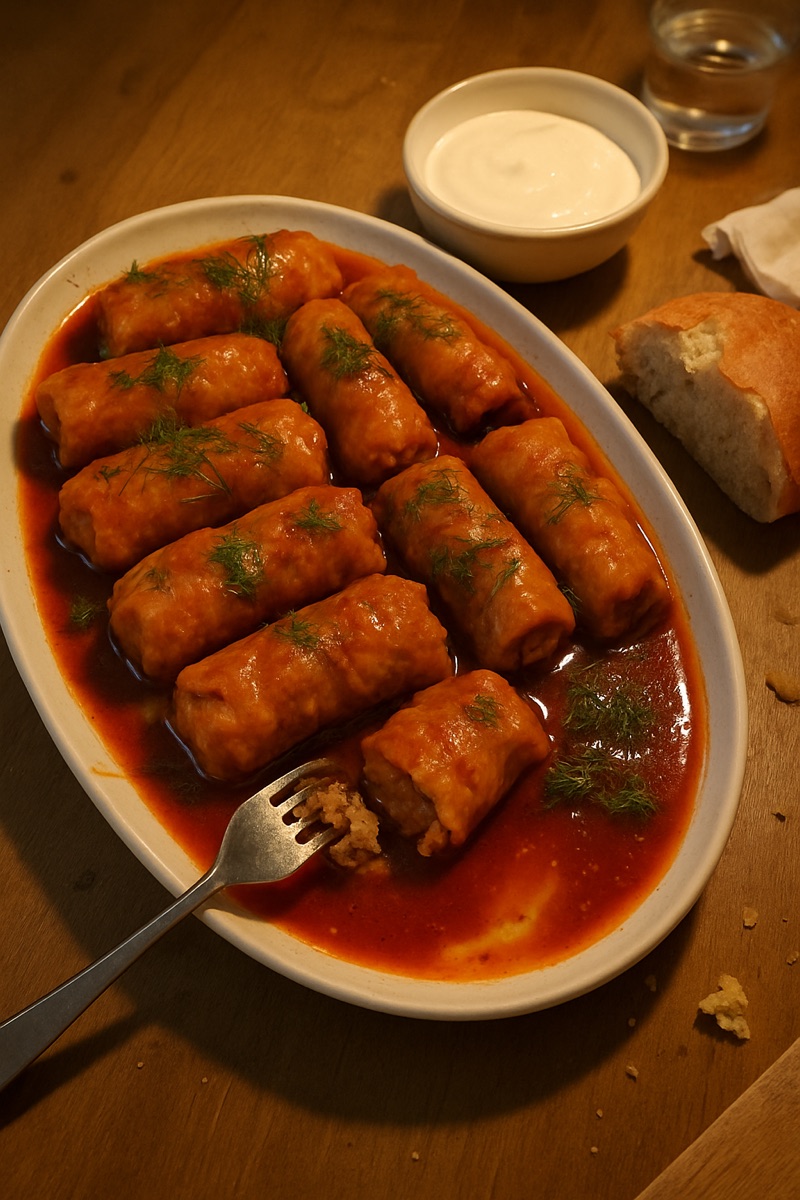
- Sarmale — Cabbage rolls on whole leaves of brine-soured cabbage, or vine leaves, filled with pork, beef and rice and simmered for hours, often in a clay pot. They are served hot with sour cream, and no Moldovan wedding is complete without them.
- Chiftele and pârjoale — Meatballs of beef, sometimes mixed with lamb. In Moldova meat is traditionally served as a starter or first course, and these meatballs are among the most common ways to eat it.
- Tochitură — Small pieces of pork cooked slowly in their own fat, served with mămăligă, a fried egg and brânză. Many cooks add smoked sausage and a little offal, and the Moldovan style has its own name, tochitură moldovenească.
- Răcitură — Pork, rooster, turkey or fish simmered for hours with the bones and cartilage, then set in bowls with the strained broth and crushed garlic and left to jell in the cold. Also called piftie, it is one of the cold starters of the holiday table.
Soups and dumplings
Soup is served before anything else at a Moldovan meal, and dumplings are a meal of their own:
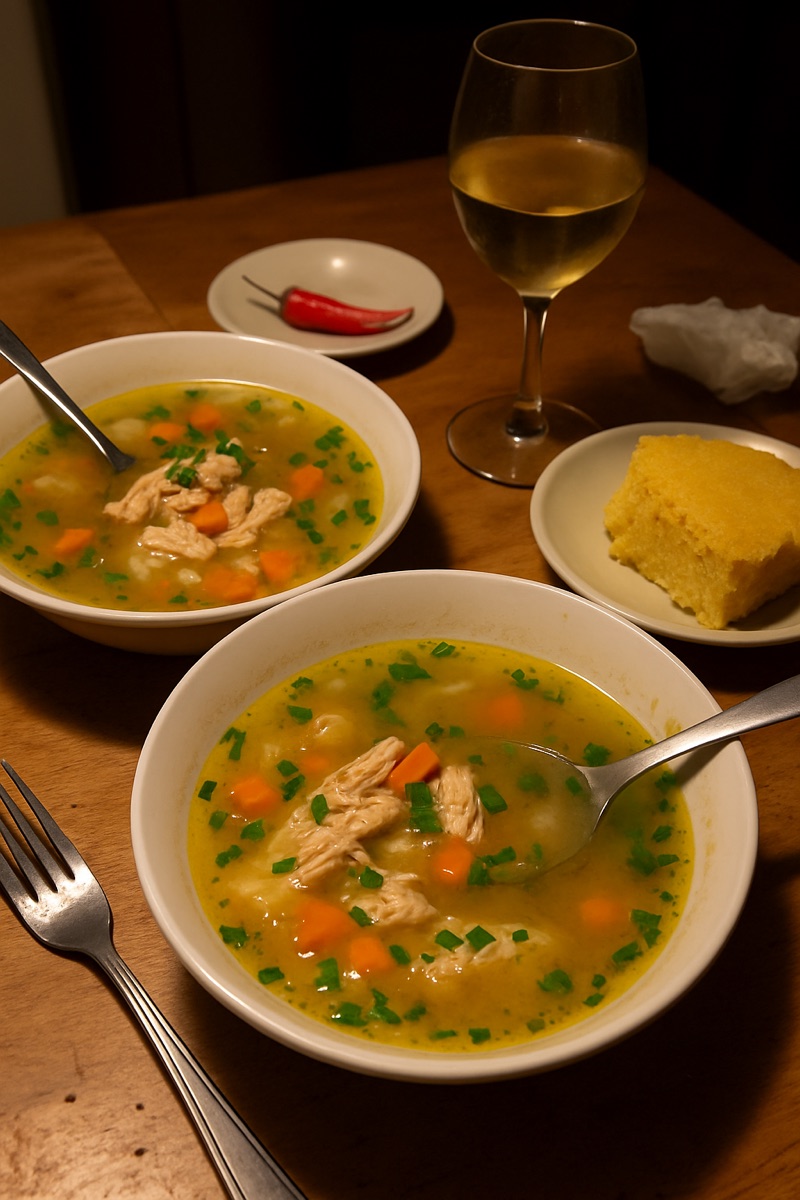
- Zeamă — Chicken soup with homemade egg noodles and lovage, soured at the end with borș, fermented wheat or barley bran. Almost every restaurant serves it, and by tradition it is eaten hot, with cream and chili peppers, at noon on the day after a wedding.
- Ciorbă — The general name for the family of sour soups: meat, vegetable or fish soups soured with borș or lemon juice. In the east of the country, Ukrainian families cook borscht.
- Colțunași — Large dumplings, each about a third of the size of a palm, filled with fresh white cheese, cabbage, potatoes, roasted onions or sour cherries. They are boiled and served with cream, and often a glass of wine.
Pies, sweets and wine
Moldovans take great pride in their baking, and most festive tables end with something from the oven:
- Plăcinte — Thin pastry pies, savoury with cow's cheese, cabbage, potatoes or greens, or sweet with apples, sour cherries, plums or pumpkin. There are dozens of kinds, and local tradition often decides which are served at a feast. In 2014 the Moldovan post office put plăcinte on a stamp, alongside zeamă, mămăligă and mujdei.
- Papanași — Doughnuts of fresh cheese, eggs and semolina or flour, fried or boiled, then topped with sour cream and jam or sour cherries. They are a traditional dessert in both Moldova and Romania.
- Cozonac — A sweet yeast bread rolled with walnuts, poppy seeds or raisins and baked for the holidays, alongside pască, an Easter cheese bread. It is considered a traditional food in Moldova, Romania, Bulgaria and North Macedonia.
- Wine — Moldova is Europe's 11th largest wine producer, with about 2 million hectolitres a year (2018), and families also make wine at home from village vines. Mileștii Mici holds the world's largest wine collection according to Guinness World Records, about 1.5 million bottles, and Cricova is known for its sparkling wines; divin is the local brandy.
Regional and minority kitchens
In some areas, the cooking of Moldova's minorities sets the menu. In the south, the Gagauz build their food on sheep's meat, sheep's cheese and homemade wine, and cook shorpa, a heavily seasoned mutton soup. The Bessarabian Bulgarians, also in the south, make mangea, chicken in a sauce. In the east, Ukrainian families cook borscht, and in Russian communities pelmeni, meat-filled dumplings, are common; Russian-influenced salads such as șuba are part of many New Year tables.
Cook Moldovan food at home
Mămăligă is the dish most often named as the national dish of Moldova; our article explains how it is cooked and why it is cut with a thread. Moldova belongs to the wider family of Eastern European kitchens; compare it with the traditional food of Romania, which shares most of the same dishes, and the traditional food of Ukraine.
Mămăligă, sarmale and zeamă each have a full recipe, with quantities and step-by-step methods, in the Copper app. You will find them on our page dedicated to Moldovan recipes.
The recipes
- Mămăligă🇲🇩 Moldova · 40 minutes
 Sarmale🇲🇩 Moldova · 15 hours and 30 minutes
 Zeama🇲🇩 Moldova · 2 hours and 45 minutes
Questions people ask
What is the most popular food in Moldova?
Mămăligă is the best-known Moldovan dish, followed by sarmale, zeamă chicken soup, colțunași dumplings and plăcinte pies. Mămăligă is the one most often called the national dish.
Is Moldovan food the same as Romanian food?
Very close. The two countries share a language and most recipes, from mămăligă to sarmale and papanași. Moldova adds Ukrainian and Russian influences and the dishes of its Gagauz and Bulgarian minorities.
Is Moldovan food spicy?
Not usually. Its sharp flavours come from sour soups, pickles and garlic, especially mujdei; hot chili peppers are served on the side, for example with zeamă.
What do Moldovans eat at Christmas and on holidays?
Holiday tables feature sarmale, pilaf, pork jelly (răcitură), noodles and chicken, with cozonac, pască, papanași and plăcinte among the baked goods.
What do people drink in Moldova?
Wine above all, plus divin brandy, țuică made from plums or apricots, and vișinată, made from sour cherries. Soft drinks include compot, kvas and socată, made from elderflowers.
Keep reading
- What is the national dish of Moldova?
- Traditional food of Belarus: 12 dishes to know
- Traditional food of the Czech Republic: 13 dishes to know
- Traditional food of Estonia: 13 dishes to know
- Traditional food of Hungary: 13 dishes to know
- Traditional food of Latvia: 12 dishes to know