 COPPER
What is the national dish of Moldova?
The national dish of Moldova is mămăligă: coarse cornmeal boiled with water and salt in a cast-iron pot until it sets into a firm yellow loaf, then turned out and cut with a thread. It is eaten instead of bread, with sheep's cheese and sour cream. Moldova has no official national dish, but mămăligă is the one most often cited.
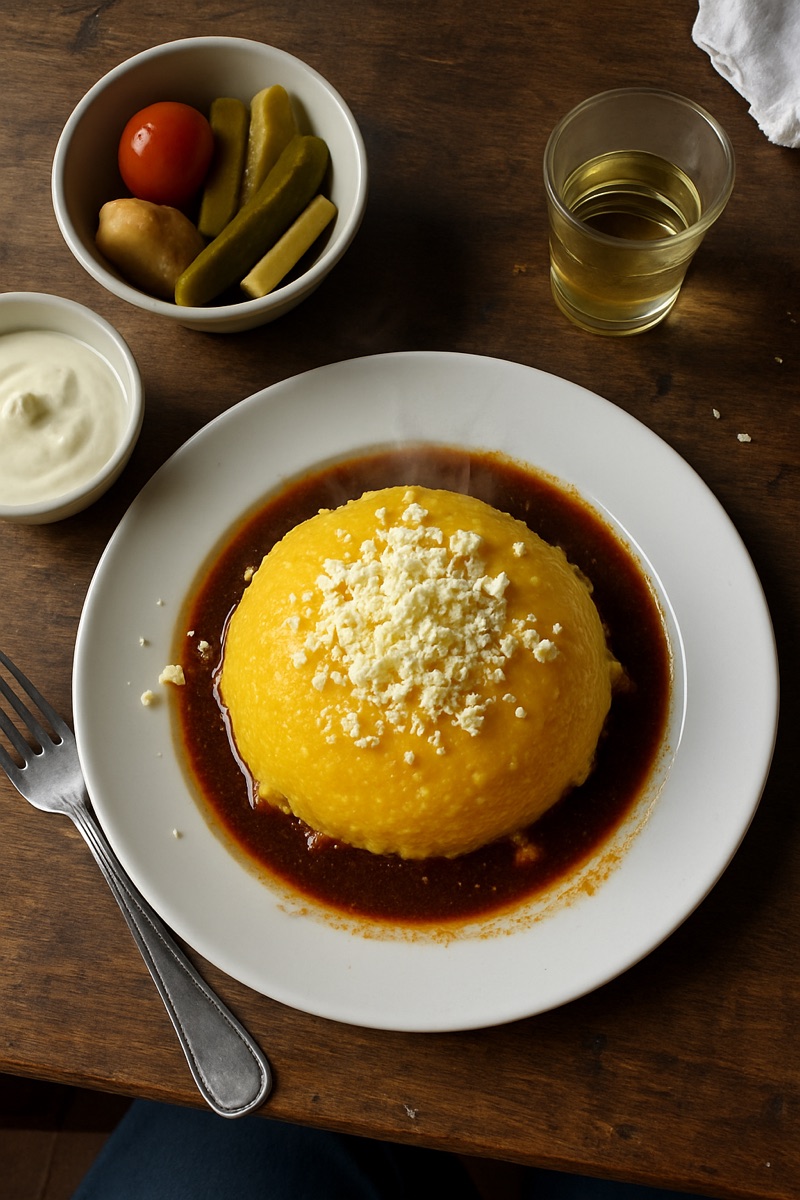
What is mămăligă?
Mămăligă is a cornmeal dish made from just three things: coarse yellow cornmeal, water and salt. Cooked the peasant way, as a bread substitute, it is much thicker than Italian polenta, stiff enough to be turned out of the pot in one piece and cut into slices.
It sits at the centre of the Moldovan table. It is served alongside stews and meat, or on its own with brânză, a brined sheep's milk cheese, and cold sour cream. Wikipedia's article on Moldovan cuisine calls it perhaps the best-known Moldovan dish, and the Romanian-language article goes further: the most famous dish of Moldovan cuisine.
How mămăligă is made
The traditional pot is a ceaun, a round-bottomed cast-iron pot. The method in our mămăligă recipe follows it step by step:
- Bring 1 litre of water with 1 tsp of salt to the boil.
- Rain in 300 g of coarse cornmeal in a thin stream, stirring with a wooden stick so no lumps form.
- Cook 25 to 30 minutes over low heat, scraping the sides, until a spoon stands up in the paste.
- Stop when the whole mass pulls away from the pot in one ball.
- Turn the pot over onto a wooden board and let the loaf rest 2 minutes.
- Cut it into thick slabs with a length of sewing thread or fishing line.
Why mămăligă is cut with a thread
Firm mămăligă sticks to metal. A knife drags through it and tears the slab, so Moldovans pull a piece of thread through the loaf instead. The slices can then be held in the hand and eaten like bread.
The classic plate is mămăligă cu brânză și smântână: a slab of hot cornmeal, about 150 g of crumbled sheep's cheese and 100 ml of cold sour cream. Other ways to eat it include crumbling it into a bowl of hot milk, or frying leftover slices in oil or lard. With pork or fried fish it often comes with mujdei, a garlic and oil sauce.
Why corn and not wheat bread?
Mămăligă was long the food of the countryside. Romanian-language sources describe it as a peasant food used in place of bread, especially in summer, when heavy work in the fields left no time to bake, and in poor rural areas. It cooks in half an hour in a single pot, with no oven and no yeast.
There was also a tax reason. According to the Romanian Wikipedia article on mămăligă, the Ottomans levied their tribute on wheat only, which left maize as the most filling crop a household could keep for itself. Today maize is one of the many grains grown on Moldova's black chernozem soil.
Where mămăligă comes from
The name is older than the corn. Before maize reached Europe in the 16th century, mămăligă was a porridge of millet flour. Maize spread through the Danube lands in the 17th century, and in Moldova it still has its own word, păpușoi. The cornmeal version then replaced the millet one and became a key food against the famines of the 17th and 18th centuries.
Mămăligă is shared with Romania, where it is just as central; the two countries speak the same language and have very similar cuisines. Read how it compares in our article on the national dish of Romania. Wikipedia's list of national dishes names mămăligă for Moldova, alongside ghiveci.
Other dishes to know from Moldova
Mămăligă rarely comes to the table alone. Its most common partner is sarmale, cabbage rolls made on whole leaves of brine-fermented cabbage. The filling of pork, beef and raw rice cooks for 2 to 3 hours in the cabbage's own brine with smoked bacon, and the rolls are best reheated the next day. They are a holiday dish, served with sour cream and soft cornmeal.
Zeama is the everyday soup: a whole chicken simmered for two hours, homemade egg noodles, then borș, a fermented wheat or barley liquid, poured in at the end to sour the broth. Lovage, parsley and dill go in off the heat.
Beyond those three, the Moldovan table also features colțunași, dumplings filled with fresh white cheese, meat or cherries; chiftele and pârjoale, beef meatballs; and plăcinte, filled pastries baked for holidays.
You will find all three recipes, with ingredients and methods, on our page about the food of Moldova. For the wider family of cabbage rolls, sour soups and cornmeal, see our guide to Eastern European food.
The recipes
- Mămăligă🇲🇩 Moldova · 40 minutes
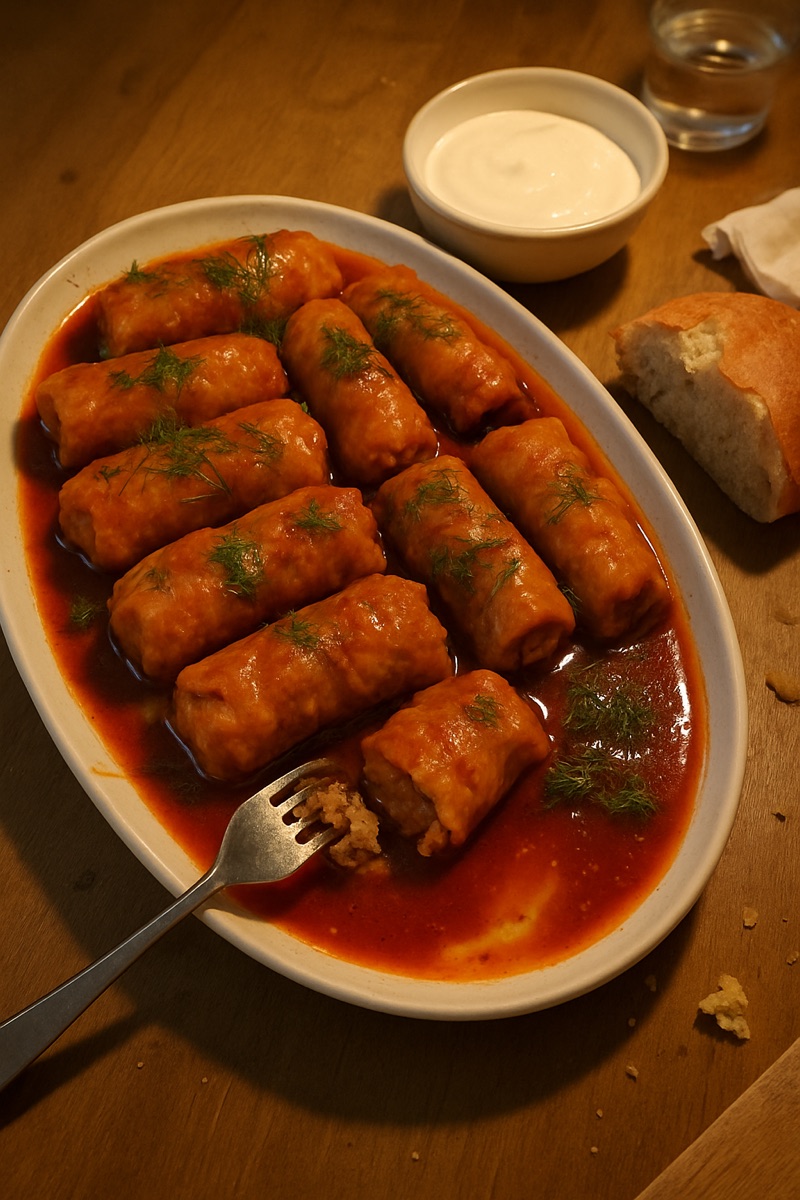 Sarmale🇲🇩 Moldova · 15 hours and 30 minutes
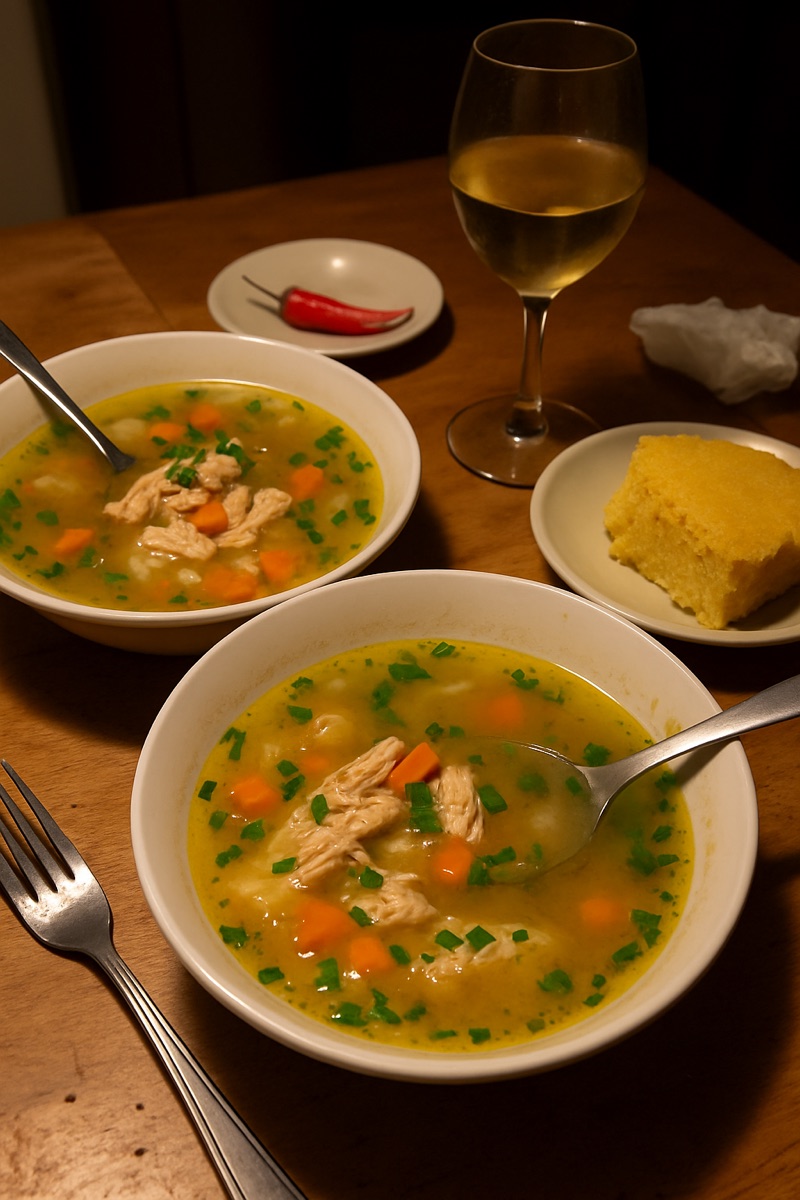 Zeama🇲🇩 Moldova · 2 hours and 45 minutes
Questions people ask
Is mămăligă the same as polenta?
Both are cooked cornmeal, but the everyday Moldovan mămăligă is cooked much thicker, firm enough to be turned out whole and sliced like bread. Softer versions closer to porridge also exist.
Is mămăligă Moldovan or Romanian?
Both. It is traditional in Moldova and Romania, which share a language and most of their cuisine, and similar dishes exist in Hungary, Ukraine and the Balkans.
What is mămăligă served with?
Most often with brânză (sheep's cheese) and sour cream, or alongside stews, sarmale, pork or fried fish with mujdei garlic sauce.
How do you pronounce mămăligă?
Roughly "muh-muh-LEE-guh", with the stress on the third syllable (IPA [məməˈliɡə]).
Does Moldova have an official national dish?
No. There is no law or decree naming one, but mămăligă is the dish most often cited as Moldova's national dish.
Keep reading
- Traditional food of Moldova: 12 dishes to know
- What is the national dish of Belarus?
- What is the national dish of the Czech Republic?
- What is the national dish of Estonia?
- What is the national dish of Hungary?
- What is the national dish of Latvia?