 COPPER
Traditional food of China: 13 dishes to know
Chinese food rests on rice in the south and wheat in the north, cooked by stir-frying in a wok, steaming and braising, and seasoned with soy sauce, vinegar, ginger and spring onion. Its regional cuisines differ widely. The most emblematic dishes are Peking duck, jiaozi dumplings, Cantonese dim sum and Sichuan mapo tofu.
What Chinese food is built on
The first divide in Chinese food is the staple. In the wheat-growing north, people rely on flour: noodles, flatbreads, steamed buns and dumplings. In the rice-growing south, a bowl of rice anchors almost every meal. On top of that base come vegetables, pork, poultry, fish and tofu, cut small so they cook fast.
The core techniques are stir-frying over high heat in a wok, steaming in bamboo baskets, braising and roasting. Soy sauce, rice vinegar, rice wine, ginger, garlic and spring onion season most dishes, and meals are shared from common plates. Tea goes with food throughout the day, from breakfast to dim sum, while baijiu, a strong grain spirit, accounts for almost all the alcohol drunk in China.
Northern China: duck, dumplings and noodles
- Peking duck — A Beijing roast duck prepared since the imperial era and fully developed under the late Ming dynasty: air is pumped under the skin, the bird is scalded, hung to dry, then roasted until the skin turns thin and crisp. It is carved at the table and eaten wrapped in thin pancakes with spring onion, cucumber and sweet bean sauce.
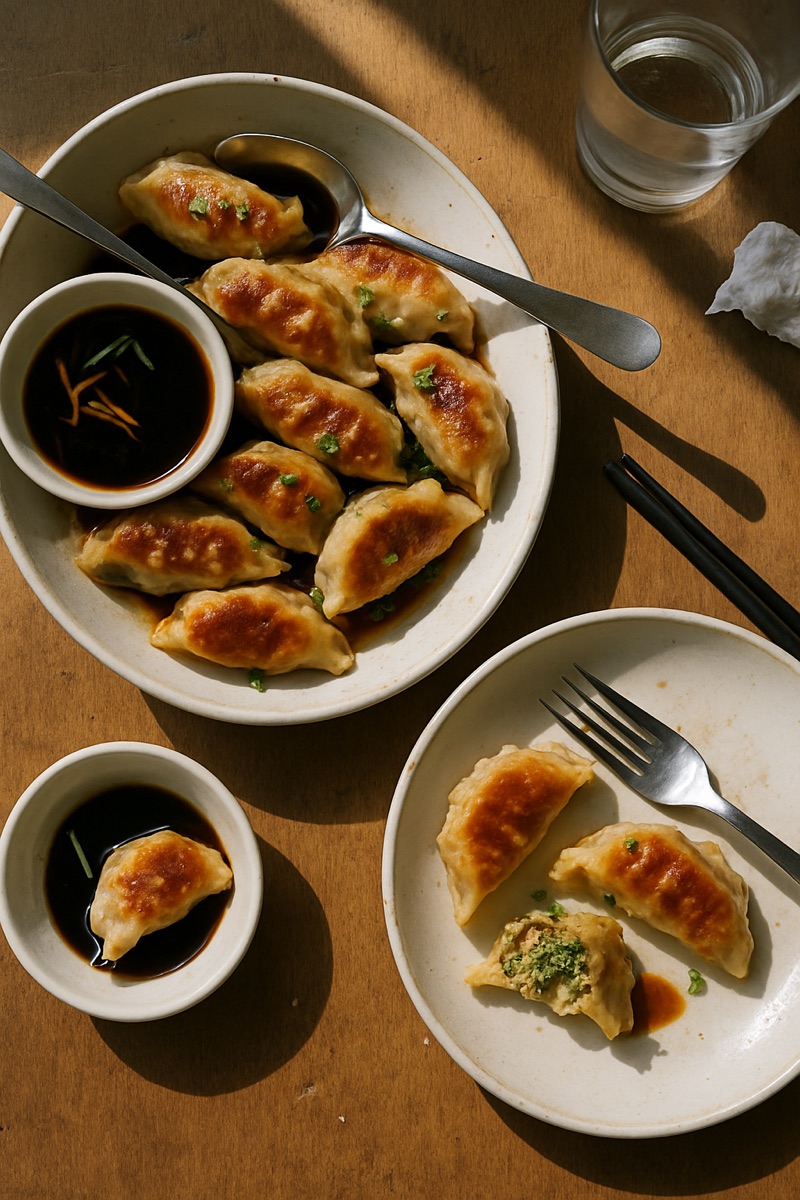
- Jiaozi dumplings — Crescent-shaped dumplings of thin wheat dough around a filling of pork or other meat with cabbage, leek or other vegetables. They are boiled, steamed or pan-fried, eaten all year in the north, and many families make and eat them at midnight on Chinese New Year's Eve. Some cooks hide a coin in one for luck.
- Baozi — Soft steamed buns of leavened wheat dough filled with pork, vegetables or sweet bean paste. They are a standard breakfast and street snack, sold straight from the steamer.
- Lanzhou beef noodles — From Lanzhou in Gansu province, a dish of the Muslim Hui people: hand-pulled noodles in a clear beef broth with white radish, red chilli oil and green coriander. The broth contains no soy sauce, which keeps it clear. In 2021 the skill of making it was added to China's national intangible cultural heritage list.
Southern China: dim sum, roasts and rice
- Dim sum — The small dishes of Cantonese cuisine, eaten at yum cha, the custom of drinking tea with food, for breakfast or lunch but traditionally never for dinner. Dishes are often wheeled through the dining room on steam carts, and diners tap two fingers on the table to thank whoever pours their tea. Classics include har gow shrimp dumplings, siu mai pork and shrimp dumplings, and char siu bao.
- Char siu — Cantonese barbecued pork whose name means fork roasted. Pork, usually shoulder, is marinated with hoisin, soy sauce, rice wine, five-spice and honey or maltose for a shiny glaze, then roasted. Its red colour traditionally came from red fermented bean curd. It is eaten sliced over rice or noodles and used as a filling in dim sum buns.
- Xiaolongbao — Small soup dumplings associated with Shanghai. Solid meat aspic is wrapped with the pork filling; steaming in bamboo baskets melts it into broth inside the dumpling, which is why they are bitten carefully. They descend from the soup-filled dumplings of Kaifeng under the Northern Song dynasty.
- Congee — Rice simmered in plenty of water until it breaks down into a smooth porridge, eaten mostly at breakfast. It is served plain with pickles or cooked with fish, pork or preserved egg, and is also the classic food for someone who is unwell.
Sichuan: heat and numbness
Sichuan cooking is known for mala, the pairing of chilli heat (la) with the numbing tingle (ma) of Sichuan peppercorn.
- Mapo tofu — Soft tofu simmered with minced meat in a red sauce of doubanjiang, fermented chilli bean paste, and chilli oil, finished with ground roasted Sichuan peppercorn. It is eaten over plain rice.
- Kung pao chicken — Diced chicken stir-fried with dried chillies, Sichuan peppercorns and peanuts, glazed with a sweet and sour sauce based on black vinegar. It is a Sichuan classic now cooked across China.
- Hot pot — A simmering pot of broth set in the middle of the table, where diners cook thinly sliced meat, vegetables and tofu themselves, then dip them in sauce. The Chongqing and Sichuan style uses a fiery mala broth; the northern style, such as Beijing mutton hot pot, uses a plain broth. It is especially popular in winter.
Festival foods
- Zongzi — Glutinous rice wrapped in bamboo leaves around a filling, then steamed or boiled for hours. They are eaten for the Dragon Boat Festival, on the fifth day of the fifth lunar month; northern versions tend to be sweet with bean paste or jujubes, southern ones savoury with pork belly. Popular legend links them to the poet Qu Yuan.
- Mooncakes — Round pastries with a thin crust stamped with a pattern, filled with dense lotus seed or red bean paste, sometimes around a salted egg yolk. They are given and shared for the Mid-Autumn Festival.
The eight great cuisines and where to cook them
A widely used classification divides Chinese food into eight great cuisines: Anhui, Cantonese (Guangdong), Fujian, Hunan, Jiangsu, Shandong, Sichuan and Zhejiang. Cantonese food favours light seasoning and steaming, Sichuan and Hunan are the spiciest. Because of that variety China has no single national dish; we look at the candidates in our article on the national dish of China.
Jiaozi, mapo tofu and kung pao chicken are on Copper with step-by-step methods, from beating water into the dumpling filling to toasting the peppercorns. You will find them on our food of China page. For the dumplings and noodles of the steppe to the north, read the traditional food of Mongolia, and for rice noodles and herbs to the south, the traditional food of Vietnam.
For the neighbouring kitchens, see our guide to East Asian food.
The recipes
- Jiaozi dumplings🇨🇳 China · 1 hour and 45 minutes
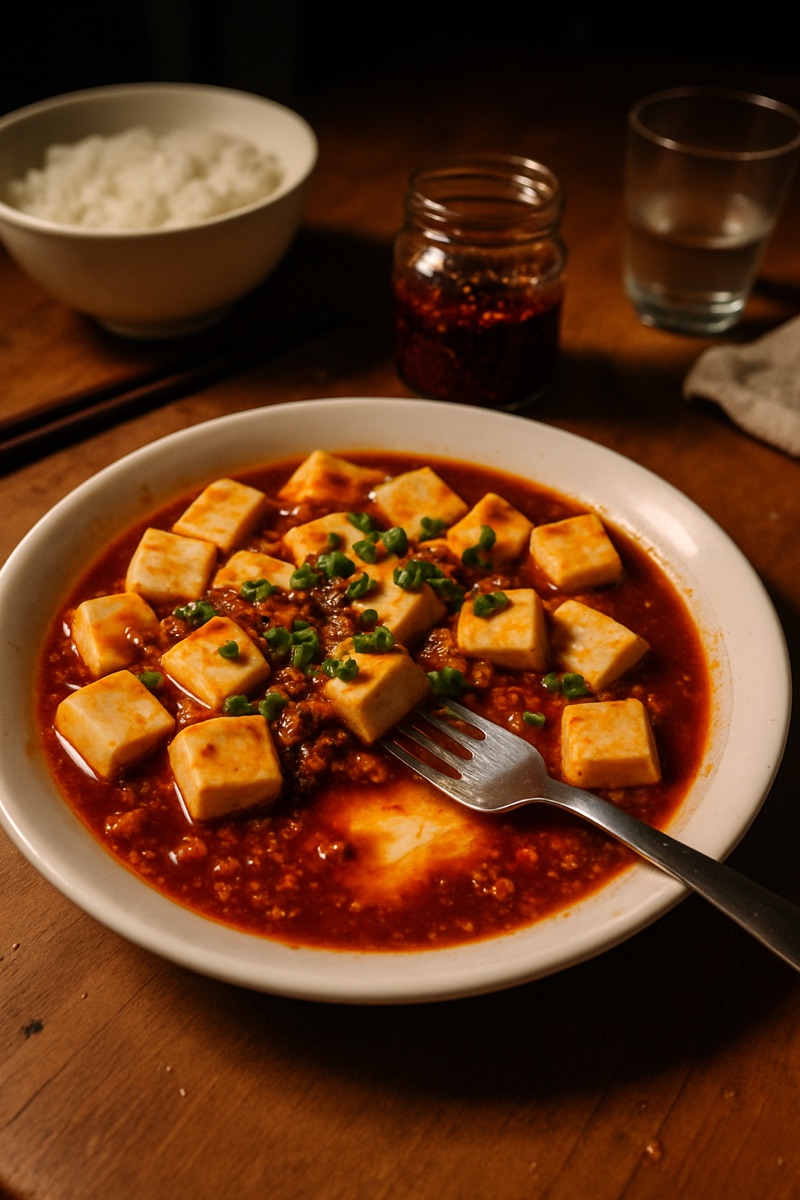 Mapo tofu🇨🇳 China · 30 minutes
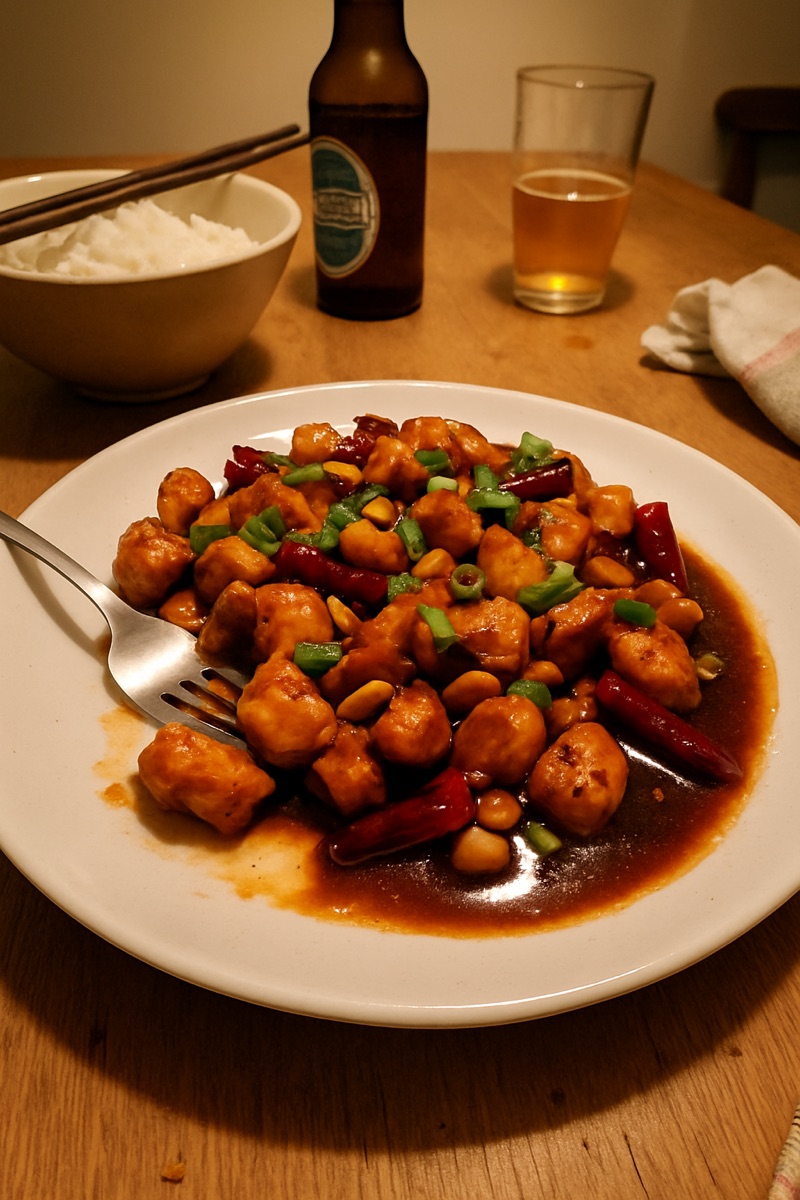 Kung pao chicken🇨🇳 China · 35 minutes
Questions people ask
What is the most popular food in China?
There is no single answer, since regional cuisines differ so much. Peking duck is the dish most associated with China abroad, while jiaozi dumplings, noodles and rice dishes are what most people eat every day.
What do people in China eat for breakfast?
Breakfast is often savoury: congee with pickles, steamed baozi, dumplings, noodle soup or fried dough sticks with soy milk, depending on the region.
Is Chinese food spicy?
It depends on the region. Sichuan and Hunan cooking is hot, with chillies and numbing Sichuan peppercorn, while Cantonese food is mild and lightly seasoned.
What are the eight great cuisines of China?
Anhui, Cantonese, Fujian, Hunan, Jiangsu, Shandong, Sichuan and Zhejiang. The classification dates from 1980 and grew out of the older four great traditions.
What do Chinese people eat at New Year?
Jiaozi dumplings are central in northern China, where many families eat them at midnight on New Year's Eve. Fish is also a fixture of the New Year's Eve reunion dinner.
Keep reading
- What is the national dish of China?
- Traditional food of Japan: 14 dishes to know
- Traditional food of North Korea: 13 dishes to know
- Traditional food of South Korea: 14 dishes to know
- Traditional food of Taiwan: 14 dishes to know
- What is the national dish of Japan?