 COPPER
Traditional food of North Korea: 13 dishes to know
Traditional North Korean food shares its roots with the whole Korean peninsula: rice, kimchi and side dishes (panch'an), with noodles, soups and grilled meat. It is generally less spicy than South Korean cooking, with a tang that balances hot, sour and sweet. The dishes to know first are Pyongyang raengmyŏn, kimchi, pibimpap and pindae-ttŏk.
What North Korean food is built on
North Korean cuisine grew from the same agricultural and nomadic traditions of southern Manchuria and the Korean peninsula as the cooking of the South. Short-grain rice and kimchi are the staples. A traditional meal sets rice and kimchi next to panch'an, small side dishes that are spicy, salty or tangy and often fermented, around a main course of porridge (chuk), grilled meat (pulgogi) or noodles (myŏn).
The flavour differs from the South. North Korean dishes are described as less spicy and more varied in composition, with a tanginess that comes from the interplay of hot, sour and sweet. Tofu, corn, potatoes and porridge are everyday staples, pork is the most common meat, and seafood such as Alaska pollock, cod, clams and octopus is a staple too.
What people actually eat depends heavily on class and income. Upscale restaurants in Pyongyang are priced far beyond average wages, while market stalls sell cheap snacks such as tofu bap, born in the famine years of the 1990s. Many dishes from the North were carried south by families who fled during the Korean War and became staples there too.
Noodles and rice dishes
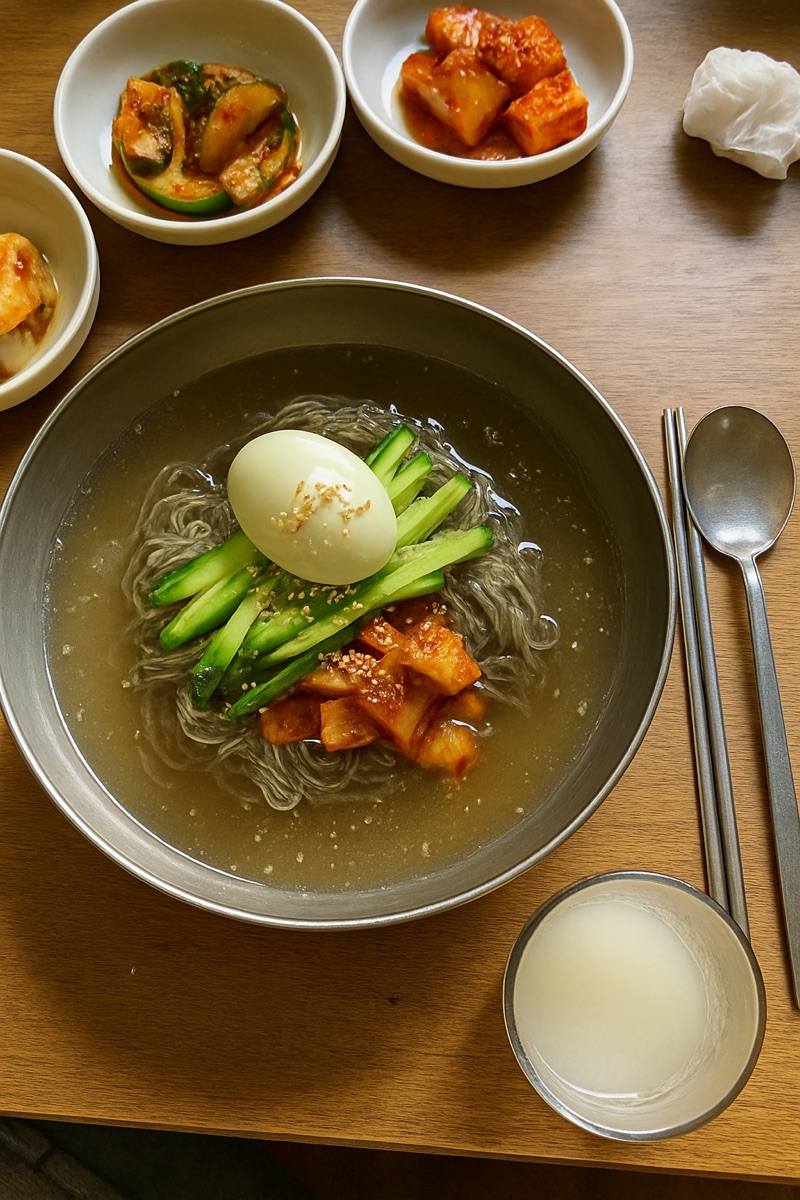
- Pyongyang raengmyŏn — Thin, chewy buckwheat noodles in a cold beef, pheasant or dongchimi (radish water kimchi) broth, topped with meat, egg, pickled radish and a slice of Korean pear, with vinegar and mustard on the side. Its custom was inscribed by UNESCO in 2022, and it is the dish most often named as the national dish of North Korea.
- Hamhung naengmyeon — The other famous cold noodle, from Hamhung on the east coast. Its noodles are made from potato or sweet potato starch, which makes them chewier, and they are served without broth, mixed with koch'ujang and topped with marinated raw fish, usually skate.
- Pibimpap — White rice topped with separately seasoned vegetables and other ingredients, mixed at the table; the hot stone pot version is called tolsot pibimpap. Haeju, in Hwanghae province, has its own well-known style.
- Pyongyang onban — Warm rice of Pyongyang: freshly cooked rice topped with sliced mushrooms, chicken and a couple of pindae-ttŏk, mung bean pancakes. It is one of the city's signature dishes, the warm counterpart to its cold noodles.
Kimchi, soups and stews
- Kimchi — Fermented vegetables, above all napa cabbage and radish, eaten at almost every meal and relied on through winter, when fresh vegetables run out. Northern kimchi uses less salt and chilli, little or no salted seafood, and is often watery. North Korea's kimchi-making tradition was inscribed by UNESCO in 2015.
- Sundubu jjigae — A stew of uncurdled soft tofu boiled in chilli oil made by blooming red pepper flakes in pork fat, with an egg cracked in at the table. Tofu is a staple food in North Korea, eaten at home and on the street.
- Taedonggang sungeoguk — A soup of flathead grey mullet from the Taedong River, seasoned simply with black peppercorns and salt. It has long been served to guests in Pyongyang, and people returning from the city are greeted with the question: how was the mullet soup?
Dumplings, pancakes and street food
- Pindae-ttŏk — A fried pancake of ground mung beans with green onion and kimchi. It first appears, as binjatteok, in the Ŭmsik timibang, a cookbook written in the 1670s, and was traditionally eaten in Hwanghae and Pyongan provinces in the northwest.
- P'yŏnsu — Square dumplings stuffed with vegetables, a speciality of Kaesong eaten mainly in summer. Mandu, Korean dumplings, take a different style in each region of the North, and Kaesong is the city most associated with them.
- Sundae — Intestines stuffed with pork blood, minced meat, rice and vegetables, then steamed; North Korean versions all use blood in the filling. Abai sundae from Hamgyong and Pyongan, and Kaesong sundae, are named regional styles. It is a popular street food on both sides of the border.
- Injo kogi bap — Artificial meat rice: a skin of injo kogi, made from leftover soybean paste, boiled, filled with rice and seasoned with chilli powder until sweet and spicy. It is one of the most popular street foods in North Korea.
- Tofu bap — Triangles of fried tofu slit open, stuffed with rice and topped with a seasoning sauce. It dates from the Arduous March, the famine of the 1990s, and is now a common street food.
Festival food
- Songpyeon — Rice cakes filled with sesame, red bean or chestnut, steamed and eaten at Chuseok, the autumn harvest festival, when they are offered to ancestors. The traditional songpyeon of Pyongan province is shaped like a seashell.
Regional cooking in North Korea
Pyongan province and its capital Pyongyang are known for raengmyŏn, onban and mullet soup. Hamgyong in the northeast is known for nongma guksu, potato starch noodles, and kajami sikhae, flounder fermented with grain, garlic, ginger and chilli; Hamgyong cooks also season kimchi with fresh fish and oysters. Ryanggang, high in the north, developed many potato dishes; Hwanghae is known for Haeju pibimpap; and Kaesong for its dumplings and pansangi, a meal laid out as rice, broth and many small side dishes.
To drink, North Koreans have soju, called nongtaegi and made from sweet potato or barley, makkŏlli rice wine in the countryside, beer from the Taedonggang brewery, and ginseng or jujube tea.
Cook North Korean food at home
Copper has Pyongyang-style naengmyeon, bibimbap and sundubu jjigae with ingredient lists and step-by-step methods. The techniques that matter: chill the beef broth overnight and lift off the fat before mixing it with dongchimi brine; rinse the buckwheat noodles under cold water until they squeak; and season each vegetable separately before it goes on the rice. You will find them on our page about the food of North Korea.
North Korean cooking belongs to the wider East Asian kitchen. For the southern side of the same tradition, see the traditional food of South Korea, and for the neighbour across the Yalu River, the traditional food of China.
The recipes
- Naengmyeon🇰🇵 North Korea · 14 hours and 50 minutes
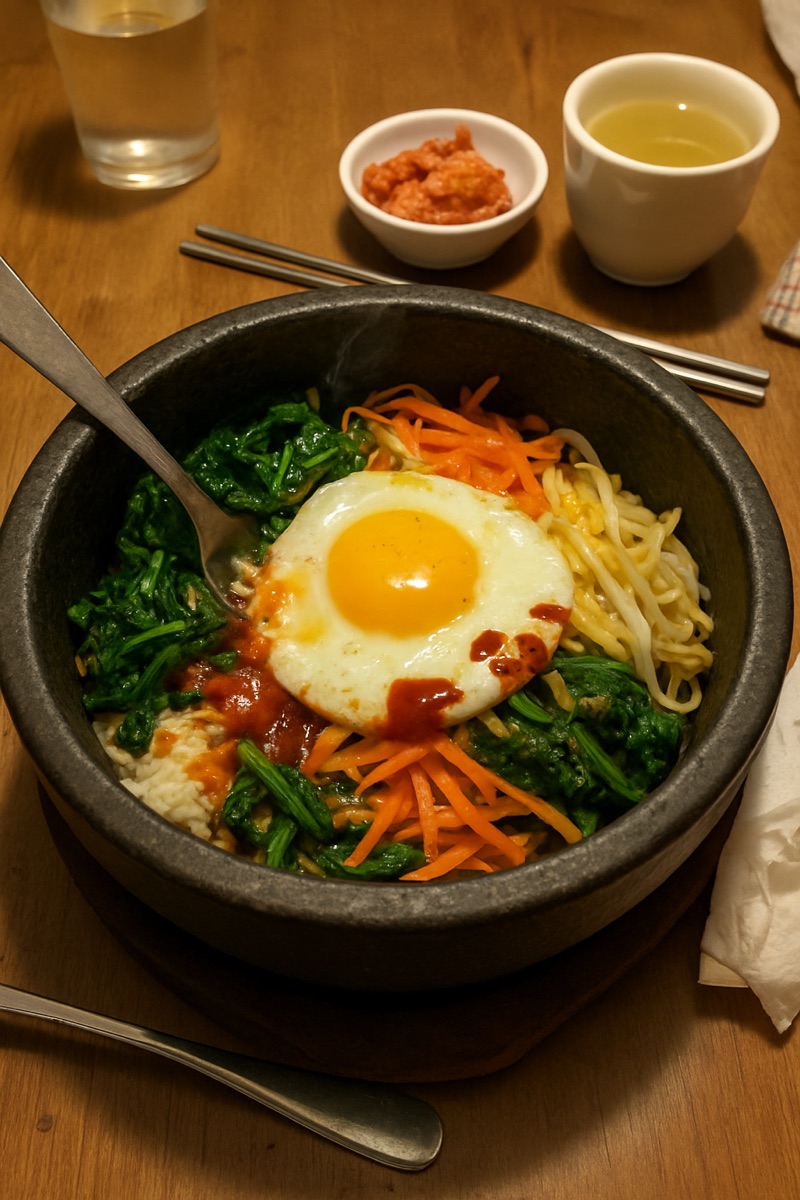 Bibimbap🇰🇵 North Korea · 1 hour
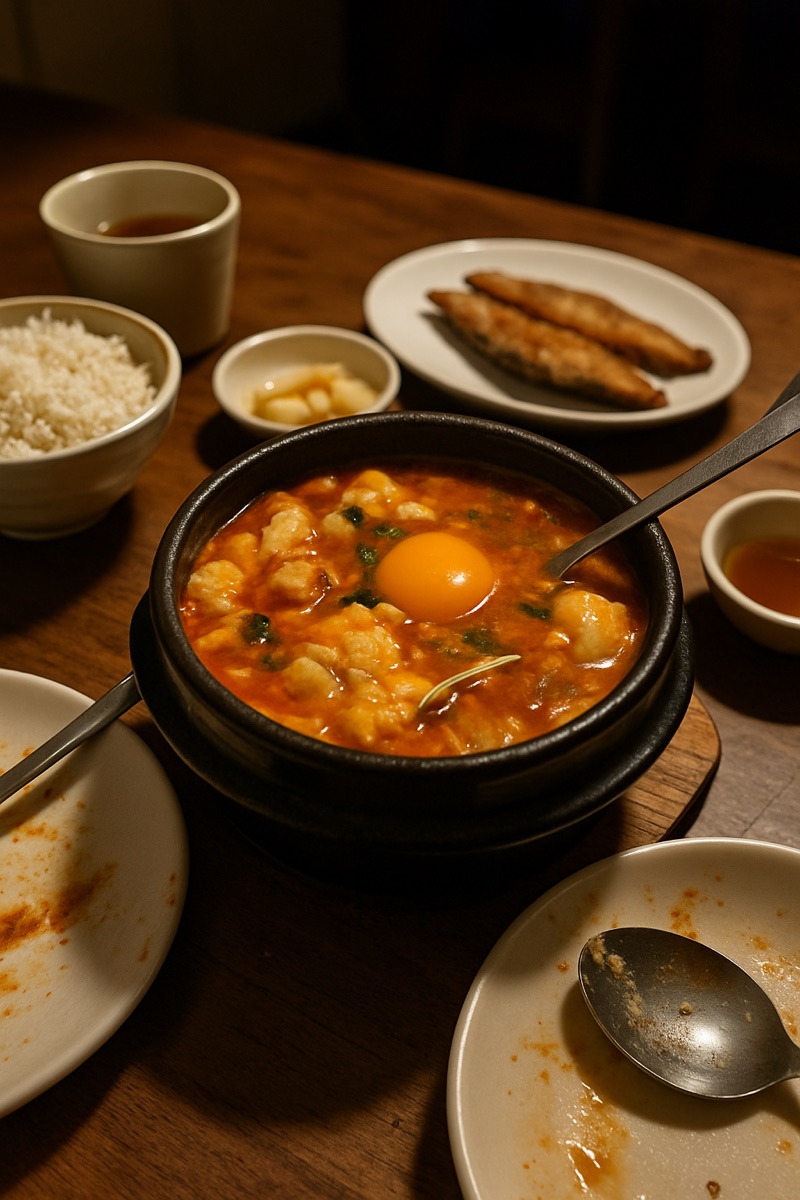 Sundubu jjigae🇰🇵 North Korea · 20 minutes
Questions people ask
What is the most popular food in North Korea?
Raengmyŏn, cold buckwheat noodles, is the most popular dish that originates in North Korea, and its Pyongyang version is on UNESCO's intangible heritage list. Kimchi accompanies almost every meal.
Is North Korean food spicy?
Less than South Korean food. North Korean kimchi is less spicy and less red than the southern kind, and northern dishes lean on a balance of hot, sour and sweet rather than strong chilli heat.
What is the difference between North and South Korean food?
They share most dishes and the same base of rice, kimchi and side dishes. Northern cooking uses less chilli, salt and salted seafood, its noodle tradition is centred on Pyongyang and Hamhung, and it has newer street foods such as injo kogi bap and tofu bap born in the 1990s.
What do North Koreans eat every day?
Rice, often stretched with corn, potatoes or porridge, with kimchi and a few side dishes. Tofu is a staple, and pork is the most common meat.
What do people drink in North Korea?
Soju (nongtaegi), rice liquor, makkŏlli, local beers such as Taedonggang, and teas made from ginseng or jujube with pine nuts.
Keep reading
- What is the national dish of North Korea?
- Traditional food of China: 13 dishes to know
- Traditional food of Japan: 14 dishes to know
- Traditional food of South Korea: 14 dishes to know
- Traditional food of Taiwan: 14 dishes to know
- What is the national dish of China?