 COPPER
What is the national dish of North Korea?
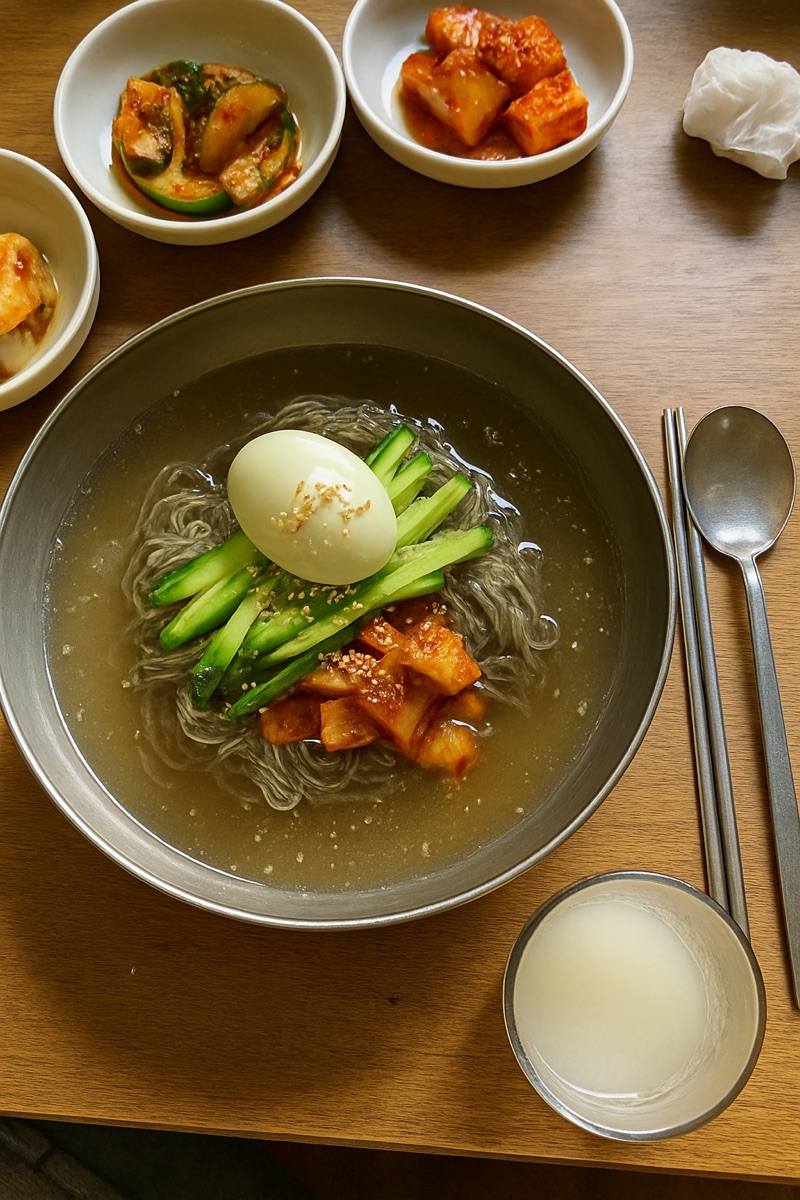
North Korea has no single official national dish, but raengmyŏn is the one most often named: long buckwheat noodles in an iced beef or radish-kimchi broth, served in a brass bowl with meat, egg, pickled radish and pear. Its Pyongyang version was added to UNESCO's intangible heritage list in 2022. Kimchi is the other dish commonly cited.
Raengmyŏn or kimchi?
Wikipedia's list of national dishes gives two answers for North Korea: raengmyŏn and kimchi. Neither has been declared the national dish by law, but both have been put forward by the country itself to UNESCO.
In 2015, "Tradition of kimchi-making in the Democratic People's Republic of Korea" was inscribed on UNESCO's Representative List of the Intangible Cultural Heritage of Humanity. In 2022 the "Pyongyang Raengmyon custom" followed. Kimchi, though, is shared with the whole Korean peninsula, while raengmyŏn is described by Wikipedia as the most popular dish that originates in North Korea, which is why it is the usual answer.
What is raengmyŏn?
Raengmyŏn is the North Korean spelling of naengmyeon, the name used in the South. Both mean cold noodles. The most famous version, P'yŏngyang raengmyŏn, is made mainly from buckwheat and served in a large, deep bowl.
UNESCO's description sets out the dish clearly: the noodles are served in a brass bowl, topped with meat, kimchi, vegetables, fruit and garnish, and finished with cool meat stock or the juice of dongchimi, a watery radish kimchi. Vinegar and mustard are brought to the table so that each diner can season their own bowl.
Pyongyang naengmyeon broth was traditionally made with beef or pheasant, and often mixed with dongchimi. On the South Korean side, Wikipedia notes that sugar is not added and beef broth is used exclusively, while in the North sugar may be added to taste along with the vinegar and mustard.
The other well-known style comes from Hamhung. It is a mixed, broth-less version with chewier noodles made from potato or sweet potato starch, often topped with raw marinated skate.
How Pyongyang cold noodles are made
Our naengmyeon recipe follows the Pyongyang style, with a clear beef broth cut with radish kimchi brine:
- Simmer 500 g of beef brisket in 2 litres of water for 1 hour 30 minutes, skimming as it goes, then press and slice the meat.
- Season the strained broth with salt, chill it overnight and lift off the set fat.
- Mix it with 400 ml of dongchimi brine: it should taste lightly tangy and clean, never sweet.
- Freeze it for an hour before serving so it turns slushy.
- Boil the buckwheat noodles for only 2 to 3 minutes, then rinse them hard under cold water until they squeak.
- Serve in chilled metal bowls, topped with beef, cucumber, pickled radish, Korean pear and half a boiled egg.
Where raengmyŏn comes from
Cold noodles were originally a speciality of northern Korea, especially of Pyongyang and Hamhung. The 19th-century text Dongguksesigi records them as a dish of the Joseon period, and they were historically eaten in winter rather than summer.
After the Korean War, families who moved south brought the dish with them, and naengmyeon became popular throughout Korea. It also crossed into politics: at the first summit between Kim Jong Un and Moon Jae-in, Kim presented Pyongyang-style raengmyŏn as a gift.
The noodles carry meaning too. Long noodles stand for a long life, which is why they were traditionally eaten without cutting. UNESCO notes that Pyongyang families gather to eat them the day before Jongwoldaeborum, a winter folk holiday, and serve them at birthdays and weddings.
UNESCO also describes how the skill is passed on. Within families, grandmothers and mothers teach it to their children and see it as a duty; outside the home, it is kept alive by training in Pyongyang raengmyŏn restaurants, cooking contests, festivals and exhibitions. Today the dish is no longer reserved for special occasions.
Other dishes to know from North Korea
North Korean kimchi is less spicy and less red than the southern kind, with less seafood and less salt, and a little sugar to help fermentation in the cold climate. It accompanies almost every meal and is relied on in winter, when fresh vegetables run out.
Bibimbap, written pibimpap in the North, is rice topped with separately seasoned vegetables, beef and a fried egg, mixed at the table. Sundubu jjigae is a soft tofu stew boiled in a chili oil made by blooming gochugaru in pork fat; tofu is a staple food in North Korea.
For the southern side of the same kitchen, see our guide to South Korea's national dish. You will find all three recipes on our page about the food of North Korea, and the wider picture in our guide to East Asian food.
The recipes
- Naengmyeon🇰🇵 North Korea · 14 hours and 50 minutes
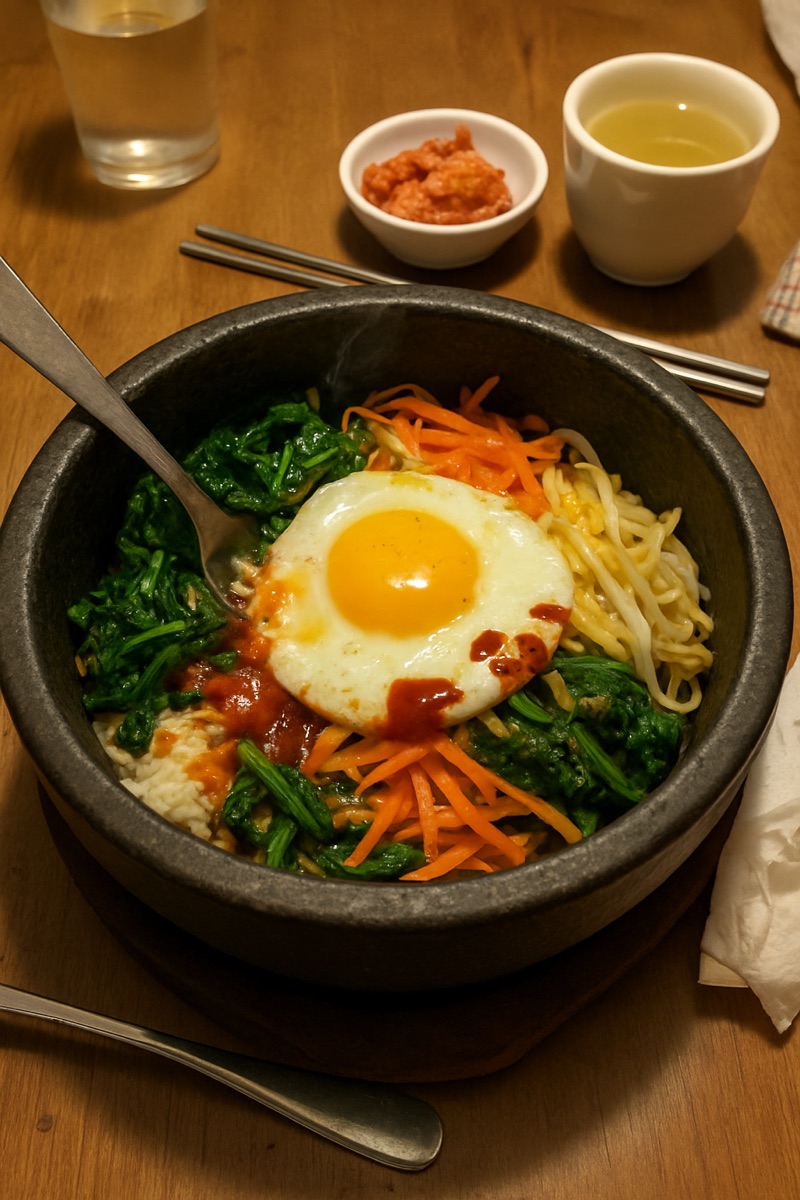 Bibimbap🇰🇵 North Korea · 1 hour
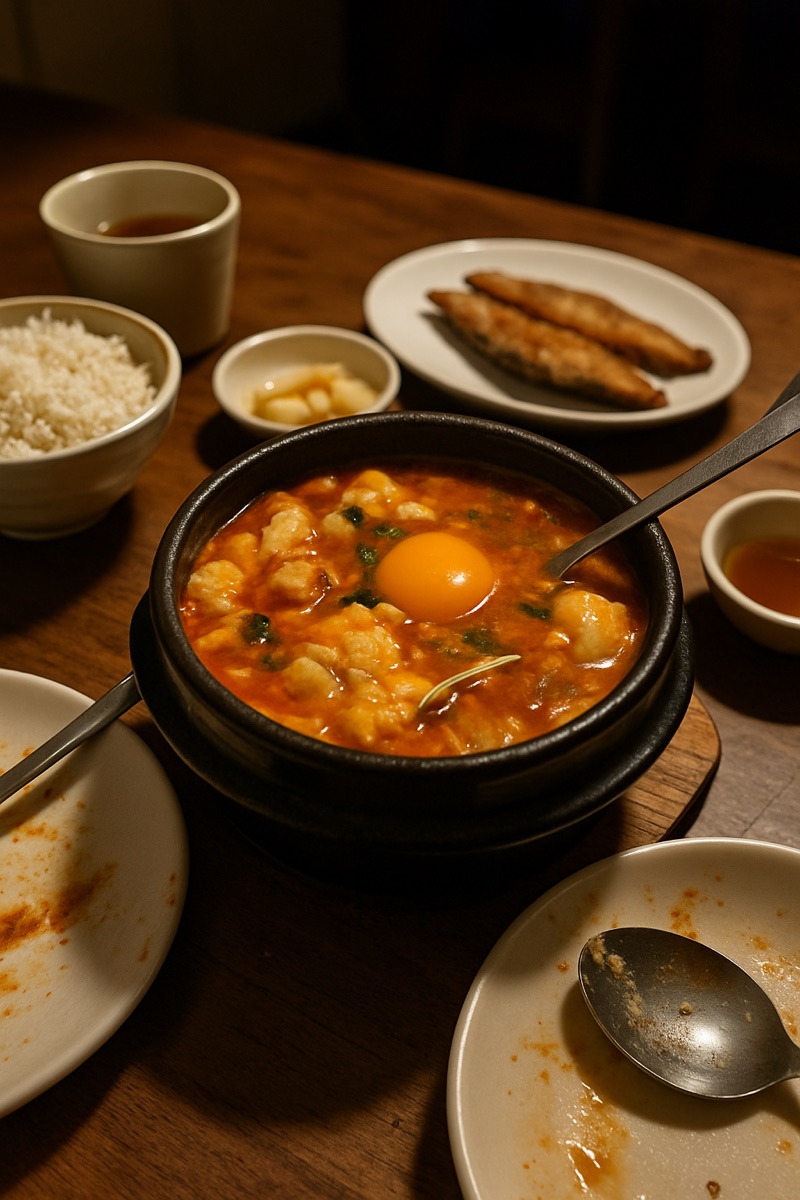 Sundubu jjigae🇰🇵 North Korea · 20 minutes
Questions people ask
Is naengmyeon North Korean or South Korean?
It originated in what is now North Korea, in Pyongyang and Hamhung, and spread across the peninsula after the Korean War. It is eaten in both Koreas today.
What is the difference between raengmyŏn and naengmyeon?
Only the spelling. Raengmyŏn is the North Korean form and naengmyeon the South Korean form of the same word for cold noodles.
Is Pyongyang raengmyŏn UNESCO heritage?
Yes. The "Pyongyang Raengmyon custom" was inscribed on UNESCO's Representative List of the Intangible Cultural Heritage of Humanity in 2022.
Why are naengmyeon noodles so long?
Long noodles symbolise a long life, so they were traditionally eaten uncut. Restaurants now often offer to cut them with scissors.
What is served with raengmyŏn?
Vinegar and mustard are added at the table to taste. The bowl itself is topped with sliced beef, egg, pickled radish, cucumber and pear.
Keep reading
- Traditional food of North Korea: 13 dishes to know
- What is the national dish of China?
- What is the national dish of Japan?
- What is the national dish of South Korea?
- What is the national dish of Taiwan?
- Traditional food of China: 13 dishes to know