 COPPER
What is the national dish of South Korea?
South Korea has no official national dish, but kimchi is the one most often named: vegetables, usually napa cabbage or Korean radish, seasoned with chili powder and salted seafood and left to ferment. It is served at nearly every Korean meal, and kimjang, the communal making of kimchi, has been on UNESCO's heritage list since 2013. Bulgogi and bibimbap are the usual other answers.
Is kimchi the national dish of South Korea?
There is no official national dish: no Korean law names one. Lists of national dishes give South Korea several, starting with kimchi, then bulgogi and bibimbap, with jajangmyeon, bingsu and tteokbokki further down.
Kimchi comes first for a simple reason. It is not one dish among many but a staple eaten as a side dish with almost every Korean meal. A traditional Korean meal is even named after the number of side dishes, banchan, that come with the rice, and kimchi is served at nearly every one of those meals. A 2003 article put South Korean consumption at 18 kg of kimchi per person per year.
What is in kimchi?
UNESCO defines kimchi as Korean preserved vegetables seasoned with spices and fermented seafood. The two main vegetables and the two key seasonings are:
- Napa cabbage, the most common base.
- Korean radish, the other main vegetable.
- Gochugaru, Korean chili powder, which gives the red colour.
- Jeotgal, salted seafood, the fermented seafood in UNESCO's definition.
Kimjang: how Korea makes its kimchi
Late autumn is kimjang season. Families and neighbours gather to make and share large quantities of kimchi, enough for every household to get through the winter. UNESCO inscribed kimjang on its Representative List of the Intangible Cultural Heritage of Humanity in 2013, describing it as a practice that reaffirms Korean identity. UNESCO also describes kimjang as an excellent opportunity for strengthening family cooperation, because the work is done collectively by whole communities.
North Korea's own kimchi-making tradition was inscribed separately in 2015; kimchi is a national dish on both sides of the border, as our article on the national dish of North Korea explains.
Kimchi was not always red. Chili peppers were unknown in Korea until the early 17th century and only became a standard ingredient in the 19th century.
How kimchi is cooked: kimchi jjigae
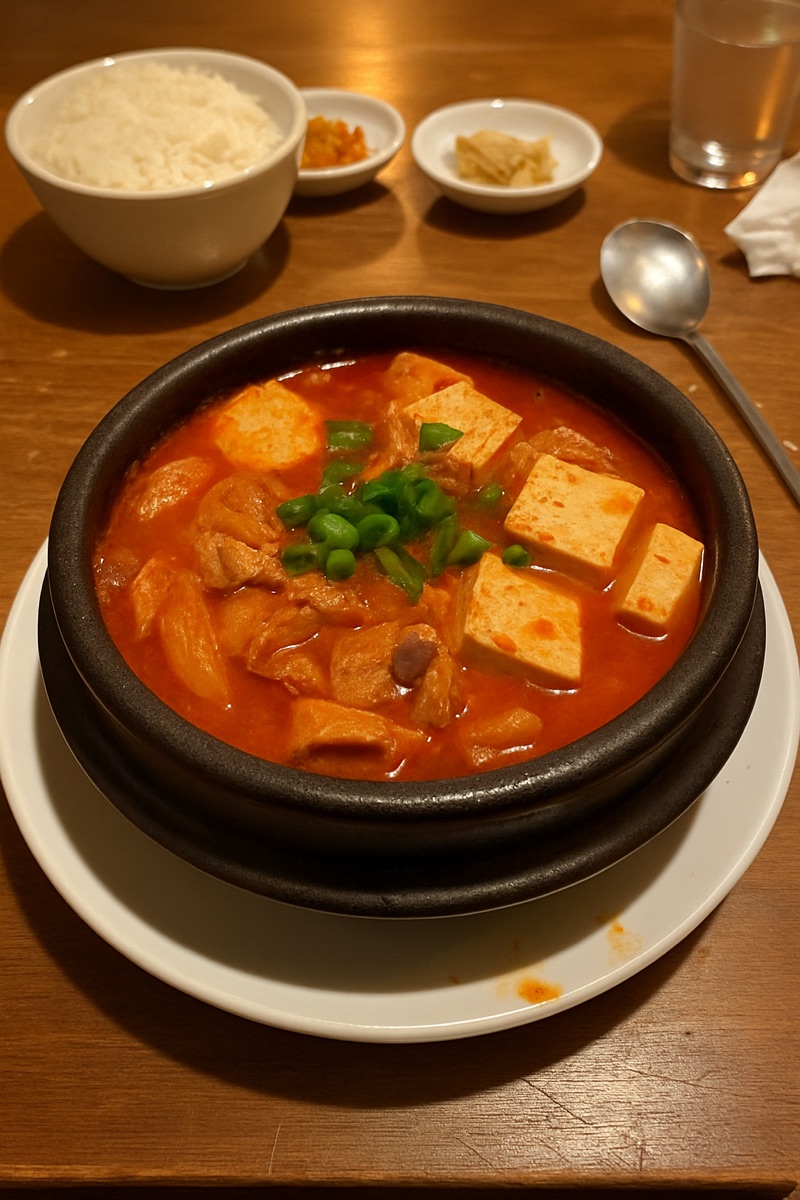
Once kimchi has fermented long enough to turn sour, Koreans cook with it. The best-known result is kimchi jjigae, a stew built on kimchi aged at least three weeks, with its brine poured in too; fresh kimchi will not make it.
Pork belly is rendered for 5 minutes until the fat runs, the sour kimchi is fried in it with 4 tablespoons of its brine until the leaves turn glossy, then gochugaru, gochujang, onion and garlic go in. A stock made by simmering dried anchovies and a piece of dried kelp for 15 minutes is poured over, and the stew simmers 20 minutes until the kimchi is soft and the broth deep red. Sliced tofu goes on top for the last 5 minutes, left unstirred so it stays whole, and the pot is served still boiling with rice.
Bibimbap and bulgogi: the other candidates
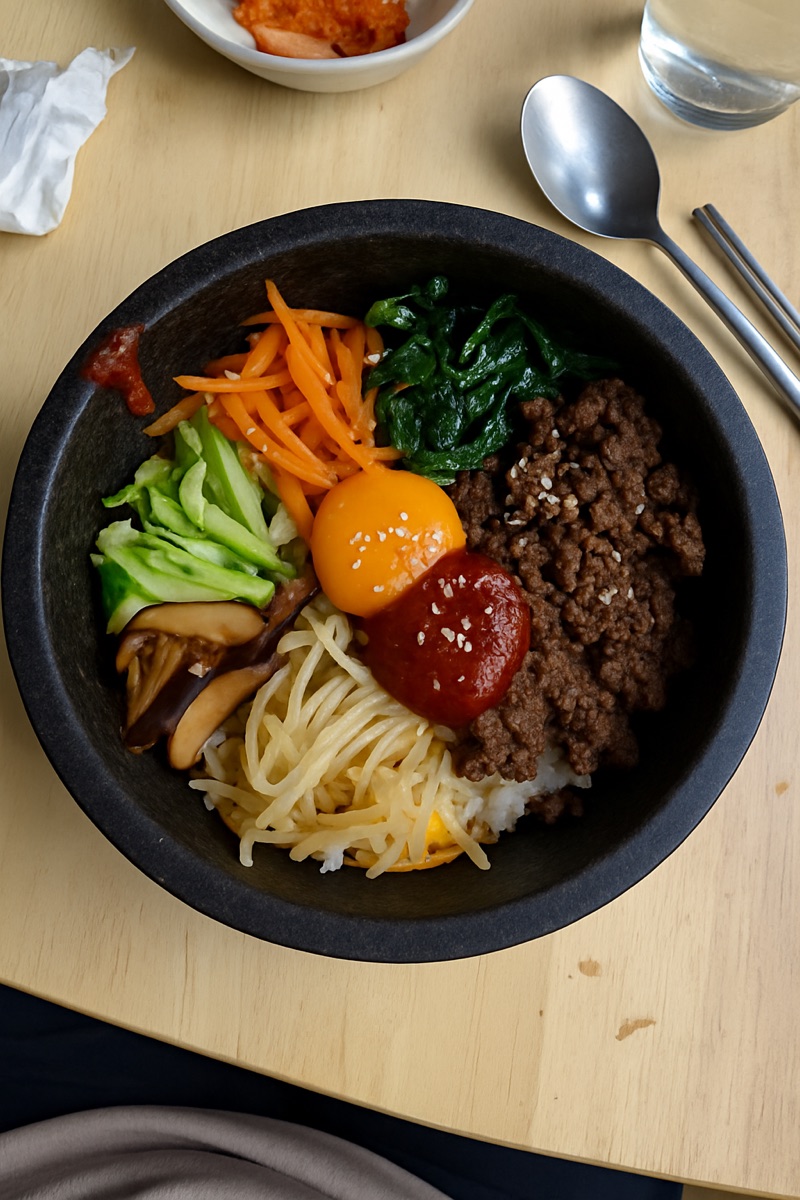
Bibimbap means mixed rice: bibim is mixing, bap is cooked rice. Its first known recipe appears in the Siuijeonseo, a late 19th-century cookbook, and the city of Jeonju is the place most associated with it; Jeonju bibimbap is typically topped with soybean sprouts, hwangpo-muk (a mung bean jelly), gochujang and seasoned raw beef. It has also become a symbol of Korean food for non-Koreans.
The method is about separation. Spinach is blanched 30 seconds and squeezed dry, bean sprouts boiled 3 minutes, carrot and shiitake sautéed apart, and each namul is seasoned on its own with sesame oil, garlic and salt. They are arranged in sections over hot rice with marinated beef and a runny fried egg, then stirred hard with gochujang sauce at the table. In dolsot bibimbap it is served in a very hot stone pot, with a raw egg cooking against the sides of the bowl.
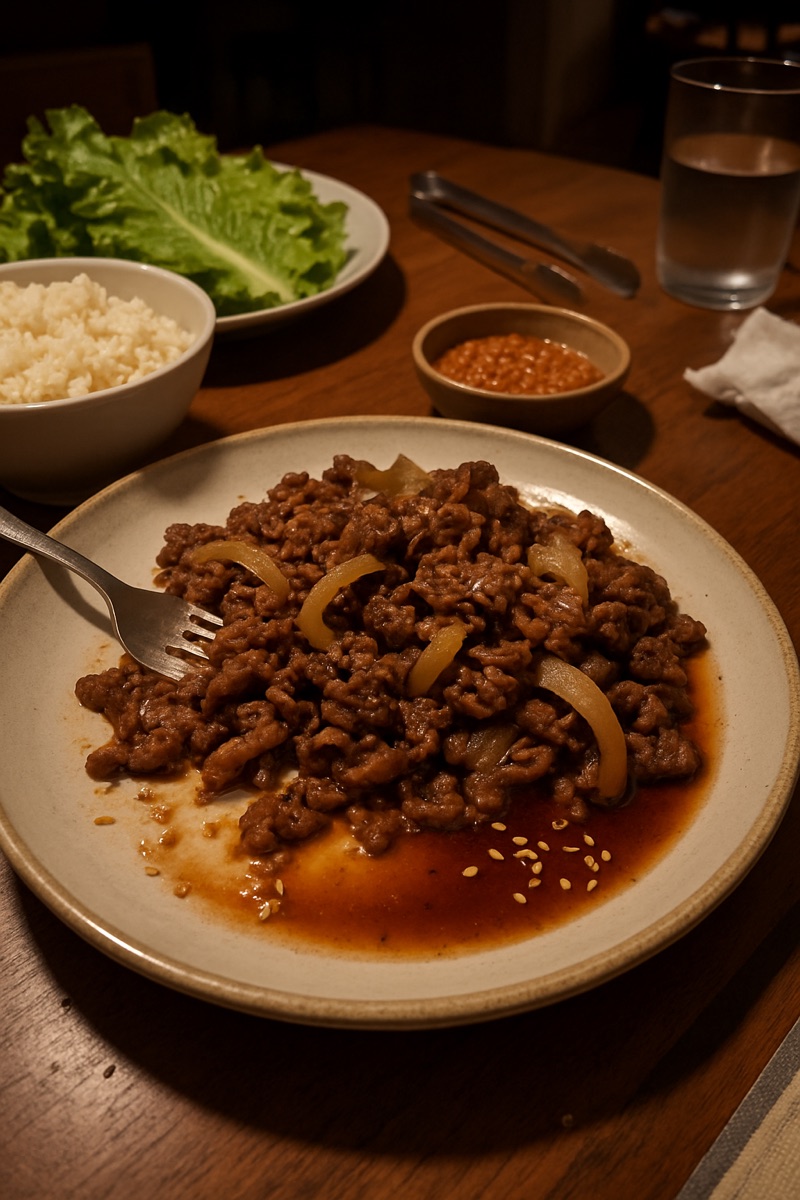
Bulgogi is Korean-style marinated sliced beef. Sirloin or ribeye is half-frozen, cut 2 to 3 mm thick and marinated in grated Asian pear, onion, soy sauce, brown sugar, rice wine, sesame oil and garlic for 30 minutes to 4 hours; the raw pear tenderises the meat. It is seared fast in a single layer so it caramelises instead of stewing, and served with rice and lettuce leaves for wrapping.
Cooking Korean dishes at home
The three Copper recipes rest on two Korean pantry staples: sour, well-aged kimchi for the stew, and gochujang, the fermented chili paste, for both the stew and the bibimbap sauce. For bulgogi, the keys are raw Asian pear in the marinade and a very hot pan. All three recipes, with ingredients and timings, are on our page about the food of South Korea.
For the neighbouring kitchens, see our guide to East Asian food.
The recipes
- Kimchi jjigae🇰🇷 South Korea · 1 hour
 Bibimbap🇰🇷 South Korea · 45 minutes
 Bulgogi🇰🇷 South Korea · 1 hour and 20 minutes
Questions people ask
Is kimchi a dish or a side dish?
Both. Kimchi is mostly eaten as a side dish, banchan, with almost every Korean meal, but sour aged kimchi is also the base of cooked dishes such as kimchi jjigae.
What is kimjang?
Kimjang is the late-autumn tradition of making and sharing large batches of kimchi to last the winter. UNESCO added it to its intangible heritage list in 2013.
Is bibimbap the national dish of South Korea?
Bibimbap is often named alongside kimchi and bulgogi, and has become a symbol of Korean food for non-Koreans. There is no official national dish, but kimchi is cited first.
What is served with bulgogi?
Bulgogi is served with rice and lettuce leaves for wrapping the beef.
Has kimchi always been spicy?
No. Chili peppers were unknown in Korea until the early 17th century and only became standard in kimchi in the 19th century.
Keep reading
- Traditional food of South Korea: 14 dishes to know
- What is the national dish of China?
- What is the national dish of Japan?
- What is the national dish of North Korea?
- What is the national dish of Taiwan?
- Traditional food of China: 13 dishes to know