 COPPER
Traditional food of South Korea: 14 dishes to know
Korean food is built on steamed short-grain rice served with banchan, small side dishes, and on fermentation: kimchi and the three jang, gochujang chili paste, doenjang soybean paste and ganjang soy sauce. Grilling at the table and long-simmered stews are the main techniques. The most emblematic dishes are kimchi, bibimbap, bulgogi and kimchi jjigae.
What Korean food is built on
A Korean meal is organised around a bowl of bap, steamed short-grain rice. Around it sit the banchan, small shared side dishes of seasoned vegetables, pickles and kimchi; traditional meals are even named after the number of banchan served. A soup or stew completes the table.
The flavour comes from fermentation. Kimchi, eaten with almost every meal, is joined by the jang: gochujang, a red chili paste; doenjang, a fermented soybean paste; and ganjang, soy sauce. Garlic, spring onion, sesame oil and gochugaru chili flakes appear in most dishes, and over 180 kinds of kimchi exist, from cabbage and radish to cucumber. Chili peppers reached Korea through trade during the Joseon period, and have since become central to the cuisine.
Rice, kimchi and everyday dishes
- Kimchi — Vegetables, most often napa cabbage or Korean radish, salted and fermented with gochugaru, garlic, ginger, spring onion and jeotgal, salted seafood. Over 180 varieties are recognised. Gimjang, the traditional making of kimchi for the winter, was inscribed by UNESCO as intangible heritage in 2013.
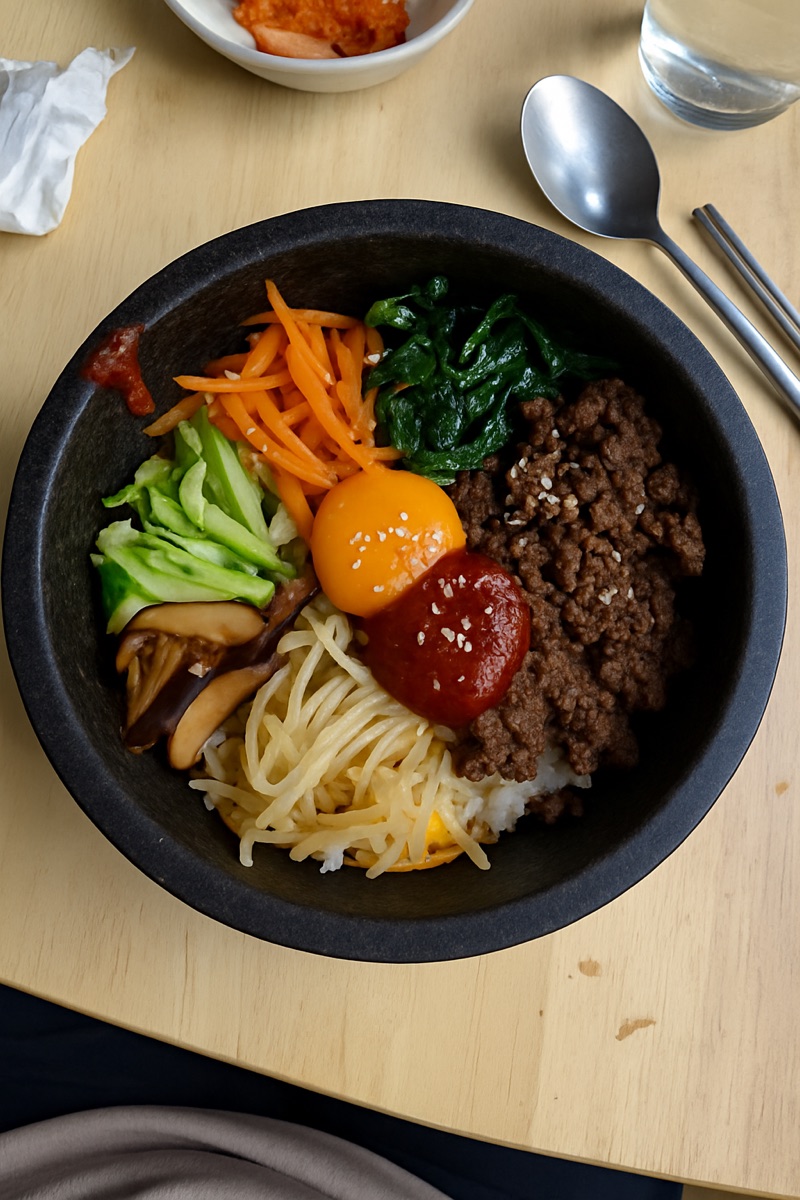
- Bibimbap — A bowl of rice topped with namul, vegetables each seasoned and cooked separately, plus beef, a fried egg and gochujang. It is stirred hard at the table just before eating. The city of Jeonju is especially associated with it.
- Gimbap — Rice seasoned with salt and sesame oil, rolled in sheets of gim seaweed around pickled radish, egg, spinach, carrot and ham, then sliced. It is the standard food for picnics and packed lunches, the dosirak.
- Juk — Porridge of rice or other grains boiled with beans, sesame, nuts or pumpkin: jatjuk with pine nuts, hobak-juk with pumpkin, patjuk with red beans in winter, jeonbok-juk with abalone on Jeju Island. Easy to digest, it is a common breakfast and the standard food for babies, the ill and the elderly.
Grilled meat
Grilling at the table is how Koreans eat meat when they go out together, then wrap each piece in lettuce or perilla leaves with ssamjang dipping sauce and grilled garlic, a way of eating called ssam. These three are the classics:
- Bulgogi — Thinly sliced beef marinated in soy sauce, sesame oil, garlic and grated Asian pear, which tenderises the meat. It is seared fast over high heat so it caramelises, and eaten with rice. Its standing as a candidate is covered in our article on the national dish of South Korea.
- Galbi — Beef short ribs or pork ribs, galbi meaning simply "rib", marinated in soy sauce, sugar, garlic, spring onion, ginger and sesame oil. Diners grill them on a tabletop grill over charcoal, then cut the meat with kitchen scissors. Cities have their own styles, such as Suwon galbi.
- Samgyeopsal — Thick slices of pork belly grilled at the table, then cut into small pieces and wrapped in fresh lettuce leaves. Koreans are especially fond of it, and it is a standard order at barbecue restaurants.
Stews, soups and noodles
The stews take their character from the same pastes that define the cuisine: gochujang and gochugaru in kimchi jjigae, fermented soybean paste in doenjang jjigae. Soups such as samgyetang are milder, and cold noodles are the answer to the summer heat.
- Kimchi jjigae — A stew of kimchi fermented long enough to turn sour, cooked with its brine, pork belly and tofu. Fresh kimchi does not work here: the sourness of aged kimchi is the point.
- Doenjang jjigae — The most common Korean stew: fermented soybean paste simmered with vegetables and fish or other additions, with many variations.
- Samgyetang — A whole young chicken stuffed with glutinous rice, ginseng, jujube and garlic, simmered into a soup. It is the representative summer health food, eaten on the hottest days of the lunar calendar, the boknal.
- Naengmyeon — Long, thin noodles of buckwheat or sweet potato starch served in an icy beef or dongchimi broth (mul-naengmyeon) or with a spicy gochujang dressing (bibim-naengmyeon). Of northern origin, from Pyongyang and Hamhung, it is now mostly eaten in summer.
- Japchae — Glass noodles made from sweet potato starch, stir-fried with vegetables, mushrooms and beef, and seasoned with soy sauce and sesame oil. Created for a royal banquet in the 17th century, it is now a fixture of weddings, birthdays and holidays.
Street food and rice cakes
Rice is not only steamed: pounded into dough, it becomes tteok, the rice cakes found at street stalls, at festivals and on ritual tables.
- Tteokbokki — Chewy cylinders of rice cake, garaetteok, simmered with fish cake, boiled eggs and spring onions in a spicy gochujang sauce. It is sold at street stalls (pojangmacha) and snack bars (bunsikjip); a soy-based version, gungjung tteokbokki, comes from royal court cooking.
- Songpyeon — Small half-moon rice cakes, eaten mostly during Chuseok, the autumn harvest festival, to express gratitude to ancestors. They belong to the large family of tteok, Korean rice cakes.
Cook Korean food at home
Korean and Japanese cooking share rice, soy and fermented seasonings but use them very differently: compare with the traditional food of Japan. Many Korean dishes are tied to a place: bibimbap to Jeonju, galbi to Suwon, cold noodles to Pyongyang and Hamhung, abalone porridge to Jeju Island. For the wider family of neighbouring kitchens, see our guide to East Asian food.
Bibimbap, bulgogi and kimchi jjigae each have a full recipe with quantities and step-by-step methods in the Copper app. You will find them on our page dedicated to Korean recipes.
The recipes
- Bibimbap🇰🇷 South Korea · 45 minutes
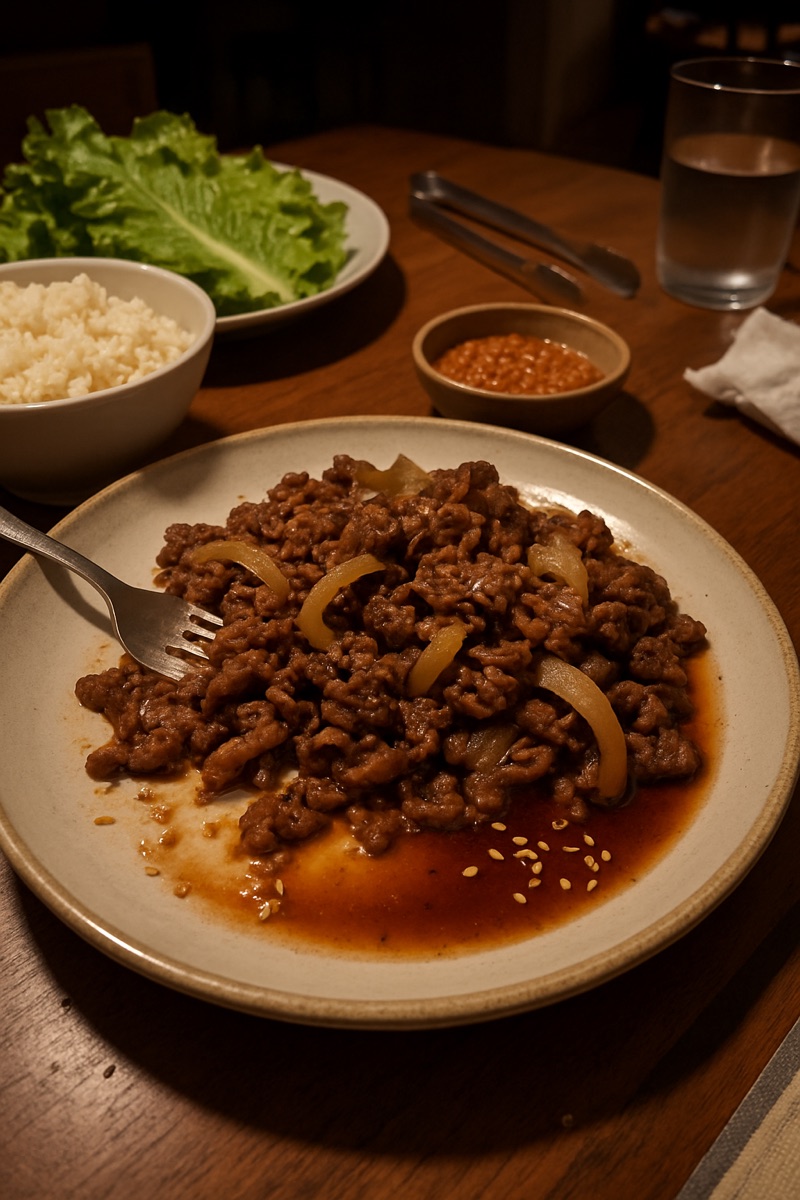 Bulgogi🇰🇷 South Korea · 1 hour and 20 minutes
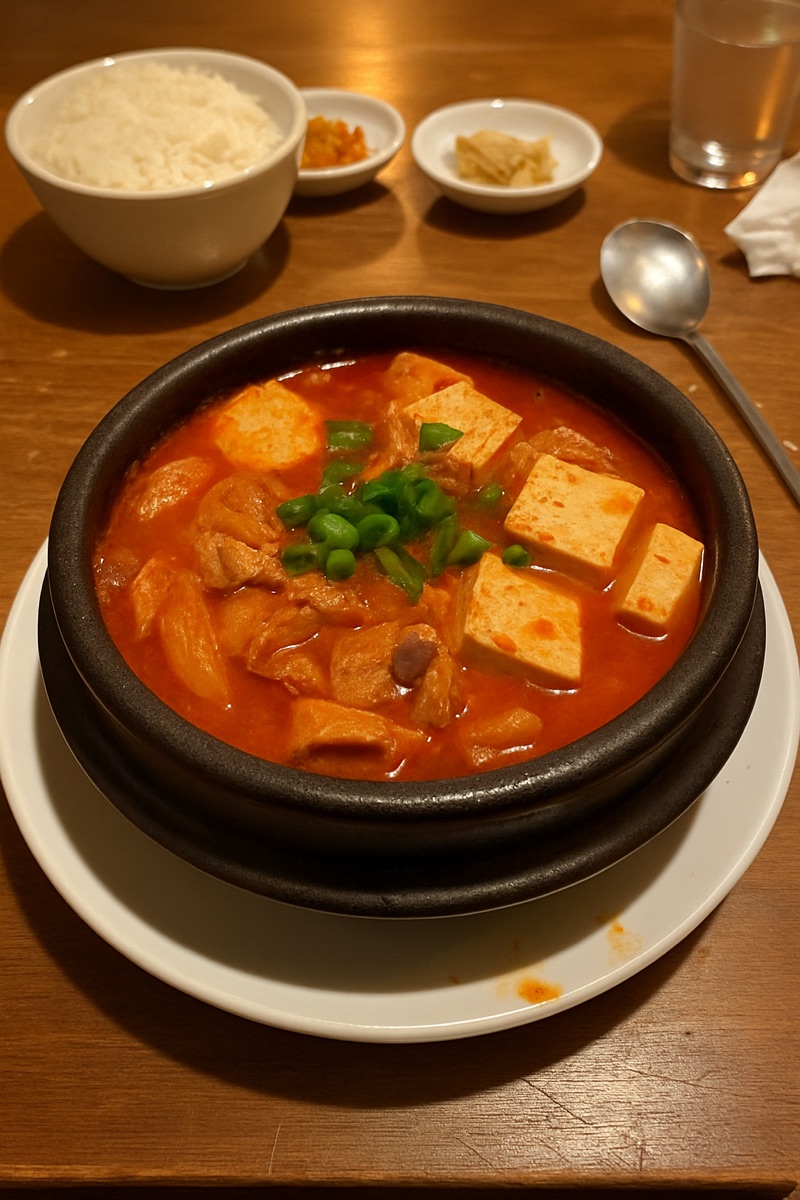 Kimchi jjigae🇰🇷 South Korea · 1 hour
Questions people ask
What is the most popular food in South Korea?
Kimchi is eaten with almost every meal. Among dishes, bibimbap, bulgogi, samgyeopsal, kimchi jjigae and tteokbokki are among the best known, in Korea and abroad.
Is Korean food spicy?
Many Korean dishes are, because of gochugaru chili flakes and gochujang chili paste in kimchi, stews and tteokbokki. Others are not spicy at all, such as bulgogi, japchae, samgyetang, gimbap and soy-based gungjung tteokbokki.
What do Koreans eat for breakfast?
Juk, rice porridge, is a common Korean breakfast, plain or cooked with pine nuts, pumpkin or abalone. It is also given to babies, the ill and the elderly because it is easy to digest.
What is banchan?
Banchan are the small side dishes served with rice at a Korean meal: kimchi, seasoned vegetables, pickles and more. Traditional meals are named after the number of banchan on the table.
What do Koreans eat at Chuseok?
Songpyeon, half-moon rice cakes, are the food most associated with Chuseok, the autumn harvest festival. They are eaten to express gratitude to ancestors.
What is the difference between gimbap and sushi?
Gimbap rice is seasoned with salt and sesame oil, while Japanese rolled sushi uses rice vinegar. Gimbap fillings are usually cooked or pickled, such as egg, ham, spinach and pickled radish.
Keep reading
- What is the national dish of South Korea?
- Traditional food of China: 13 dishes to know
- Traditional food of Japan: 14 dishes to know
- Traditional food of North Korea: 13 dishes to know
- Traditional food of Taiwan: 14 dishes to know
- What is the national dish of China?