 COPPER
Traditional food of Taiwan: 14 dishes to know
Traditional Taiwanese food grew mainly out of southern Fujian (Hokkien) cooking, with Hakka, mainland Chinese and Japanese influences. Rice, pork, seafood and soy are the base, seasoned with soy sauce, rice wine, sesame oil, pickled greens and basil. Much of it is eaten as xiaochi, snacks from night markets. The dishes to know first are beef noodle soup, lu rou fan, gua bao and oyster omelette.
What Taiwanese food is built on
Southern Fujian cooking, brought by Hokkien settlers, has had the deepest influence on mainstream Taiwanese cuisine. Hakka cooking, the regional cuisines of mainland Chinese who arrived after 1949, and fifty years of Japanese rule added their own layers. The indigenous peoples of the island have their own, older food traditions.
Rice was traditionally the base of the diet, and the Japanese introduced the short-grained japonica rice Taiwanese still prefer. Pork, chicken, soy and seafood are the main proteins; milkfish is the most popular fish. Beef was long avoided by farming families who depended on their cattle, and wheat noodles, bread and dumplings only became central after the Second World War, when American food aid brought large quantities of wheat.
The seasoning cupboard holds soy sauce, rice wine, sesame oil, fermented black beans, pickled radish, pickled mustard greens, peanuts, chillies, coriander and a local basil, with five-spice powder and a pepper-salt mix for fried food. Sugar is used generously, a legacy of the island's sugar industry. A large share of everyday eating is xiaochi, substantial snacks closer to tapas than to a full meal, sold in night markets across the island.
Noodles, rice and dumplings
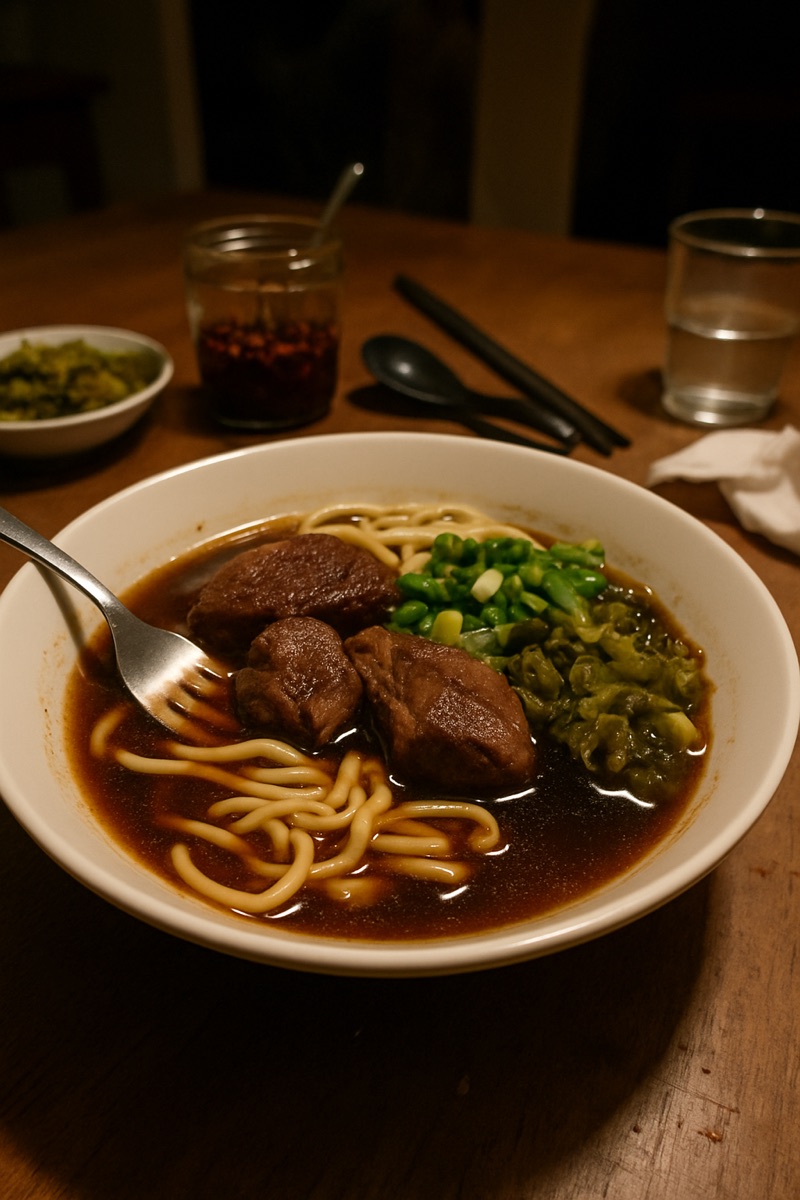
- Beef noodle soup — Beef shank red-braised for hours with spicy broad bean paste, soy sauce and rice wine, served over wheat noodles with pickled mustard greens. The red-braised style was created by Kuomintang veterans from Sichuan who settled in Kaohsiung, and it is often called the national dish of Taiwan.
- Lu rou fan (minced pork rice) — Fatty pork, minced or cut into small cubes, stewed in soy sauce and spices and spooned with its sauce over a bowl of rice. It is of Fujian origin, and the other dish often named as Taiwan's national dish. Khong bah png is the same idea with large chunks of braised pork.
- Xiao long bao — Thin-skinned pleated dumplings whose pork filling contains pork-skin aspic that melts into soup during steaming. They are eaten with shredded ginger in black vinegar, after biting a small hole to drink the soup. Dumplings were a minor part of Taiwanese food until wheat consumption grew after the war; today they are among its most popular dishes.
- Gua bao — A flat, clam-shaped steamed bun folded around a slice of soy-braised pork belly, pickled mustard greens, sugared peanut powder and coriander. It comes from the Fujian tradition and is eaten as a snack rather than a full meal.
- Sanbeiji (three-cup chicken) — Chicken cooked in an earthenware pot with equal measures of soy sauce, rice wine and sesame oil, plus ginger, garlic and basil, until the sauce has been absorbed. It reaches the table sizzling. The dish comes from Jiangxi and was brought to Taiwan by Hakka people; the Taiwanese version is not spicy.
Night-market snacks and breakfast
- Oyster omelette (o-a-tsian) — Small oysters cooked in a batter of eggs and starch with leafy greens, so the omelette is soft and chewy at once, then covered with a sweet, mildly spicy sauce. It is of Hokkien origin and is often described as the most popular snack in Taiwan's night markets.
- Ba-wan — A large dumpling of translucent, gelatinous tapioca-starch dough filled with pork, bamboo shoots and shiitake mushrooms, served in a sweet and savoury sauce. Its name means meat sphere, and it is the defining dish of Changhua.
- Stinky tofu — Tofu fermented in a brine, traditionally made with vegetables and meat, which gives it a strong smell and a milder taste. In Taiwanese night markets it is most often deep-fried and served with pickled cabbage and garlic sauce.
- Taiwanese fried chicken — Bite-sized popcorn chicken (yansuji), marinated in soy sauce, garlic, rice wine and five-spice, coated in flour or sweet potato starch, fried and tossed with salt, pepper and fried basil. The flattened fried chicken cutlet, showered with pepper, is the other night-market version.
- Danbing — A thin crepe of flour and starch fried with an omelette on top and rolled up, sold at breakfast shops. It came from mainland China after 1949; Taiwanese cooks added sweet potato starch for a chewier texture. Northern versions are crisp, southern versions softer and sweeter.
Desserts and drinks
- Pineapple cake — A square of short pastry around a pineapple filling, Taiwan's best-known pastry and its most popular edible souvenir. In Taiwanese Hokkien the word for pineapple sounds like a phrase meaning prosperous and thriving, so the cakes are given at engagements and as good-luck presents.
- Shaved ice (tshuah-ping, baobing) — A mound of shaved ice topped with sugar syrup, condensed milk, adzuki beans, mung beans, tapioca balls or fresh fruit, mango in summer and strawberry in winter. It arrived under Japanese rule. Xuehua bing, snow ice, is shaved from frozen milk instead of water.
- Bubble tea — Milk tea made with black or green tea and chewy tapioca pearls, invented in Taiwan in the 1980s. Two tea houses, Chun Shui Tang in Taichung and Hanlin in Tainan, both claim it. It is now one of the island's best-known food exports.
Regional dishes in Taiwan
Many towns are known for one dish. Tainan has the longest list: milkfish congee for breakfast, ta-a noodles with minced pork and shrimp, and oily rice with shredded pork, mushrooms and dried shrimp. Hsinchu is known for its rice vermicelli and pork balls, Tamsui for a-gei, fried tofu stuffed with glass noodles, and Taichung for the suncake pastry.
- Chiayi turkey rice — A bowl of rice topped with shredded turkey and moistened with a sauce of turkey drippings and soy sauce, often with pickled radish. It is the signature dish of Chiayi, in the south-west.
Cook Taiwanese food at home
Copper has beef noodle soup, gua bao and xiao long bao with ingredient lists and step-by-step methods. The techniques that matter: fry the broad bean paste until the oil turns red before the beef goes in, braise the pork belly in slices so each bun gets one intact piece, and let the pork-skin stock set firm before dicing it into the dumpling filling. You will find them on our page about the food of Taiwan.
Taiwan shares many dishes with the rest of East Asian cooking. To compare, see the traditional food of China and the traditional food of Japan.
The recipes
- Beef noodle soup🇹🇼 Taiwan · 3 hours and 35 minutes
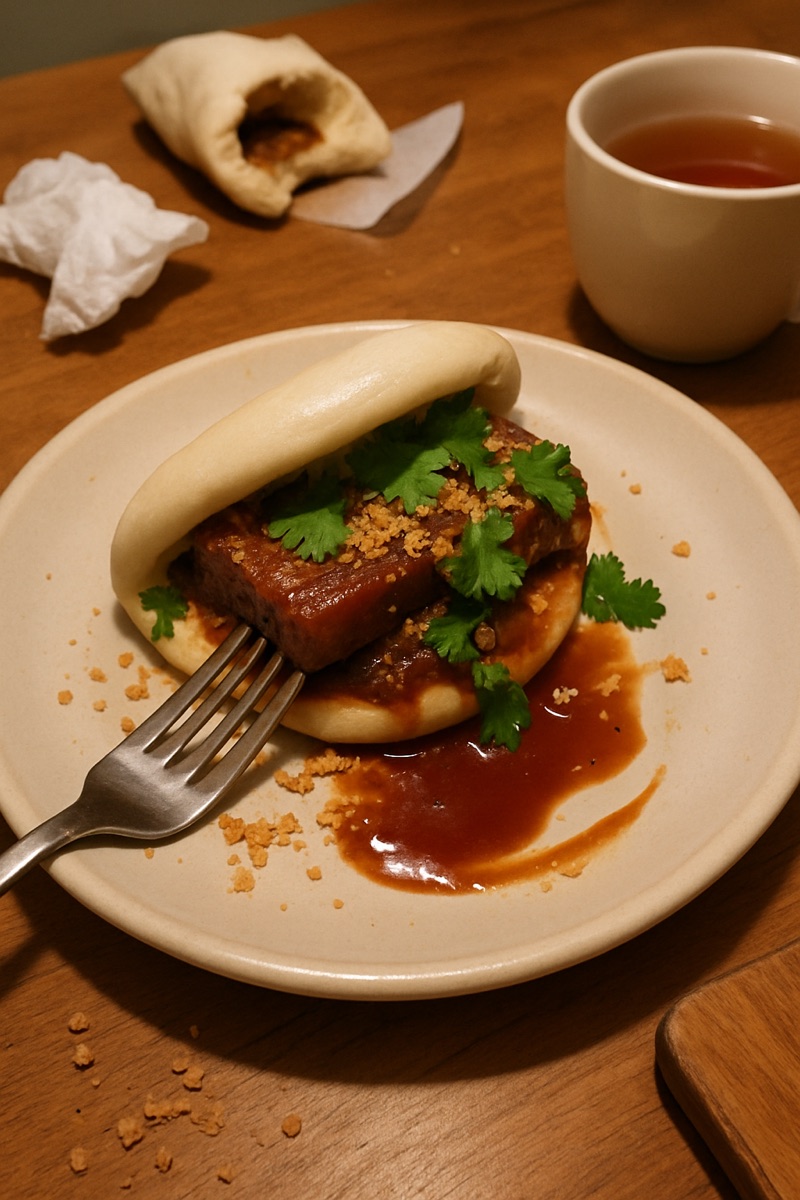 Gua bao🇹🇼 Taiwan · 2 hours and 5 minutes
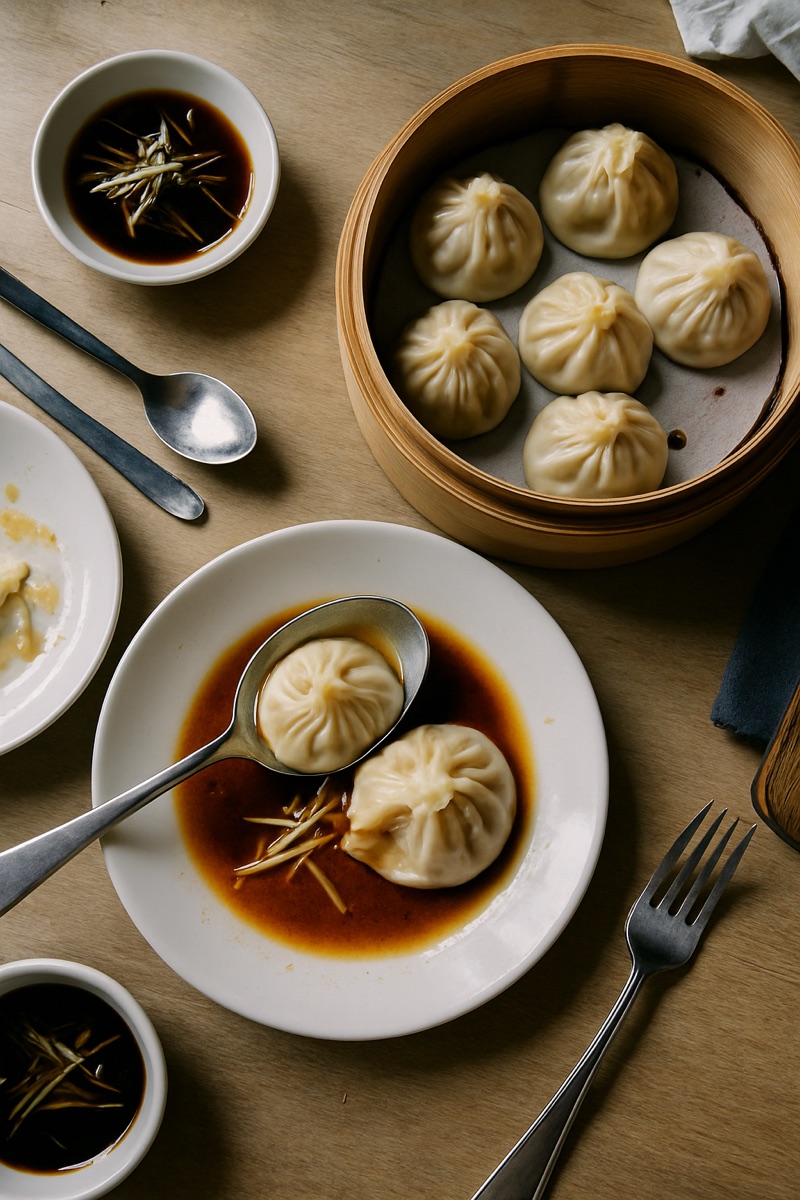 Xiao long bao🇹🇼 Taiwan · 9 hours
Questions people ask
What is the most popular food in Taiwan?
Beef noodle soup and lu rou fan (minced pork rice) are the dishes most often named, and beef noodle soup is widely called the national dish. In night markets, oyster omelette, fried chicken and stinky tofu are among the most sold snacks, and bubble tea is the best-known drink.
What do people in Taiwan eat for breakfast?
Breakfast shops sell danbing, the rolled egg crepe, often with soy sauce or sweet chilli sauce. In Tainan, congee with milkfish belly is a classic breakfast.
Is Taiwanese food spicy?
Most dishes are not hot. Taiwanese cooking leans on soy sauce, rice wine, sesame oil, sugar and basil rather than chilli. Spicy exceptions include the beef noodle soup's chilli bean paste and Sichuan-style mala hotpot, which is increasingly popular in Taipei.
What is xiaochi?
Xiaochi are small eats: substantial snacks, similar in status to tapas, such as oyster omelette, gua bao or ba-wan. They are sold mainly in night markets, and each market has its own famous ones.
How is Taiwanese food different from Chinese food?
It is rooted in southern Fujian cooking, but it also absorbed Hakka, Japanese and post-1949 mainland influences, and it is known abroad for night-market xiaochi, bubble tea and fried chicken.
Keep reading
- What is the national dish of Taiwan?
- Traditional food of China: 13 dishes to know
- Traditional food of Japan: 14 dishes to know
- Traditional food of North Korea: 13 dishes to know
- Traditional food of South Korea: 14 dishes to know
- What is the national dish of China?