 COPPER
What is the national dish of China?
China has no single national dish, official or unofficial: its regional cuisines are too varied. The dish most often named is Peking duck, a Beijing roast duck with thin crisp skin, served with pancakes, spring onion, cucumber and sweet bean sauce, which became a national symbol by the mid-20th century. Jiaozi, the dumplings of Chinese New Year, are the other frequent answer.
Does China have a national dish?
Not one. Reference lists of national dishes note that China, like Mexico and India, has no single national dish, even unofficially, because of the diversity of its peoples and regional cuisines. No law or state declaration names one.
When a single answer is given, it is usually Peking duck. Jiaozi dumplings and dim sum come next. The first is a banquet dish from the capital; the second is what families make at home.
That split is not a weakness of the question. Chinese cooking is usually described through its regional schools. Peking duck belongs to Beijing, jiaozi to the north, dim sum to the Cantonese south and the two dishes at the end of this page to Sichuan.
Peking duck, the dish of the capital
Peking duck has been prepared in Beijing since the imperial era. A roast duck called *shao yazi* already appears in 1330 in the *Yinshan Zhengyao*, written by the imperial kitchen inspector Hu Sihui, and the dish took its modern form under the Ming. By the mid-20th century it had become a national symbol, served to tourists and diplomats; Henry Kissinger ate it on his secret 1971 visit.
Two Beijing restaurants carry its history: Bianyifang, opened in 1416, roasts in a closed oven, and Quanjude, founded in 1864, uses the hung oven its founder developed. The duck is carved at the table and served in three stages:
- the crisp skin, dipped in sweet bean sauce;
- the meat, rolled in thin pancakes with spring onion and cucumber;
- the carcass, made into a broth or stir-fried.
Jiaozi, the other national answer
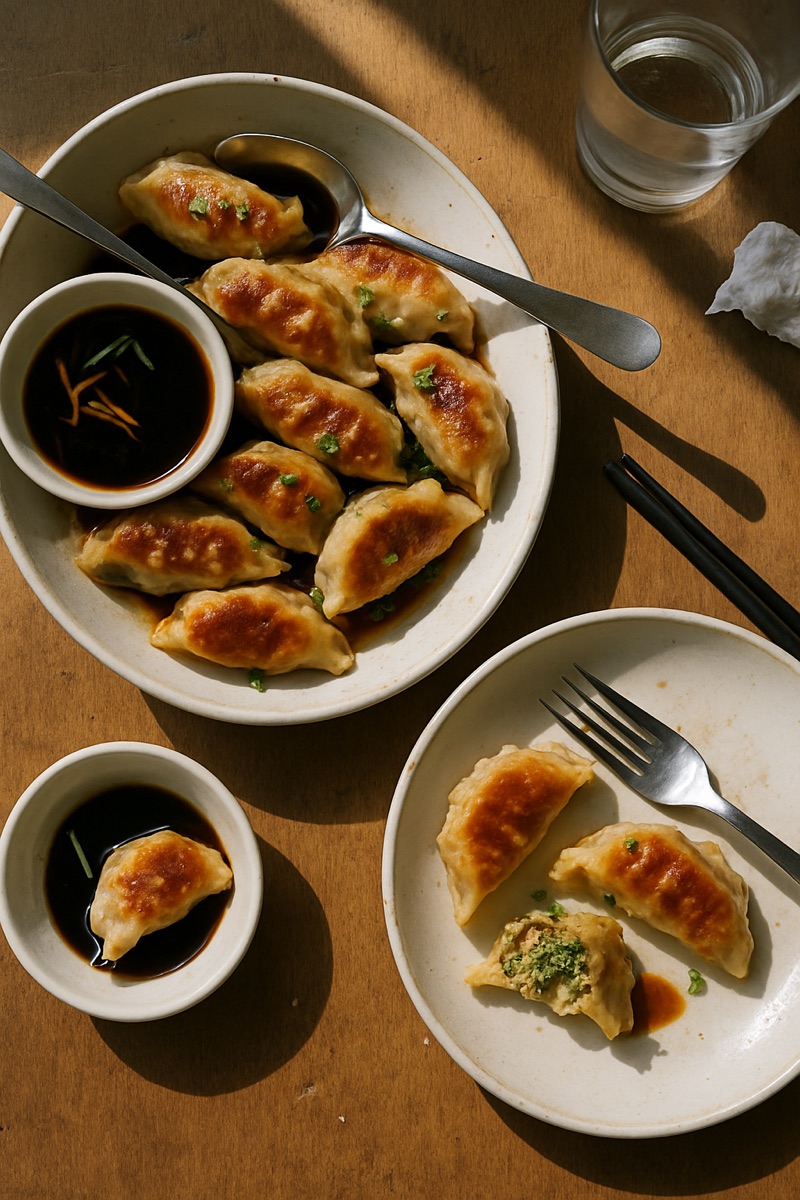
Jiaozi are crescent-shaped dumplings of thin dough around a meat or vegetable filling. Their shape recalls old Chinese money, so they stand for wealth, and in northern China they are the dish of Chinese New Year. Tradition credits the Eastern Han physician Zhang Zhongjing with inventing them, and archaeologists have found a bowl of jiaozi in Tang dynasty tombs at Turpan.
Russian pelmeni belong to the same family of boiled meat dumplings, with a thinner skin and a ring shape.
For even dumplings, the dough is rolled into 2 cm ropes and cut into 10 g pieces, one per wrapper, each holding a heaped teaspoon of filling. Jiaozi are not only boiled: they can also be steamed, pan-fried, deep-fried or baked, and outside the New Year they are eaten at any meal, from breakfast to dinner.
How jiaozi are made
Our jiaozi recipe follows the classic pork and napa cabbage filling. The details that matter:
- The dough: 300 g flour and 150 ml cold water, kneaded 8 to 10 minutes and rested 30 to 60 minutes so the wrapper stretches without tearing.
- The cabbage: minced, salted, then wrung out in a towel; a filling that keeps its water makes a soggy dumpling.
- The pork: stirred in one direction with ginger, green onion, soy sauce and Shaoxing wine, then 80 ml cold water beaten in a spoon at a time until it is sticky and juicy.
- The wrapper: rolled to 8 cm, thinner at the rim than in the centre, folded and pleated on one side.
- The cooking: boiled until they float, topped up with cold water and brought back to the boil, twice. They are eaten with black vinegar and slivered ginger.
Other dishes to know from China
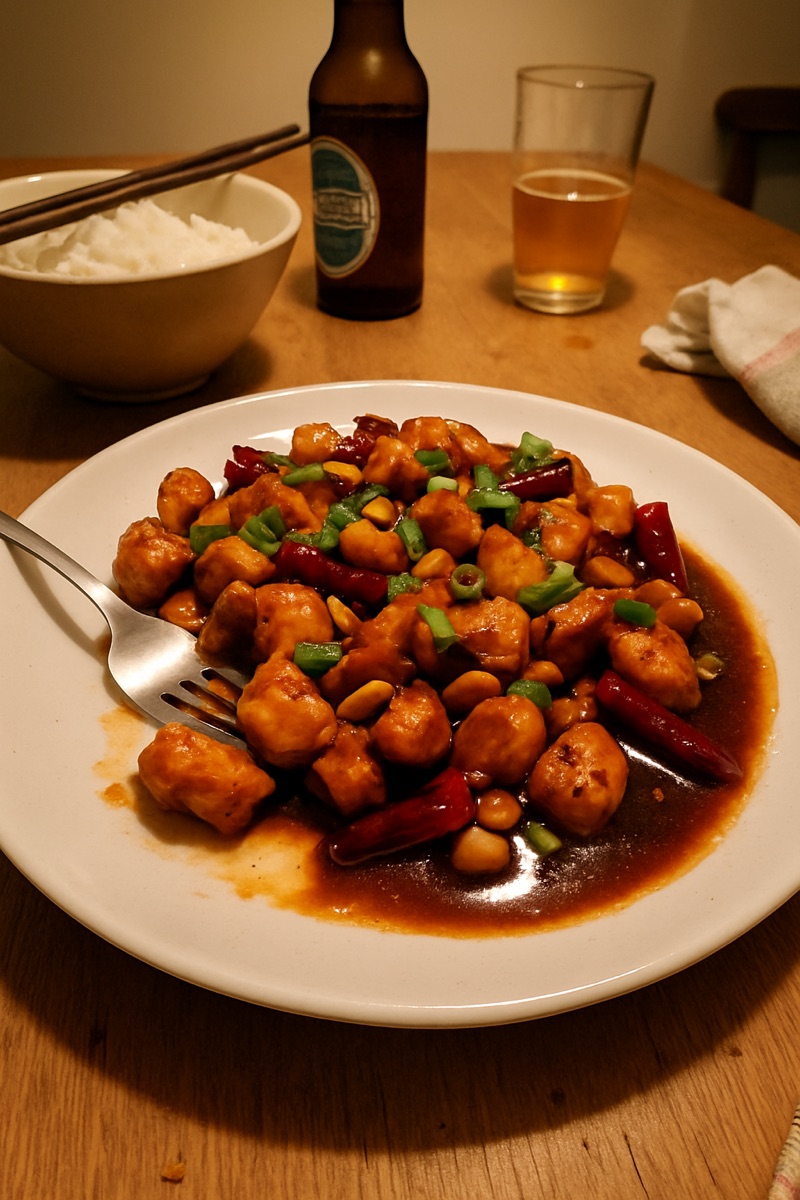
Sichuan cooking gives two dishes known well beyond China. Kung pao chicken is diced chicken thigh stir-fried with dried chilies and Sichuan peppercorns, glazed with a sweet-sour black vinegar sauce, with peanuts folded in at the end so they stay crisp. The peppercorns are warmed only until the oil smells fragrant; burnt, they turn the dish bitter.
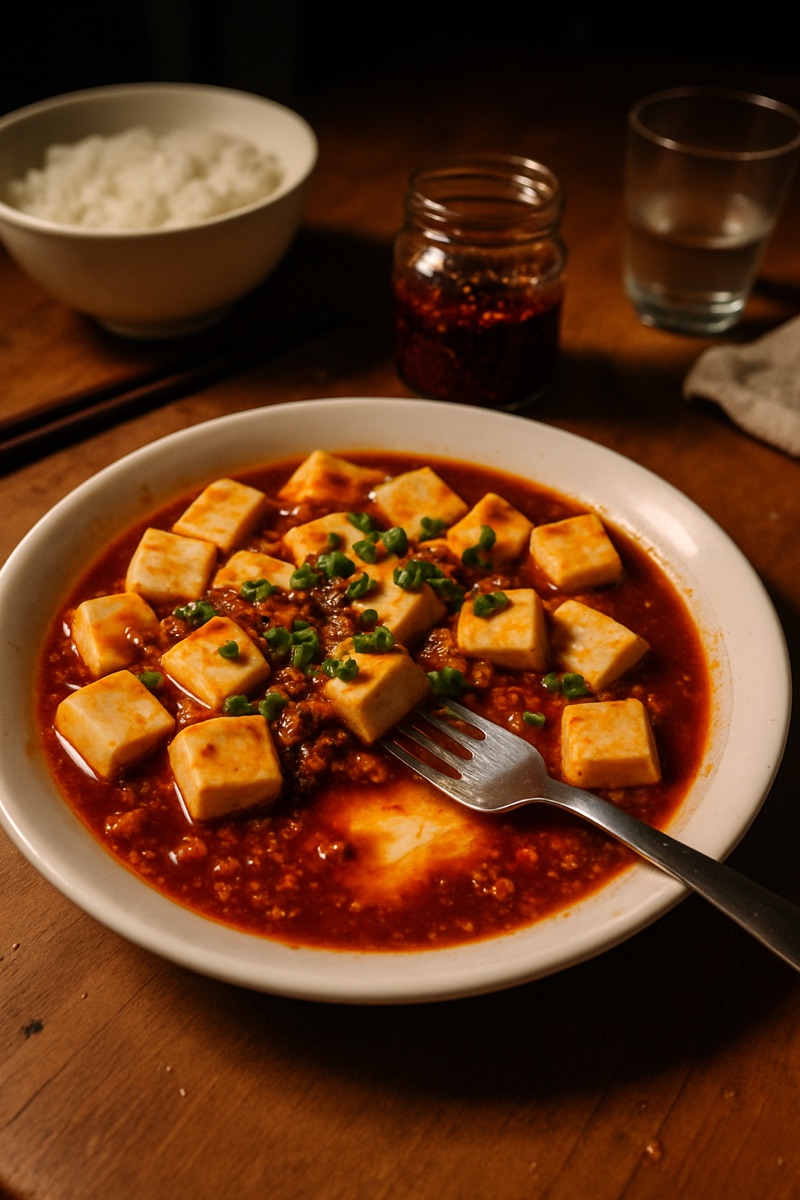
Mapo tofu is soft tofu simmered with ground beef and doubanjiang fried until the oil turns red, thickened in three passes and finished with ground roasted Sichuan peppercorn, the source of its numbing *ma*. All three recipes are on our page about the food of China.
Both dishes rest on the same idea of *mala*, the mix of chili heat and the tingling numbness of Sichuan peppercorn. In mapo tofu the curd is never pressed: it is warmed for 2 minutes in salted water just below a simmer, then nudged in the sauce with the back of a ladle so it does not break.
For the neighbouring kitchens, see our guide to East Asian food.
The recipes
- Jiaozi dumplings🇨🇳 China · 1 hour and 45 minutes
 Kung pao chicken🇨🇳 China · 35 minutes
 Mapo tofu🇨🇳 China · 30 minutes
Questions people ask
Does China have an official national dish?
No. China has no single national dish, official or unofficial, because its regional cuisines are so varied. Peking duck is the dish most often named.
Why is Peking duck considered China's national dish?
It has been made in Beijing since the imperial era and, by the mid-20th century, had become a national symbol served to tourists and visiting diplomats.
What is Peking duck served with?
Thin pancakes, spring onion, cucumber and sweet bean sauce. The skin, the meat and the carcass are traditionally served as three separate stages.
Why do Chinese people eat dumplings at New Year?
In northern China jiaozi are the New Year dish because their crescent shape recalls old Chinese money, so they stand for wealth and good fortune.
What do you dip jiaozi in?
Traditionally a black vinegar and soy sauce dip, often with ginger or garlic. Our recipe serves them with black vinegar and slivered ginger.
Keep reading
- Traditional food of China: 13 dishes to know
- What is the national dish of Japan?
- What is the national dish of North Korea?
- What is the national dish of South Korea?
- What is the national dish of Taiwan?
- Traditional food of Japan: 14 dishes to know