 COPPER
What is the national dish of Japan?
Japan has no official national dish. Three dishes share the title: sushi, vinegared rice with raw fish or other toppings, the dish the world associates with Japan; ramen, wheat noodles in hot broth; and curry rice (karē raisu), a thick, mild curry sauce over rice, eaten more often at home. What UNESCO recognised in 2013 was washoku, Japanese food culture as a whole.
Why Japan has no single national dish
No law or official body in Japan names a national dish, and sources split between several. Lists of national dishes put sushi, sashimi, Japanese curry, ramen, tempura, wagashi and miso soup side by side for Japan.
The honest answer depends on the question. If you mean the dish that represents Japan abroad, it is sushi. If you look at everyday meals, ramen and curry rice have a strong case too: both are described as national dishes in their own right, and both started as foreign imports.
Sushi: the dish the world knows
Sushi is defined by its rice, not its fish. The base is short or medium-grain rice seasoned with vinegar, sugar and salt, called shari or sumeshi. On top or inside goes the neta: most often raw fish, but also cooked seafood, vegetables or egg. It is served with pickled ginger, wasabi and soy sauce.
It began as a way of preserving fish by fermenting it in rice. The form most people picture today, nigiri-zushi, a slice of fish pressed onto a hand-shaped ball of rice, is credited to Hanaya Yohei around 1824 in Edo, now Tokyo. At the time it was street food, the fast food of the city's merchant class.
It was first called Edomae zushi, because it used fish freshly caught in Edo Bay, now Tokyo Bay. The term Edomae is still used today as a byword for quality sushi, wherever the fish comes from.
Ramen: the noodle soup with a Chinese past
Ramen is a Japanese-Chinese dish: Chinese-style alkaline wheat noodles served in hot broth, flavoured most often with soy sauce or miso and topped with sliced pork (chāshū), nori, bamboo shoots and spring onion. It grew out of the noodle soups served in Yokohama's Chinatown in the late 19th century, and the first specialised ramen shop opened in 1910. Today almost every region has its own style, such as Sapporo's miso ramen. For the Chinese side of the story, see the national dish of China.
Ramen was looked down on for decades as cheap working-class food tied to Chinese immigrants. Today it is one of the dishes most identified with Japan, and each city defends its own broth:
- Sapporo: rich miso ramen.
- Hakodate: salt-flavoured broth.
- Tokyo: soy-flavoured chicken broth.
- Kitakata: thick, flat noodles in a pork and dried-sardine broth.
- Hakata (Fukuoka): milky tonkotsu, a pork bone broth.
Curry rice: from navy galleys to home kitchens
Curry came to Japan from India by way of the British during the Meiji era and first appeared in Japanese cookbooks in 1872. The Imperial Japanese Navy adopted it, served it with rice, and thickened the sauce with flour so it would not spill at sea. The result, a thick, mild sauce with onion, carrot, potato and meat, is now its own dish. By 2000, curry was a more frequent meal in Japan than sushi or tempura.
Curry rice is only one of three common forms: there is also curry udon, the sauce poured over thick noodles, and curry bread (karē pan), a curry-filled pastry first sold in 1927. In 1963, House Foods launched Vermont Curry, an instant roux made with apples and honey. Its mild sweetness turned what had been seen as a spicy adult dish into one of children's favourite meals.
What UNESCO recognised: washoku
In 2013, UNESCO added "Washoku, traditional dietary cultures of the Japanese, notably for the celebration of New Year" to its Representative List of the Intangible Cultural Heritage of Humanity. It did not single out one dish. It recognised a way of eating: seasonal, locally sourced rice, fish, vegetables and wild plants, prepared with respect for nature and passed down at family meals.
UNESCO points to New Year as the moment where this is most visible, when families pound rice cakes and prepare decorated dishes in which each ingredient has a symbolic meaning.
Other dishes to know from Japan
Beyond the famous three, Japanese home cooking is built on dishes like the ones below. All three, with ingredients and step-by-step methods, are on our page about the food of Japan.
For the neighbouring kitchens, see our guide to East Asian food.
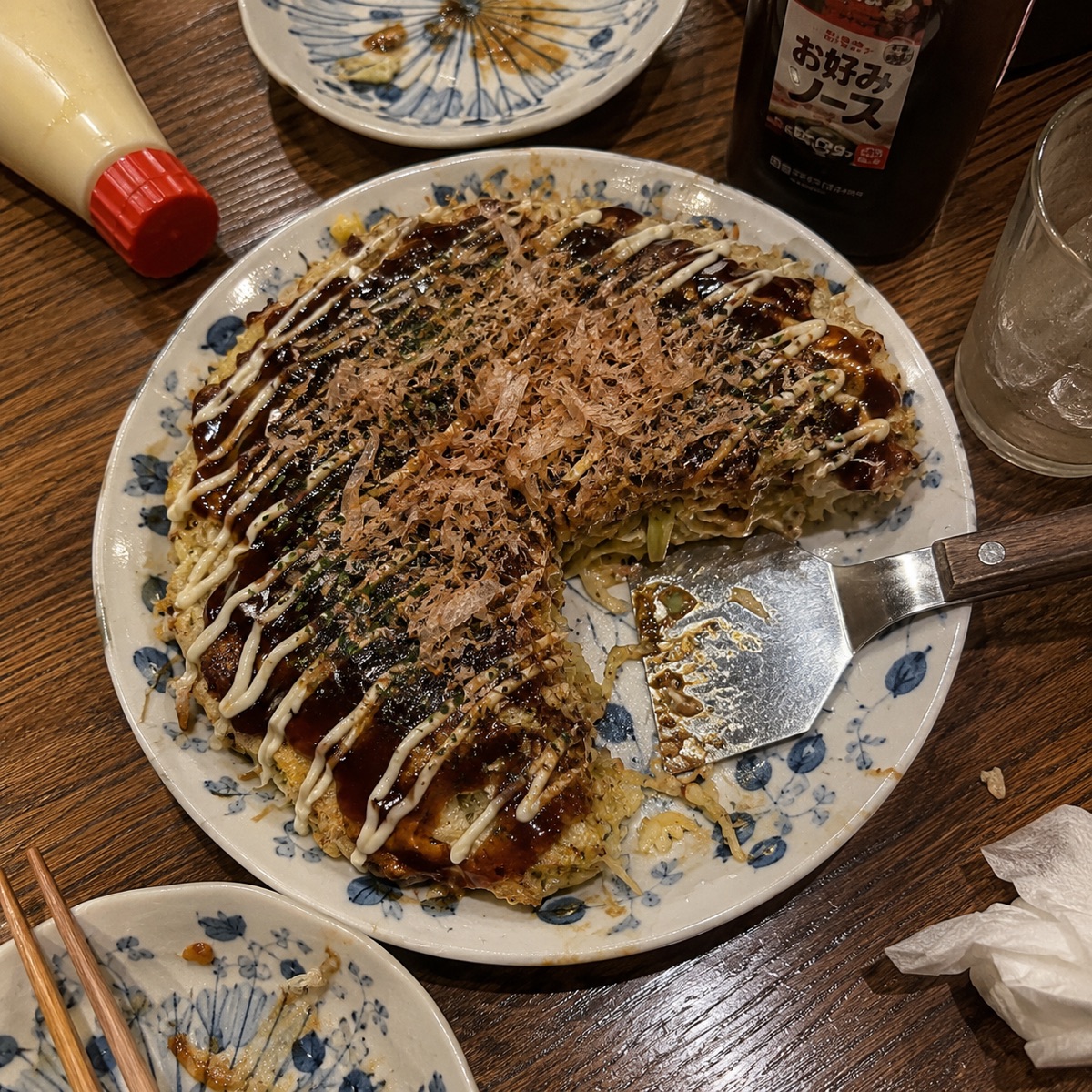
- Okonomiyaki: a savoury griddle pancake, here in the Kansai (Osaka) style, that is mostly shredded cabbage, finished with sauce, mayonnaise and bonito flakes. The name means roughly "grilled as you like it".
- Oyakodon: the "parent and child" bowl, chicken and egg simmered in a sweet soy and dashi broth and slid over rice while the egg still trembles.
- Tonjiru: miso soup made into a meal with pork belly, daikon, carrot and burdock, the miso stirred in at the end and never boiled.
The recipes
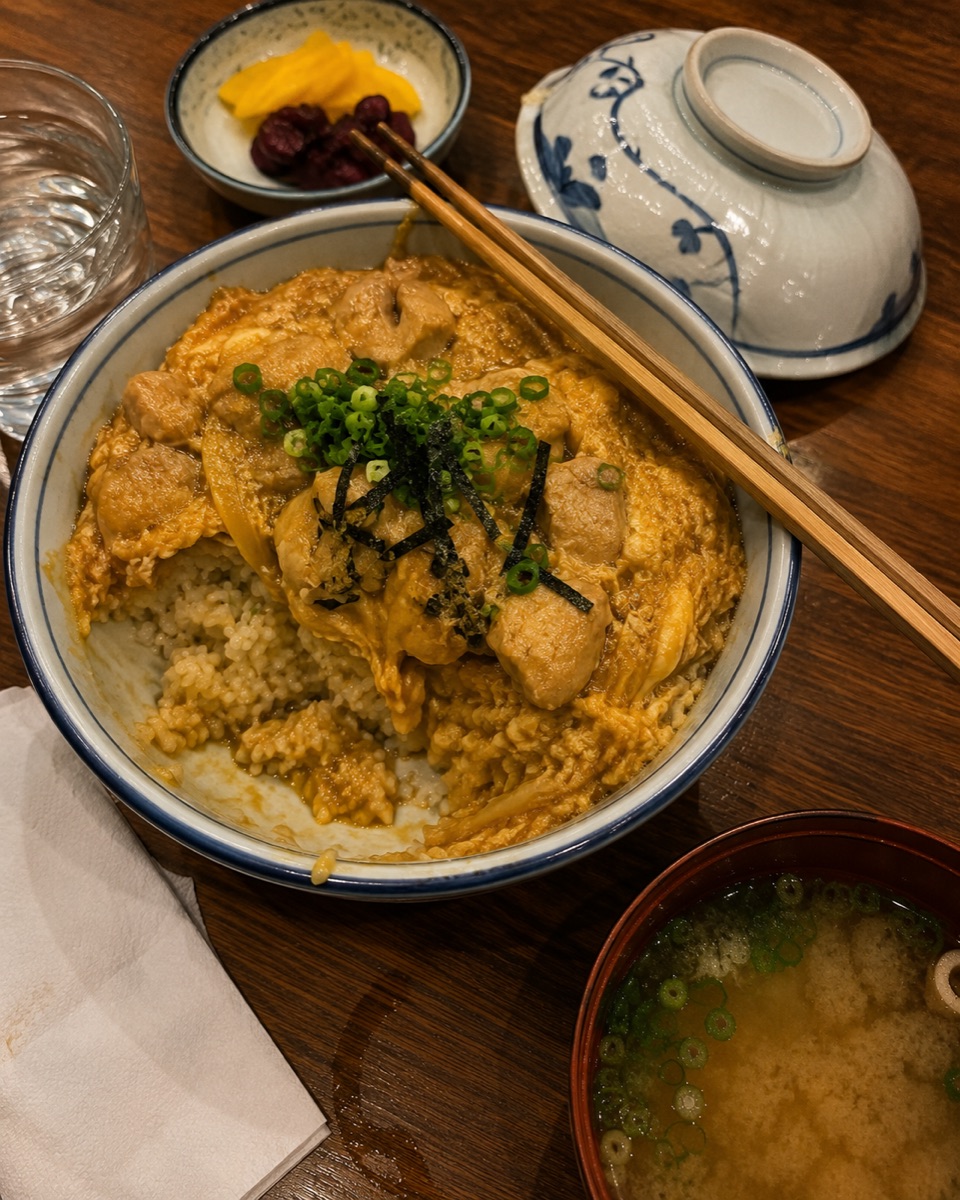 Oyakodon
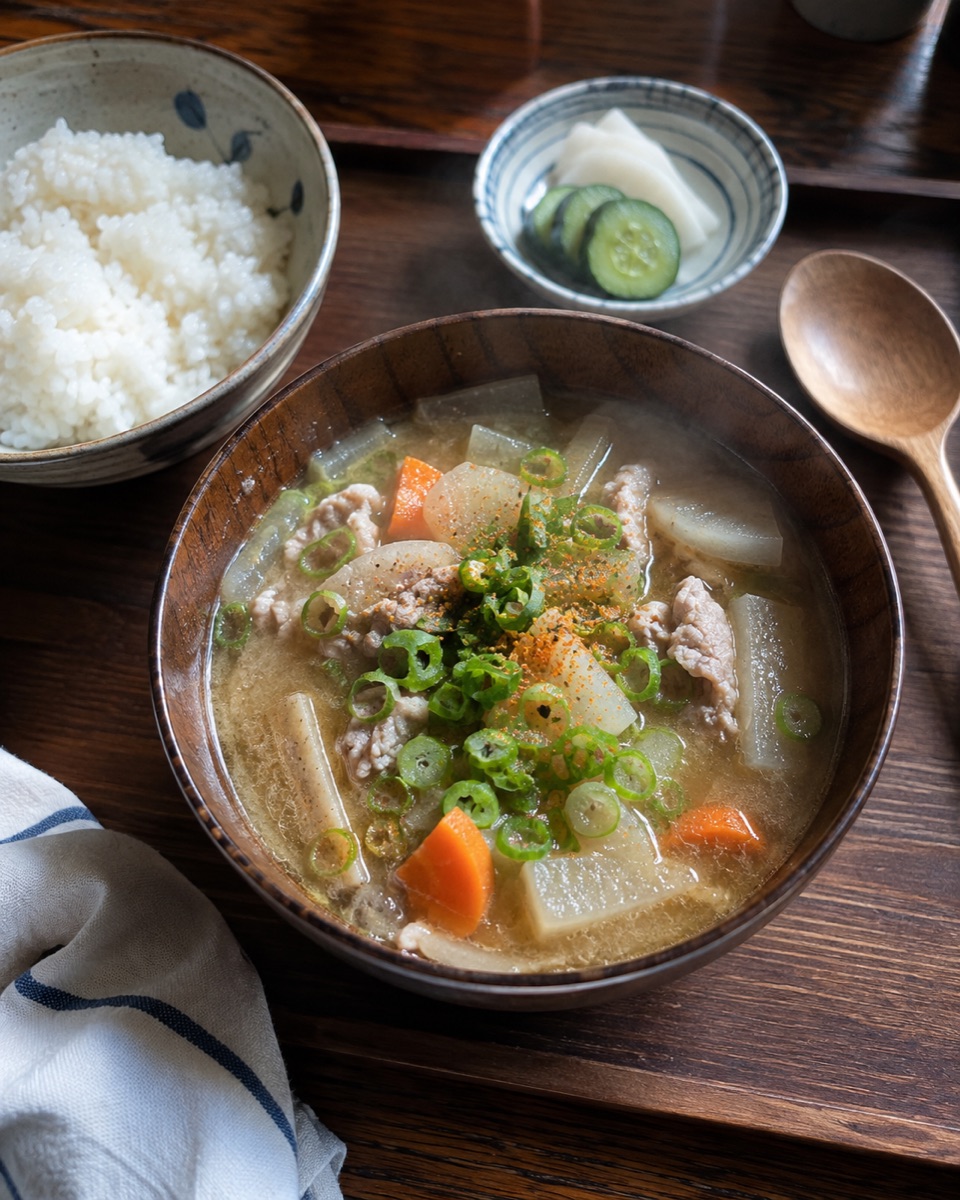 Tonjiru
Questions people ask
Is sushi the national dish of Japan?
Sushi is the dish most associated with Japan abroad, but Japan has no official national dish. Ramen and curry rice are also commonly described as national dishes.
Is ramen Japanese or Chinese?
Ramen is a Japanese-Chinese dish. It developed in Japan from southern Chinese noodle soups served in Yokohama's Chinatown in the late 19th century, and is now considered a Japanese dish.
Why is Japanese curry different from Indian curry?
Curry reached Japan through the British in the Meiji era and was adapted by the Japanese Navy, which thickened it with flour and served it on rice. It became a milder, thicker sauce with onion, carrot and potato.
Is Japanese food on the UNESCO heritage list?
Yes. Washoku, the traditional dietary culture of the Japanese, was inscribed on UNESCO's Intangible Cultural Heritage list in 2013. The listing covers the food culture, not a single dish.
What do Japanese people eat every day?
Rice, fish and vegetables form the base of the traditional diet described by UNESCO, and everyday meals also include dishes such as curry rice, ramen, donburi rice bowls like oyakodon, and miso soups such as tonjiru.
Keep reading
- Traditional food of Japan: 14 dishes to know
- What is the national dish of China?
- What is the national dish of North Korea?
- What is the national dish of South Korea?
- What is the national dish of Taiwan?
- Traditional food of China: 13 dishes to know