 COPPER
What is the national dish of Russia?
Russia has no official national dish, and several are cited. Pelmeni, thin-skinned dumplings of raw minced beef and pork boiled from frozen, are the most often called a national dish. Borscht, a beet soup, is widely eaten but originated in Ukraine. Shchi, cabbage soup, is the oldest: with kasha it gave the saying "shchi and kasha are our food".
Does Russia have an official national dish?
No. No Russian law or decree names one, and lists of national dishes give Russia a long string of candidates: beef Stroganoff, borscht, shchi, kasha, pelmeni, pirozhki and more.
Three come up most often. Pelmeni are the dish encyclopedias describe as a national dish. Shchi has the longest history. Borscht is the best known abroad, but its origins are Ukrainian.
Pelmeni, the dumplings of the Urals and Siberia
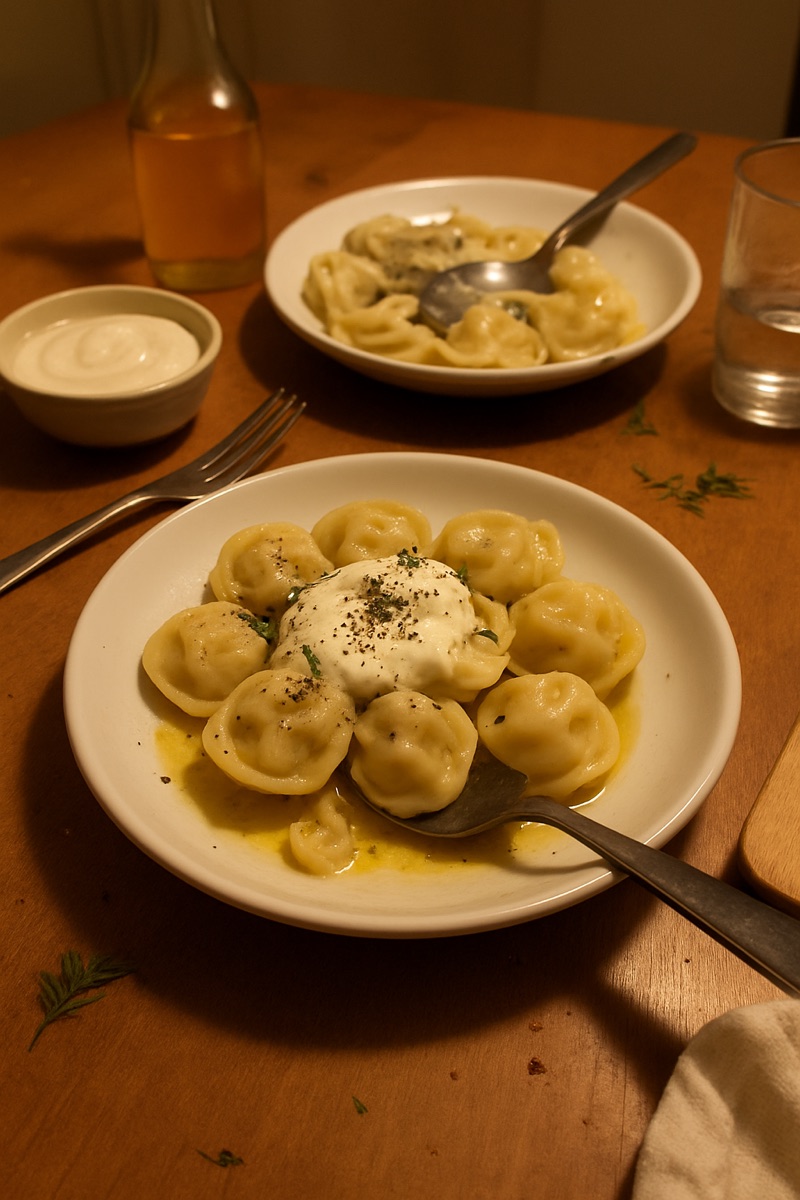
Pelmeni are dumplings of thin, unleavened dough around a raw meat filling. They became a staple of Russian cooking during Russia's expansion into the Urals and Siberia, and Russians seem to have learned them from Finno-Ugric peoples: the name comes from *pel'n'an'*, "ear bread" in the Komi and Udmurt languages. China's jiaozi belong to the same family.
What sets them apart is the filling. Our pelmeni recipe mixes half beef, half pork with grated onion, then works in 100 ml of ice water a spoonful at a time; that water turns to broth inside each dumpling. The dough is rolled 1 to 2 mm thick, cut into 5 to 6 cm rounds, folded and pinched into a ring. Pelmeni are frozen raw and boiled straight from the freezer, 4 to 5 minutes after they float, then served with butter, sour cream and dill.
A practical detail: pelmeni are made to be frozen. Laid apart on a floured tray, they freeze solid in at least an hour and go straight from the freezer into boiling salted water.
Borscht, and why Ukraine claims it
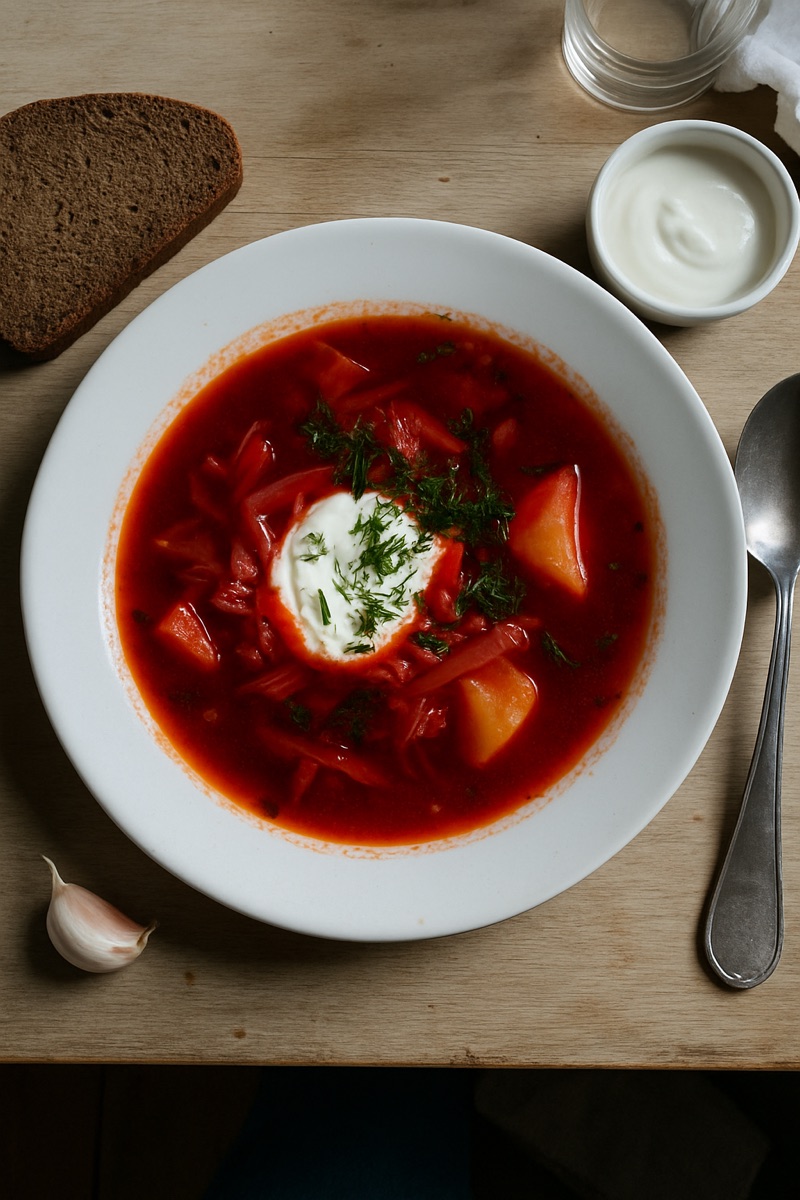
Borscht is a sour soup of beef broth, beets, cabbage and potatoes, served hot with sour cream. It is eaten all over Russia, but it originated in Ukraine, and in 2022 UNESCO inscribed the culture of Ukrainian borscht cooking on its list of heritage in need of urgent safeguarding. The name goes back to the Proto-Slavic word for hogweed, the plant the earliest version was made from.
In our borscht recipe, beef on the bone simmers two hours for the broth. The beets are cut in strips, tossed with vinegar and braised separately with tomato paste for 15 minutes: the acid keeps them red. Potatoes and cabbage go into the broth, then the beets, fried onion and carrot, the meat and crushed garlic. It rests 20 minutes, covered, before serving. Traditionally, borscht is served with smetana or sour cream, sometimes with hard-boiled eggs or potatoes, and with *pampushky*, small garlic yeast rolls.
Borscht and shchi are close relatives: both can start from a long-simmered meat broth. What changes is what gives the soup its colour and sourness: beets with vinegar and tomato for borscht, cabbage or sauerkraut for shchi.
Shchi and kasha, the oldest answer
Shchi, a cabbage soup, was the main first course of Russian meals for over a thousand years, eaten by rich and poor alike. Made with sauerkraut it becomes sour shchi; with sorrel or nettle, green shchi. Kasha covers any porridge, with buckwheat, millet and oats the most common.
Together they gave the best-known Russian saying about food: *Shchi da kasha, pishcha nasha*, "shchi and kasha are our food".
Other dishes to know from Russia
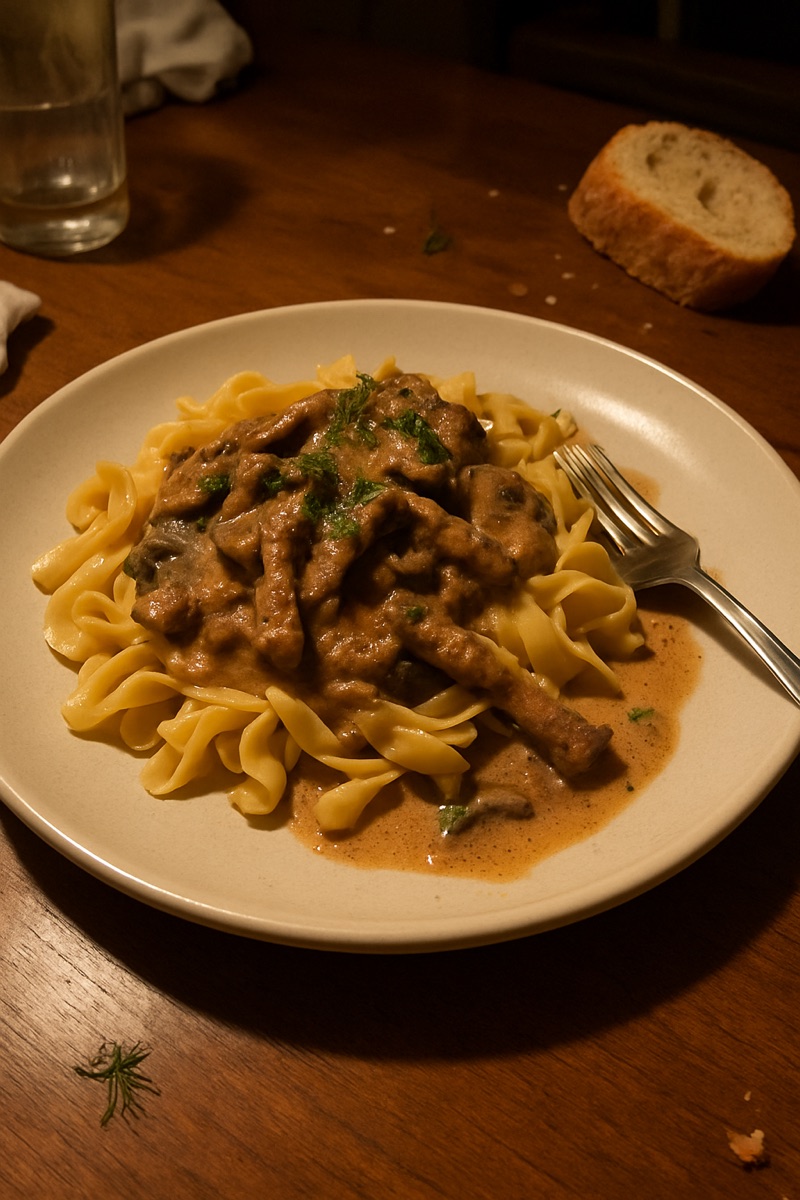
Beef Stroganoff is named after a member of the Stroganov family and dates from mid-19th-century Russia. The first known recipe appears in the 1871 edition of Elena Molokhovets' cookbook *A Gift to Young Housewives*: beef in a roux of broth and mustard, finished with a little sour cream, with no mushrooms. Our beef Stroganoff recipe follows it, seared in batches for 2 to 3 minutes and served with crisp potato straws. The beef is cut and seasoned two hours ahead; the sauce is 20 g butter and a tablespoon of flour cooked lightly, 300 ml beef broth, a teaspoon of mustard and two tablespoons of sour cream, and the beef finishes 15 minutes in it on very low heat.
Russian cooking sits within Eastern European cuisine, and all three recipes are on our page about the food of Russia.
The Stroganoff that travelled abroad changed a lot. After 1917 it was served in hotels and restaurants in China, the first English cookbook recipe appeared in 1932, and many later versions added mushrooms, which the 1871 recipe did not have. The Russian original is simpler: quickly seared beef in a mustard and sour cream sauce.
The recipes
- Pelmeni🇷🇺 Russian Federation · 3 hours
 Borscht🇷🇺 Russian Federation · 3 hours and 10 minutes
 Beef stroganoff🇷🇺 Russian Federation · 2 hours and 30 minutes
Questions people ask
Does Russia have an official national dish?
No. Several dishes are cited, mainly pelmeni, borscht and shchi; pelmeni are the ones most often described as a national dish.
Is borscht Russian or Ukrainian?
Borscht is eaten throughout Russia but originated in Ukraine. In 2022 UNESCO inscribed the culture of Ukrainian borscht cooking as heritage in need of urgent safeguarding.
What is the difference between pelmeni and other dumplings?
Pelmeni have a very thin skin and a raw filling of mixed beef and pork beaten with ice water, which turns to broth as they boil. They are usually frozen raw and cooked from the freezer.
What is served with pelmeni?
Butter, sour cream and dill, often with a splash of vinegar on the side.
Where does the word pelmeni come from?
From pel'n'an', meaning "ear bread" in the Komi and Udmurt languages of the Urals, a sign of the dish's Finno-Ugric roots.
Keep reading
- Traditional food of Russia: 14 dishes to know
- What is the national dish of Belarus?
- What is the national dish of the Czech Republic?
- What is the national dish of Estonia?
- What is the national dish of Hungary?
- What is the national dish of Latvia?