 COPPER
Traditional food of Russia: 14 dishes to know
Russian food is built on cabbage, beets, potatoes, buckwheat and rye, with sour cream, dill and fermented flavours from sauerkraut, pickles and kvass. Soup opens most meals. The most emblematic dishes are shchi, a cabbage soup, pelmeni, meat dumplings, blini, yeasted pancakes, and kasha, buckwheat porridge, with borscht and beef Stroganoff close behind.
What Russian food is built on
Traditional Russian cooking grew around a long winter and the Russian stove, where shchi traditionally simmered and blini were baked. Its staples are the ones that keep: cabbage, beets, potatoes, onions, buckwheat and rye bread, with sauerkraut and pickles for the months without fresh vegetables.
Two flavours define it. The first is sourness, from fermented cabbage, pickle brine and kvass, a low-alcohol drink of fermented rye bread. The second is smetana, sour cream, which goes on soups, dumplings and pancakes alike. Dill, butter and mustard do the rest, and black rye bread is served with soups such as borscht. A typical meal starts with a hot soup, the first course, before the main dish.
Soups
Soup is the first course of a Russian meal, and the range is wide: hot cabbage and beet soups in winter, a cold kvass soup in summer, and ukha, a clear fish broth that was once served alongside fish pies. These four are the ones every Russian kitchen knows:
- Shchi — Cabbage soup, the main first course of Russian meals for over a thousand years, made with or without meat. With sauerkraut it becomes sour shchi; with sorrel or nettle, green shchi. With buckwheat kasha it gave the saying "shchi and kasha are our food".
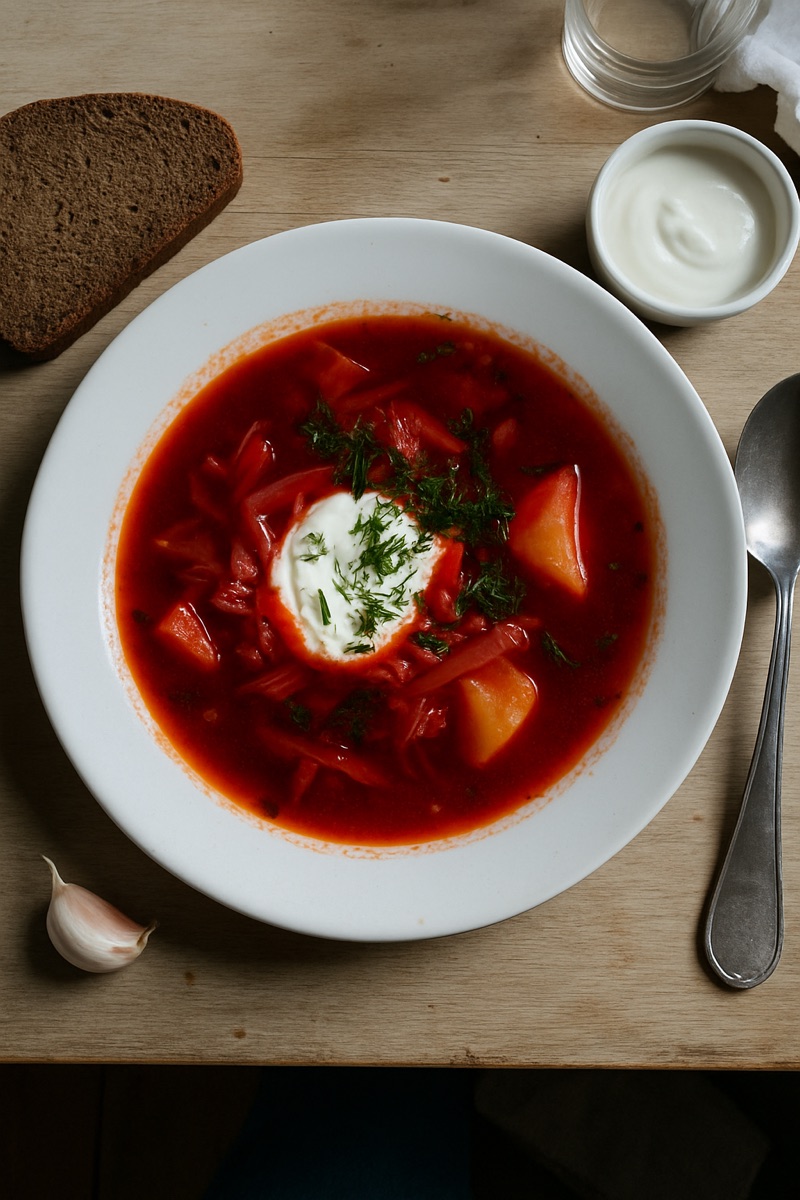
- Borscht — A sour soup of beef broth, beets, cabbage and potatoes, served hot with sour cream and dark bread. It is eaten all over Russia, but it originated in Ukraine, which UNESCO recognised in 2022.
- Solyanka — A thick, sour-salty soup that borrows from shchi and rassolnik. It gets its sharp taste from pickles and their brine, olives, capers and tomato, and is made with meat, fish or mushrooms.
- Okroshka — A cold summer soup of diced cucumber, radish, spring onion, boiled potato, egg and cooked meat, covered with kvass just before eating and finished with sour cream. Kefir is a common alternative to kvass.
Dumplings, pancakes and pies
Dough is everywhere in Russian food, from boiled dumplings to filled buns. Pelmeni show how far the cuisine travelled east: Russians seem to have learned them from the Finno-Ugric peoples of the Urals, and the name comes from pel'n'an', "ear bread" in the Komi and Udmurt languages.
- Pelmeni — Small dumplings of thin unleavened dough around a raw beef and pork filling, boiled until they float and served with butter, sour cream and dill. They spread with Russia's expansion into the Urals and Siberia and are made in large batches to be frozen. Our article on the national dish of Russia explains why they are its most cited candidate.
- Blini — Thin pancakes of yeast-raised batter made with wheat or buckwheat flour and milk. They are eaten with butter, smetana, jam or caviar, or folded around a filling, and are the centre of Maslenitsa, the butter week that ends winter.
- Pirozhki — Hand-sized buns of yeasted dough, baked or fried, filled with ground meat, mashed potato, cabbage, mushrooms or boiled egg with spring onion. Sweet versions hold apple, cherry, jam or tvorog curd cheese.
- Syrniki — Small fried pancakes of tvorog, a fresh curd cheese, mixed with egg, flour and sugar. They are a breakfast or dessert dish, served with jam, smetana or melted butter.
Main dishes and grains
Three more dishes complete the picture: a beef dish named after the Stroganov family, the porridge that has fed Russia for centuries, and a cold jellied meat.
- Beef Stroganoff — Strips of beef seared quickly and finished in a broth sauce with mustard and sour cream. It dates from mid-19th-century Russia, and the first known recipe appears in Elena Molokhovets' 1871 cookbook, without the mushrooms many later versions added.
- Kasha — Porridge, most often of buckwheat, called grechka, though millet and oats are common too. It is boiled in water or milk, eaten at breakfast or as a side dish, and always with butter: "you cannot spoil kasha with butter", goes the saying. Russia has the highest per-capita buckwheat consumption in the world, about 15 kg a year.
- Kholodets — Jellied meat: pieces of pork or veal boiled for hours with spices, then chilled for three to four hours until the broth sets into a firm jelly around the meat. It is served cold and is a classic of festive tables.
Festive salads and drinks
Two mayonnaise-dressed salads define the Russian New Year table. Alongside them, a bread-based drink has been part of daily life for centuries.
- Olivier salad — A finely diced salad of potatoes, carrots, peas, pickles, eggs and meat or sausage, bound with mayonnaise. It is one of the main features of every New Year buffet.
- Herring under a fur coat — Pickled herring covered with layers of boiled potato, vegetables and mayonnaise, topped with grated beets that form the purple "fur coat". It sits next to the Olivier at New Year.
- Kvass — An ancient drink made by fermenting rye bread, slightly sour and very low in alcohol, and still widely popular. It is also the base of okroshka.
Cook Russian food at home
Russian cooking belongs to the wider family of Eastern European cuisine, and many of its dishes are shared with neighbouring countries: compare borscht and dumplings with the traditional food of Ukraine.
Borscht, pelmeni and beef Stroganoff each have a full recipe, with quantities and step-by-step methods, in the Copper app. You will find them on our page dedicated to Russian recipes.
The recipes
- Borscht🇷🇺 Russian Federation · 3 hours and 10 minutes
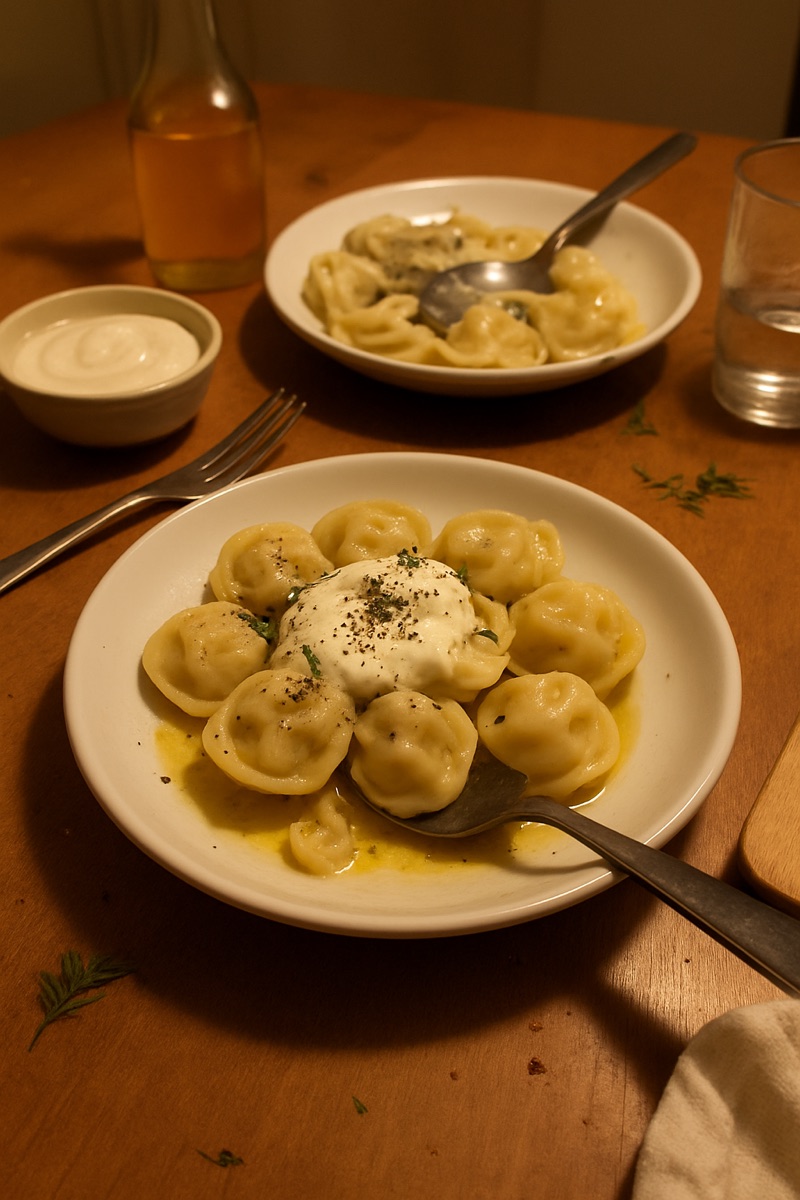 Pelmeni🇷🇺 Russian Federation · 3 hours
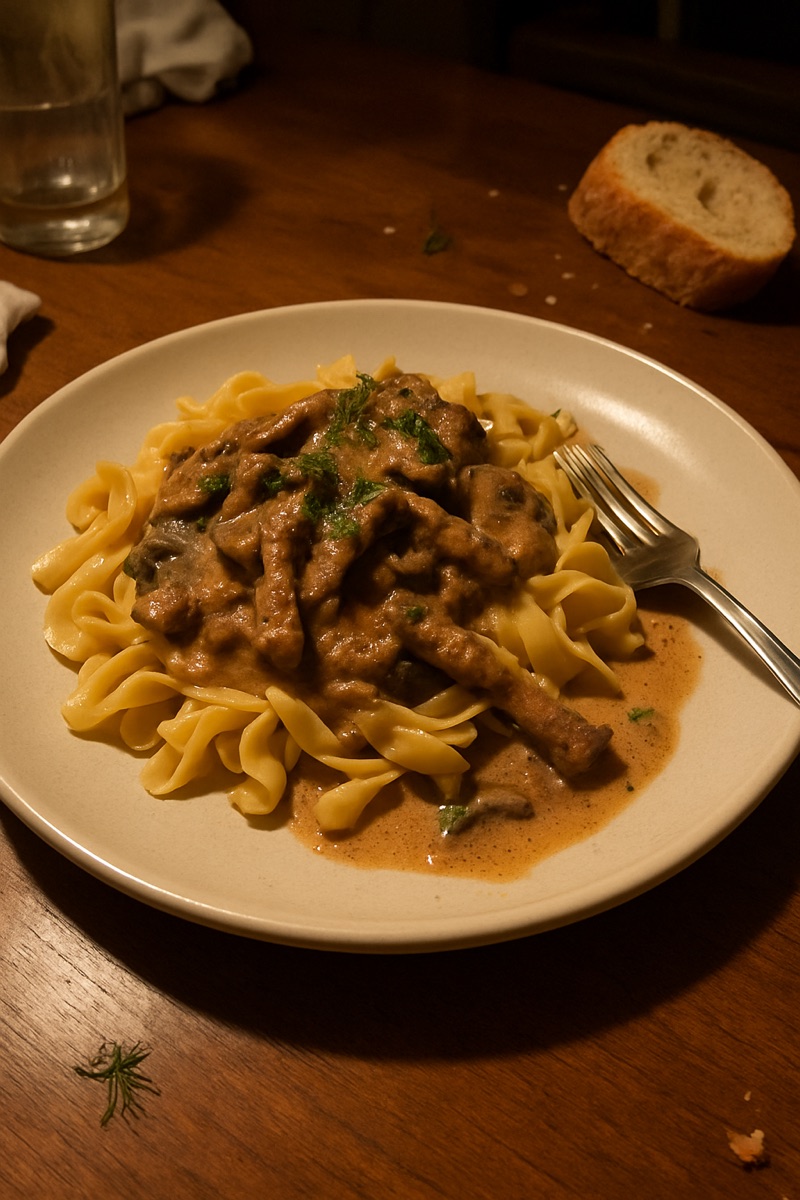 Beef stroganoff🇷🇺 Russian Federation · 2 hours and 30 minutes
Questions people ask
What is the most popular food in Russia?
Pelmeni, borscht, shchi, blini and buckwheat kasha are the dishes most associated with Russia. Pelmeni are the ones most often described as a national dish, and Olivier salad is on almost every New Year table.
What do Russians eat for breakfast?
Kasha is the classic breakfast: buckwheat, millet or oat porridge cooked in water or milk and served with butter, sugar or jam. Syrniki, fried curd cheese pancakes with jam or sour cream, are another common breakfast dish.
Is Russian food spicy?
No, Russian food is generally mild. Its sharp notes come from sourness, through sauerkraut, pickles, kvass and sour cream, and from mustard rather than chili.
Is borscht Russian or Ukrainian?
Borscht is eaten all over Russia, but it originated in Ukraine. In 2022 UNESCO inscribed the culture of Ukrainian borscht cooking on its list of heritage in need of urgent safeguarding.
What do Russians eat at New Year?
Olivier salad, a diced potato salad bound with mayonnaise, is one of the main features of New Year buffets, usually next to herring under a fur coat, layered with potato and grated beets.
Keep reading
- What is the national dish of Russia?
- Traditional food of Belarus: 12 dishes to know
- Traditional food of the Czech Republic: 13 dishes to know
- Traditional food of Estonia: 13 dishes to know
- Traditional food of Hungary: 13 dishes to know
- Traditional food of Latvia: 12 dishes to know