 COPPER
Traditional food of Vietnam: 12 dishes to know
Vietnamese food is built on rice, fish sauce and fresh herbs, balancing sweet, salty, sour, bitter and spicy in the same meal. Rice comes as grains, noodles and rice paper, and raw herbs go on almost every plate. The most emblematic dishes are phở, the beef noodle soup, bún chả, Hanoi's grilled pork with noodles, the bánh mì sandwich and cơm tấm, Saigon's broken rice.
What Vietnamese food is built on
Vietnamese cooking is rice-based rather than wheat-based. Rice is eaten as plain grains, turned into noodles (bún, phở), rolled into bánh tráng rice paper and ground into flour for crepes and cakes. The main seasoning is nước mắm, fish sauce made from fermented fish, used in cooking and mixed with lime, sugar, garlic and chili into the dipping sauce nước chấm that sits on almost every table.
A Vietnamese meal aims to combine five tastes: sweet, salty, bitter, sour and spicy. Lemongrass, ginger, mint, Vietnamese mint, Thai basil, lime and bird's eye chili do much of that work, and a plate of raw herbs and lettuce is served alongside many dishes so each person seasons their own bite. Chinese noodle soups and French colonial food, from baguettes to coffee and beef, both left marks that Vietnam reworked into its own food.
The dish most often named as the national dish of Vietnam is phở, but the country's food changes a lot from north to south, as the dishes below show.
Noodle soups and noodle bowls
Noodles in broth are eaten at any hour, from street stalls with low plastic stools to family kitchens.
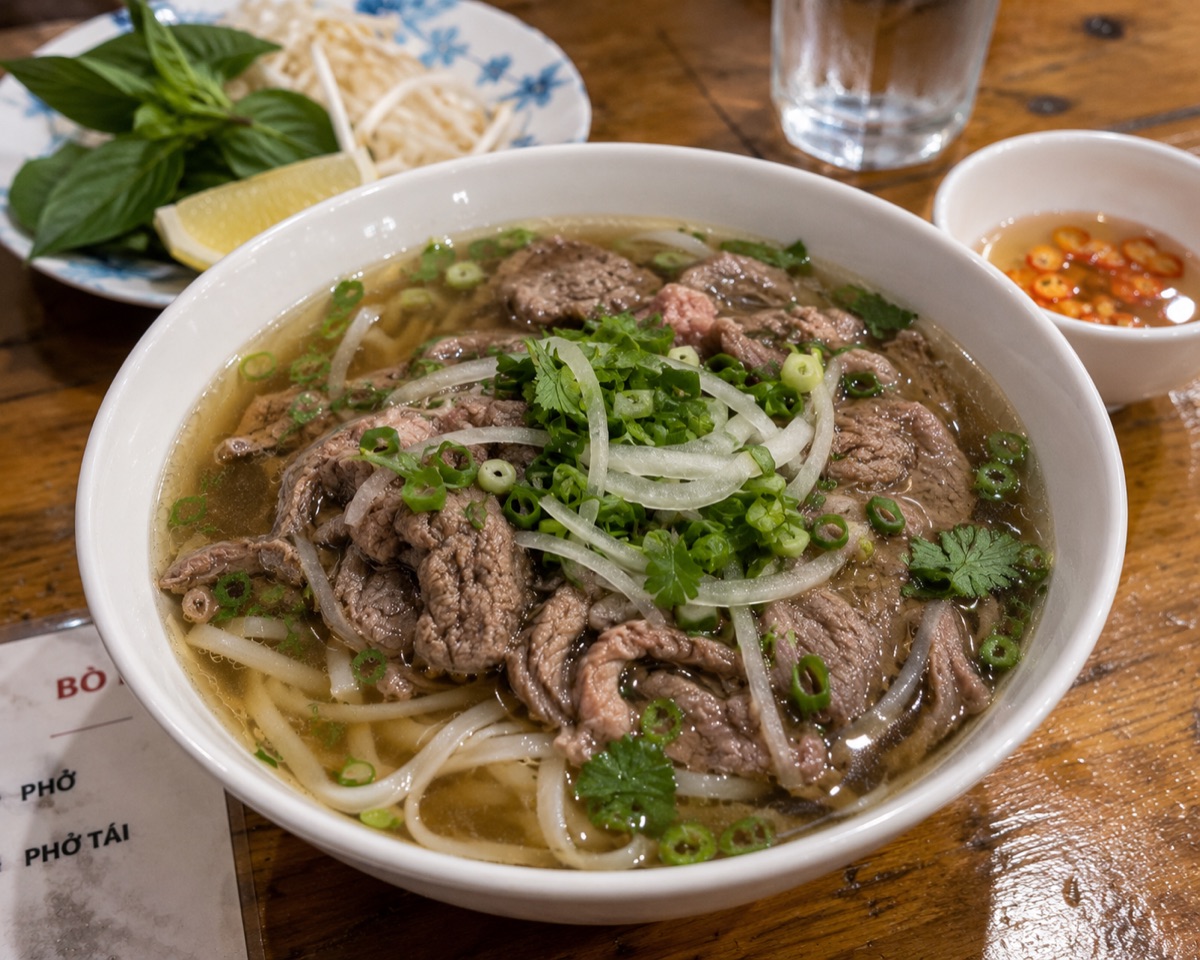
- Phở bò — Flat rice noodles in a clear beef broth simmered for hours with charred onion, ginger, star anise and cinnamon, poured boiling over thin slices of raw beef. The modern dish took shape between 1900 and 1907 in Nam Định province, southeast of Hanoi, and was first sold by street vendors at dawn and dusk. Hanoi keeps the garnish to scallions and cilantro; the south adds bean sprouts, Thai basil, lime and hoisin.
- Bún chả — Hanoi's lunch dish: grilled fatty pork patties and slices of pork belly served in a sweet-sour fish sauce broth, with cold rice vermicelli and herbs to dip in. The first dedicated restaurant opened on Gia Ngư street in the Old Quarter. Barack Obama and Anthony Bourdain ate it at Bún Chả Hương Liên in May 2016.
- Bún bò Huế — The spicy beef noodle soup of Huế, the former imperial capital in central Vietnam. Beef bones are simmered with lemongrass and seasoned with fermented shrimp paste and dried chili, and the noodles are thicker and rounder than phở. Pork knuckle and pig blood curds are traditional toppings.
- Canh chua — The sour soup of the Mekong Delta, made with river fish, pineapple, tomato and bean sprouts in a broth soured with tamarind. It is finished with herbs such as ngò gai and fried garlic and eaten with white rice. Snakehead fish, catfish, shrimp and tofu versions all exist.
Rice dishes and home cooking
- Cơm tấm — Broken rice, once the cheap fragments left after milling, topped with a grilled pork chop, shredded pork skin (bì), pickles and sweet fish sauce. It began among Mekong Delta rice farmers and became the signature meal of Saigon. Unlike most Vietnamese food, it is eaten with a fork and spoon.
- Cá kho tộ — Catfish or snakehead fish braised in a clay pot in caramel sauce (nước màu) and fish sauce until dark and sticky. Kho, braising in caramel, is a family technique designed to stretch a small amount of protein over a lot of rice. It is usually served with a sour soup.
- Bánh chưng — A square cake of glutinous rice, mung beans and fatty pork seasoned with black pepper, wrapped in dong leaves and boiled for ten to twelve hours. Families make it together in the last days of the lunar year and place it on the ancestral altar for Tết, the Lunar New Year. Its square shape represents the earth.
Street food: wraps, crepes and sandwiches
- Bánh mì — A short baguette with a thin crisp crust and an airy crumb, filled with pâté, Vietnamese cold cuts, pickled carrot and daikon, cucumber, cilantro, mayonnaise and chili. The French brought the baguette in the 1860s; the Saigon-style sandwich known today developed in the 1950s. Grilled pork, chicken, sardine and tofu versions are sold from street carts across the country.
- Bánh xèo — A thin rice-flour and turmeric crepe, named after the sizzle the batter makes in the hot pan, folded over pork, prawns and bean sprouts. Pieces are torn off, wrapped in lettuce and herbs and dipped in nước chấm. Central Vietnam makes small, hand-sized ones; the Mekong Delta makes large crepes coloured with coconut milk.
- Gỏi cuốn — Fresh rolls of rice paper wrapped around pork, prawns, rice vermicelli and herbs, served uncooked at room temperature. They are called gỏi cuốn in the south and nem cuốn in the north. They come with a peanut and hoisin dipping sauce or nước chấm.
Sweets and coffee
- Chè — The name covers a whole family of sweet soups, puddings and drinks made from mung beans, kidney beans, glutinous rice, tapioca, jellies or fruit, cooked in water with sugar. They are served hot or cold, in a bowl or a glass, and in the south often topped with coconut cream. Vendors sell them ready to eat in plastic cups.
- Cà phê sữa đá — Iced coffee made by dripping dark-roast robusta through a small metal filter called a phin onto sweetened condensed milk, then pouring it over ice. Condensed milk replaced fresh milk under French rule because dairy was scarce and spoiled quickly in the heat. Northerners call it cà phê nâu đá, "iced brown coffee".
North, centre and south
Vietnam's long shape gives it three distinct kitchens. The north, around Hanoi, cooks light and balanced food, often using black pepper instead of chili; phở and bún chả come from here. The centre, around Huế, is the spiciest region, with chili and shrimp paste in many dishes and a decorative style of cooking shaped by the old royal court; bún bò Huế is its best-known bowl. The south, around Saigon and the Mekong Delta, uses more sugar, coconut, garlic and fresh herbs, and gave the country cơm tấm, canh chua and cá kho tộ.
Vietnam shares rice noodles, fish sauce and herb plates with its neighbours. For comparison, read our guides to the traditional food of Thailand and the traditional food of Cambodia, or explore the wider Southeast Asian kitchen.
Cook Vietnamese food at home
Three of these dishes have full step-by-step recipes in Copper: phở bò with its long-simmered broth, Hanoi bún chả, and crisp bánh xèo with nước chấm. You will find them, with ingredients and timings, on our page about the food of Vietnam.
The recipes
- Phở bò🇻🇳 Vietnam · 4 hours
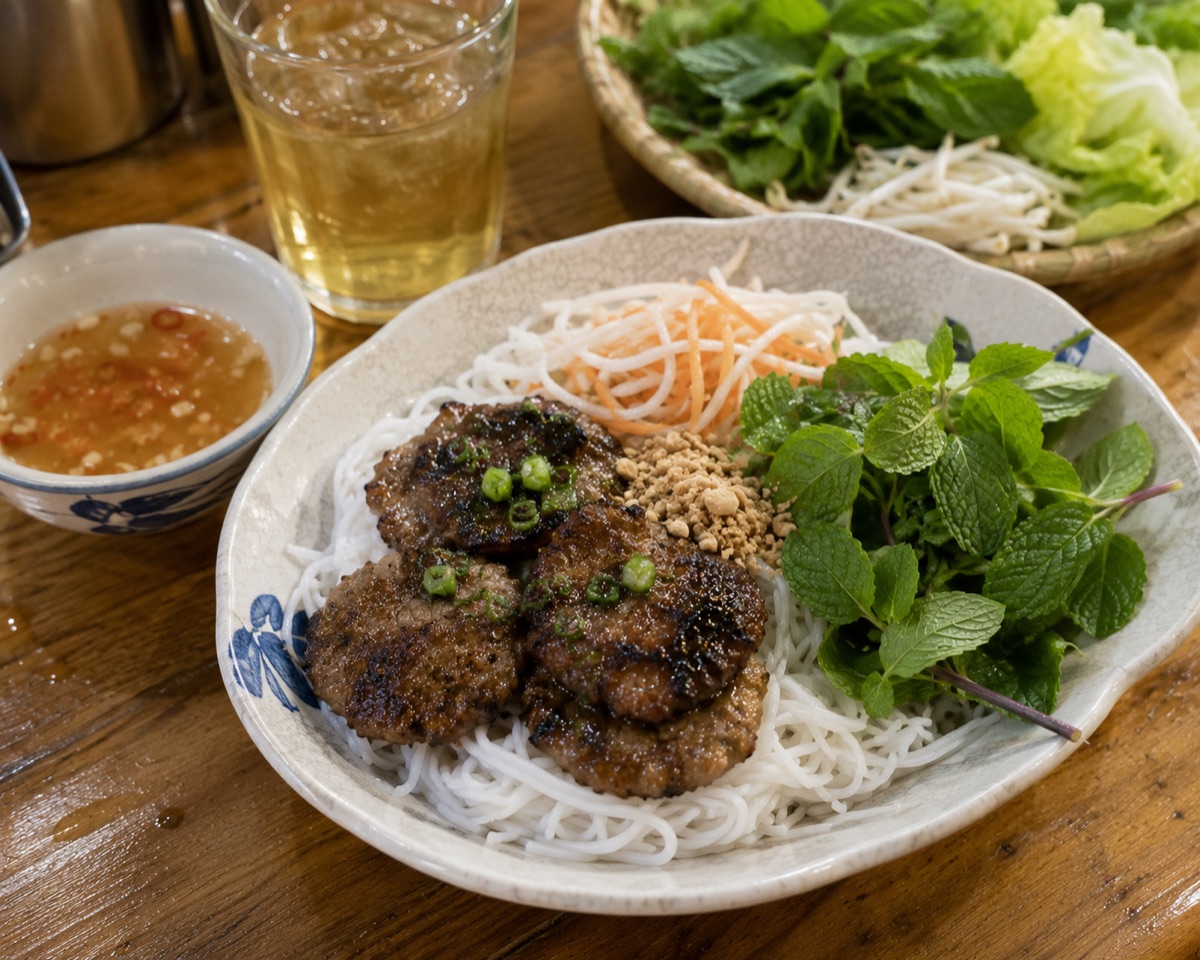 Bún chả🇻🇳 Vietnam · 1 hour and 15 minutes
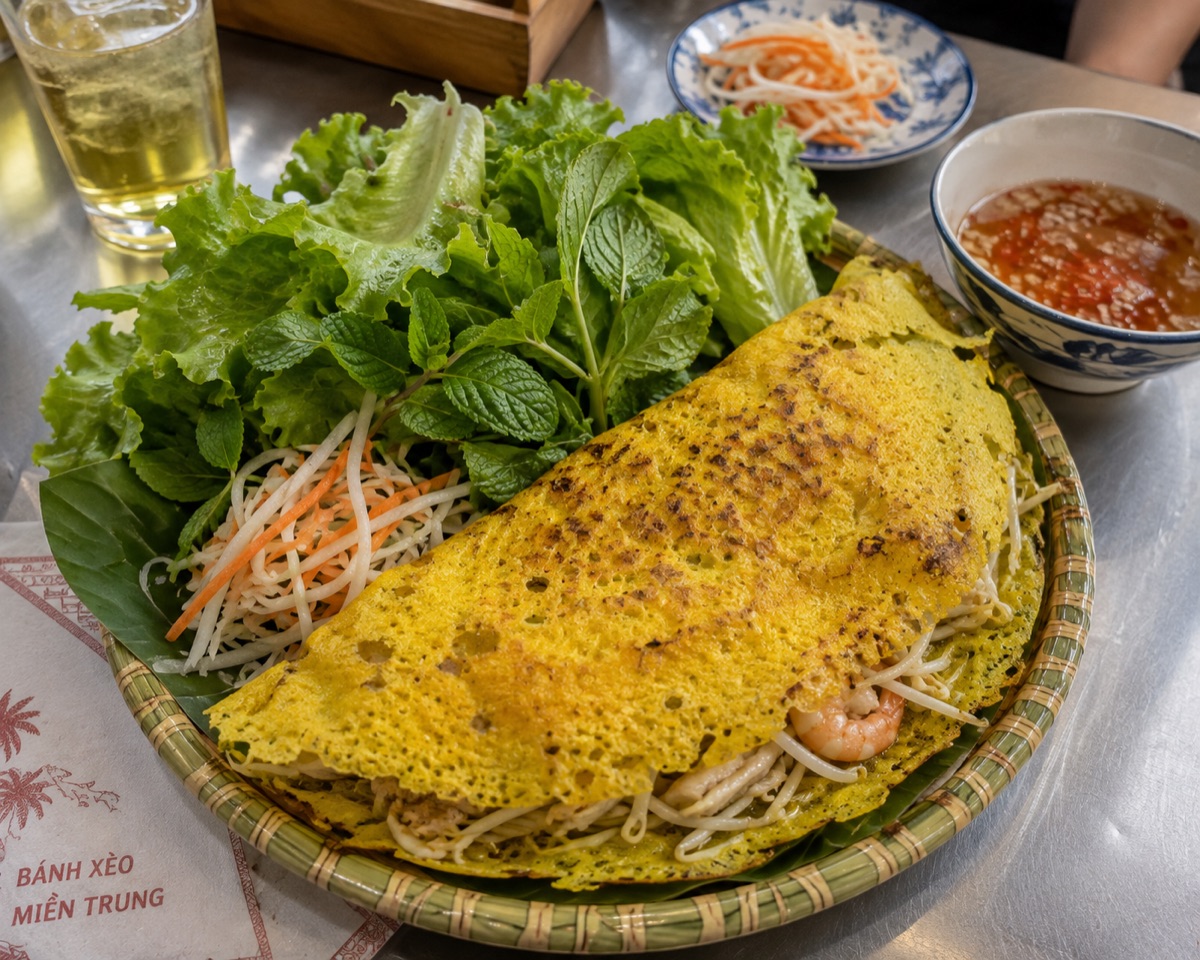 Bánh xèo🇻🇳 Vietnam · 3 hours and 40 minutes
Questions people ask
What is the most popular food in Vietnam?
Phở, rice noodles in a clear beef or chicken broth, is the best-known Vietnamese dish and is often called the national dish. Bánh mì, bún chả and cơm tấm are also eaten every day across the country.
What do people in Vietnam eat for breakfast?
Noodle soups such as phở, which street vendors first sold at dawn, are a classic morning meal. Bánh mì and sticky rice (xôi) are quick alternatives, often with an iced coffee.
Is Vietnamese food spicy?
Not usually by default. Northern food is mild and uses black pepper more than chili, while central Vietnam, especially Huế, is noticeably spicy. In most places fresh chili and chili sauce are served on the side so each person adds their own.
What is the difference between phở and bún bò Huế?
Phở uses flat rice noodles in a clear broth scented with star anise and cinnamon. Bún bò Huế uses thicker round noodles in a spicy broth flavoured with lemongrass and fermented shrimp paste.
What do Vietnamese people eat at Tết?
The essential Tết dish is bánh chưng, a square cake of glutinous rice, mung beans and pork wrapped in leaves and boiled for ten to twelve hours, then placed on the ancestral altar.
Keep reading
- What is the national dish of Vietnam?
- Traditional food of Brunei: 12 dishes to know
- Traditional food of Cambodia: 12 dishes to know
- Traditional food of Indonesia: 13 dishes to know
- Traditional food of Laos: 14 dishes to know
- Traditional food of Malaysia: 13 dishes to know