 COPPER
What is the national dish of Vietnam?
Vietnam has no official national dish, but phở is the one most often cited: flat rice noodles in a clear beef broth scented with charred onion, ginger and star anise, poured boiling over thin slices of raw beef. It appeared in northern Vietnam in the early 20th century. In 2024 the culture ministry listed Hanoi phở and Nam Định phở as national intangible cultural heritage.
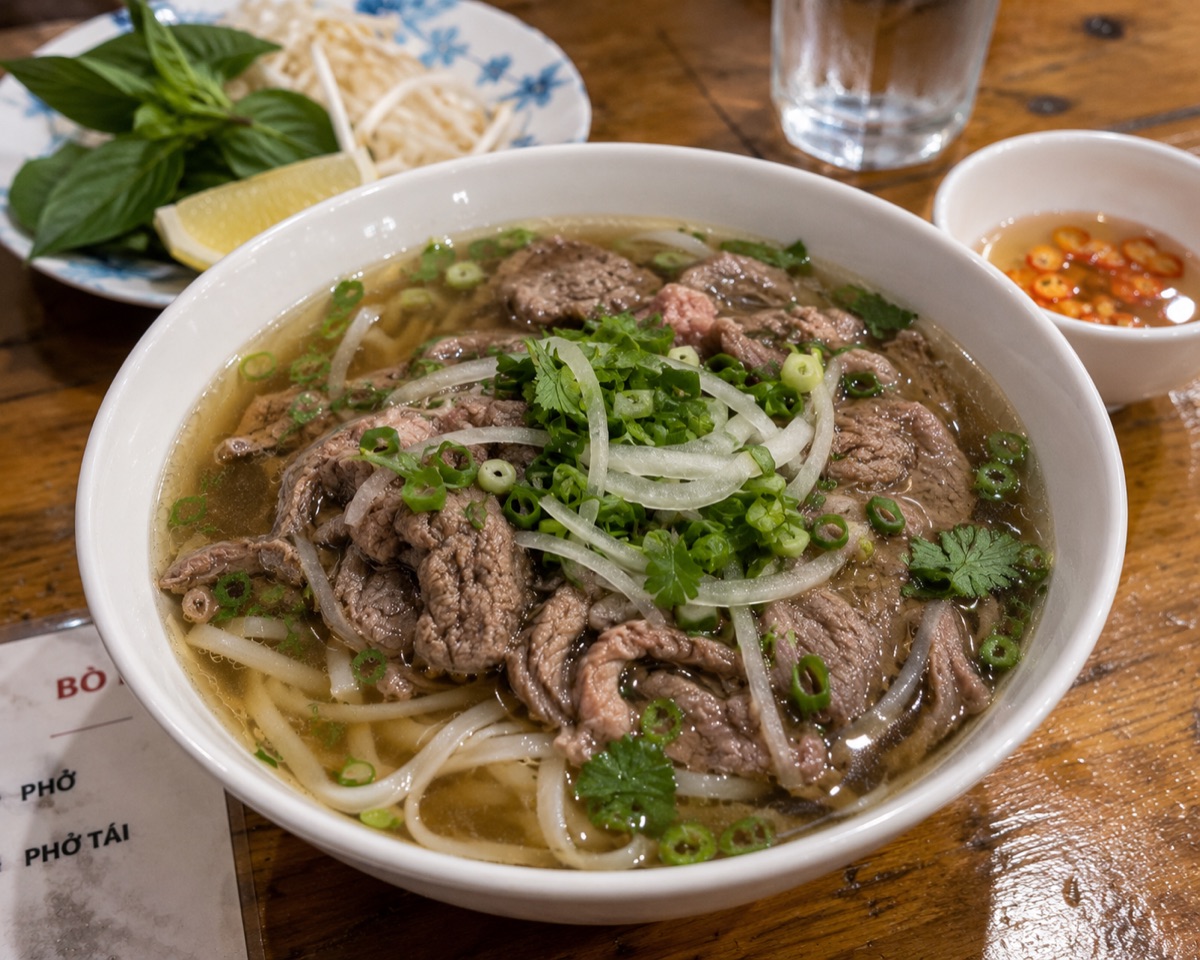
What is in a bowl of phở?
Phở is a soup of broth, flat rice noodles (bánh phở), herbs and meat, usually beef (phở bò) and sometimes chicken (phở gà). The broth is what you judge it by:
- Beef bones and brisket, simmered for hours.
- Charred onion and ginger, blackened in a dry pan before they go in.
- Whole spices: star anise, cinnamon, black cardamom, coriander seed and cloves, toasted first.
- Fish sauce, a little sugar and salt to season.
- Toppings: sliced brisket and raw sirloin, with bean sprouts, basil, spring onion and lime on the side.
How phở bò is made
The bones and brisket are first boiled hard for 5 minutes, drained and rinsed. That step is what keeps the broth clear. They go back in a clean pot with about 4 litres of water, the charred aromatics and the toasted spices, and simmer very gently for around 3 hours, skimmed as they go.
The broth is strained and seasoned with fish sauce until it tastes beefy, fragrant and barely sweet, then kept at a boil. Raw sirloin is sliced as thin as possible and laid over the noodles, and the boiling broth poured on top cooks it in the bowl. Our phở bò recipe gives every quantity.
Where phở comes from
Phở is a recent dish. It first appears in Vietnamese writing in the early 20th century, and its modern form took shape between 1900 and 1907 in Nam Định province, southeast of Hanoi. The villages of Vân Cù and Dao Cù are reputed to be its home.
It was first sold at dawn and dusk by street vendors who carried a cauldron over a wood fire on a shoulder pole. The men who carried these mobile kitchens wore a felt hat known as the mũ phở. Hanoi's first fixed phở stands opened in the 1910s, and around 1925 a villager from Vân Cù opened the first Nam Định-style stand in the capital. Whether phở owes more to French beef-eating habits or to Chinese beef noodle soups sold in Hanoi is still debated.
When Vietnam was partitioned in 1954, more than a million people moved from North to South and took phở with them. The South, where it had been less common, added its own garnishes: lime, bean sprouts, culantro, basil, hoisin and chilli sauce. Raw-beef phở tái also began to rival the fully cooked phở chín. In the North, meanwhile, private phở restaurants were nationalised and street vendors were banned as capitalist, though many kept selling from their shoulder poles and plastic stools. After the war, refugees opened phở shops from Paris to California. The dish keeps changing: phở cuốn, the same ingredients rolled in sheets of fresh rice noodle, has become popular in Hanoi, and since 2017 Vietnam has held an annual Phở Day on 12 December. In August 2024 Vietnam's Ministry of Culture, Sports and Tourism recognised Hanoi phở and Nam Định phở as national intangible cultural heritage.
Hanoi phở vs Saigon phở
The two main styles differ in broth, noodles and what comes on the side:
- Hanoi (northern) phở: clear, savoury broth, light on spices, garnished with whole green onion and coriander; served with chilli sauce, pickled garlic and fried dough sticks (quẩy).
- Saigon (southern) phở: sweeter, cloudier broth, eaten with bean sprouts, fresh chilli, hoisin sauce and a plate of herbs such as Thai basil and culantro.
- Nam Định phở: more fish sauce in the broth and wider noodles.
Other dishes to know from Vietnam
Hanoi's other famous noodle dish is bún chả: pork patties and sliced belly grilled over charcoal, dropped into a light, sweet-sour fish sauce broth and eaten with cold rice noodles and herbs. It is traditionally a lunchtime dish. The food writer Vũ Bằng described it in 1959, calling Hanoi a town 'transfixed by bún chả'. The city's first bún chả restaurant opened on Gia Ngư street in the Old Quarter. Barack Obama ate it with Anthony Bourdain at a Hanoi restaurant in 2016.
Bánh xèo is a thin turmeric and coconut rice-flour crepe, named after the sizzle the batter makes as it hits the pan, folded over pork, prawns and bean sprouts and eaten wrapped in lettuce and herbs. Bánh xèo has spread to Cambodia and Thailand; see the national dish of Cambodia.
For the wider region, see our guide to Southeast Asian food, and find all three dishes on our page about the food of Vietnam.
The recipes
- Phở bò🇻🇳 Vietnam · 4 hours
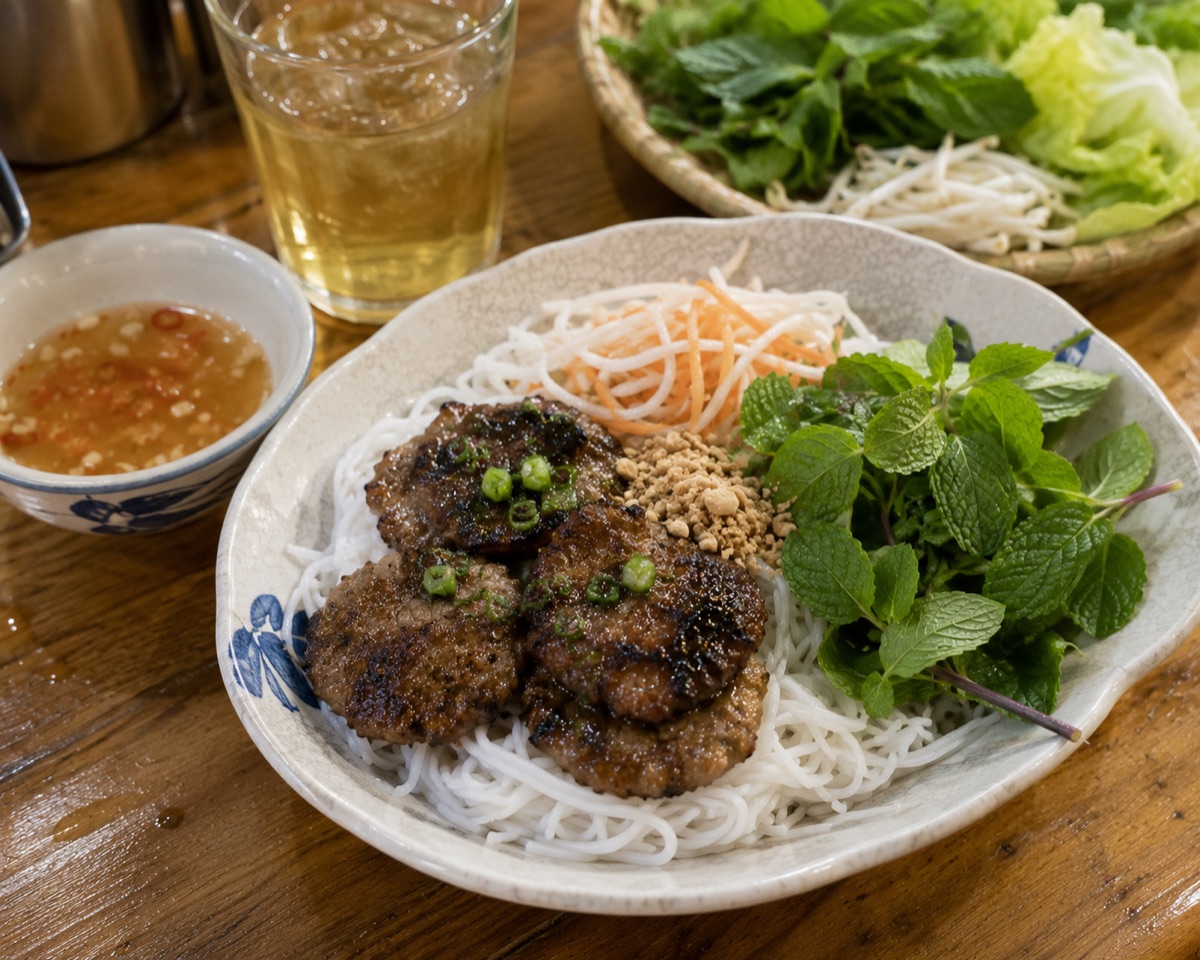 Bún chả🇻🇳 Vietnam · 1 hour and 15 minutes
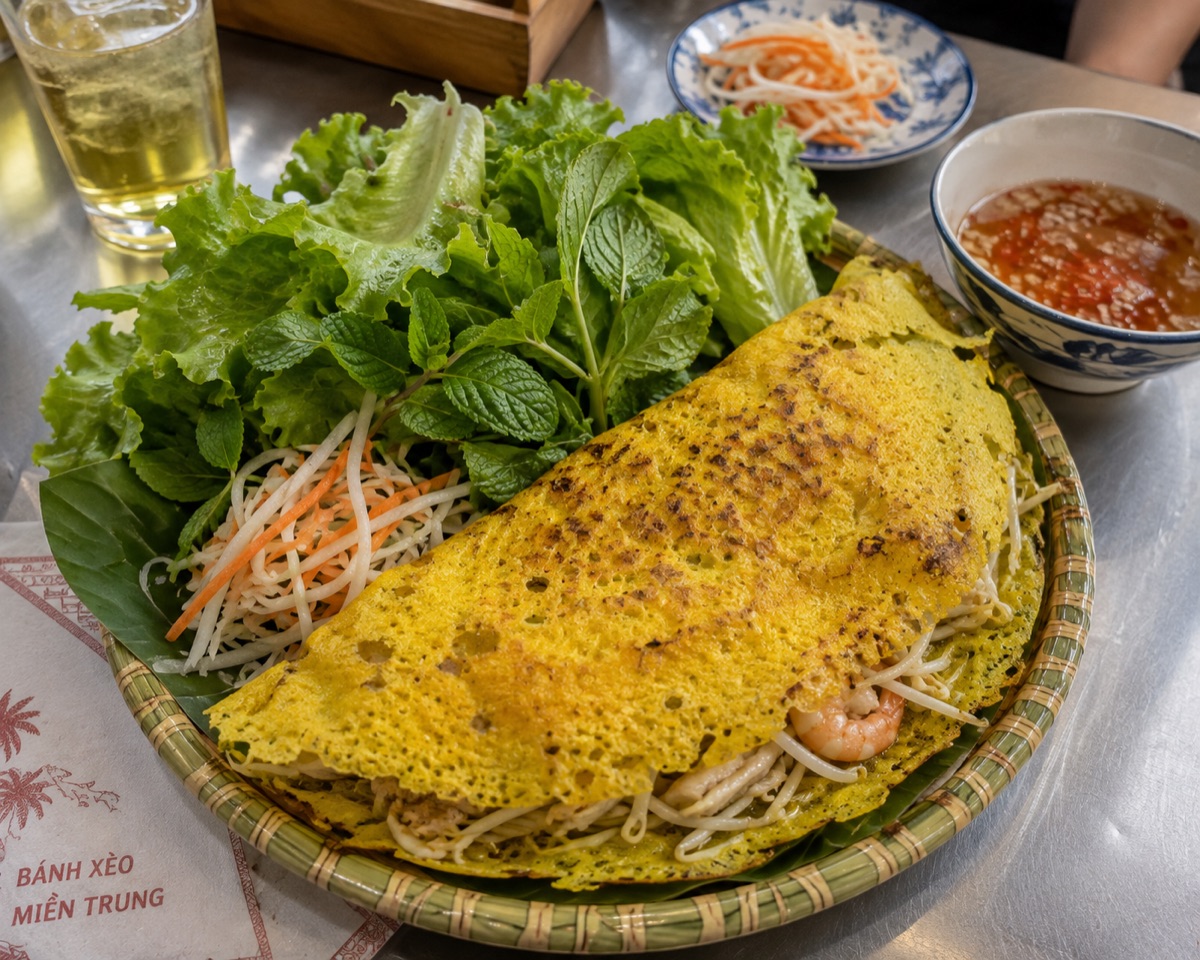 Bánh xèo🇻🇳 Vietnam · 3 hours and 40 minutes
Questions people ask
How do you pronounce phở?
Roughly 'fuh', with a dipping tone, not 'foe'. The Vietnamese spelling phở marks that tone.
Is phở Vietnamese, Chinese or French?
Phở is Vietnamese, created in northern Vietnam in the early 20th century. Historians still debate how much it borrowed from French beef cooking and from Chinese beef noodle soups sold in Hanoi.
What is the difference between phở bò and phở gà?
Phở bò is made with beef bones and beef; phở gà uses chicken meat and bones. The spices stay the same, though the charred ginger is often left out of the chicken version.
Is phở eaten for breakfast?
Phở was first sold as a snack at dawn and dusk by street vendors. Today it is served in homes, street stalls and restaurants across Vietnam.
What is served with phở?
Bean sprouts, Thai basil, lime wedges, sliced chilli and spring onion; in the north, also pickled garlic, chilli sauce and fried dough sticks.
Keep reading
- Traditional food of Vietnam: 12 dishes to know
- What is the national dish of Brunei?
- What is the national dish of Cambodia?
- What is the national dish of Indonesia?
- What is the national dish of Laos?
- What is the national dish of Malaysia?