 COPPER
What is the national dish of Brunei?
The national dish of Brunei is ambuyat: starch from the trunk of the sago palm, set with boiling water into a sticky, translucent and deliberately bland mass. It is wound onto a two-pronged bamboo fork called a chandas (candas) and dipped into sour, spicy sauces. No law makes it official, but it is the dish consistently named as Brunei's national dish.
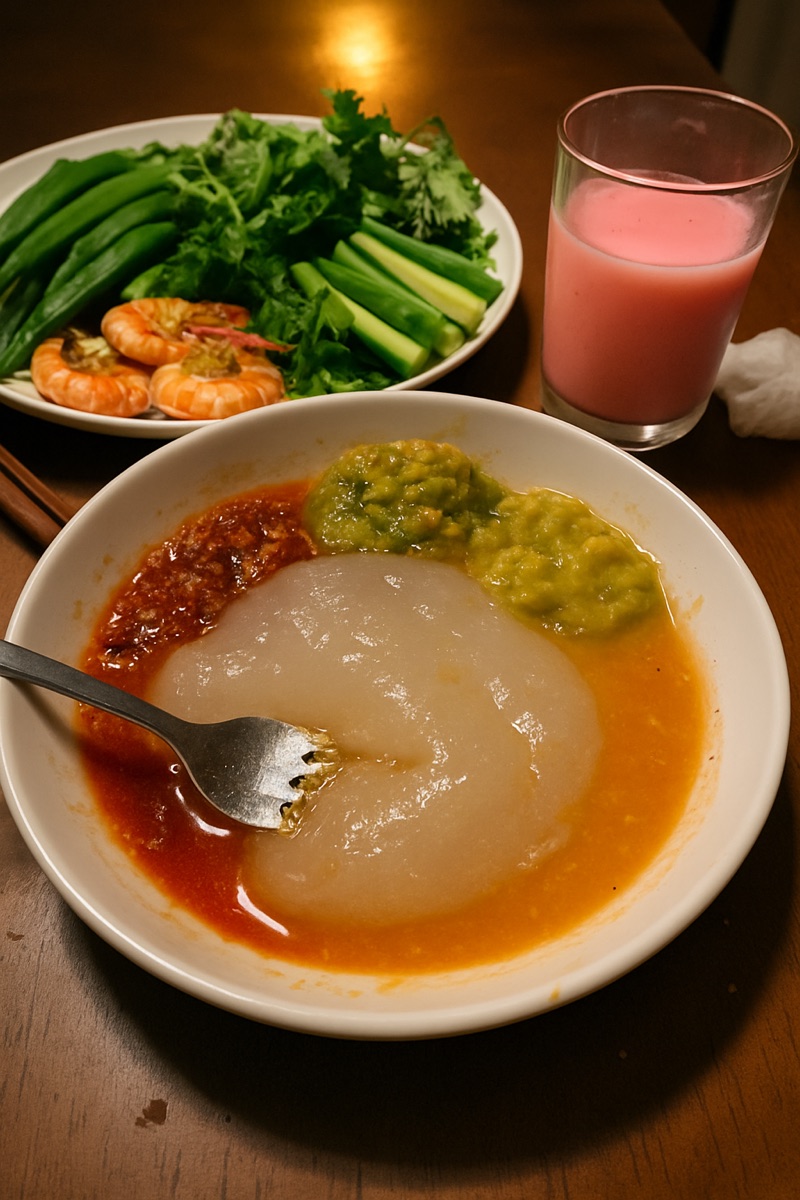
What is ambuyat?
Ambuyat is made from sago, the starch extracted from the interior trunk of the sago palm. On its own it is starchy and bland, close to tapioca. In Brunei, sago is also called ambulung.
The starch is not cooked on the stove. Boiling water is poured over it and stirred hard until it turns into a glossy, glue-like mass, which is served hot. It has no taste of its own on purpose: the flavour comes entirely from the sauces it is dipped in, which are sour, salty and fiery.
It is one of the few dishes considered peculiar to Brunei. Its relatives across the border are known as linut or pinantung in the Malaysian states of Sabah and Sarawak and in Labuan.
How ambuyat is made
Our ambuyat recipe shows how little there is to it, and how much depends on one gesture:
Outside Borneo, sago starch can be hard to find. Home recipes such as the one published by Will Fly for Food accept tapioca or potato starch instead; the method stays the same, with the boiling water poured over the starch and stirred until it turns clear and sticky.
- Slake 250 g of sago starch with 100 ml of cold water in a large heatproof bowl.
- Bring 400 ml of water to a hard rolling boil. Water that is merely hot will not set the starch.
- Pour it over the starch all at once while stirring hard with a wooden stick.
- Keep turning for 2 to 3 minutes until the mass turns translucent, glossy and stretchy.
- Add no salt and no oil, and serve hot straight away.
How do you eat ambuyat?
Ambuyat is eaten with a chandas (also spelled candas), a linked pair of bamboo sticks. You twirl a portion of starch around the prongs, dip it in the sauce, and swallow it without chewing.
The sauce, called cacah, is the real seasoning. Wikipedia lists the classic ones:
Our recipe uses a cacah tempoyak: 3 red chillies crushed with 1 teaspoon of shrimp paste, then stirred with 3 tablespoons of tempoyak and 1 tablespoon of lime juice. It should be sour, hot and pungent, because it carries all the flavour of the dish.
It is a shared meal. The ambuyat is served in a big bowl and portioned into smaller bowls for each diner, with several side dishes around it and a chandas for every person at the table.
- Sambal belacan: chilli pounded with shrimp paste.
- Sambal tempoyak: chilli with tempoyak, fermented durian paste.
- Sambal cincalok: chilli with cincalok, fermented shrimp.
- Binjai: a sour sauce made from a type of wild mango.
Where ambuyat comes from
Ambuyat is the traditional food of the Bruneian Malay, Bisaya, Bajau, Kadazan-Dusun and Lun Bawang peoples of northern Borneo, in Brunei as well as in neighbouring Sabah, Sarawak and Labuan. In the past it was a dietary staple for the indigenous people of the region.
Similar dishes exist elsewhere in the Malay world. In eastern Indonesia, papeda is a sago dish served with stir-fried water spinach, papaya flower buds and a turmeric-yellow fish curry flavoured with green chillies, lemongrass and bay leaves. Compare it with our guide to Indonesia's national dish.
Other dishes to know from Brunei
Bruneian food is close to that of Malaysia, Singapore and Indonesia, with Indian, Chinese, Thai and Middle Eastern influences. Fish and rice are the staples, the food is halal and pork is avoided.
Nasi lemak is one of the most popular everyday dishes: rice cooked in coconut milk with knotted pandan leaves, served with a sambal of dried chillies, shallots and shrimp paste fried for 15 to 20 minutes until its oil splits red, plus crisp anchovies, roasted peanuts, boiled egg and cucumber. It is also the dish most often named for Malaysia.
Satay is chicken marinated in a pounded lemongrass, galangal and turmeric paste, grilled over charcoal and served with a coarse roasted peanut sauce. Nasi katok, literally knock rice, is plain rice with fried chicken and sambal, traditionally wrapped in brown paper. Beef rendang and pajeri nanas are also popular.
You will find these dishes, with ingredients and step-by-step methods, on our page about the food of Brunei. For the neighbouring kitchens, see our guide to Southeast Asian food.
The recipes
- Ambuyat🇧🇳 Brunei Darussalam · 15 minutes
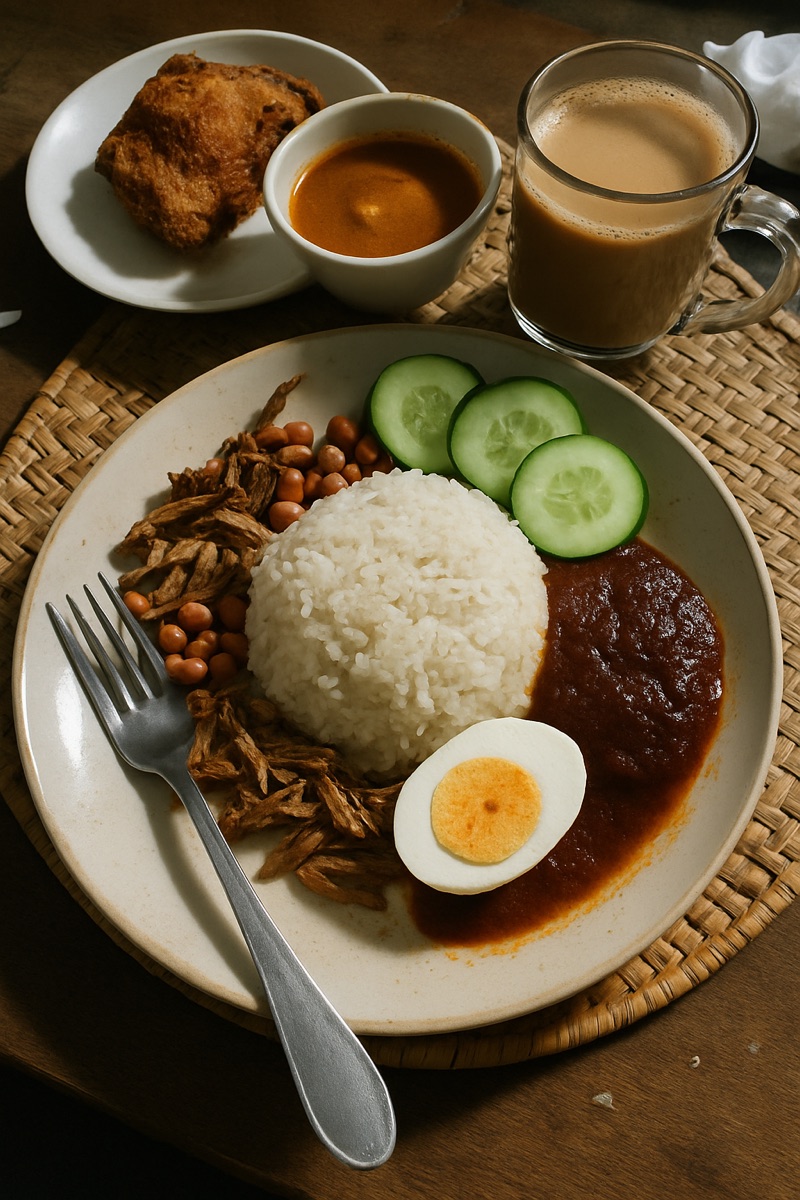 Nasi lemak🇧🇳 Brunei Darussalam · 1 hour and 15 minutes
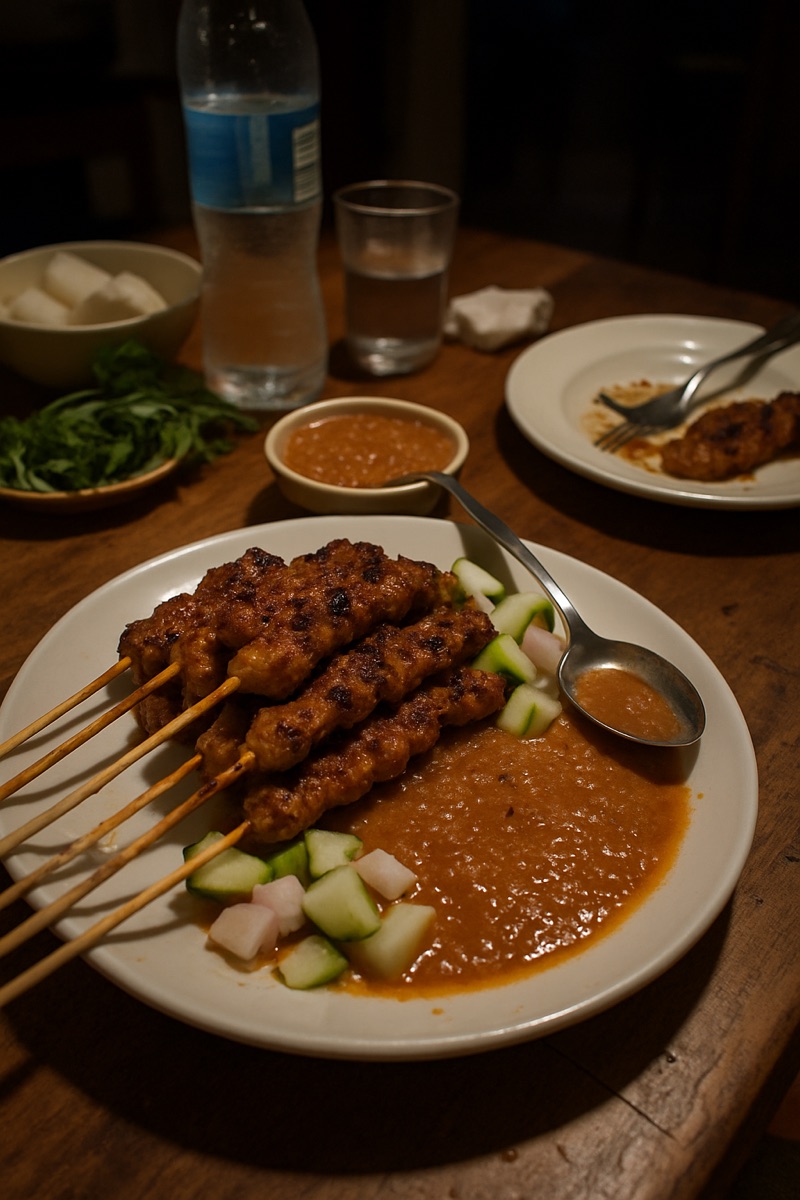 Satay🇧🇳 Brunei Darussalam · 4 hours and 50 minutes
Questions people ask
Is ambuyat the national dish of Brunei?
Yes. Ambuyat is the dish consistently described as Brunei's national dish, although no law or decree makes it official.
What does ambuyat taste like?
Almost nothing. Ambuyat is deliberately bland; its flavour comes from the sour and spicy sauces it is dipped in, such as sambal belacan or tempoyak.
How do you eat ambuyat?
You wind a portion around a two-pronged bamboo fork called a chandas, dip it in the sauce and swallow it without chewing.
Is ambuyat also eaten in Malaysia?
Yes. It is popular in Sabah, Sarawak and Labuan, where it is sometimes called linut or pinantung.
What is ambuyat made from?
It is made from sago starch, taken from the interior trunk of the sago palm, mixed with boiling water.
Keep reading
- Traditional food of Brunei: 12 dishes to know
- What is the national dish of Cambodia?
- What is the national dish of Indonesia?
- What is the national dish of Laos?
- What is the national dish of Malaysia?
- What is the national dish of Myanmar?