 COPPER
Traditional food of Brunei: 12 dishes to know
Traditional Bruneian food is built on rice and fish, seasoned with sambal and spice pastes, and is halal, without pork or alcohol. It is close to Malay cooking in Malaysia and Indonesia, with Borneo specialities made from sago and glutinous rice. The dishes to know first are ambuyat, the national dish, nasi katok, nasi lemak and beef rendang.
What Bruneian food is built on
Brunei's cooking is heavily influenced by its neighbours Malaysia, Singapore and Indonesia, with additional Indian, Chinese, Thai and Middle Eastern influences. As across the region, rice and fish are the staples. Beef is expensive and therefore less common, and in rural areas game such as wild birds, sambar deer and barking deer is hunted.
Islam shapes the table. Food is halal and pork is avoided, apart from Chinese stalls and restaurants, which are allowed to sell it, and alcohol is not sold anywhere in the country. During Ramadan it is illegal to eat in public during daylight hours. Dishes are often spicy and are usually eaten with rice or noodles, and sambal, a relish of ground chillies with shrimp paste, garlic, shallot and lime, comes with almost everything.
Brunei sits on the island of Borneo, and that shows in its starches. Sago, the starch from the trunk of the sago palm, gives the national dish, and glutinous rice wrapped in leaves gives a whole family of snacks. Kuih, small cakes and snacks mostly made from rice flour, glutinous rice and coconut, are eaten throughout the day and sold at the tamu, the open-air market.
Rice and sago dishes
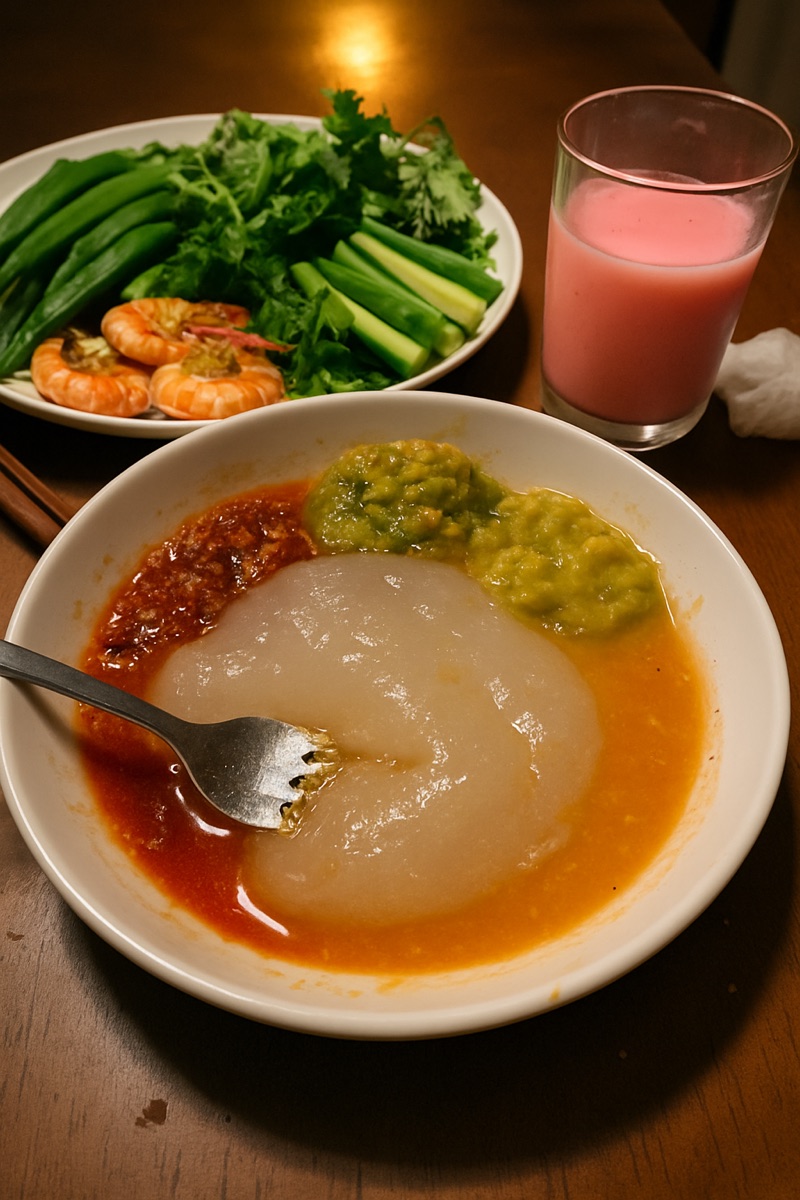
- Ambuyat — Sago starch set with boiling water into a sticky, translucent and deliberately bland mass. It is twirled onto a candas, a two-pronged bamboo fork, dipped into a sour and spicy sauce called cacah, and swallowed without chewing. It is the national dish of Brunei, served in a big shared bowl with side dishes, though locals eat rice far more often.
- Nasi katok — Plain rice, a piece of fried chicken and sambal, traditionally wrapped in brown paper. The name means knock rice: customers once knocked on a vendor's door to order, a story usually traced to a family in Mabohai in the 1980s. It still costs about B$1, and 24-hour chains have made it Brunei's own fast food.
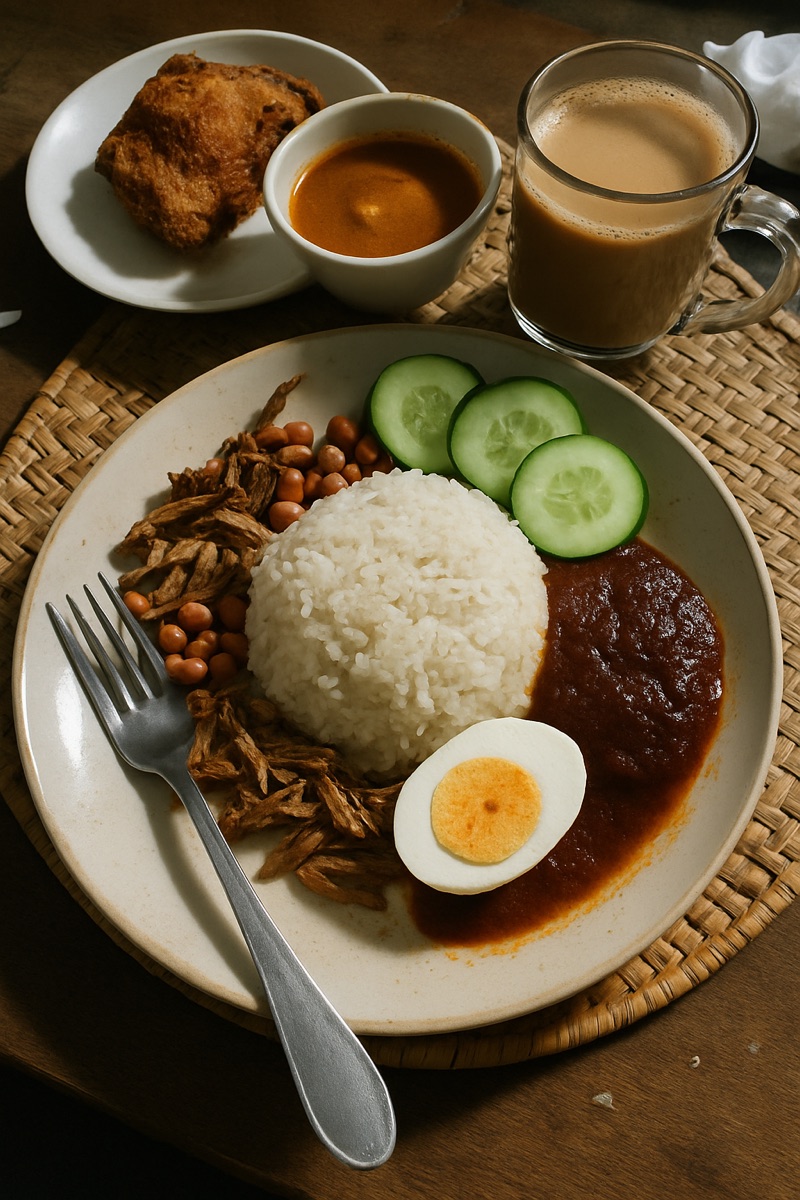
- Nasi lemak — Rice steamed in coconut milk with pandan leaves, served with a sambal of dried chillies and shrimp paste fried until its oil separates, crisp anchovies, roasted peanuts, boiled egg and cucumber. It is one of the most popular everyday dishes; nasi katok differs by using plain white rice.
- Kelupis — Glutinous rice mixed with coconut milk and salt, half-cooked, then wrapped tightly in nyirik leaves and steamed. Made by the Bruneian Malay, Bisaya, Kedayan, Dusun and Lun Bawang peoples, it is served at weddings and Hari Raya, eaten with peanut sauce, curry or rendang, and has been recognised as part of Brunei's national cultural heritage.
- Pulut panggang — Glutinous rice cooked with coconut milk and filled with a spicy sambal, wrapped in banana leaf and grilled rather than steamed. It is eaten for breakfast or at tea time, and in Tutong the morning batches can sell out by 8:30.
Meat, grills and noodles
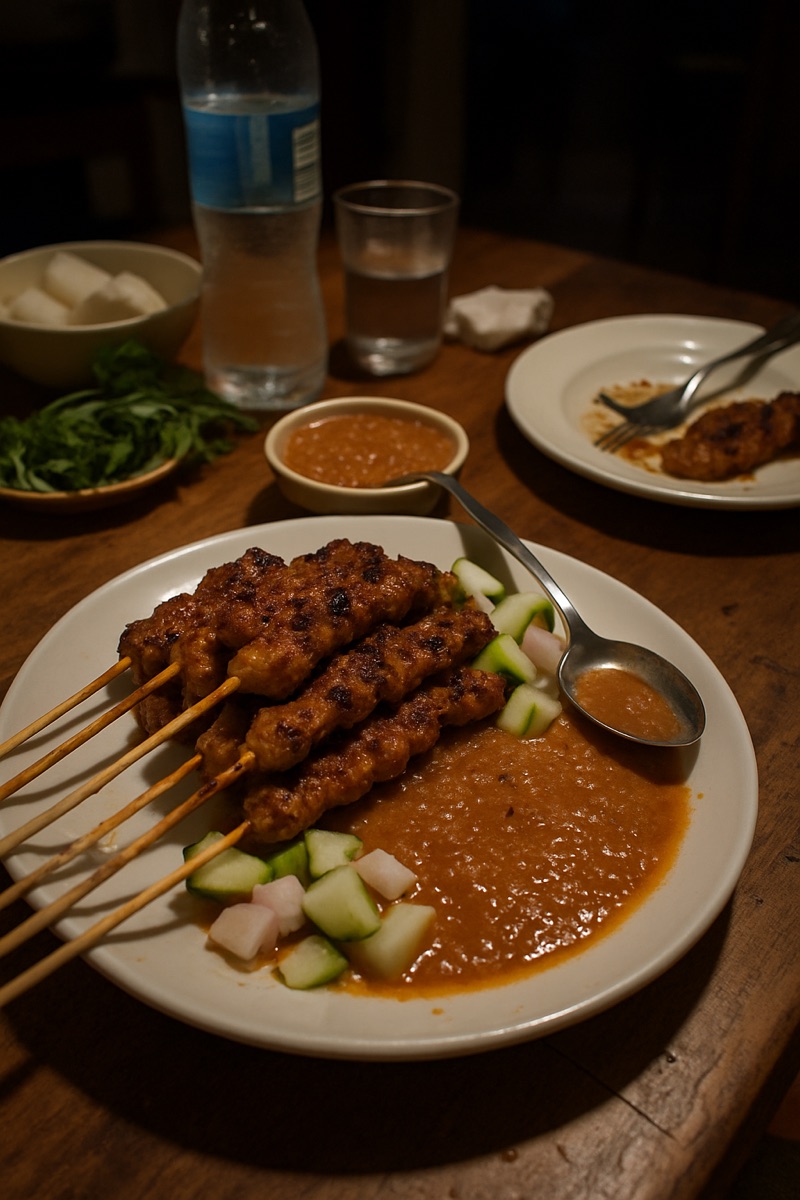
- Satay — Small pieces of marinated meat on skewers, grilled over charcoal and served with a peanut sauce. The marinade is a pounded paste of lemongrass, galangal and turmeric. It is a fixture of night markets and food courts such as the one at Jerudong Park, where it is sold next to grilled chicken tail, tongkeng ayam.
- Beef rendang — Beef cooked slowly in coconut milk and spices in an open pot until the liquid evaporates and the meat fries in its own oil, leaving a dark, dry glaze. It belongs to the Malay world as a whole and is served at Hari Raya and wedding feasts, and Wikipedia lists it among the most popular foods in Brunei.
- Soto — Noodles served in a beef broth. Brunei Tourism names it with nasi katok as one of the filling, cheap dishes at the Sumbangsih Mulia food complex in Beribi, where numerous stalls sell local food under one roof.
Kuih and sweet snacks
- Tapai — Siam rice mixed with laru, a yeast starter, and sugar, rolled and wrapped in nipah leaves, then left in a cool place to ferment. The result is a sweet-sour rice snack. The process is long, and tapai is a staple of weddings, ceremonies and the tamu.
- Penyaram — A flat fried cake of rice flour or corn flour worked with coconut milk, nicknamed kuih UFO for its flying-saucer shape. Brunei Tourism credits it to the Bruneian Malay and the Bajau.
- Kueh kusoi — A soft steamed cake known in Malaysia as kuih kosui. Where Malaysians and Indonesians sweeten it with pandan and palm sugar, Bruneians use gula anau, a sugar from the sap of sago or nipah palms, which gives it a dark caramel colour and a nutty taste. It is eaten with afternoon tea.
- Wajid — Rice cooked with coconut milk and sugar reduced to a dark caramel, wrapped in nyirik leaves and pinned with a coconut-leaf skewer. The version from Temburong district is made with beras Jawa, a rice hard to find elsewhere, and is less sticky and less chewy than ordinary wajid.
Where and how Bruneians eat
Bruneians eat out often and in groups: the ambuyat ritual, with one bowl and a candas for each diner, reflects a culture of sharing food. Food courts are the easiest way in. Sumbangsih Mulia in Beribi sells penyaram, selurut (a steamed cone of rice and sago flour in a coconut leaf) and nasi katok; Jerudong Park has arguably the largest food court in the country, known for satay and grilled meats; and Kontena Park in Anggerek Desa houses rotating vendors in shipping containers.
The kitchen is shared with Borneo. Ambuyat is eaten as linut in the Malaysian states of Sabah and Sarawak and in Labuan, kelupis is made by the same peoples on both sides of the border, and kolo mee, dry noodles tossed with shallots and meat, from Kuching in Sarawak, is popular in Brunei too. To drink there is teh tarik, a sweet milk tea, coffee (kopi), fruit juices and coconut water. Beef rendang and pajeri nanas, a pineapple dish, are named among the most popular foods in the country.
Cook Bruneian food at home
Copper has ambuyat, nasi lemak and satay with ingredient lists and step-by-step methods. The techniques that matter: pour water at a hard rolling boil over the slaked sago, or it will not set; fry the sambal for nasi lemak slowly until the oil splits red; and pound the satay paste fine so it clings to the meat. You will find them on our page about the food of Brunei.
Brunei's cooking is part of the wider Southeast Asian kitchen. To compare, see the traditional food of Malaysia and the traditional food of Indonesia.
The recipes
- Ambuyat🇧🇳 Brunei Darussalam · 15 minutes
 Nasi lemak🇧🇳 Brunei Darussalam · 1 hour and 15 minutes
 Satay🇧🇳 Brunei Darussalam · 4 hours and 50 minutes
Questions people ask
What is the national dish of Brunei?
Ambuyat, a bland, sticky mass of sago starch set with boiling water, eaten with a two-pronged bamboo fork called a candas and dipped in sour, spicy sauces. Brunei Tourism calls it the country's proud national dish.
What is the most popular food in Brunei?
Nasi katok, rice with fried chicken and sambal sold for about B$1, is the everyday favourite and works as the country's fast food. Nasi lemak, beef rendang and satay are also among the most popular dishes.
Is Bruneian food spicy?
Often. Dishes are commonly spicy and eaten with rice or noodles, and sambal made from ground chillies and shrimp paste comes with nasi katok, nasi lemak and pulut panggang. Ambuyat itself has no taste; its sauces are sour and hot.
Can you eat pork or drink alcohol in Brunei?
Food in Brunei is halal and pork is avoided, although Chinese stalls and restaurants are allowed to sell it. Alcohol is not sold anywhere in the country, and drinking it in public is prohibited.
What desserts are popular in Brunei?
Kuih: tapai (fermented rice wrapped in nipah leaves), penyaram, kueh kusoi sweetened with gula anau, wajid from Temburong, kueh koci, seri muka and kuih cincin. Most are made from rice flour or glutinous rice with coconut and palm sugar.
Keep reading
- What is the national dish of Brunei?
- Traditional food of Cambodia: 12 dishes to know
- Traditional food of Indonesia: 13 dishes to know
- Traditional food of Laos: 14 dishes to know
- Traditional food of Malaysia: 13 dishes to know
- Traditional food of Myanmar: 12 dishes to know