 COPPER
Traditional food of Malaysia: 13 dishes to know
Malaysian food blends the cooking of its three main communities, Malay, Chinese and Indian, with the indigenous kitchens of Sabah and Sarawak. Rice is the staple, and coconut milk, chilli sambal, shrimp paste, lemongrass and pandan run through it. The dishes to know first are nasi lemak, laksa, char kway teow and roti canai, with teh tarik to drink.
What Malaysian food is built on
Malaysian cuisine reflects the country's population: mostly Malays, Chinese and Indians, plus the indigenous peoples of Sabah and Sarawak, the Orang Asli of the peninsula and the Peranakan and Eurasian communities. Its roots go back to the Malacca Sultanate of the 1400s, when the Malay coast was a passage for maritime trade. Arab traders brought spices, Portuguese, Dutch and English traders introduced peanuts, pineapples and tomatoes, and in the 19th century British rule brought Chinese and Indian labourers, whose cooking became part of the national table.
Rice (nasi) is the most important staple, and the state of Kedah, the country's "rice bowl", grows about half of it. Malay cooking leans on coconut milk, chilli, lemongrass, turmeric, tamarind, pandan and sambal; Chinese Malaysian cooking comes mostly from Fujian, Teochew, Cantonese, Hakka and Hainanese traditions; Indian Malaysian cooking mixes north and south Indian and Sri Lankan styles. At lunch and dinner, dishes are not served in courses but all at once, often as nasi campur, plain rice with your choice from a spread of dishes. The dish most often called the national one has its own article: the national dish of Malaysia.
Rice dishes and curries
Most Malaysian meals are built around rice, from the coconut rice eaten at breakfast to the curry spreads of the Indian Muslim restaurants.
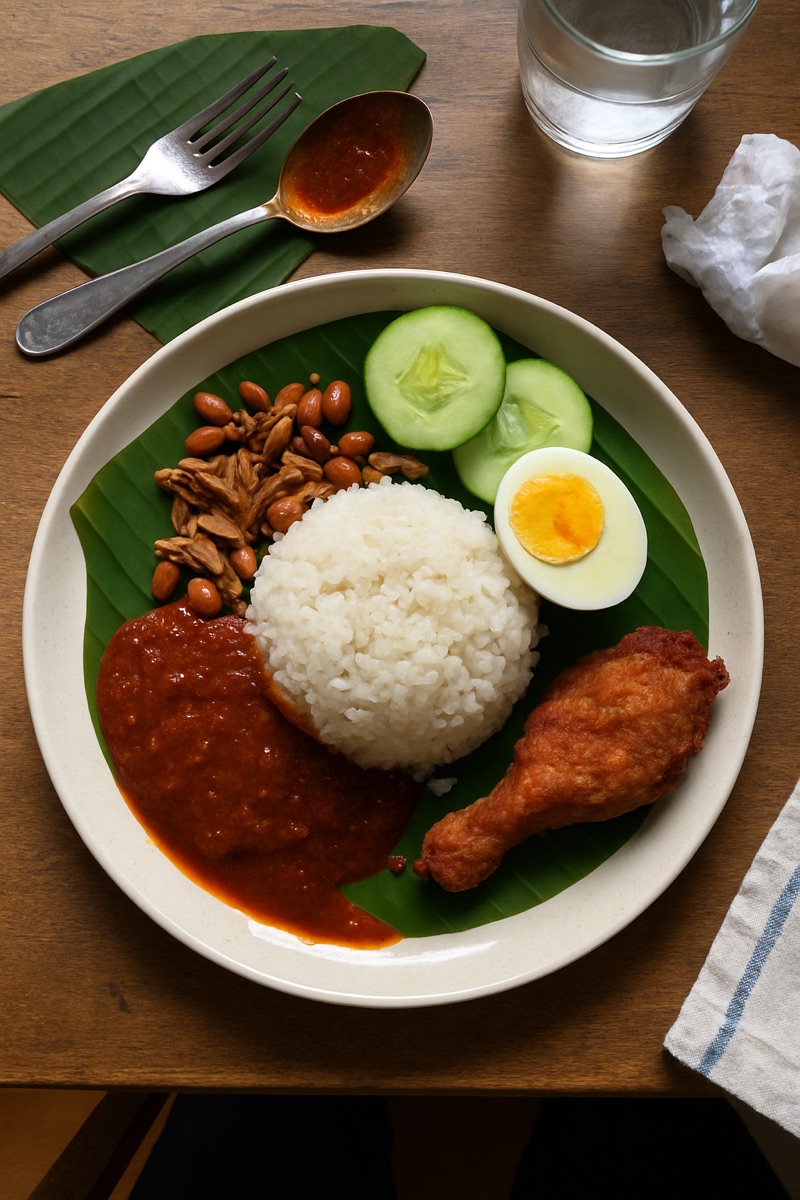
- Nasi lemak — Rice steamed in coconut milk with pandan leaves, served with sambal, fried anchovies (ikan bilis), peanuts, cucumber and a boiled egg. It is of Malay origin and frequently referred to as the national dish. It is thought of as breakfast but eaten at any time of day, sometimes with fried chicken, curry or rendang for a bigger meal.
- Nasi kandar — Steamed rice with an array of curries, side dishes and gravies, poured over the plate together. It is a northern Malaysian dish from Penang, first introduced by Tamil Muslim traders from India, and it is mostly sold in Muslim-owned restaurants specialising in Indian curry rice.
- Nasi kerabu — Rice coloured blue with butterfly pea flowers, served with dried fish or fried chicken, stuffed peppers, crackers and fresh herbs and greens, often mixed together like a salad before eating. It is most popular in Kelantan and Terengganu on the east coast.
- Rendang — Meat stewed in coconut milk and spices, brought by the Minangkabau people who settled in Negeri Sembilan. Buffalo is the most traditional choice, but beef and chicken are far more common today, and the addition of kerisik, toasted coconut paste, is a Malaysian touch. Malay families cook it for festive occasions and serve it with ketupat or nasi minyak.
- Asam pedas — A sour and spicy stew, its name meaning "sour spicy", built on tamarind and chilli and usually cooked with fish such as mackerel or stingray. Its development is associated with the old trading port of Malacca, and some regions add tomato, okra, torch ginger bud or Vietnamese coriander.
Noodles, soups and hawker classics
Hawker stalls, coffee shops and food courts are where much of Malaysia's Chinese-Malaysian and Peranakan food is eaten.
- Laksa — A spicy noodle soup of Peranakan Chinese origin, either in a rich coconut curry broth or a broth soured with tamarind or asam gelugur. Malaysia has many versions: curry laksa, also called curry mee, with tofu puffs, prawns and cockles; Penang's sour, fish-based asam laksa; and Sarawak laksa from Kuching.
- Char kway teow — Flat rice noodles stir-fried over very high heat with bean sprouts, prawns, egg, chives and slices of Chinese sausage, traditionally with cockles and lard. The Penang-style version is the most highly regarded, both in Malaysia and abroad.
- Satay — Marinated beef or chicken skewered on wooden sticks and grilled over charcoal, served with compressed rice, onion, cucumber and a spiced peanut sauce. It is one of Malaysia's most popular foods; the town of Kajang in Selangor is known for a style with bigger pieces of meat.
- Bak kut teh — Pork ribs simmered for hours in a broth of herbs and spices such as star anise, cinnamon, cloves, dong quai and garlic. The Hokkien name means "meat bone tea", though there is no tea in it; strong tea is drunk alongside. It is eaten for breakfast or lunch, and chicken versions exist for Muslim diners.
- Hainanese chicken rice — Chicken steeped whole at just below boiling, then chopped and served with rice cooked in chicken fat and stock, a bowl of clear broth and chilli sauce. It was created by immigrants from Hainan in southern China and is one of the most popular Chinese-inspired dishes in Malaysia; in Malacca the rice is shaped into balls.
Breakfast, sweets and drinks
In 2024 UNESCO inscribed Malaysia's breakfast culture on its list of intangible cultural heritage, a culture in which nasi lemak, roti canai and teh tarik are shared across all communities.
- Roti canai — A thin, unleavened flatbread of Indian origin with a flaky crust, fried on a skillet with oil and served with dal or curry. Every mamak eatery sells it, along with many variations, such as roti telur with egg or roti bawang with onion.
- Teh tarik — Strong black tea sweetened with condensed milk and "pulled": poured back and forth between two containers with the arms outstretched, which cools it and gives it a frothy head. It is considered Malaysia's national drink.
- Cendol — Soft green jelly strands of rice flour or mung bean starch flavoured with pandan, served with chilled coconut milk and gula melaka palm sugar, often over shaved ice. It is sold at roadside stalls and hawker centres, and in Malacca it is often topped with mashed durian. The bigger shaved-ice dessert ais kacang, or ABC, often includes cendol among its toppings.
Regional cooking across Malaysia
Penang is known for its hawker food, including char kway teow, asam laksa and nasi kandar. The east coast states of Kelantan and Terengganu have nasi kerabu and laksam, thick rice noodle rolls in a white gravy of fish and coconut milk. Malacca is a centre of Nyonya (Peranakan) cooking, developed by the Straits Chinese, which combines Chinese ingredients with coconut milk, lemongrass, turmeric, tamarind and sambal.
Malaysian Borneo cooks differently. Sarawak food is less spicy and relies on its black pepper; its signature dishes include Sarawak laksa and kolo mee, egg noodles tossed in a shallot and lard dressing. In Sabah, Kadazandusun cooking favours boiling and grilling, with dishes such as hinava, raw fish cured in lime juice. Many dishes are shared with Malaysia's neighbours: compare with the traditional food of Indonesia and the traditional food of Thailand, or explore the wider Southeast Asian kitchen.
Cook Malaysian food at home
Nasi lemak, laksa and char kway teow each have a full recipe with quantities and step-by-step methods in the Copper app. You will find all three on our page dedicated to Malaysian recipes.
The recipes
- Nasi lemak🇲🇾 Malaysia · 1 hour and 15 minutes
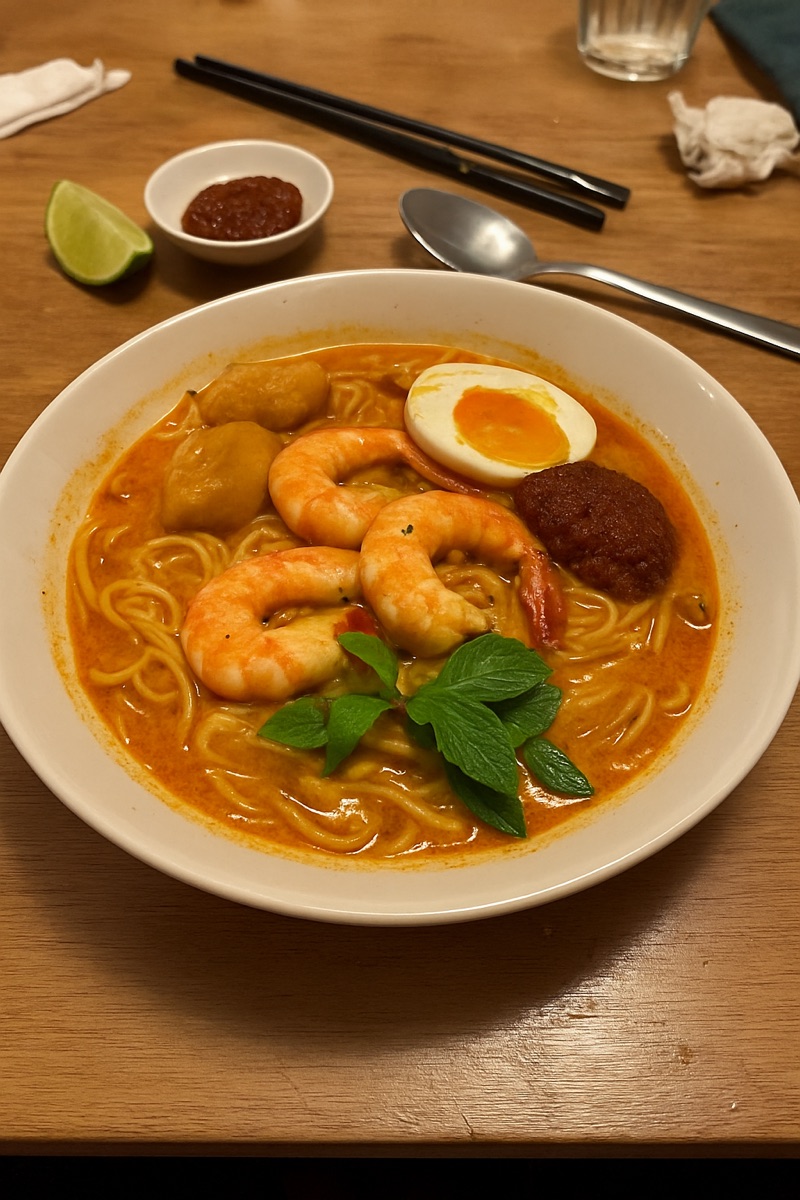 Laksa🇲🇾 Malaysia · 1 hour and 20 minutes
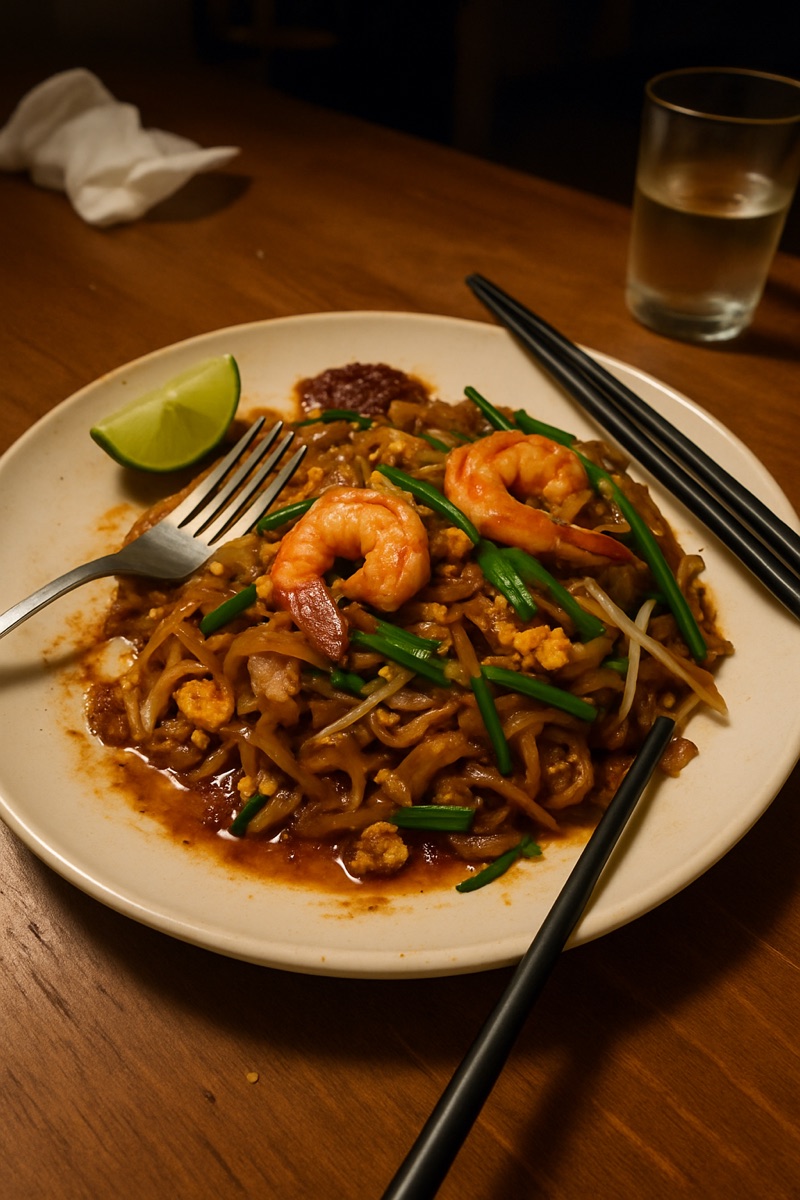 Char kway teow🇲🇾 Malaysia · 30 minutes
Questions people ask
What is the most popular food in Malaysia?
Nasi lemak is the dish most often named, followed by roti canai, satay, laksa and char kway teow. Teh tarik, pulled milk tea, is considered the national drink.
What do Malaysians eat for breakfast?
There is no single breakfast: nasi lemak, kuih cakes, Chinese congee and noodle soups, roti canai and Indian dishes such as idli and thosai are all common.
Is Malaysian food spicy?
Much of it is. Sambal and chilli pastes are everywhere and dishes like asam pedas are named for their heat, but Chinese dishes such as chicken rice are mild, and Sarawak cooking is considered less spicy than the peninsula's.
What is the difference between Malaysian and Singaporean food?
Peninsular Malaysia shares a history with Singapore, so many dishes, such as laksa and chicken rice, exist on both sides of the border in slightly different versions.
What is nasi campur?
"Mixed rice": a plate of plain rice to which you add dishes from a spread of curries, vegetables and fried foods, paying for what you take. It is sold in Malay warung and family eateries.
Keep reading
- What is the national dish of Malaysia?
- Traditional food of Brunei: 12 dishes to know
- Traditional food of Cambodia: 12 dishes to know
- Traditional food of Indonesia: 13 dishes to know
- Traditional food of Laos: 14 dishes to know
- Traditional food of Myanmar: 12 dishes to know