 COPPER
Traditional food of Indonesia: 13 dishes to know
Indonesian food is a family of regional cuisines spread over thousands of islands, built on rice, coconut milk, peanut sauce and pounded spice pastes called bumbu, with sambal on almost every table. The most emblematic dishes are nasi goreng, rendang, satay and soto, four of the five national dishes the government named in 2018, alongside gado-gado.
What Indonesian food is built on
Indonesia has about 6,000 inhabited islands and more than 600 ethnic groups, so its cuisine is really a set of regional kitchens. Sumatran cooking shows Middle Eastern and Indian influence in its curries, Javanese cooking is mostly indigenous, and Chinese noodles, meatballs and spring rolls have been absorbed everywhere. What ties it together is rice, eaten at almost every meal, and the bumbu, a spice paste of shallot, garlic, chilli, galangal, turmeric or candlenut traditionally ground in a stone mortar.
Three more threads run through the archipelago. Coconut milk goes into soups, curries and desserts. Peanut sauce dresses satay and vegetable salads. And sambal, a chilli relish often made with terasi shrimp paste, exists in as many as 300 varieties. Kecap manis, soy sauce sweetened with palm sugar, gives many dishes their dark gloss. The government chose an official dish in 2014 and five more in 2018: the full story is in our article on the national dish of Indonesia.
Rice dishes and feasts
Most Indonesian meals are built around a mound of rice with a few side dishes and at least one sambal. These are the rice dishes and slow-cooked classics found across the country.
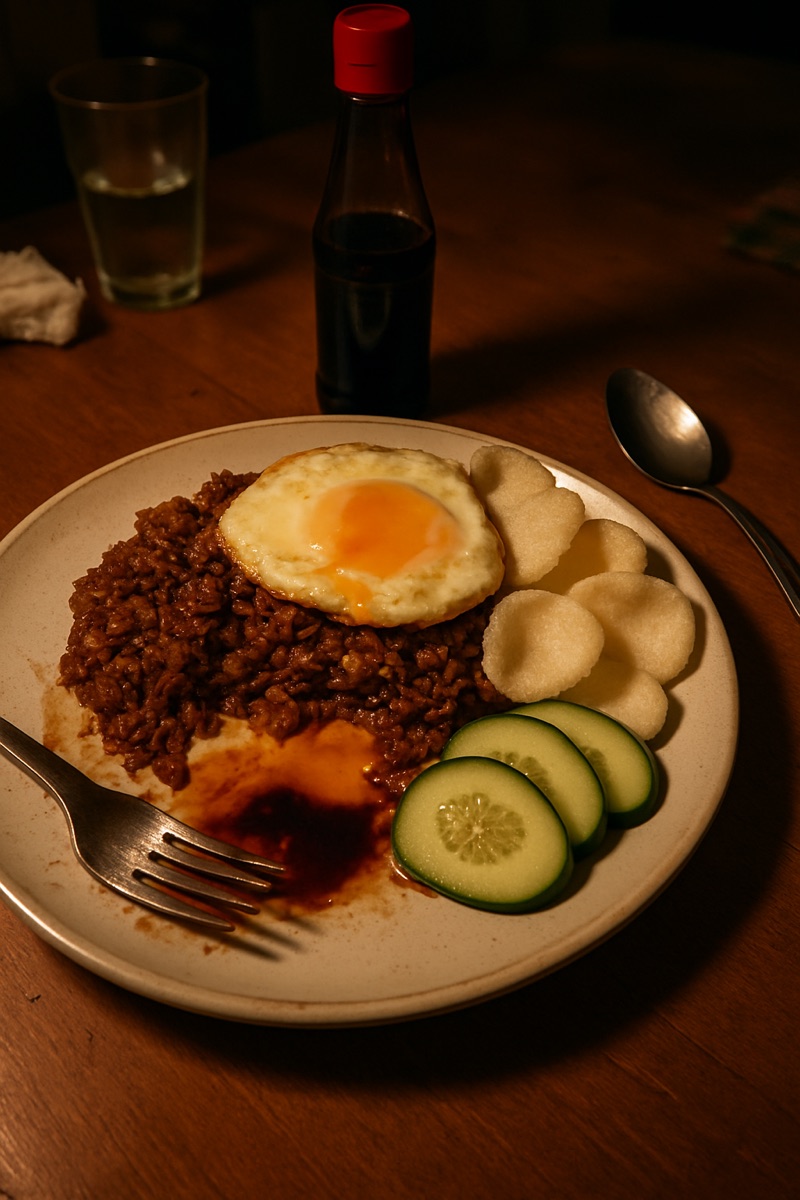
- Nasi goreng — Fried rice made with rice cooked the day before, fried with a pounded paste of shallot, chilli and terasi and darkened with kecap manis. It was treated as the unofficial national dish after independence and is cooked in homes and sold from street carts, whose vendors announce themselves by striking the wok. A fried egg on top is standard.
- Rendang — The signature dish of the Minangkabau of West Sumatra: beef or buffalo simmered uncovered in coconut milk and spices for hours, until the liquid is gone and the paste fries the meat dark and dry. Padang restaurants serve it all over Indonesia.
- Tumpeng — A cone of rice, white, cooked in coconut milk or coloured yellow with turmeric, set in the middle of side dishes such as urap vegetables, fried chicken and boiled eggs. It comes from Javanese ceremonial feasts, where the cone stands for a sacred mountain, and it became the official national dish in 2014. Today it is the centrepiece of birthdays and celebrations.
- Gudeg — Young, unripe jackfruit stewed for several hours with palm sugar, coconut milk and spices, with teak leaves that turn it reddish brown. It is the signature dish of Yogyakarta and a good example of how sweet Central Javanese cooking is.
Soups, grills and street food
Indonesian street food is cheap and everywhere, sold from warung stalls and from hawkers pushing carts through residential streets.
- Chicken satay — Small pieces of marinated meat on skewers, grilled over charcoal and served with peanut sauce, lontong rice cakes, shallot and cucumber. Almost every region has its own version; the chicken satay of Madura is probably the most popular in the country.
- Soto — A spiced broth with meat, usually chicken, and vegetables, served from Sumatra to Papua. Nearly every region, ethnic group and city has its own soto, which is why it was named one of the five national dishes in 2018.
- Rawon — A beef soup from East Java, coloured almost black by keluak nuts, which also give it a nutty flavour. It is often described as black beef soup.
- Bakso — Springy beef meatballs, served in broth with yellow noodles or rice vermicelli. With soto and satay, it is one of the most popular street foods in Indonesia, and bakso sellers announce themselves by tapping a spoon on a bowl.
- Pempek — A fishcake of fish and tapioca from Palembang in South Sumatra, served in cuko, a sweet, sour and spicy sauce of palm sugar, chilli, tamarind and vinegar. Locals sometimes add yellow noodles and diced cucumber.
Vegetables, tempeh and sweets
- Gado-gado — A salad of blanched or steamed vegetables, hard-boiled egg, boiled potato, fried tofu, tempeh and slices of lontong rice cake, under peanut sauce and topped with crackers. It is a Betawi dish from Jakarta and one of the five national dishes.
- Tempeh — Whole soybeans bound into a firm cake by a controlled fermentation with Rhizopus mould. It is native to Java, where it is a staple source of protein, and it turns up fried, braised or in gado-gado.
- Klepon — Balls of glutinous rice dough coloured green with pandan, filled with palm sugar, boiled until the centre melts, then rolled in grated coconut. They belong to the kue, the traditional rice-flour and coconut cakes sold in markets.
- Es cendol — Green jelly strands of rice flour or mung bean starch flavoured with pandan, served over shaved ice with coconut milk and palm sugar syrup. Also called es dawet, it is one of the iced drinks that double as desserts at street stalls.
Regional cooking across the islands
From West Sumatra comes nasi Padang: plain rice with a dozen or more pre-cooked dishes set on the table at once, rendang and gulai curries among them, and you pay only for what you eat. Java's food is sweeter in Central Java and spicier in East Java, home of rawon. Bali roasts whole pigs stuffed with chilli, turmeric, garlic and ginger as babi guling. In Maluku and Papua the staple is sago, eaten as a porridge called papeda with a yellow fish soup.
Many dishes cross borders: satay, rendang and sambal are just as popular in Malaysia and Singapore. Compare with the traditional food of Malaysia, or explore the wider Southeast Asian kitchen.
Cook Indonesian food at home
Nasi goreng, rendang and chicken satay each have a full recipe with quantities and step-by-step methods in the Copper app. You will find them on our page dedicated to Indonesian recipes.
The recipes
- Nasi goreng🇮🇩 Indonesia · 30 minutes
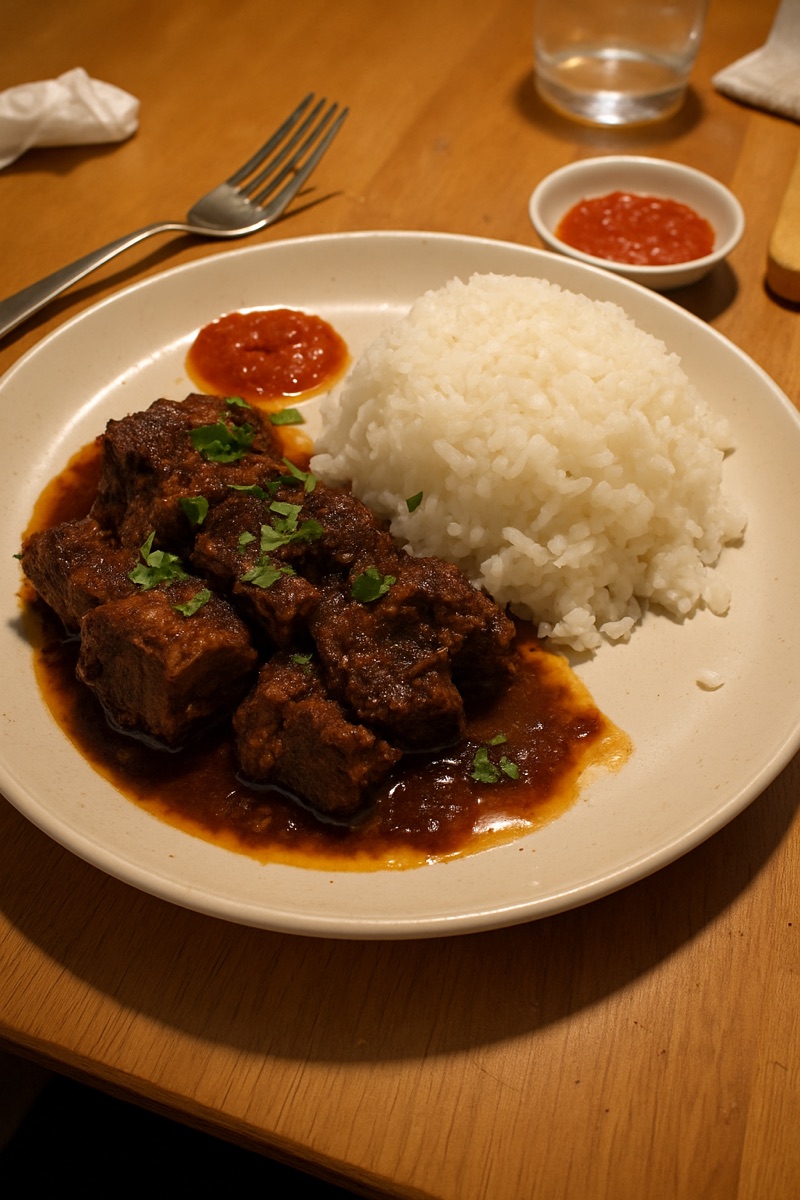 Rendang🇮🇩 Indonesia · 5 hours and 20 minutes
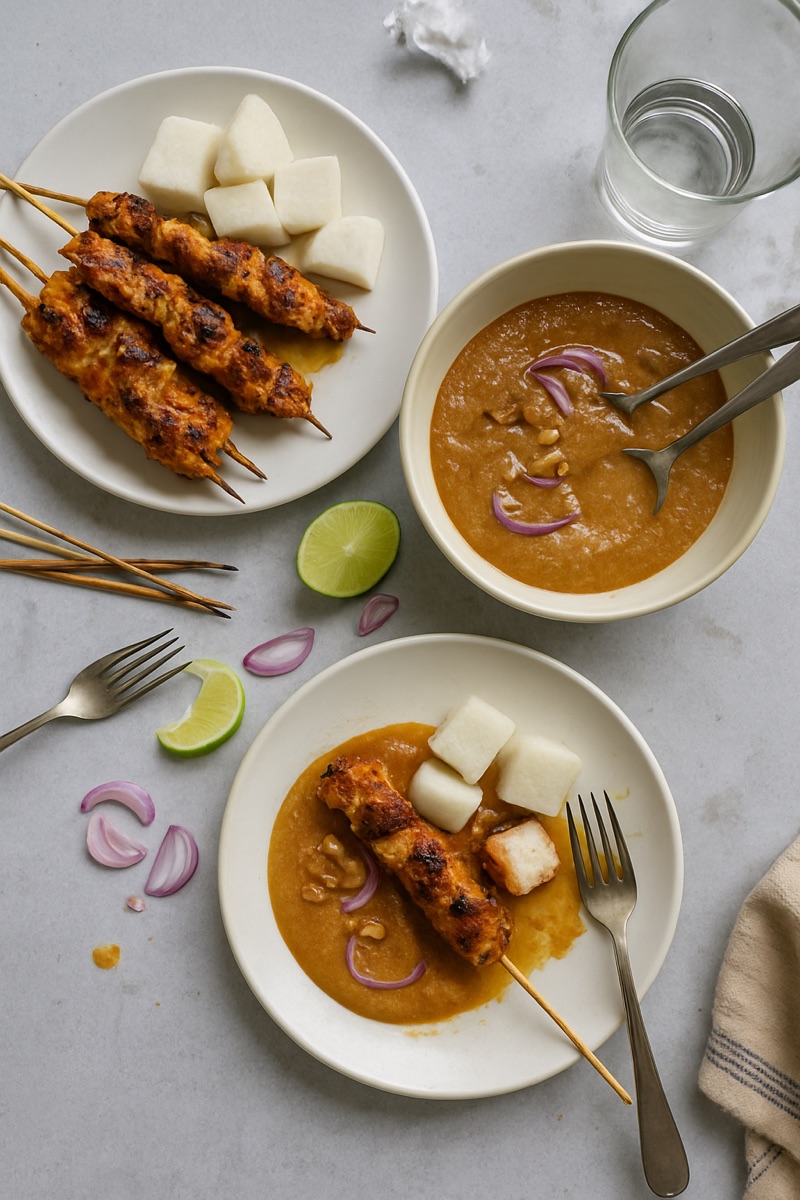 Chicken satay🇮🇩 Indonesia · 4 hours
Questions people ask
What is the most popular food in Indonesia?
Nasi goreng, satay, soto, rendang and gado-gado are the most widespread, and the government named all five national dishes in 2018. Bakso meatball soup is one of the most common street foods.
What is the national dish of Indonesia?
Tumpeng, a cone of rice surrounded by side dishes, is the official national dish, chosen in 2014. In 2018 the Ministry of Tourism added soto, satay, nasi goreng, rendang and gado-gado.
Is Indonesian food spicy?
Often. Most Indonesians favour hot and spicy food, and sambal is a staple condiment on Indonesian tables. Central Javanese cooking is noticeably sweeter, and the chilli level of a sambal varies from mild to very hot.
What is eaten with every Indonesian meal?
Usually rice, with a few side dishes and at least one sambal; krupuk crackers are common too. In eastern Indonesia, sago and root vegetables often take the place of rice.
What is the difference between gado-gado and satay?
Both use peanut sauce. Gado-gado is a salad of vegetables, egg, tofu, tempeh and rice cake, while satay is grilled meat on skewers served with the sauce for dipping.
Keep reading
- What is the national dish of Indonesia?
- Traditional food of Brunei: 12 dishes to know
- Traditional food of Cambodia: 12 dishes to know
- Traditional food of Laos: 14 dishes to know
- Traditional food of Malaysia: 13 dishes to know
- Traditional food of Myanmar: 12 dishes to know