 COPPER
Traditional food of Myanmar: 12 dishes to know
Traditional Burmese food is rice eaten with curries, salads and a light soup, all served at once. Curries rest on garlic, shallots and ginger rather than coconut milk, ngapi (fermented fish or shrimp paste) seasons almost everything, and the flavour aim is sour, salty and spicy. The dishes to know first are mohinga, lahpet thoke, Shan noodles and ohn no khao swe.
What Burmese food is built on
Myanmar sits between South Asia, China and the rest of Southeast Asia, and its food shows all three. Steamed rice, htamin, is the centre of a meal. Around it come Burmese curries, salads called athoke, a light soup shared from a communal bowl, fried vegetables, fritters, and ngapi yay gyo, a plate of fresh and blanched vegetables with a fish-paste dip. The meal ends with a piece of palm sugar or a bite of fermented tea leaves.
Burmese curries differ from Thai ones: they start from a trio of garlic, shallots and ginger, use dried spices as well as fresh herbs, rarely use coconut milk and are usually milder. Ngapi, a fermented paste of fish or shrimp, is the cornerstone of the cooking; in Shan State fermented soybeans play the same role. The phrase chin ngan sat, sour, salty and spicy, sums up the flavours Burmese cooks aim for.
Meals are traditionally eaten with the right hand, the rice formed into small balls with the fingertips; noodles are eaten with chopsticks and a spoon. Beef is avoided by many Buddhists, so pork, chicken, goat, fish and shrimp are the usual curry proteins. Tea is the national drink, and green tea is poured free in restaurants and tea shops.
Noodles and noodle soups
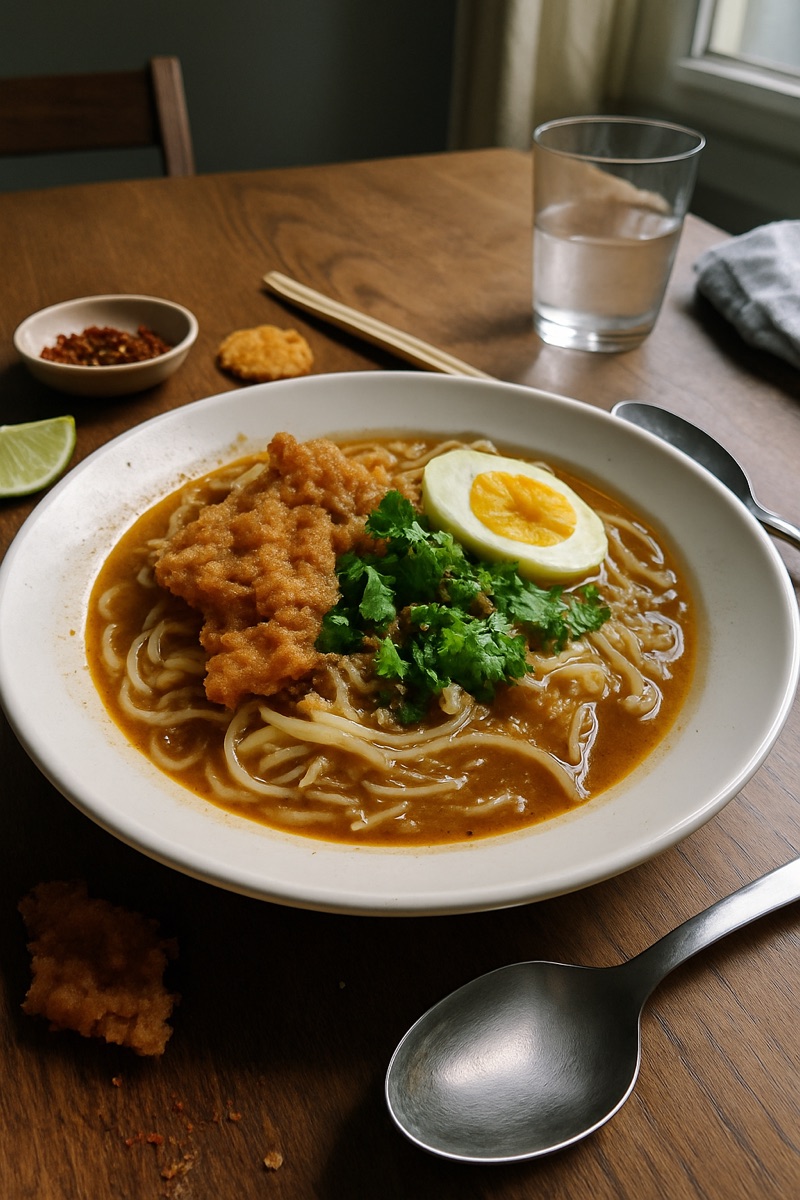
- Mohinga — Rice noodles in a catfish broth with lemongrass, ginger, banana stem and fish paste, thickened with toasted chickpea flour and rice, and topped with boiled egg, fritters and lime. It is the national dish of Myanmar and is traditionally eaten for breakfast.
- Ohn no khao swe — Wheat noodles in a curried chicken and coconut milk broth thickened with chickpea flour, topped with crisp bean fritters, boiled egg, raw onion, chillies and crispy noodles, then sharpened with fish sauce and lime. It is thought to come from Shwedaung, near Pyay, and is compared to Malaysian laksa and northern Thai khao soi.
- Shan noodles — Rice noodles under a sauce of minced chicken or pork simmered with tomato, garlic and chilli, finished with garlic oil, crushed peanuts and pickled mustard greens. They come from Shan State in the east and are served with a small bowl of clear broth.
- Nan gyi thoke — Thick, round rice noodles mixed with chicken curry and chilli oil, garnished with toasted chickpea flour, sliced onion, boiled egg, fish cake and lime. It started as a street food in Mandalay, and in Yangon it is called Mandalay mont di.
Salads, curries and rice dishes
- Lahpet thoke — Fermented tea leaves served with separate heaps of fried split peas and beans, peanuts, sesame, garlic, dried shrimp, cabbage and tomato, tossed with oil, lime and fish sauce. Myanmar is one of very few countries that eats tea as well as drinking it, and lahpet was once a peace offering between warring kingdoms.
- Hsibyan (oil curry) — The everyday Burmese curry, made with fatty pork, chicken, fish or prawns. Meat and paste simmer in water and oil until the water has boiled off and a layer of oil separates and rises to the top, which mellows the raw garlic, shallot and ginger. Curry houses, called htamin hsaing, serve it with rice, a free soup and raw vegetables.
- Htamin jin — Rice, fresh or fermented, kneaded with boiled lake fish, tomato and mashed potato into balls, garnished with garlic oil, crisp garlic and garlic chive roots, and served with roasted chilli flakes in oil. It is the signature dish of the Intha people of Inle Lake in Shan State.
- Danbauk — Burmese-style biryani, whose name comes from the Persian dum pukht, made with chicken or mutton. It is served with mango pickle, a fresh salad of onion, cabbage and cucumber, fermented limes, fried dried chillies and a bowl of soup.
Snacks, breads, sweets and tea
- Burmese tofu — A tofu of Shan origin made not from soy but from chickpea or yellow split pea flour, cooked with water, turmeric and salt until creamy, then left to set. It is eaten cut into fritters, in salads, or served hot and creamy before it sets, as tohpu nway.
- Palata — A flaky fried flatbread related to the Indian paratha, eaten at breakfast or teatime with curried meat or, as a sweet, sprinkled with sugar. It belongs to the Indian breads, with nanbya, puri and chapati, that are commonly eaten in Myanmar.
- Mont let hsaung — A sweet of tapioca or rice noodles, glutinous rice, grated coconut and toasted sesame in coconut milk with jaggery syrup, It is one of the mont, the traditional Burmese snacks and sweets, and is also drunk as a popular coconut-milk refreshment.
- Laphet yay (Burmese milk tea) — Black tea brewed very strong and sweetened with condensed and evaporated milk to each drinker's taste. It is as popular as plain green tea; the tea leaves themselves are grown in Shan and Kachin States.
Regional cooking in Myanmar
The main divide is between Upper and Lower Myanmar. Lower Myanmar, around Yangon, Mawlamyaing and the Ayeyarwady delta, cooks with more fish, fish sauce and ngapi. Upper Myanmar, the Bamar heartland around Mandalay, Magway and Sagaing, and the hills of Shan and Kachin State, uses more meat, poultry, pulses and beans, and the Shan and Kachin add more fresh herbs to their curries.
Rakhine State on the coast is known for seafood and for ngapi made with little or no salt. The south has the strongest food reputation of all, as the proverb goes: Mandalay for eloquence, Yangon for boasting, Mawlamyaing for food. In the cities, the cooking of the Chettiar, from southern India, is popular too.
Cook Burmese food at home
Copper has mohinga, lahpet thoke and Shan noodles with ingredient lists and step-by-step methods. The techniques that matter: toast the chickpea flour and rice before they thicken the mohinga broth, fry the split peas and beans twice so they stay crunchy in the tea leaf salad, and simmer the Shan noodle sauce until the oil rises. You will find them on our page about the food of Myanmar.
Myanmar shares ingredients with the rest of Southeast Asian cooking and borrows from South Asia. To compare, see the traditional food of Thailand and the traditional food of India.
The recipes
- Mohinga🇲🇲 Myanmar · 1 hour and 50 minutes
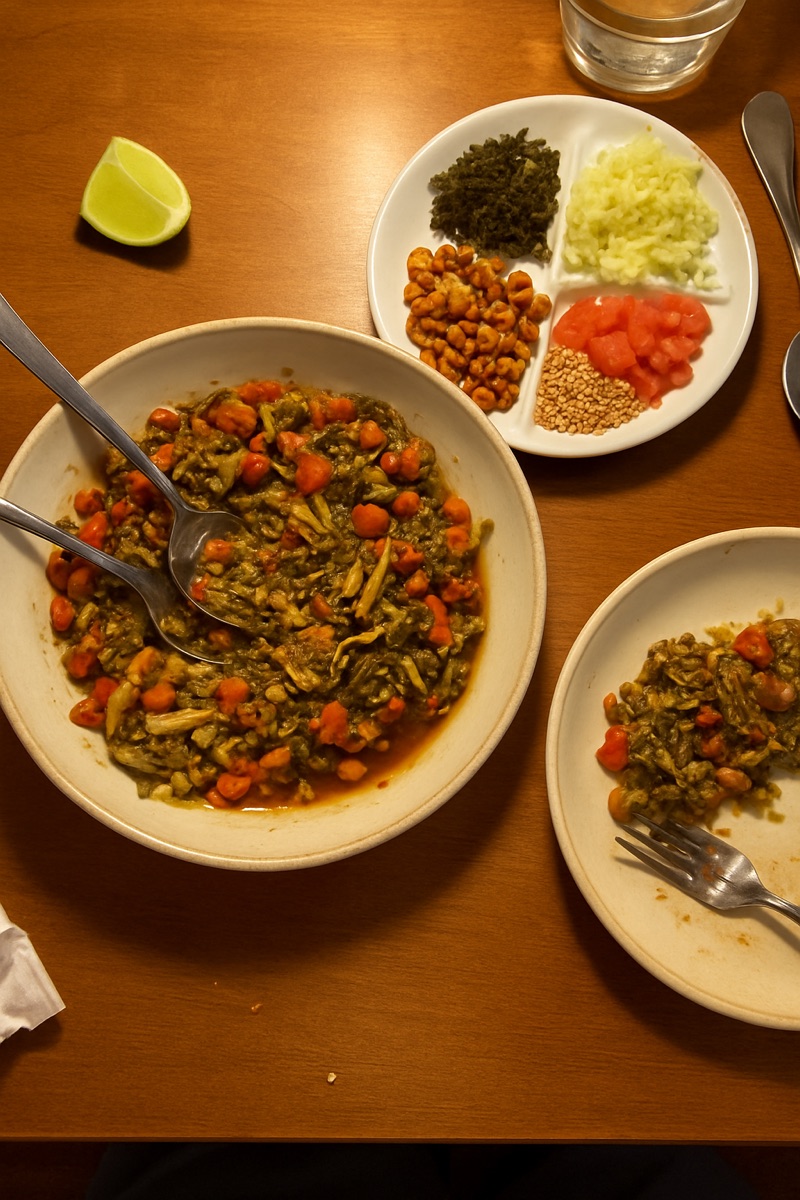 Lahpet thoke🇲🇲 Myanmar · 1 hour
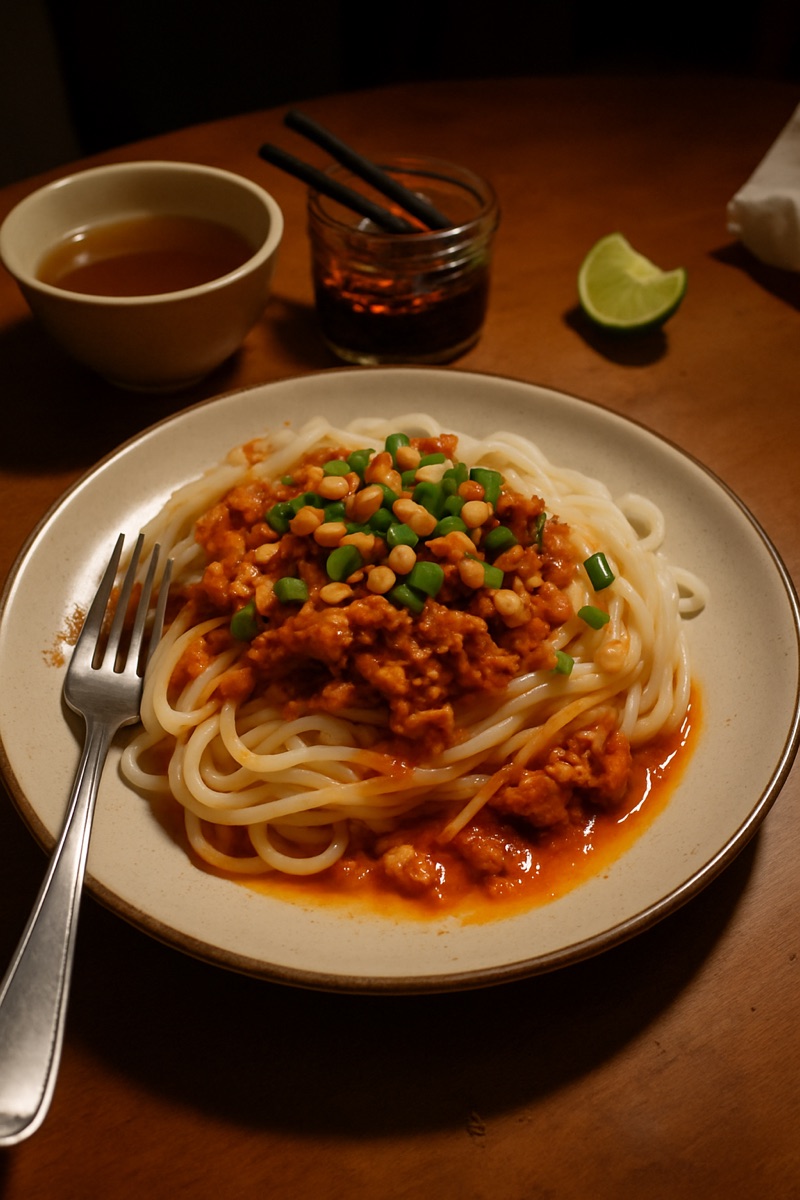 Shan noodles🇲🇲 Myanmar · 50 minutes
Questions people ask
What is the most popular food in Myanmar?
Mohinga, the fish noodle soup, is the unofficial national dish. Lahpet thoke, the tea leaf salad, is the other dish most tied to Burmese identity, and rice with a hsibyan curry is the everyday meal.
What do people in Myanmar eat for breakfast?
Mohinga is the classic breakfast. Indian breads such as palata and nanbya are also commonly eaten for breakfast or at teatime.
Is Burmese food spicy?
Burmese curries are often milder than Thai ones, and much of the heat comes from chillies, chilli oil and condiments added at the table. Some condiments are fiery, such as ngapi daung, a Rakhine paste of pounded fish paste and green chilli.
What is lahpet?
Lahpet is fermented tea leaf. The leaves are steamed, packed and fermented for months, then eaten as a salad (lahpet thoke) or served at the end of a meal, a custom tied to hospitality and ceremonies.
Do Burmese people eat with their hands?
Traditionally yes, with the right hand, shaping rice into small balls with the fingertips. Chopsticks and spoons are used for noodles, and forks and spoons are now common too.
Keep reading
- What is the national dish of Myanmar?
- Traditional food of Brunei: 12 dishes to know
- Traditional food of Cambodia: 12 dishes to know
- Traditional food of Indonesia: 13 dishes to know
- Traditional food of Laos: 14 dishes to know
- Traditional food of Malaysia: 13 dishes to know