 COPPER
Traditional food of Thailand: 13 dishes to know
Traditional Thai food is built around rice, eaten with several shared dishes that balance sour, hot, salty and sweet. Fish sauce, lime, chillies, palm sugar and fresh herbs such as lemongrass, galangal and basil do most of the work. The dishes to know first are tom yum kung, green curry, som tam and pad krapow.
What Thai food is built on
A Thai meal is rice, khao, with several dishes served at the same time and shared, soups included. A family meal aims for contrast in flavour, texture and cooking method, and traditionally includes a chilli dip or relish, nam phrik, eaten with raw or cooked vegetables. Jasmine rice is the everyday grain in the centre and south; sticky rice, eaten by hand, is the staple of the north and north-east.
The seasoning base is the same across the country: nam pla (fish sauce), lime, chillies, garlic, shallots, shrimp paste and palm sugar, with fresh rather than dried herbs, lemongrass, galangal, kaffir lime leaves, coriander and holy or Thai basil. Coconut milk enriches the curries and soups of the centre and south. Thais traditionally eat with a fork and spoon, pushing food onto the spoon; chopsticks are used mainly for noodle soups.
Curries and soups
- Tom yum kung — A hot and sour prawn soup flavoured with lemongrass, galangal, kaffir lime leaves, chillies, lime and fish sauce. It comes clear (nam sai) or creamy (nam khon). In 2024 UNESCO inscribed it on its list of intangible cultural heritage.
- Kaeng khiao wan (green curry) — A coconut curry built on a paste of fresh green chillies, cooked with chicken or fish balls and Thai basil. It can be one of the hottest Thai curries, and in the centre it is also eaten over khanom chin, fresh fermented rice noodles.
- Massaman curry — A mild, rich beef or chicken curry with potatoes, onions and peanuts in coconut milk. Its paste combines Thai ingredients with spices from Persia, India and the Malay world, cardamom, cinnamon, cloves, cumin and nutmeg among them.
- Tom kha kai — Chicken simmered in coconut milk with galangal, lemongrass and kaffir lime leaves, sharpened with lime and fish sauce. It is milder and creamier than tom yum.
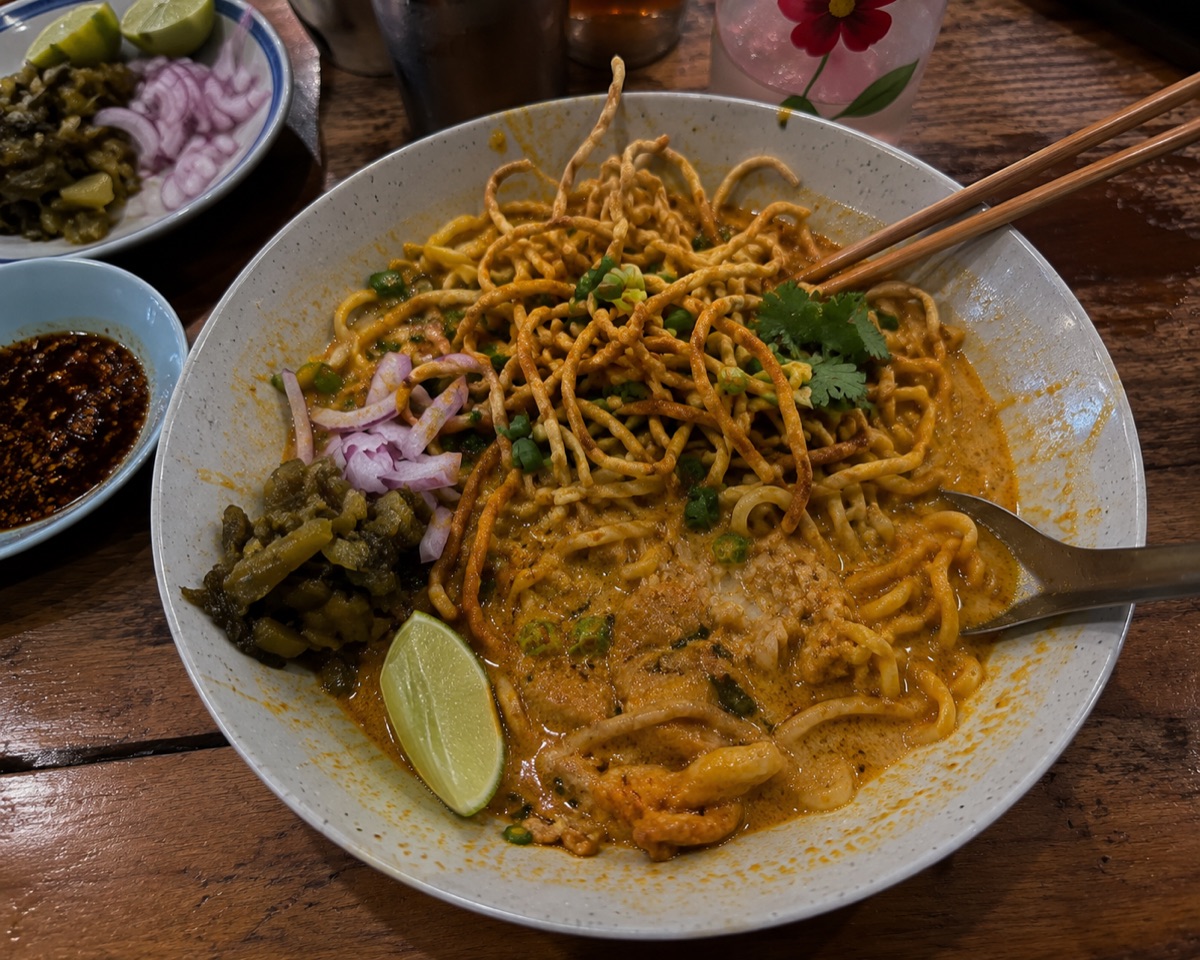
- Khao soi — Chiang Mai's curry noodle soup: egg noodles in a coconut curry broth with chicken, topped with more of the same noodles fried crisp. Pickled mustard greens, shallots and lime are served on the side.
Noodles, rice, street food and dessert
- Pad thai — Rice noodles stir-fried in a wok with egg, tamarind, fish sauce, sugar, shrimp or tofu, bean sprouts and peanuts. It was created in the 1930s, and the government of Plaek Phibunsongkhram promoted noodles to reduce rice consumption, which helped spread it nationwide. It is the dish most often named as the national dish of Thailand.
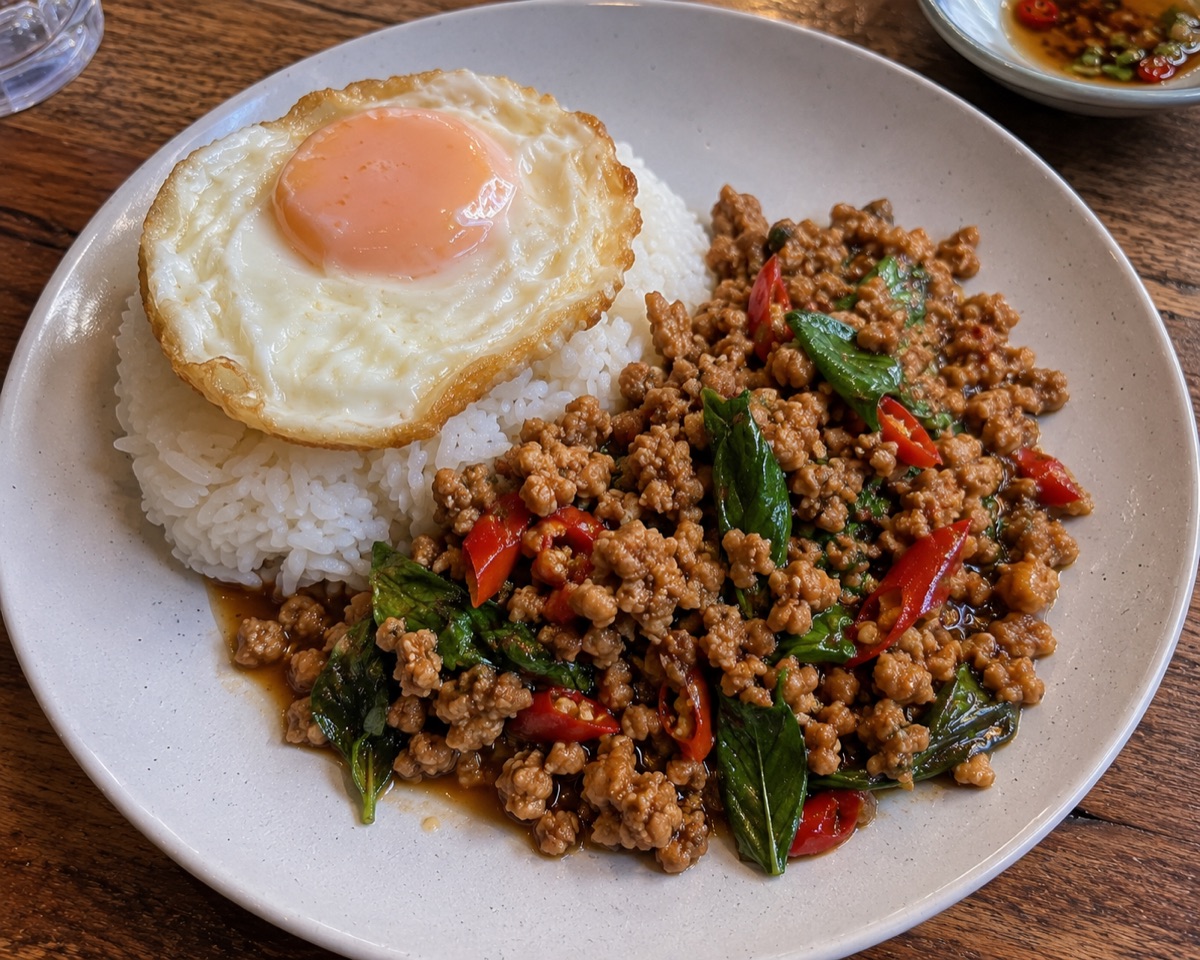
- Pad krapow — Minced pork or chicken stir-fried hard with garlic, chillies and holy basil, served on rice under a fried egg with crisp edges. It is one of the most ordered one-plate meals in the country, sold at street stalls from breakfast to late night.
- Khao man kai — Rice cooked in chicken stock with garlic, served with sliced poached chicken, a bowl of broth and a spicy dipping sauce, usually with a bowl of radish soup. It came to Thailand with Hainanese Chinese immigrants and is now a standard street stall dish.
- Khao niao mamuang (mango sticky rice) — Sticky rice cooked in sweetened thick coconut milk and served with slices of ripe mango, often with extra coconut cream poured over. It is one of the best-known Thai desserts, sold by street vendors when mangoes are ripe.
Isan and northern dishes
The north-east, Isan, cooks with sticky rice, grilled meat and sharp salads close to those of Laos. The north, the old Lanna kingdom around Chiang Mai, shares many of those ingredients and adds its own sausages and chilli dips.
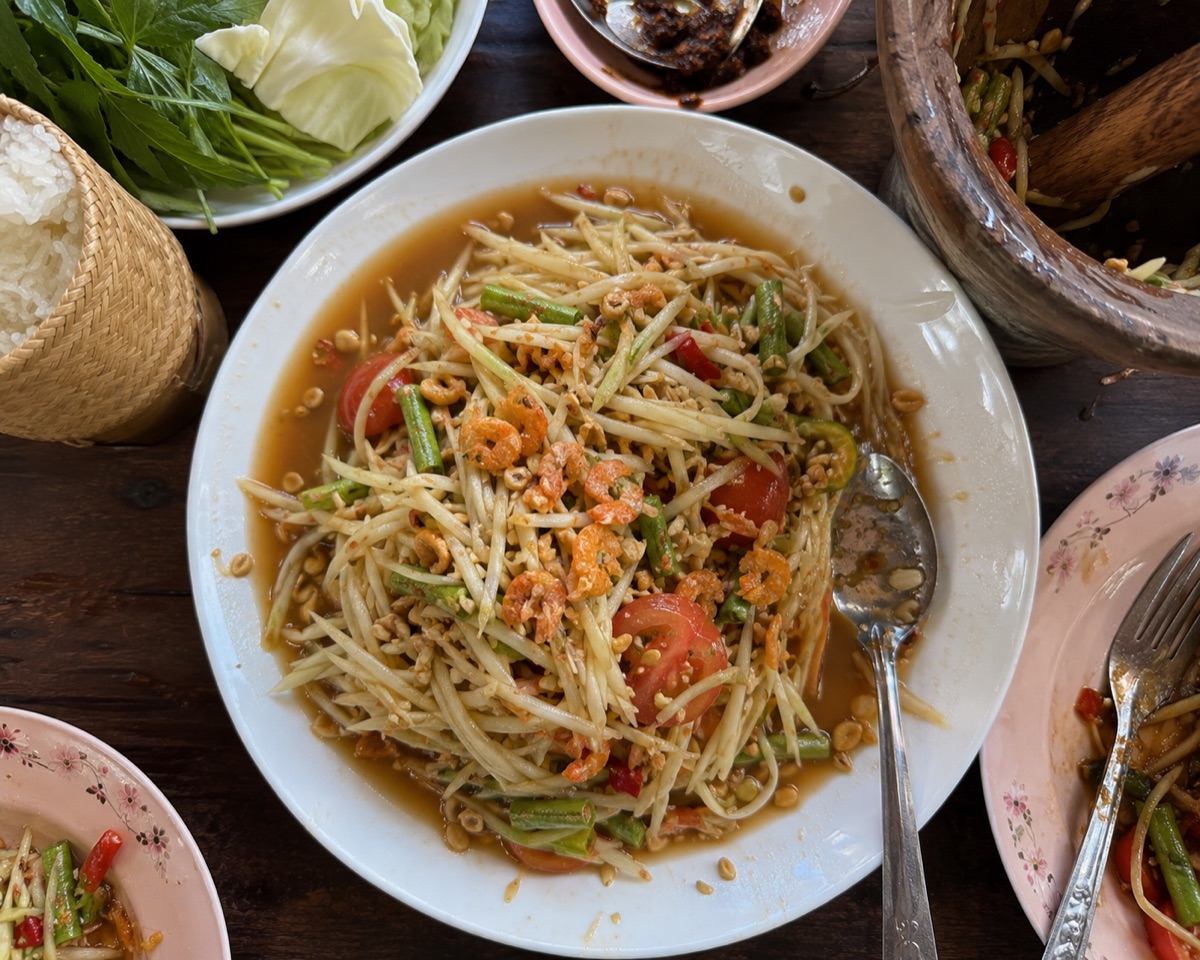
- Som tam — Shredded green papaya pounded in a mortar with garlic, chillies, lime, fish sauce and palm sugar, with long beans, tomatoes, peanuts and dried shrimp. Isan versions add pickled rice-paddy crab or fermented fish sauce.
- Larb — A salad of minced meat with chillies, shallots, mint and toasted ground rice, seasoned with lime and fish sauce in Isan. The northern version is drier and smokier, seasoned with dried spices instead of lime.
- Kai yang — Marinated chicken grilled over charcoal, the Isan partner of som tam and sticky rice. The three together make one of the most common meals in the country.
- Sai ua — A northern grilled pork sausage mixed with spices and herbs. It is sold at Chiang Mai markets and served with fresh ginger and chillies.
Regional cooking in Thailand
Thai cuisine is often described as five regional cuisines. Bangkok's cooking shows Teochew Chinese and royal influence; the central plains cook with coconut milk; Isan with sticky rice and herbs; the north with milder curries and nam phrik dips; the south, on the Kra Isthmus, with fresh turmeric, coconut and fiery, complex curries such as kaeng lueang, a sour yellow fish curry.
Thailand shares many dishes with its neighbours across Southeast Asian cooking. To compare, see the traditional food of Laos and the traditional food of Cambodia.
Cook Thai food at home
Copper has khao soi, pad krapow and som tam with ingredient lists and step-by-step methods. The techniques that make them work: fry the curry paste in coconut milk until the oil splits out for khao soi, take the wok off the heat before adding the holy basil for pad krapow, and pound the papaya gently so it soaks up the dressing. You will find them, with every other Thai recipe we have, on our page about the food of Thailand.
The recipes
 Pad krapow moo
 Som tam
Questions people ask
What is the most popular food in Thailand?
Pad thai is the best-known Thai dish abroad, but at home pad krapow, som tam, khao man kai and noodle soups are among the most eaten. Tom yum kung is the dish with official cultural status.
What do people in Thailand eat for breakfast?
Often the same dishes as at lunch, bought from street stalls. Specific breakfast foods include chok (rice porridge), khao tom (rice soup), pathongko (fried dough) and soy milk.
Is Thai food spicy?
Much of it is, especially Isan salads, southern curries and green curry. But a meal balances spicy dishes with mild ones such as massaman curry, khao man kai or tom kha kai, and diners adjust heat with condiments at the table.
What is the difference between tom yum and tom kha?
Tom yum is a hot and sour broth, clear or creamy. Tom kha is built on coconut milk with galangal, which makes it milder and richer.
Do Thai people eat with chopsticks?
Mostly not. Thais eat with a fork and spoon, using the fork to push food onto the spoon. Chopsticks are used for noodle soups, and sticky rice is eaten by hand.
Keep reading
- What is the national dish of Thailand?
- Traditional food of Brunei: 12 dishes to know
- Traditional food of Cambodia: 12 dishes to know
- Traditional food of Indonesia: 13 dishes to know
- Traditional food of Laos: 14 dishes to know
- Traditional food of Malaysia: 13 dishes to know