 COPPER
Traditional food of Cambodia: 12 dishes to know
Traditional Cambodian (Khmer) food is built on rice and freshwater fish. Its flavour comes from kroeung, a pounded paste of lemongrass, galangal, turmeric and kaffir lime, from prahok, a fermented fish paste, and from Kampot pepper. Dishes are served together and balanced across the meal. The ones to know first are fish amok, num banh chok, samlor kako and lok lak.
What Cambodian food is built on
Khmer cuisine is close to two thousand years old. It has absorbed Indian, Chinese (mostly Teochew), French and Portuguese elements, and shares many dishes with central Thailand, southern Vietnam and Laos. Rice and fish, above all freshwater fish, are the two pillars: rice is eaten at every meal, and the Cambodian chef Luu Meng has estimated that 40 to 50 per cent of Cambodian dishes contain fish.
Two preparations give the food its character. Kroeung is a fresh paste pounded from lemongrass, galangal, garlic, shallots, kaffir lime leaves and turmeric; it comes in yellow, green and red versions for different soups and curries. Prahok, fish salted and fermented for about a month, flavours almost every Khmer dish, either cooked in or served as a dip. Kampot pepper and Kampong Speu palm sugar both carry protected geographical indications.
All dishes are served at the same time, and the balance comes from combining them: a sour soup, a salty fish, fried vegetables and plain rice. That differs from Thai cooking, where sour, salty, sweet and hot are usually combined in one dish. Food is cut into bite-sized pieces, so knives are rarely used; chopsticks appear only with noodles.
Curries, soups and stews
Samlor is the Khmer word for the large family of soups, stews and curries served with rice, fresh noodles or a baguette.
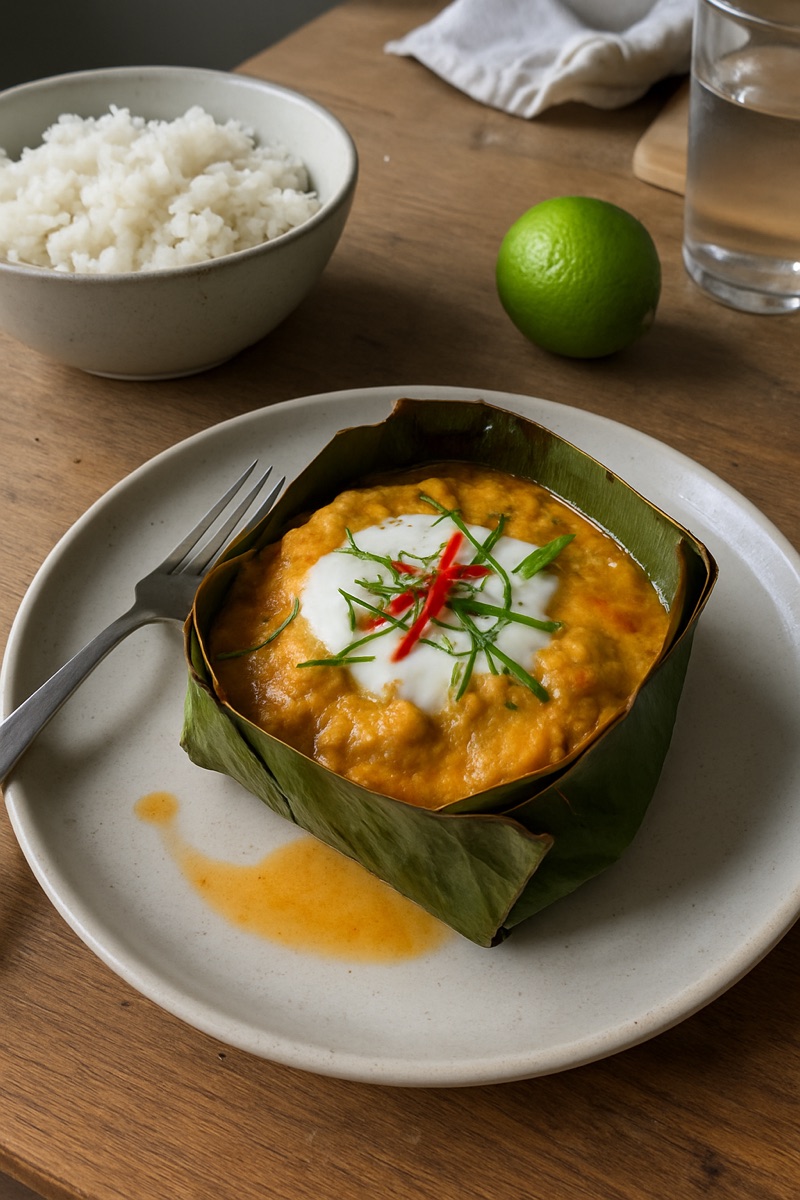
- Fish amok — Fish bound with coconut cream, egg and yellow kroeung, steamed in a banana-leaf cup until it sets into a soft mousse. It is the dish foreigners know best and is often called the national dish of Cambodia.
- Samlor kako — A thick soup of green kroeung, prahok, roasted ground rice, catfish, pork or chicken, and a large mix of vegetables, fruits and herbs. It is often compared to ratatouille. In a Khmer legend it was first called the soup of a hundred ingredients, until a king renamed it kako, stirred, because the cooks never stopped stirring it. It is considered one of Cambodia's national dishes.
- Samlor machu — The family of Khmer sour soups, soured with tamarind and often pineapple, tomato or water spinach. Versions include chicken or fish with pineapple and tomato, and samlor machu kroeung, with beef or pork ribs cooked in yellow kroeung.
- Kari sach moan (chicken curry) — The Khmer chicken curry, made with red kroeung. Kari, an Indian-style curry, is believed to be a loanword from Tamil. Cambodian curries stand out for their use of sweet potatoes, and in the countryside they are kept for ceremonies and holidays because spices are expensive and extracting coconut milk is laborious.
Noodles and breakfast dishes
- Num banh chok — Lightly fermented fresh rice noodles under a yellow-green gravy of fish pounded with kroeung, prahok and coconut milk, eaten lukewarm with raw banana blossom, bean sprouts, cucumber and herbs. Called Khmer noodles, it is a breakfast dish sold by market stalls and mobile vendors.
- Kuyteav — Rice noodle soup in a clear broth of pork bones and dried squid, topped with minced pork, pork belly, offal or seafood and caramelised garlic oil. It is the most widespread breakfast across the country and is usually sold out before noon. The Phnom Penh version carries the most toppings.
- Bay sach chruk — Thin slices of pork marinated in palm sugar, garlic, coconut milk and fish sauce, kept warm over a grill or a bed of coals and served on steamed rice with a bowl of chicken broth garnished with radish and fried onions. It is one of the most common breakfasts in Cambodia.
Grills, dips, street food and sweets
- Lok lak — Cubes of marinated beef seared in a very hot pan, served on lettuce, tomato and cucumber, often with a fried egg and rice, and dipped in tuk meric: cracked Kampot pepper, lime juice and salt. It came from the Vietnamese shaking beef and is now counted among Cambodia's national dishes.
- Prahok ktis — A dip of prahok cooked with minced pork, yellow kroeung, coconut cream, tamarind, palm sugar and pea eggplants, eaten with raw cucumber, cabbage, long beans and other vegetables. The Cambodian foreign ministry chose it for its culinary diplomacy campaign.
- Num pang — The Cambodian short baguette, adopted under French rule. Split and filled with pâté and cold cuts, pork meatballs or grilled lemongrass beef, plus pickled carrots, papaya and herbs, it becomes num pang sach, a sandwich close to the Vietnamese bánh mì.
- Fried insects — Crickets, giant water bugs and tarantulas seasoned with salt, sugar and oil and deep-fried, sold as street snacks. Frogs, turtles and fire ants are eaten too.
- Num ansom — A cylinder of glutinous rice filled with banana, jackfruit or pork, usually steamed, though it can also be grilled or fried. It is made for Khmer New Year and Pchum Ben, when sticky rice cakes are offered to ancestors, and it is an indispensable cake at traditional weddings.
Regional cooking in Cambodia
The gap between rural and urban food is bigger than between regions. Country cooking relies on what can be grown or gathered, with little meat; city cooking is more varied, and part of it descends from the royal court.
On the coast, saltwater fish replaces river fish: Kep is known for crab sautéed with black pepper, and Kampot for its pepper and its anchovy fish sauce. Near the Thai border, dishes use more coconut milk, chillies and sugar, and the north adds game and bamboo shoots, as in Laos. Siem Reap has its own num banh chok, thinner and made without coconut milk.
Cook Cambodian food at home
Copper has fish amok, num banh chok and lok lak with ingredient lists and step-by-step methods. The techniques that make them work: pound the kroeung in a mortar until smooth, since a blender leaves it fibrous; pound the poached fish into the kroeung to thicken the noodle gravy instead of using flour; and sear the beef in small batches so it browns rather than boils. You will find them on our page about the food of Cambodia.
Cambodia shares ingredients and techniques with the rest of Southeast Asian cooking. To compare, see the traditional food of Thailand and the traditional food of Vietnam.
The recipes
- Fish amok🇰🇭 Cambodia · 1 hour and 20 minutes
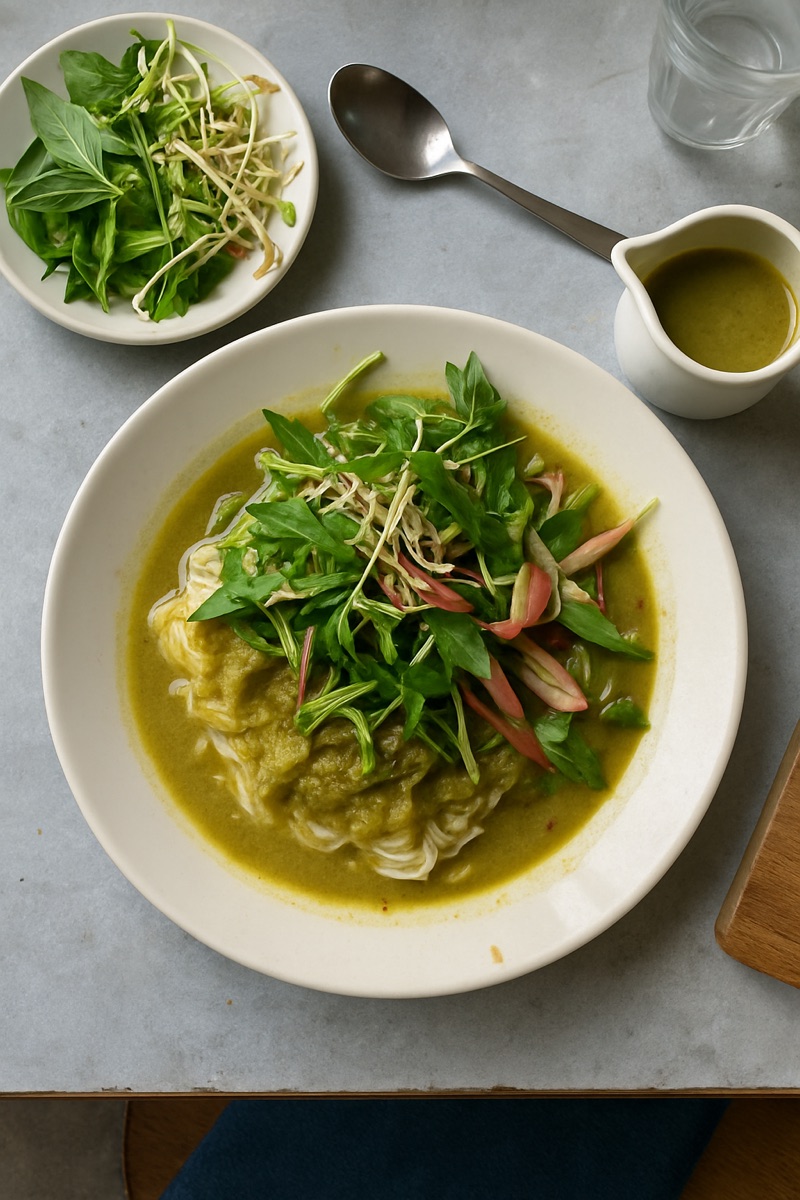 Nom banh chok🇰🇭 Cambodia · 1 hour and 20 minutes
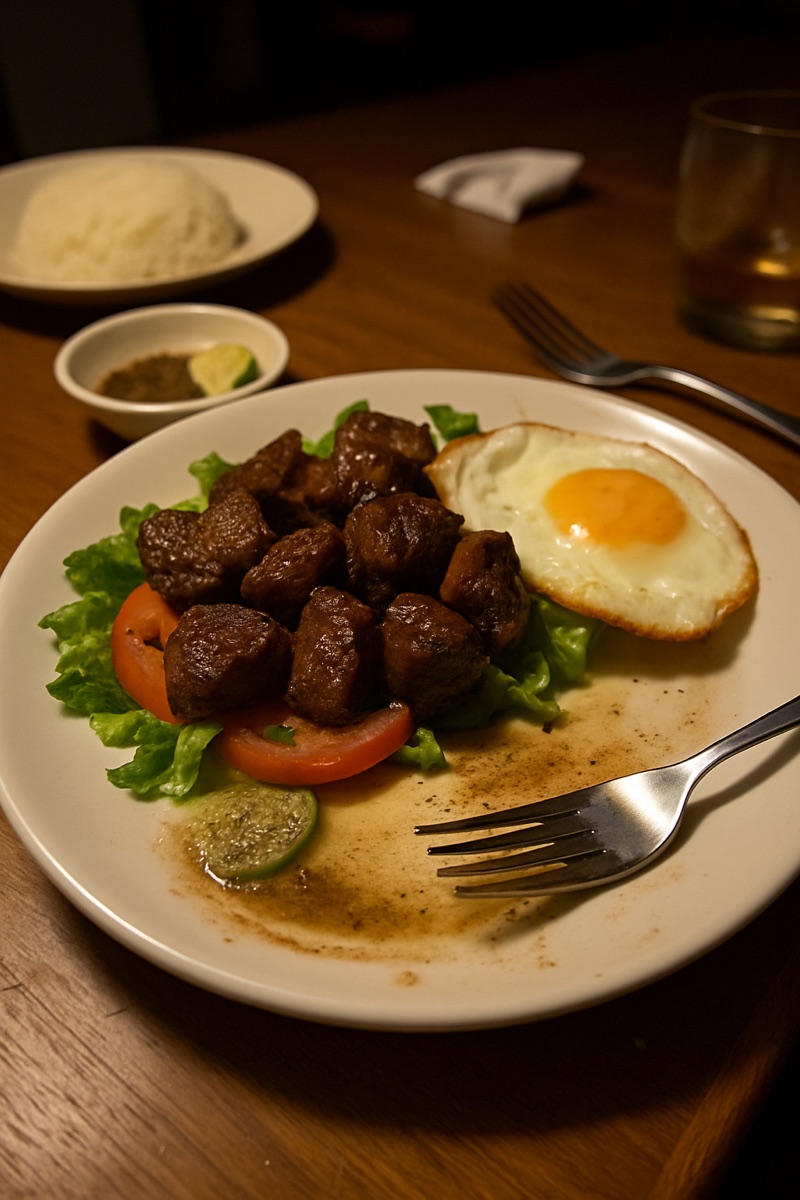 Lok lak🇰🇭 Cambodia · 50 minutes
Questions people ask
What is the most popular food in Cambodia?
Fish amok is the best-known Cambodian dish abroad. At home, num banh chok, kuyteav, samlor kako and lok lak are everyday staples, and num banh chok, samlor kako and lok lak are all named as national dishes by Cambodians.
What do people in Cambodia eat for breakfast?
Rice noodle soups such as kuyteav, num banh chok, grilled pork with rice (bay sach chruk), rice porridge with dried salted fish, or a baguette with condensed milk or pâté.
Is Cambodian food spicy?
Some dishes are, but much of the heat is added at the table, where chilli jam, pickled green chillies, garlic, fish sauce and soy sauce are set out for each diner to adjust. Dishes near the Thai border use more chillies. Kampot pepper, used in tuk meric, is the most characteristic pungent flavour.
What is prahok?
A salted, fermented fish paste, traditionally made from small river fish or snakehead and fermented in earthenware jars for about a month. It seasons soups, curries and dips, and can be eaten as a dish in its own right.
How do Cambodians eat?
All dishes come to the table at once with rice and are shared. Khmer food was traditionally eaten with the hands; today spoons and forks are used for rice and soup, and chopsticks only for noodles.
Keep reading
- What is the national dish of Cambodia?
- Traditional food of Brunei: 12 dishes to know
- Traditional food of Indonesia: 13 dishes to know
- Traditional food of Laos: 14 dishes to know
- Traditional food of Malaysia: 13 dishes to know
- Traditional food of Myanmar: 12 dishes to know