 COPPER
What is the national dish of Myanmar?
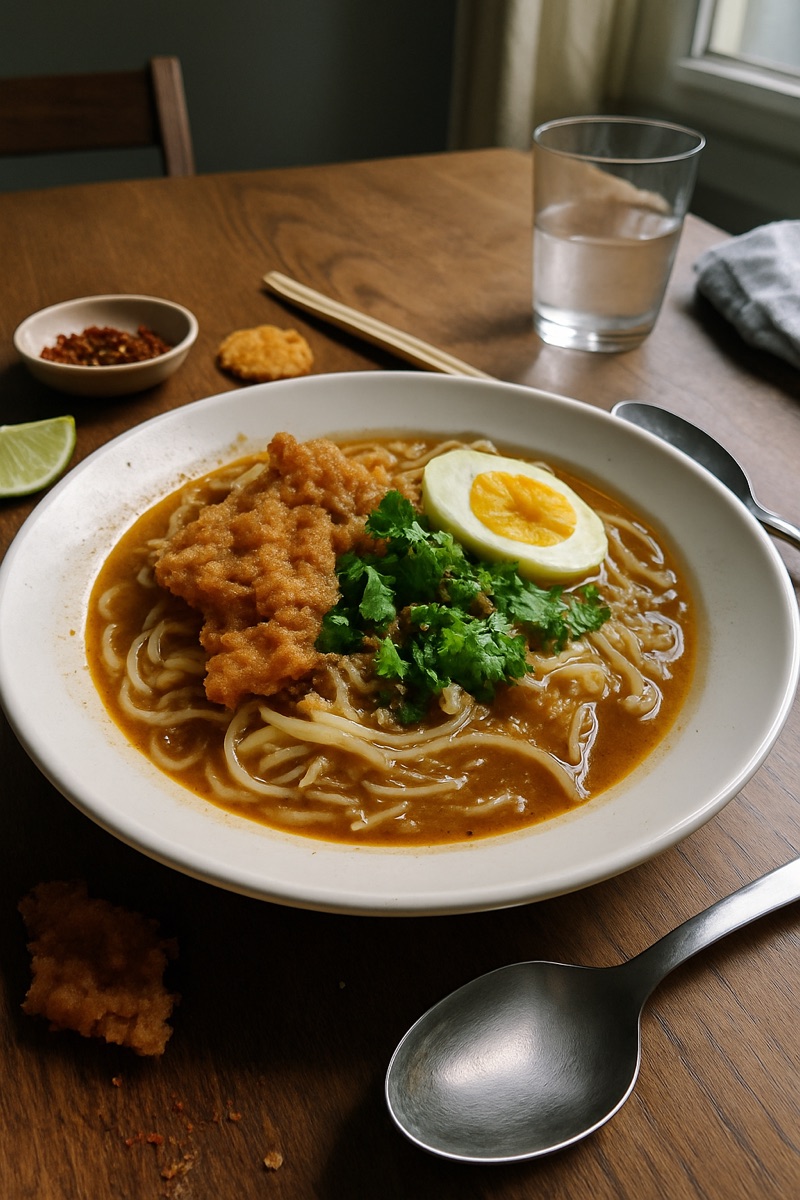
The national dish of Myanmar (Burma) is mohinga, a fish noodle soup. Thin rice noodles are served in a catfish broth flavoured with lemongrass, ginger, turmeric and fish paste, thickened with toasted chickpea flour or ground toasted rice, and topped with boiled egg, fritters and lime. Its status is unofficial but widely accepted, and it is traditionally eaten for breakfast.
What is mohinga?
Mohinga is a thick, golden fish soup ladled over rice vermicelli. It is the standard breakfast across Myanmar, and in many towns and cities it is now sold all day. Street hawkers have long carried it on a shoulder pole: the cauldron of soup on a stove at one end, the noodles, bowls and spoons at the other. From the 1960s, trishaw peddlers began setting up pavement stalls, which helped make mohinga available all day.
No law or decree makes mohinga the national dish. It simply is the dish that writers, cooks and Burmese people themselves name first, which is why it is usually described as Myanmar's unofficial national dish.
What is in mohinga?
The broth is built on fish, most often catfish, simmered with lemongrass. What turns it from fish soup into mohinga is the thickener and the aromatics:
- Toasted chickpea flour and toasted rice powder: whisked in as a slurry, they give the broth its body.
- Banana stem: sliced paper-thin, it cooks down into soft fibres.
- Aromatic paste: onion, garlic, ginger, lemongrass and turmeric, fried until the oil separates.
- Ngapi and fish sauce: fermented fish paste and fish sauce for depth and salt.
- Toppings: boiled egg, crisp fritters of split chickpeas or gourd, fried onions or garlic, coriander, dried chilli and a squeeze of lime.
How mohinga is made
Chickpea flour is toasted in a dry pan for 5 to 7 minutes until it smells nutty, and raw rice is toasted brown and ground fine. Catfish is poached for about 20 minutes with lemongrass, then flaked, and the broth is kept.
The aromatic paste is fried for 10 minutes, the fish and ngapi go in, then everything returns to the broth with the banana stem. The toasted flours are whisked in and the soup simmers for 30 to 40 minutes, until it coats a spoon. It is ladled over the noodles at the last moment. Our mohinga recipe gives every step. In Myanmar it is eaten with a Chinese-style soup spoon, so common for this dish that it is called a mohinga zun, a mohinga spoon.
Where mohinga comes from
Its exact origins are unknown. The earliest written reference dates to the Konbaung dynasty, in a verse poem by the poet U Ponnya. Because no formal recipe appears in royal records, the historian Khin Maung Nyunt concluded it was probably a commoner's dish before colonial times.
Every region has its own version. The most commonly prepared style comes from the Irrawaddy delta in Lower Myanmar, where fresh fish is plentiful, and is often called tawchet mohinga, rural-style mohinga. Some well-known variants:
- Rakhine mohinga: more fish paste and less soup.
- Bogale mohinga: a fish broth with plenty of black pepper.
- Myaungmya mohinga: three fish, striped snakehead, walking catfish and Hamilton's carp.
- Hinthada mohinga: hilsa in place of catfish.
- Mon mohinga: cooked without banana stem or rice flour.
- Anya mohinga: from Upper Myanmar, with a broth of chicken, fish and chickpea flour.
- Mawlamyine mohinga: a thinner broth with peas, green beans, mint, fish cakes and jaggery.
Other dishes to know from Myanmar
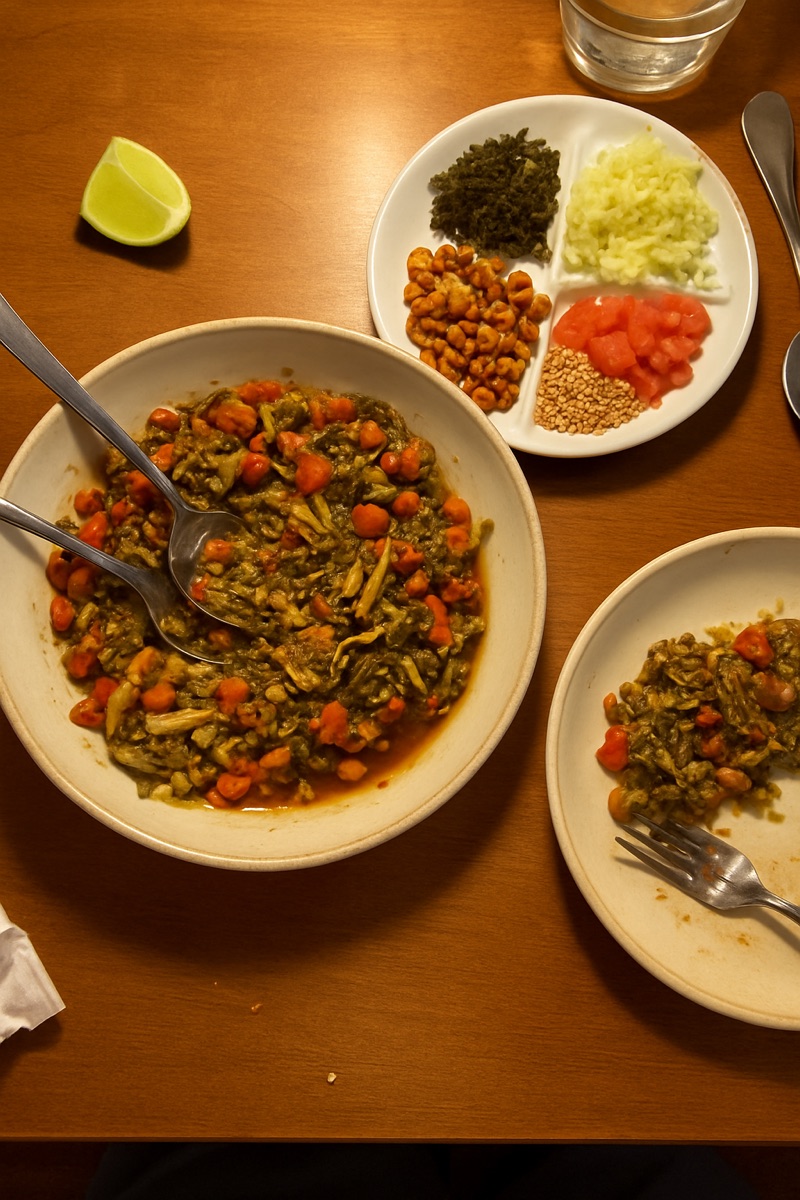
Lahpet thoke, the fermented tea leaf salad, is the other dish most associated with Burmese identity. Myanmar is one of very few countries where tea is eaten as well as drunk. Before colonial times, lahpet was a peace offering exchanged between warring kingdoms, and it was served after a judge gave a verdict, eating it meant accepting the decision. The leaves come to the table surrounded by separate heaps of fried split peas, peanuts, sesame, dried shrimp, garlic and cabbage, tossed together just before eating. The Mandalay version adds fried shredded coconut; the Yangon version adds fresh tomato, garlic, green chilli and shredded cabbage, dressed with fish sauce, oil and lime.
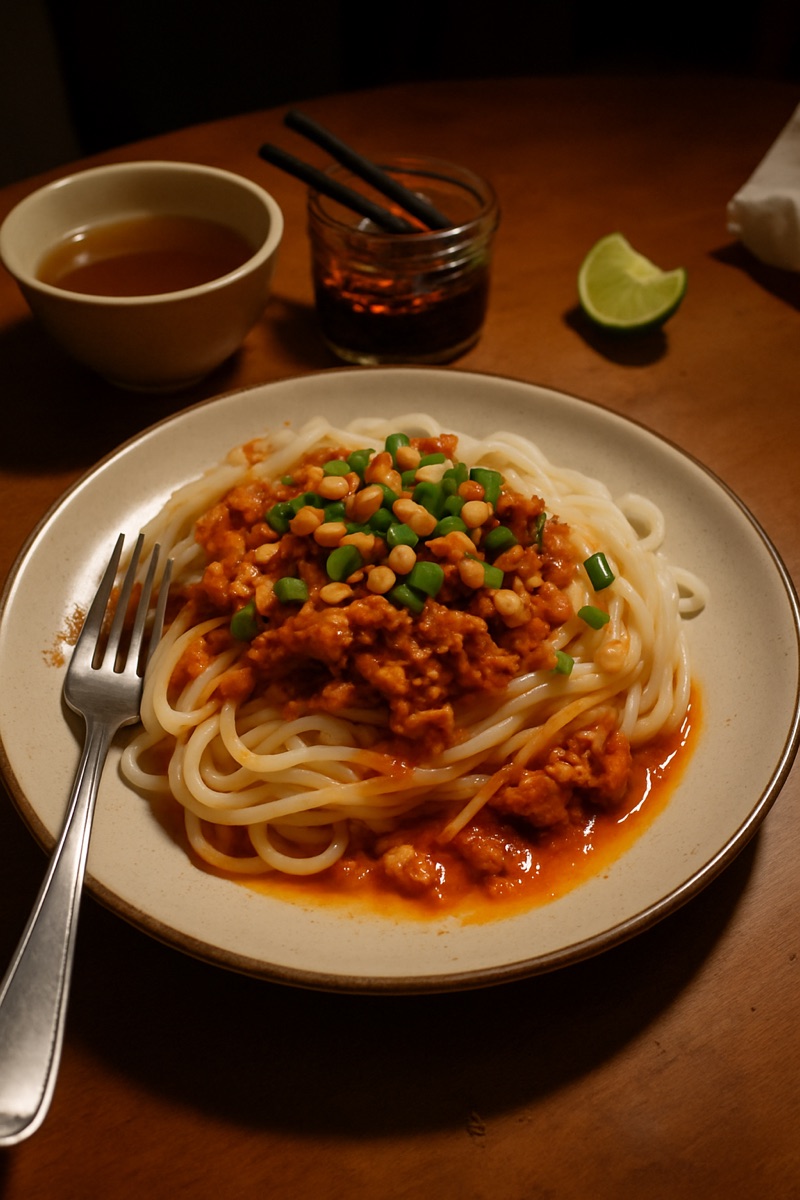
Shan noodles come from Shan State in the east: rice noodles under a sauce of minced chicken and tomato simmered on low heat for about 30 minutes, until the oil rises to the top, finished with garlic oil, pickled mustard greens and crushed peanuts, and served with a small bowl of clear broth on the side.
You will find all three recipes on our page about the food of Myanmar. For the wider region, see our guide to Southeast Asian food, and compare mohinga with Cambodia's fish-gravy noodles in our article on the national dish of Cambodia.
The recipes
- Mohinga🇲🇲 Myanmar · 1 hour and 50 minutes
 Lahpet thoke🇲🇲 Myanmar · 1 hour
 Shan noodles🇲🇲 Myanmar · 50 minutes
Questions people ask
Is mohinga the official national dish of Myanmar?
Mohinga has no official status set by law, but it is widely regarded as Myanmar's national dish and is usually described as the unofficial national dish.
When do people eat mohinga?
Mohinga is traditionally a breakfast dish, sold by street hawkers early in the morning. Today it is also sold all day in many towns and cities.
What fish is used in mohinga?
Catfish is the most common choice. Regional versions use other fish, such as hilsa in Hinthada or striped snakehead and carp in Myaungmya.
What is served with mohinga?
Mohinga is topped with boiled egg, crisp fritters, fried onions, coriander, dried chilli and lime, and diners add fish sauce to taste.
How do you pronounce mohinga?
Roughly "moh-hin-GAH". The Burmese name is also spelt mont hin gar.
Keep reading
- Traditional food of Myanmar: 12 dishes to know
- What is the national dish of Brunei?
- What is the national dish of Cambodia?
- What is the national dish of Indonesia?
- What is the national dish of Laos?
- What is the national dish of Malaysia?