 COPPER
Traditional food of India: 13 dishes to know
Traditional Indian food is built on rice, whole-wheat flour, millet and lentils, flavoured with spices such as cumin, mustard seed, turmeric, ginger and chilli, often fried in ghee or oil and poured over the dish as a tempering (tadka). It is regional first: wheat breads in the north, rice and coconut in the south. The dishes to know first are dal, biryani, masala dosa and butter chicken.
What Indian food is built on
The staples of Indian cooking are rice, whole-wheat flour, pearl millet and a wide range of lentils and pulses. The common spices are chilli, black mustard seed, cardamom, cumin, turmeric, asafoetida, ginger, coriander and garlic, used whole or ground. A large part of the population is vegetarian for religious reasons, so beans, lentils, vegetables and dairy carry many meals.
Two techniques recur everywhere. Tadka, or tempering, fries whole spices in hot ghee or oil and adds them to a dish at the start or the end. Dum is slow cooking in a sealed pot, used for biryani and rich meat dishes. That regional spread is also why there is no official national dish of India.
Broadly, the north eats wheat breads, meat curries and dishes from the Mughal court; the south eats rice, steams and uses coconut; the east cooks fish with mustard; and the west, especially Gujarat, has a strong vegetarian tradition and often serves sweet dishes alongside savoury ones. The 13 dishes below cover those regions and every part of the day.
Everyday staples
A typical Indian home meal pairs a grain with a lentil or bean dish and a vegetable, with yogurt or pickle on the side. These are the foods eaten most often, far more than the restaurant curries known abroad.
- Dal — Split lentils, peas or beans boiled with turmeric and salt, then finished with a tadka of cumin, mustard seed, asafoetida, garlic and onion. It is eaten every day across the country with rice or flatbread.
- Roti and naan — Roti, or chapati, is an unleavened whole-wheat flatbread cooked on a flat griddle called a tawa, the daily bread of the north. Naan is a leavened bread baked against the wall of a tandoor clay oven, more common in restaurants.
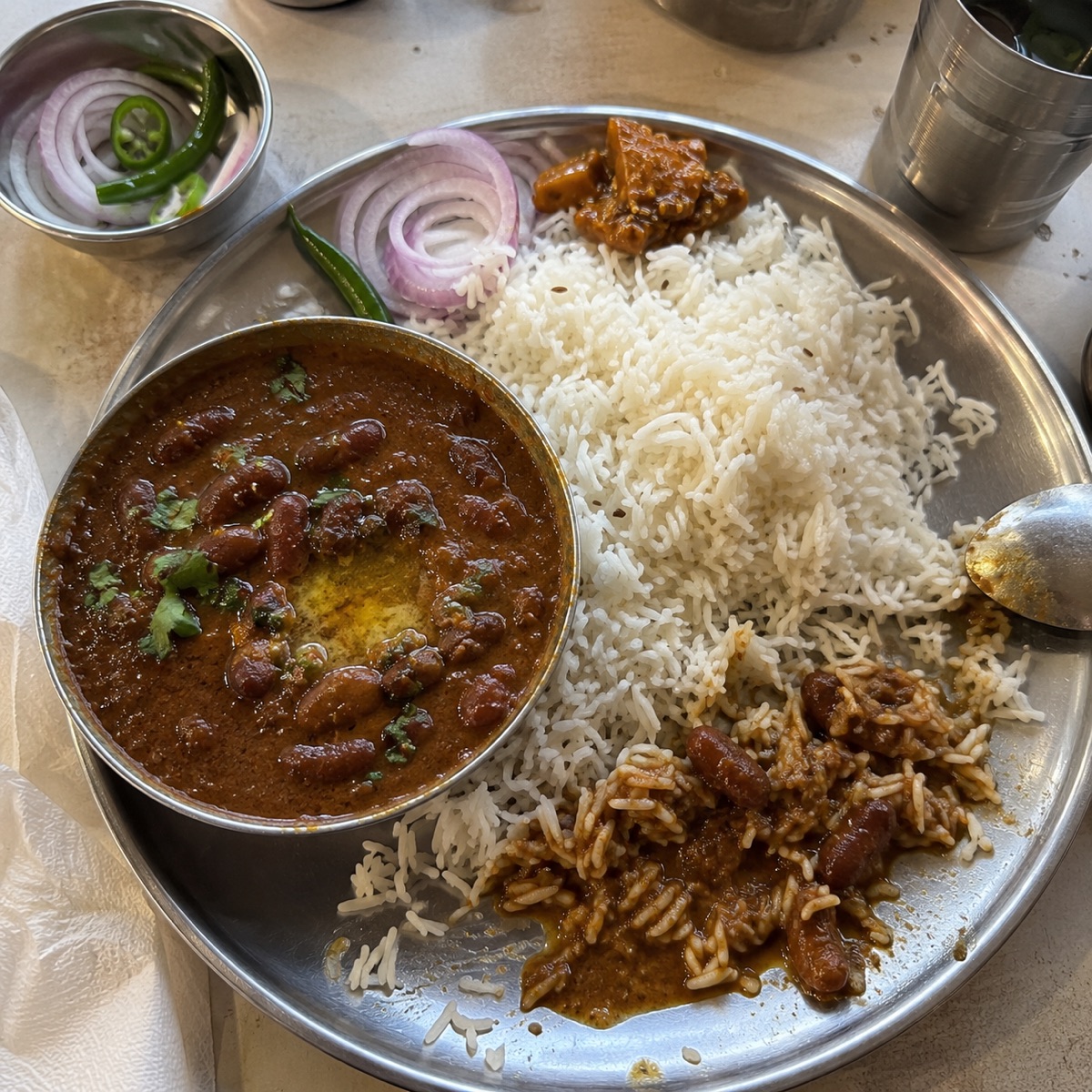
- Rajma chawal — Kidney beans simmered in a browned onion and tomato masala until the gravy thickens, served over plain basmati rice. It is part of the regular diet in North India and is often listed as North Indians' favourite home meal.
Classics of the north
The cooking of North India was shaped by the Mughal courts, which brought Persian techniques such as slow sealed-pot cooking, and by the tandoor clay oven of Punjab.
- Biryani — Rice layered with spiced meat, seafood or vegetables and cooked so that the flavours pass into the grains, a dish of the Mughal court kitchens. Hyderabad, Lucknow and Kolkata each have their own style; the Kolkata version adds potatoes. It is the most ordered dish on Indian food delivery apps.
- Butter chicken — Chicken marinated in yogurt and spices, cooked in a tandoor, then finished in a smooth tomato, butter and cream sauce with dried fenugreek leaves. It was popularised by the Moti Mahal restaurant in Delhi in the 1950s.
- Rogan josh — Mutton or goat braised in an aromatic deep-red gravy, coloured by Kashmiri chillies or alkanet root. It is one of the main courses of the wazwan, the Kashmiri multi-course feast.
The south and the west coast
In the south, rice is the staple, coconut is everywhere and steaming is a core technique. Breakfast is often made from a fermented rice and lentil batter.
- Idli — Soft steamed cakes made from a batter of rice and hulled black lentils, fermented overnight until it doubles in volume. They are a South Indian breakfast, eaten with coconut chutney and sambar, a lentil and vegetable stew.
- Masala dosa — A thin crêpe of the same kind of fermented batter, crisped on a griddle and folded around potatoes tempered with mustard seeds and curry leaves. It was popularised in Madras, now Chennai, in the 1930s by Udupi-style restaurants, and is a South Indian breakfast served with chutney and sambar.
- Vindaloo — A Goan curry whose name comes from the Portuguese carne de vinha d'alhos, meat with garlic and wine vinegar. Goan cooks made it with pork, palm vinegar, garlic and local spices, and it became much hotter later in Britain.
Street food, sweets and chai
Indian cities eat a great deal on the street, from snacks to full meals, and every celebration comes with its sweets.
- Pav bhaji — Mixed vegetables mashed in the pan with butter and a spice blend, served with toasted soft buns called pav. It began as a quick meal for Mumbai's textile mill workers and is now sold from street carts across the city.
- Samosa — A pastry shaped as a triangle, cone or crescent, filled with spiced potato, onion, peas and green chilli and deep-fried until golden. It is served hot as street food, with fresh chutneys.
- Gulab jamun — Small balls of khoya, milk reduced to a dough, fried slowly and soaked in a syrup flavoured with cardamom and rose water. They are eaten warm at festivals such as Diwali, at weddings and birthdays.
- Masala chai — Black tea boiled with milk, sugar and spices such as cardamom and ginger. It is drunk at home and sold from roadside stalls all over the country.
Indian food across South Asia
Many of these dishes are shared with India's neighbours, part of a wider South Asian way of cooking built on rice, flatbreads, lentils and tempered spices. Biryani and dal are as common in Pakistan as in India, and Sri Lanka makes its own rice and lentil breakfasts. Read our guides to the traditional food of Pakistan and the traditional food of Sri Lanka to compare.
Cook Indian food at home
Three of these dishes have full recipes in Copper: rajma chawal, masala dosa and pav bhaji. Rajma is the best place to start, because it teaches the base of North Indian cooking: brown the onion deeply and cook the tomato masala until the fat separates. Masala dosa needs a fermented batter, so plan it a day ahead; pav bhaji is the fastest of the three and works with whatever vegetables you have. All three, with quantities and step-by-step methods, are on our page about the food of India.
The recipes
- Rajma chawal🇮🇳 India · 9 hours and 30 minutes
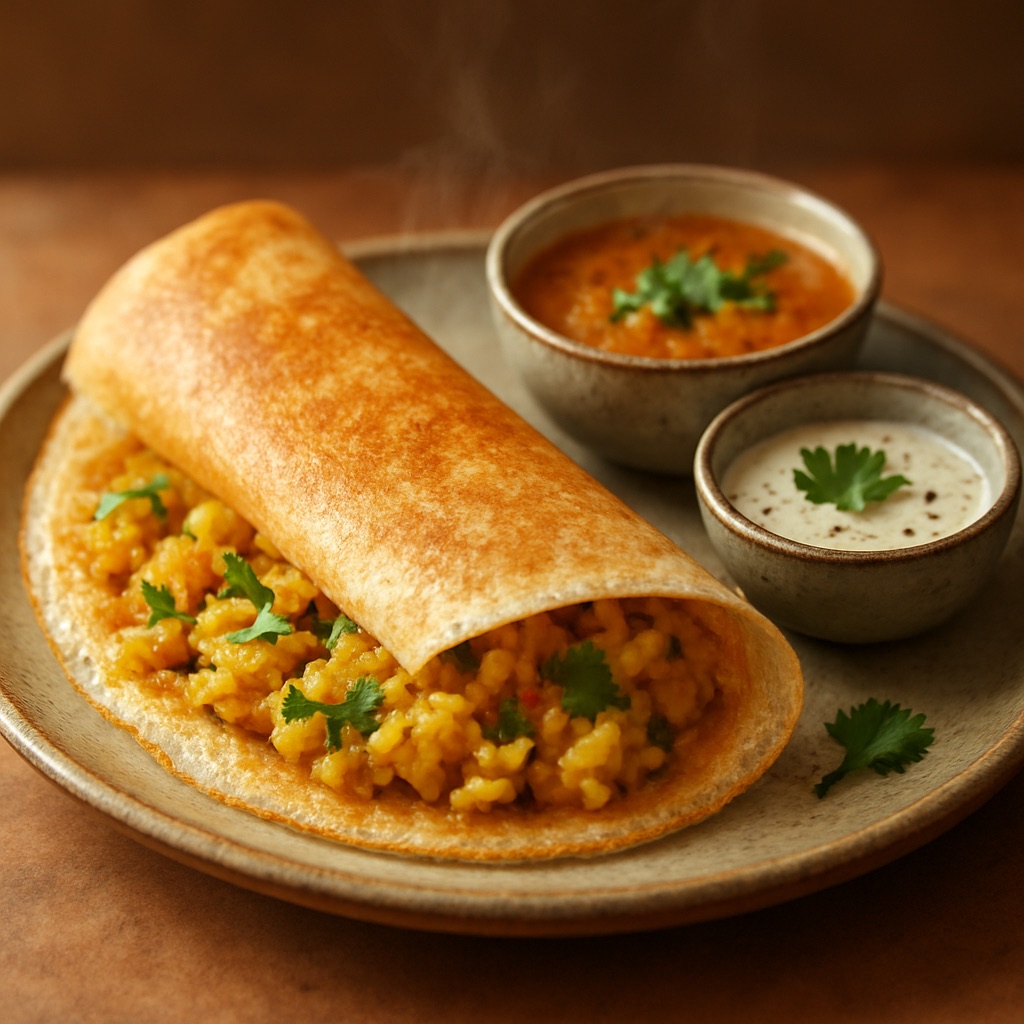 Masala dosa🇮🇳 India · 45 minutes
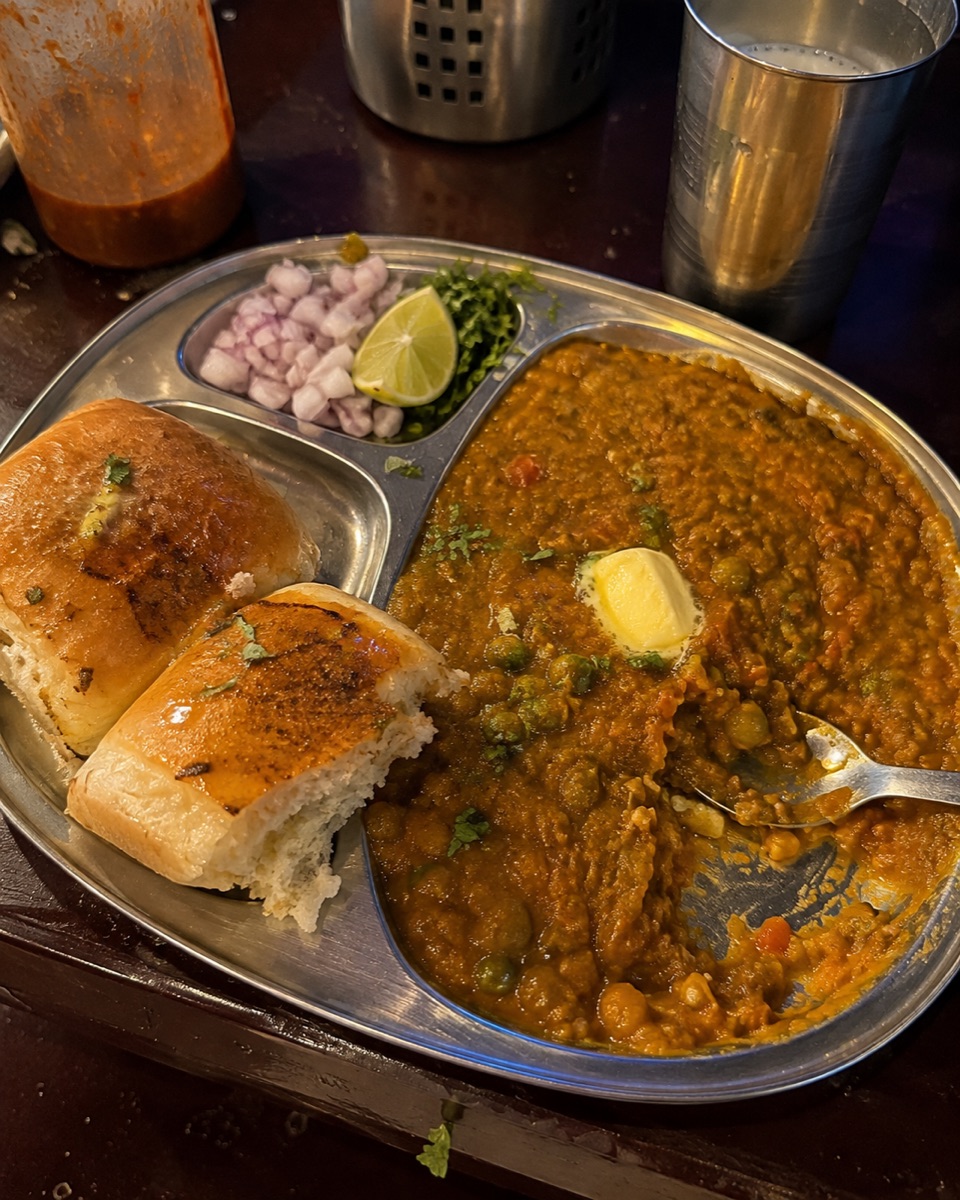 Pav bhaji🇮🇳 India · 45 minutes
Questions people ask
What is the most popular food in India?
Dal with rice or roti is eaten more than any other dish. Biryani is the most ordered dish on food delivery apps, and butter chicken and masala dosa are the best known abroad.
What do people in India eat for breakfast?
It depends on the region. In the north, rotis or parathas with vegetables and pickle; in Gujarat, dhokla; in the south, idli and dosa with sambar and coconut chutney.
Is Indian food spicy?
Much of it is, but not all. Spice is not the same as heat: many dishes are built on cumin, turmeric, cardamom and coriander with little chilli. Heat levels vary widely by region and by household.
Is most Indian food vegetarian?
A large share of Indians are vegetarian for religious reasons, especially among Hindu and Jain communities, so lentils, beans, vegetables and dairy are central. Meat and fish dishes are still widespread, from Kashmiri rogan josh to Bengali fish curries and Goan vindaloo.
Does India have a national dish?
No. Khichdi, a one-pot dish of rice and lentils, is often suggested, but the government has said it has no plan to declare one.
Keep reading
- What is the national dish of India?
- Traditional food of Bangladesh: 13 dishes to know
- Traditional food of Bhutan: 14 dishes to know
- Traditional food of the Maldives: 14 dishes to know
- Traditional food of Nepal: 13 dishes to know
- Traditional food of Pakistan: 13 dishes to know