 COPPER
Traditional food of the Maldives: 14 dishes to know
Traditional Maldivian food rests on three things: fish, above all skipjack tuna eaten fresh or cured, coconut, grated or pressed into milk, and starches such as rice, roshi flatbread, taro and breadfruit. Tuna appears at every meal. The dishes to know first are garudhiya, a clear tuna broth, mas huni, the breakfast, rihaakuru and mas riha.
What Maldivian food is built on
Maldivian cuisine, also called Dhivehi cuisine, is shared with Minicoy in the Indian territory of Lakshadweep. It is built on coconuts, fish and starches. Coconut is grated on a hunigondi, a long, low seat with a serrated steel blade at one end, or soaked and squeezed into coconut milk, kaashi kiru, the base of most curries.
The fish of choice is skipjack tuna, kandumas, alongside yellowfin, little tunny, frigate tuna, wahoo and mahi-mahi. It is eaten fresh, boiled into broth, or cured into Maldives fish, and shavings of that cured tuna season many dishes. Unlike Pacific islanders, Maldivians have no tradition of eating raw fish.
The day has a set rhythm. Breakfast is roshi, a flatbread, with mas huni and strong black tea; lunch and dinner are plain rice or roshi with a side dish. At evening tea come hedhikaa, short eats of fish and coconut served with strong black tea (kalhusai) or milk tea (kirusai). Rice, taro, sweet potato, cassava and breadfruit supply the starch.
Tuna at every meal
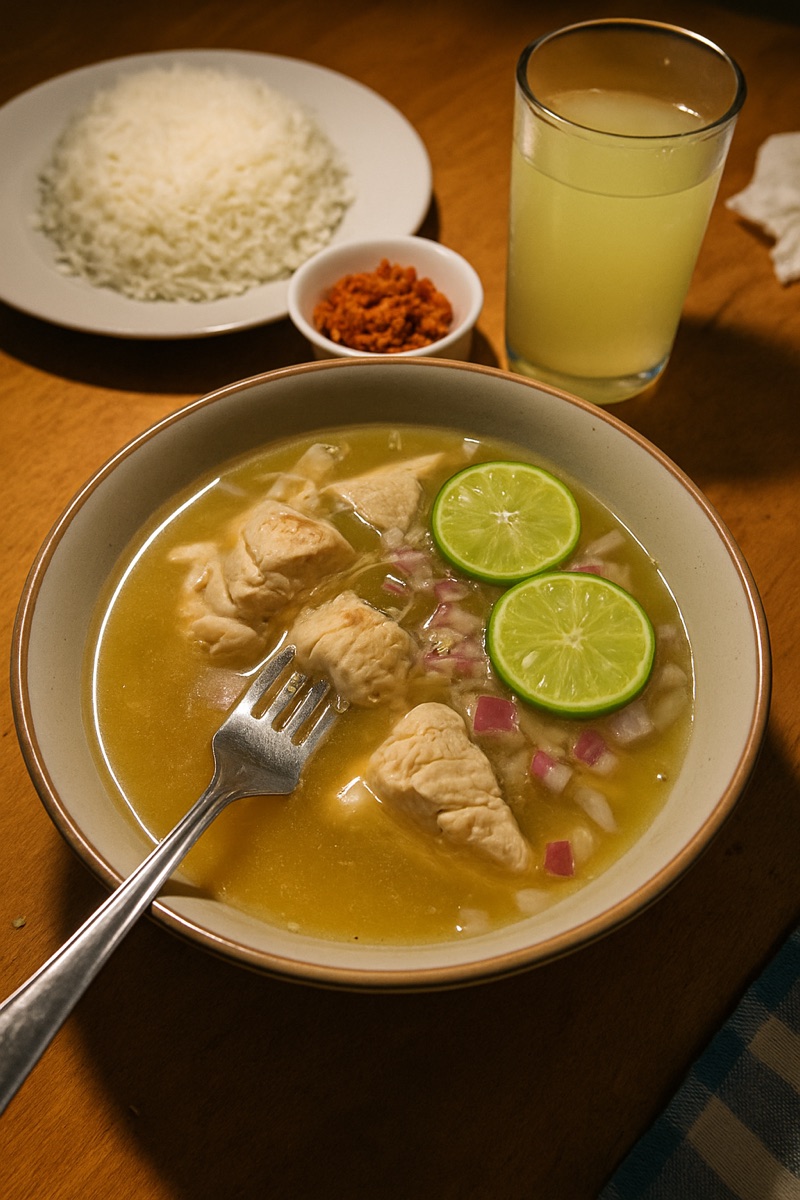
- Garudhiya — Tuna boiled in salted water, skimmed patiently as the scum rises, and eaten with rice, lime, chilli and onion. Fish heads, curry leaves, dried chillies or bilimbi are sometimes added. Wikipedia calls it the national dish of the Maldives, and it is the everyday lunch or dinner.
- Mas huni — Smoked, boiled or canned tuna rubbed together with grated coconut, onion, chilli, lime and salt, eaten for breakfast with roshi. Variations mix in boiled pumpkin, steamed eggplant or leaves.
- Rihaakuru — A thick, brown to almost black fish paste made by boiling tuna in salted water, often over days, until the water evaporates. It is eaten almost daily in Maldivian homes, with rice, roshi, taro or breadfruit, or fried with onion, curry leaves and chilli as theluli rihaakuru. Mixed with coconut milk it becomes rihaakuru dhiya, made for guests.
- Valhoamas (Maldives fish) — Tuna boiled, smoked and sun-dried until it is black, hard and as dry as wood, so it keeps without refrigeration. It was long a main export to Sri Lanka and is still a staple in Maldivian, Sri Lankan and South Indian cooking.
- Fihunu mas — A whole reef fish slashed to the bone, packed with a red paste of chilli, curry leaves, garlic, ginger and grated coconut, and grilled over charcoal.
Curries and rice dishes
Curries are eaten with steamed rice or roshi. Pieces of Maldives fish go even into vegetable curries of eggplant, pumpkin, moringa leaves or green bananas.
- Mas riha — Diced fresh tuna cooked in coconut milk with spices. It is the most important curry in the Maldives.
- Kandu kukulhu — A tuna curry for special occasions; the name means chicken of the sea. Chunks of tuna are stuffed with a special curry paste, tied with strips of pandan and cooked in coconut milk with more of the paste.
- Kulhimas — Spicy fish: a dry curry of cubed tuna, chilli powder and coconut milk. It is a traditional breakfast with roshi, and it is served with bondibaiy on special occasions.
- Masbaiy — Yellow rice cooked with cured or fresh tuna and turmeric. The raw rice is first fried with the fish, onion and spices before it is boiled, so it absorbs their flavour. It is eaten with fried rihaakuru.
- Roshi — The everyday flatbread, made from flour, salt and water rolled into discs and cooked in a pan, similar to an Indian chapati but made with plain white flour. Huni roshi has grated coconut in the dough, and mas aluvi roshi is filled with potato and fish.
Hedhikaa and sweets
- Gulha — Small balls of wheat or rice flour dough stuffed with tuna, onion, grated coconut and chilli, then deep-fried. They range from ping-pong to marble size and are eaten with sweet hot tea.
- Masroshi — A fried, stuffed dough filled with tuna, coconut, onion, garlic and ginger. Lime juice is sometimes drizzled on top.
- Bis keemiya — A fried pastry filled with cabbage, egg and tuna, similar to an egg roll and eaten as a snack throughout the country.
- Bondibaiy — Rice pudding of white rice, coconut milk and sugar, cooked until the rice absorbs the milk. It is made for Eid and the naming of a newborn, and versions use breadfruit or lentils; the rose water and pandan version is called handulu bondibaiy.
Island life and the Maldivian table
Fishing is the Maldives' second industry after tourism, and fishermen using simple bamboo poles can land 600 to 1,000 skipjack in two or three hours on a good night. That is why cured tuna sits at the centre of the cuisine: before refrigeration, boiling, smoking and drying was the only way to keep fish. Rihaakuru and Maldives fish travelled with Maldivian traders to Sri Lanka, where they were known as dhiya hakuru and umbalakada.
During Ramadan, baiypen, a plain rice porridge, is eaten to break the fast and before dawn, with maskurolhi, a dry relish of cured tuna, on the side. Screwpine fruit is sliced thin and eaten raw. As the Maldivian food site Lonumedhu points out, this local cooking is still little known to the visitors who fill the resorts.
Cook Maldivian food at home
Copper has garudhiya, mas huni and fihunu mas with ingredient lists and step-by-step methods. The techniques that matter: skim the grey foam from the garudhiya as soon as it rises and keep it at a simmer so the broth stays clear; rub the mas huni together by hand so the coconut releases its oil; and cut the reef fish to the bone so the paste reaches the centre. All three are on our page about the food of the Maldives.
The Maldives belongs to the South Asian kitchen through rice, curry and coconut. To compare, see the traditional food of Sri Lanka and the traditional food of India.
The recipes
- Garudhiya🇲🇻 Maldives · 40 minutes
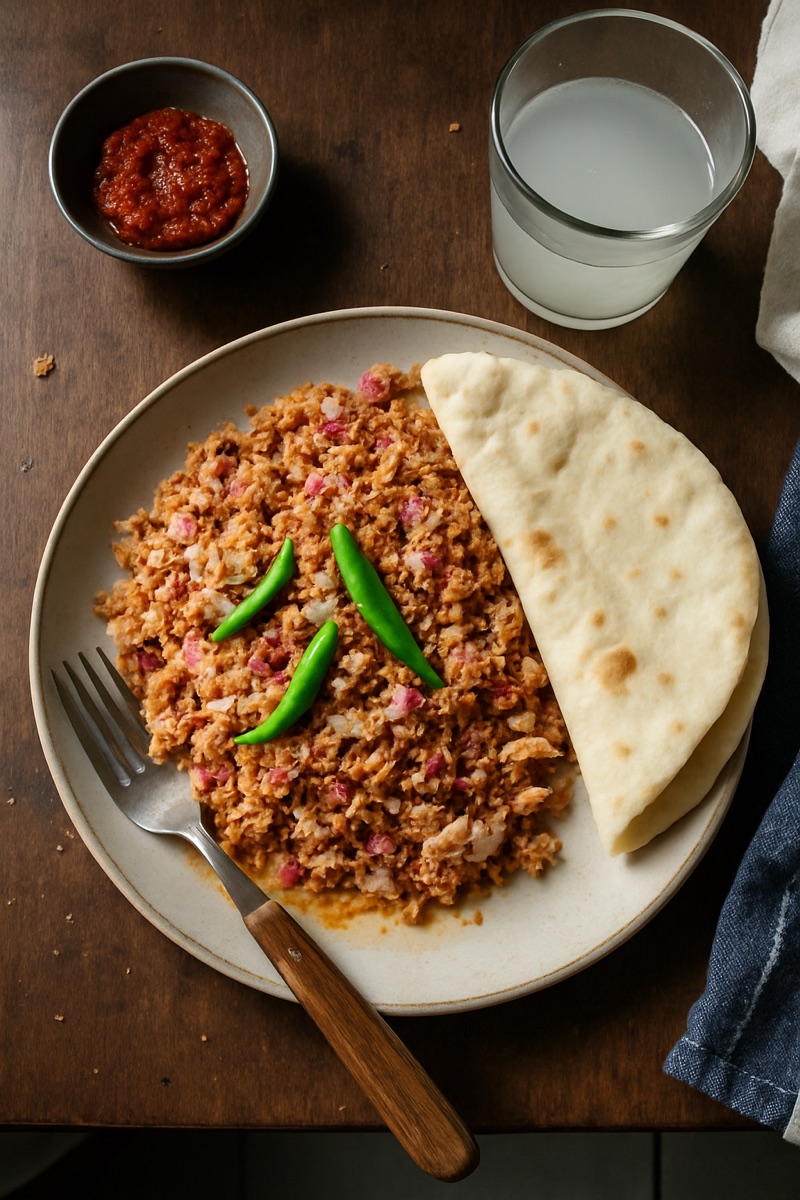 Mas huni🇲🇻 Maldives · 15 minutes
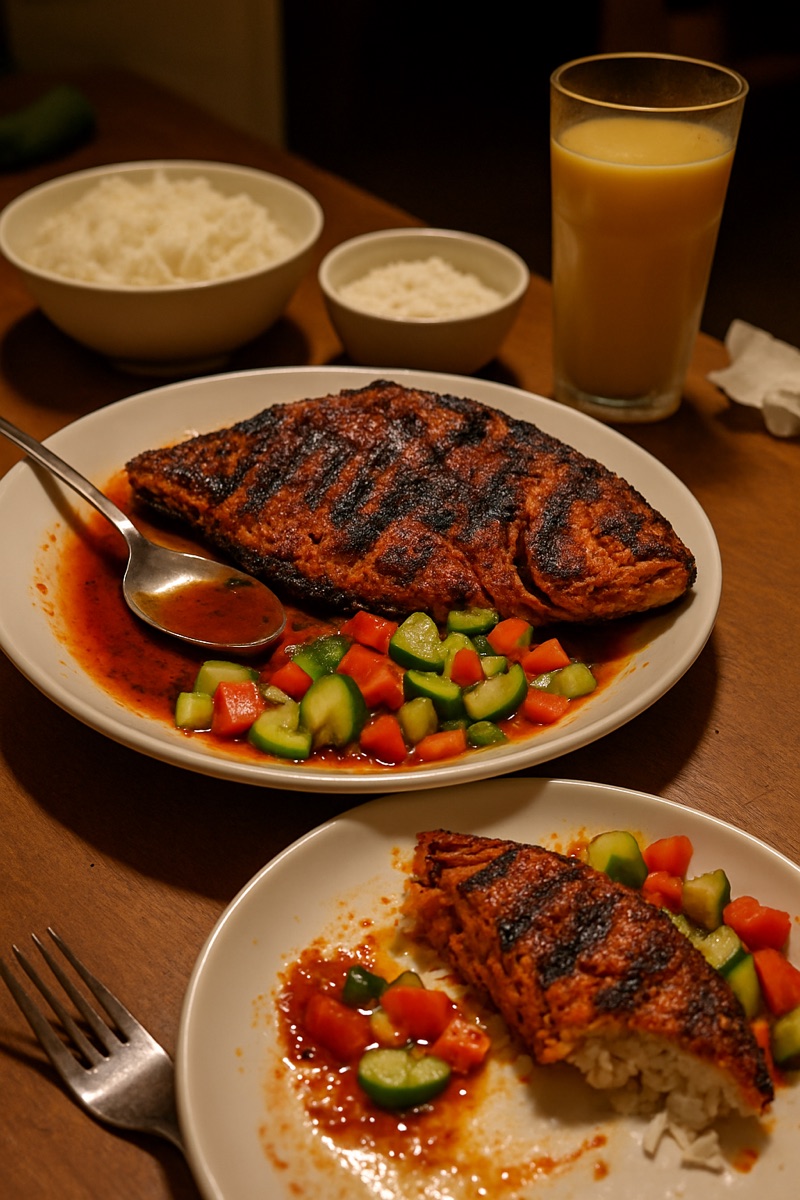 Fihunu mas🇲🇻 Maldives · 1 hour and 15 minutes
Questions people ask
What is the national dish of the Maldives?
Garudhiya, a clear broth of tuna boiled in salted water and eaten with rice, lime, chilli and onion, is the one most often called the national dish. Mas huni, the tuna and coconut breakfast, is also listed.
What do Maldivians eat for breakfast?
Mas huni with roshi flatbread and strong black tea is the classic. Kulhimas, a dry tuna curry, and rihaakuru with roshi are also daily breakfasts in many homes.
Is Maldivian food spicy?
Often. Chilli goes into mas huni, curries and fried hedhikaa, and Visit Maldives uses a Scotch bonnet chilli (githeyo mirus) in its mas huni recipe. Garudhiya itself is mild, and each diner adds chilli, onion and lime at the table.
Do Maldivians eat raw fish?
No. Unlike many Pacific island cuisines, Maldivian cooking has no tradition of raw fish: tuna is boiled, smoked, dried, grilled or curried.
What are hedhikaa?
Maldivian short eats, served with evening tea: gulha, masroshi, bajiya (a local samosa), bis keemiya, kavaabu and similar fried snacks, most of them filled with tuna and coconut.
Keep reading
- What is the national dish of the Maldives?
- Traditional food of Bangladesh: 13 dishes to know
- Traditional food of Bhutan: 14 dishes to know
- Traditional food of India: 13 dishes to know
- Traditional food of Nepal: 13 dishes to know
- Traditional food of Pakistan: 13 dishes to know