 COPPER
Traditional food of Pakistan: 13 dishes to know
Pakistani food is a meat-centred, halal cuisine eaten with wheat bread such as roti and naan or with basmati rice, and seasoned with cardamom, cinnamon, cloves, black pepper, cumin, chilli and turmeric. Slow-cooking, the karahi pan and the tandoor oven shape many dishes. The most emblematic are nihari, biryani, chicken karahi and chapli kebab, with gulab jamun as the national dessert.
What Pakistani food is built on
Pakistani cuisine blends regional cooking styles from the Indian subcontinent, Central Asia and West Asia. Arab, Turkic, Persian and Afghan dynasties shaped it, and as in most Muslim-majority countries it follows halal rules: no pork and no alcohol. Meat plays a bigger role than in other South Asian cuisines; a 2003 report found the average Pakistani ate three times as much meat as the average Indian. Goat, lamb, beef and chicken are the meats of choice, while lentils, rice and vegetables fill the everyday pot in households where meat is too expensive.
Main courses are eaten with wheat bread or rice. Roti and chapati are everyday breads, naan comes from the tandoor and is seldom made at home, and basmati is the most popular rice. The common spices are brown and green cardamom, cinnamon, cloves, nutmeg, mace, star anise and black pepper, with cumin, chilli powder, turmeric and bay leaves; Punjab adds a lot of coriander. Pakistan has no official national dish, but nihari is the one most often named: see our article on the national dish of Pakistan.
Slow-cooked stews and curries
Several of Pakistan's best-known dishes cook for hours, and some are breakfast food.
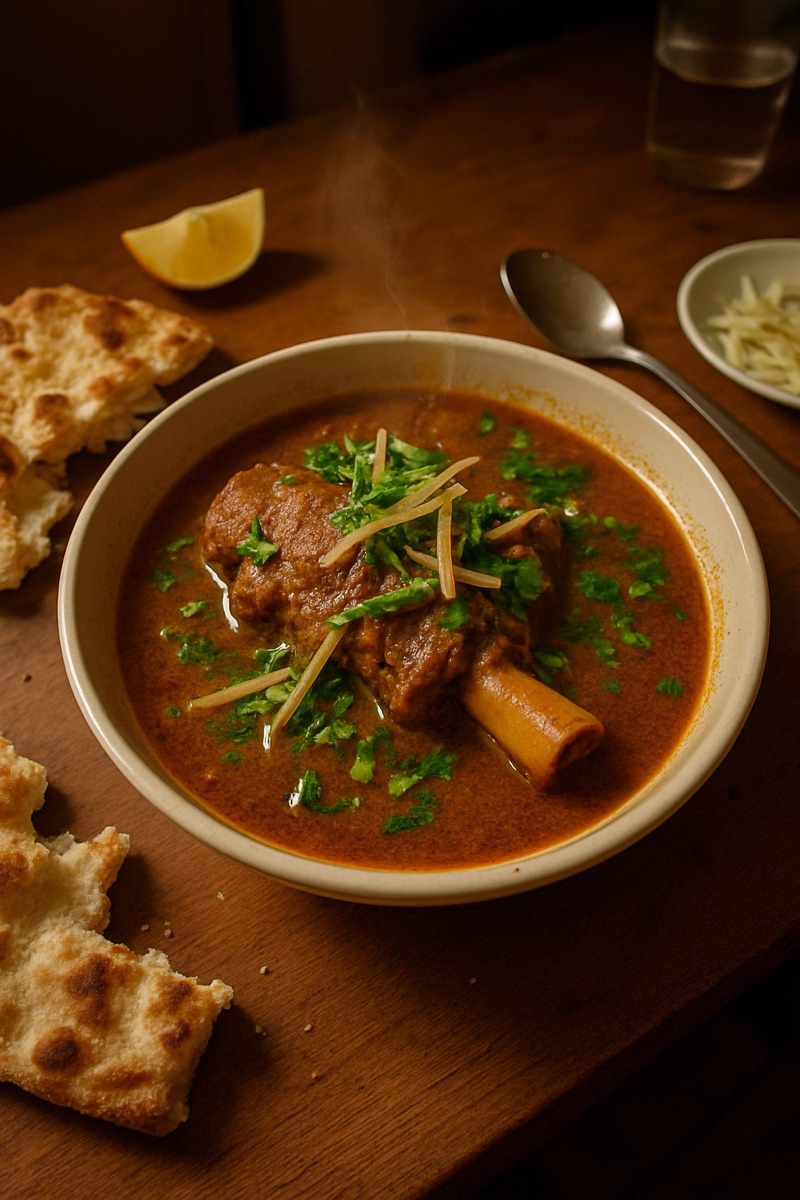
- Nihari — Beef shank and marrow bones simmered for six to eight hours with spices and long pepper, thickened with wholemeal flour and served under its layer of red spiced fat. Its name comes from the Arabic word for morning, and it is still eaten for breakfast with plain naan, fried onion, ginger and lemon. It became a large-scale success in Karachi after 1947.
- Haleem — A thick porridge of wheat, lentils and meat, cooked for hours and beaten until the grain dissolves and the meat breaks into strands. It is one of the staple dishes of Punjab and is served with fried onion, ginger and lemon.
- Paya — A stew of the trotters of a cow, goat, buffalo or sheep, slow-cooked with spices; the name means "feet" in Urdu. As siri paye, with the head added, it is eaten with plain naan for breakfast in many parts of the country, and it is also served at festivals and for special guests.
- Chicken karahi — Chicken cooked in a karahi, a deep, wok-like pan, with tomatoes, ginger, garlic, green chilli and coriander. It is traditionally made without onions in the base, takes 30 to 50 minutes, and is eaten with naan, roti or rice. Made with goat or lamb it becomes gosht karahi; the Peshawari version is eaten with Kandahari naan.
- Saag with makki ki roti — Mustard leaves cooked slowly in ghee, served with flatbread made from maize flour and fresh butter or ghee. It is a winter dish and most common in Punjab.
Rice, kebabs and grills
- Biryani — Rice layered with spiced meat, served at weddings and celebrations. Sindhi biryani, from Sindh, is one of the most consumed dishes in Pakistan: mutton, chicken, fish or shrimp with basmati rice, potatoes, tomatoes, yoghurt and sometimes prunes. Lahori biryani is the other well-known style, and tahiri is a vegetarian version.
- Chapli kebab — A wide, flat patty of minced beef with coarsely crushed coriander seeds and dried pomegranate seeds, fried in fat. It comes from Pashtun cooking in Khyber Pakhtunkhwa, especially Peshawar, and is eaten with naan, often Kandahari naan.
- Seekh kebab — Spiced minced lamb, beef or chicken shaped into cylinders on skewers and grilled over a mangal or in a tandoor. With chicken tikka, yoghurt-marinated chicken pieces, and shami kebab, it is one of the kebabs eaten throughout the country.
- Sajji — A Baloch dish of lamb marinated only in salt and a few spices, traditionally served with rice cooked inside the animal and kaak bread. In Karachi, Islamabad and Lahore it is usually made with chicken, roasted until well done and served with rice.
- Daal chawal — Lentils (daal) and rice, a popular comfort food in many households. Lentils and chickpeas are everyday staples of home cooking but are considered inexpensive, so they are not usually served to dinner guests.
Street food, breakfast and sweets
Alongside the dishes below, tea, called chai, is drunk throughout the day: doodh pati chai is brewed with milk and sugar, and pink Kashmiri chai with pistachios and cardamom is a winter and wedding drink. Lassi, a yoghurt drink that is sweet or salty, comes from Punjab.
- Halwa puri — Fried puri bread eaten with sweet semolina halwa and a gravy of chickpeas and potatoes. It is a favourite weekend and holiday breakfast in urban Pakistan, sold from carts and specialist breakfast shops.
- Bun kebab — A fried lentil or meat patty in a bun with chutney, sometimes with an egg, which is why it is also called anday wala burger. It is a longstanding street-food speciality of Karachi, where the vendors on Burns Road are particularly famous.
- Gulab jamun — Small balls of reduced-milk dough (khoya) deep-fried in ghee or oil. It was chosen as the national dessert in a Government of Pakistan poll reported in January 2019, ahead of jalebi and barfi.
Regional cooking across Pakistan
Each province has its own kitchen. Punjab cooks with coriander and moderate heat: saag, paya, murgh cholay with chickpeas, nihari, haleem and karahi, with lassi to drink. Sindh has Sindhi biryani, karhi, daal pakwan and palo fish, and is typically not spicy, while Karachi's food is known for bold, spicy flavours. Khyber Pakhtunkhwa follows Pashtun tradition, with rice dishes such as Kabuli palaw and Bannu pulao, chapli kebab and mutton karahi, traditionally not spicy. Balochistan is known for sajji, mutton rosh and dampukht, meat slow-cooked in its own fat. In Gilgit-Baltistan and Chitral people drink salty butter tea.
Much of this food is shared across the border, from biryani to kebabs and gulab jamun. Compare with the traditional food of India, or explore the wider South Asian kitchen.
Cook Pakistani food at home
Nihari, haleem and chapli kebab each have a full recipe with quantities and step-by-step methods in the Copper app. You will find all three on our page dedicated to Pakistani recipes.
The recipes
- Nihari🇵🇰 Pakistan · 8 hours
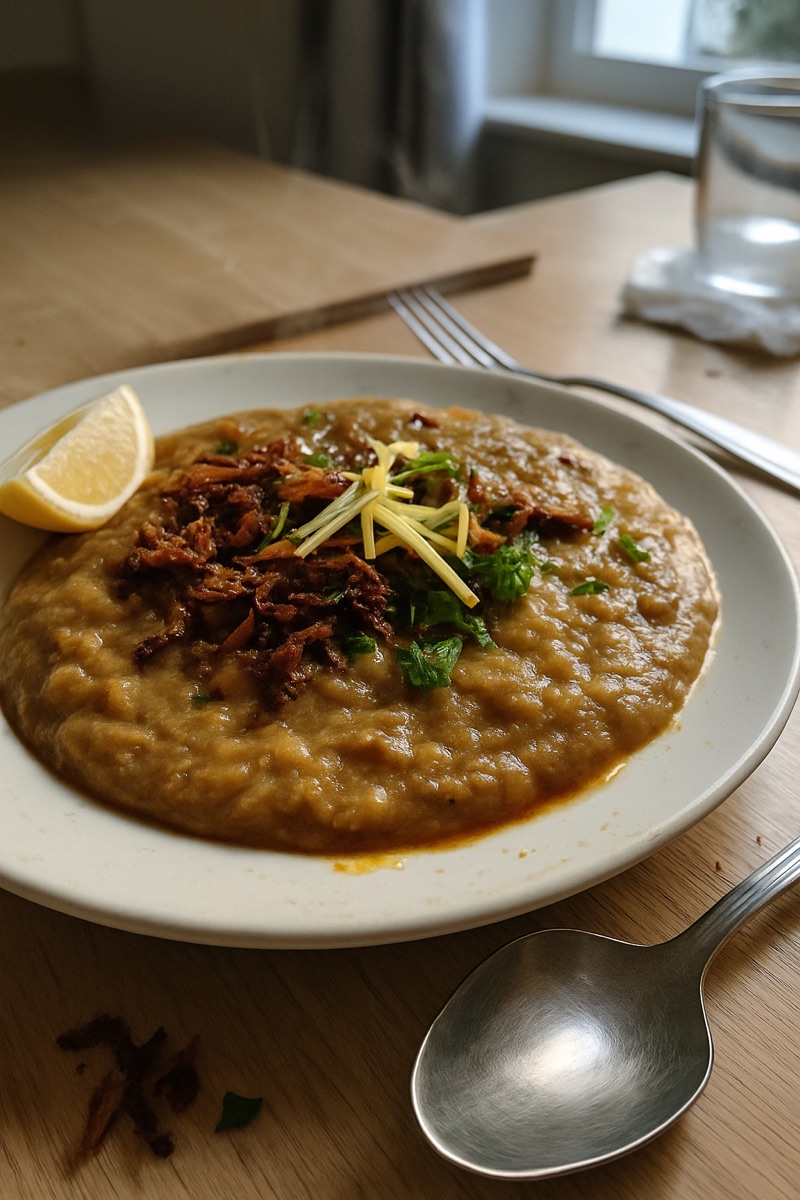 Haleem🇵🇰 Pakistan · 18 hours
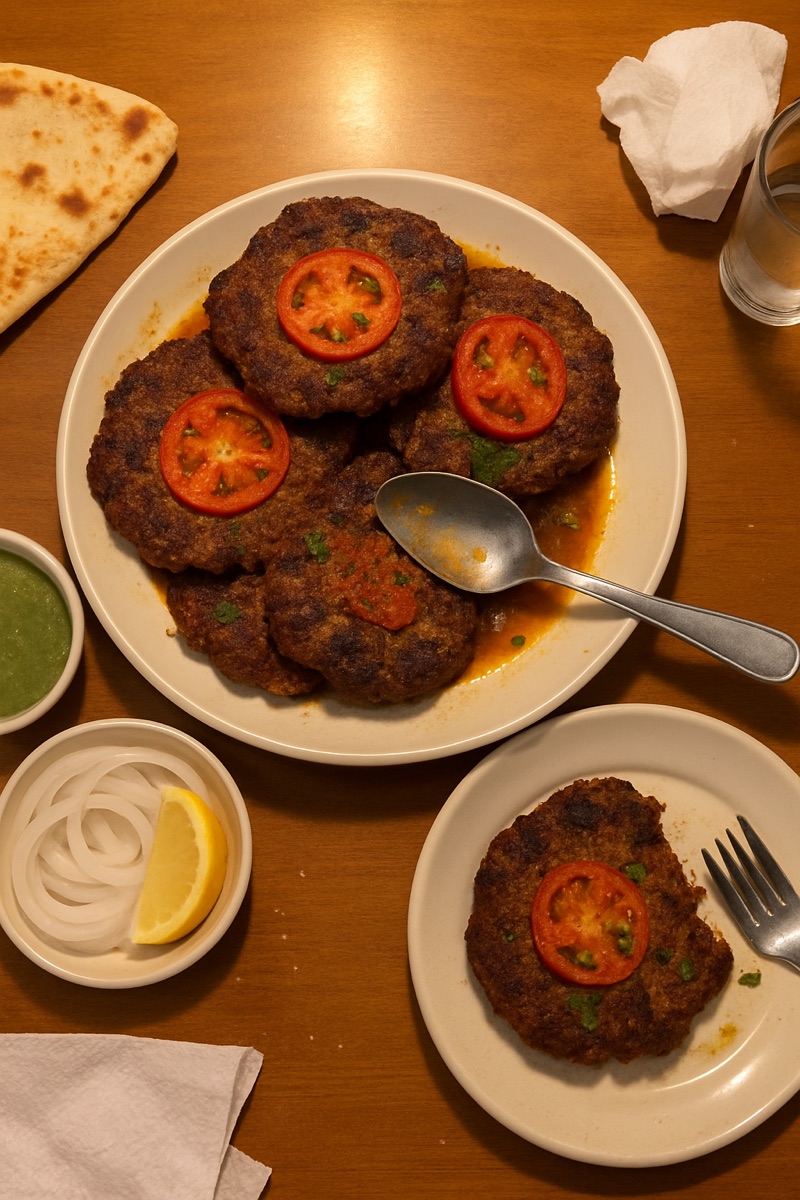 Chapli kebab🇵🇰 Pakistan · 1 hour and 15 minutes
Questions people ask
What is the most popular food in Pakistan?
Biryani, nihari, chicken karahi and kebabs such as seekh kebab and chapli kebab are among the most widespread. Sindhi biryani is one of the most consumed dishes in the country.
What do people in Pakistan eat for breakfast?
Paratha is a common breakfast across the country, often stuffed with potato, radish or minced meat. Halwa puri is a weekend favourite in cities, and nihari or siri paye with naan are eaten for breakfast in many places.
Is Pakistani food spicy?
It depends on the region. Karachi's food is known for bold, spicy flavours and Punjab's is moderately spicy, while Sindhi, Pashtun and Baloch cooking is traditionally aromatic rather than hot.
What is the national dessert of Pakistan?
Gulab jamun. It won a Twitter poll run by the Government of Pakistan and reported in January 2019, ahead of jalebi and barfi.
What is the difference between Pakistani and Indian food?
They share many dishes and techniques, but Pakistani food follows halal rules, with no pork or alcohol, and gives meat a much bigger place than other South Asian cuisines.
Keep reading
- What is the national dish of Pakistan?
- Traditional food of Bangladesh: 13 dishes to know
- Traditional food of Bhutan: 14 dishes to know
- Traditional food of India: 13 dishes to know
- Traditional food of the Maldives: 14 dishes to know
- Traditional food of Nepal: 13 dishes to know