 COPPER
Traditional food of Bhutan: 14 dishes to know
Traditional Bhutanese food is built on red rice, buckwheat and maize, on chillies treated as a vegetable rather than a spice, and on datshi, a soft cheese made at home from cow or yak milk. Dishes are stews served over rice. The ones to know first are ema datshi, the national dish, phaksha paa, jasha maroo and kewa datshi.
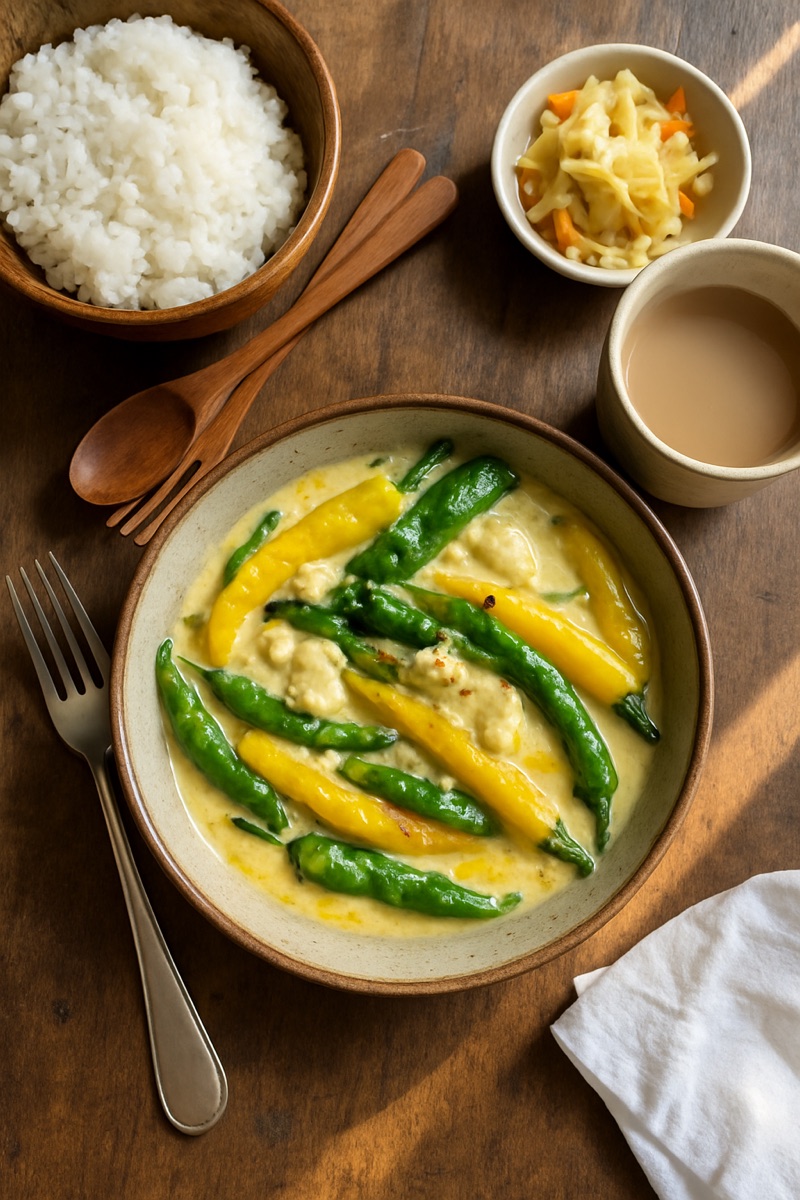
What Bhutanese food is built on
Bhutanese red rice is the staple: like brown rice in texture but nutty in taste, it is the only rice variety that grows at high altitude. Buckwheat is eaten mainly in Bumthang, maize in the eastern districts, and rice across the country. In the hills the diet adds chicken, yak meat, dried beef, pork, pork fat and lamb.
Chillies are the defining ingredient. Taste of Bhutan, a Bhutanese food site, says they are considered not a seasoning but a true vegetable, and that a meal without them is thought worthless. In September and October, village roofs turn red with chillies laid out to dry in the sun.
Dairy is the other pillar. Most milk is turned into butter and cheese, above all datshi, a fresh cottage cheese that gives its name to a whole family of dishes. Spices include cardamom, ginger, garlic, turmeric, caraway and thingay, Sichuan pepper. At the table, manners matter: when offered food, a guest says meshu meshu and covers their mouth to refuse, then accepts at the second or third offer.
Datshi dishes
Datshi dishes are stews in which the main ingredient simmers in a little water and oil and is then bound with cheese into a thick, lumpy sauce.
- Ema datshi — Green, red or sun-dried white chillies split lengthwise, simmered with spring onion and finished with datshi. Ema means chilli and datshi cheese in Dzongkha. Eaten everywhere and served over red rice, it is the national dish of Bhutan; some families add tomato, garlic or onion, others keep only chilli and cheese.
- Kewa datshi — Potatoes, boiled first, then cooked in the same cheese sauce in place of the chillies. Like ema datshi and shamu datshi, it is a dish Bhutanese eat over red rice.
- Shamu datshi — Mushrooms cooked in datshi, a milder version of the dish. Other variations use beans (semchung datshi), dried beef (shakam datshi) or pork.
Meat dishes
- Phaksha paa — Pork, fresh or dried, cooked with whole dried red chillies, ginger and vegetables such as radish, turnip, bok choy or spinach. It is eaten with rice and datshi dishes. Shakam paa, made with dried beef, follows the same method.
- Jasha maroo — Diced chicken stewed with onion, garlic, ginger, tomato, green chillies and coriander leaves, served with plenty of its own broth over red rice. It is a winter dish, and some cooks make it with beef.
- Sikam paa — Dried pork cooked with chillies. Dried meats, dried beef (shakam) as well as dried pork (sikam), are part of the diet in the hills, and both turn up in many versions of paa and datshi.
Rice, buckwheat and dumplings
- Red rice — Medium-grain Bhutanese red rice, cooked and served as the base of almost every meal. It cooks faster than many rice varieties and is eaten with bold dishes such as ema datshi, shamu datshi and kewa datshi.
- Puta — Noodles made from buckwheat, the staple grain of Bumthang. They are usually handmade, boiled or stir-fried in oil, spiced with chilli and served with egg and spring onion, and in parts of Bhutan they are offered to the gods and to the priest.
- Hoentay — Buckwheat dumplings from the Haa valley, filled with spinach or turnip leaves, amaranth seeds, cottage cheese, butter, chilli, onion and ginger. They are made for Lomba, a festival marking the end of the harvest, and for New Year.
- Momo — Steamed dumplings shared with Nepal and Tibet, filled with minced beef, pork or vegetables such as cabbage, sometimes with cheese. They are also deep-fried and served with a hot chilli sauce called ezay.
Soups, cheese and drinks
- Jaju — A soup of local spinach or turnip leaves in a broth of milk and butter, sometimes with cheese, served as a side dish to the main course.
- Chhurpi — A hardened yak milk cheese cut into small cubes and chewed or sucked for hours, especially in rural areas. It is one of the hardest cheeses in the world.
- Suja — Butter tea, made by boiling tea leaves with butter and salt. It is frothy and tastes more of butter than tea, and is drunk at weddings and Losar, the New Year. Ngaja, milk tea, is the other common cup.
- Ara — An alcoholic drink made at home from rice, maize, barley, millet, wheat or buckwheat, fermented or distilled and usually drunk hot, sometimes with butter or egg. Its sale is prohibited, but it is offered as a Lhasoel on auspicious days, especially in eastern Bhutan.
Regional cooking in Bhutan
Altitude decides the staple. Bumthang in central Bhutan eats buckwheat, as puta noodles; the eastern districts eat maize, make a matured datshi called zoetay, which turns greenish and smells strong, and have the deepest ara tradition; Haa in the west is the home of hoentay. The warm south grows most of the chillies, in Tsirang, Dagana, Sarpang and Samtse, and eats more dal bhat, rice with lentils, as in Nepal. Jakar in Bumthang even has a Swiss cheese factory making Western-style cheeses.
Cook Bhutanese food at home
Copper has ema datshi, phaksha paa and jasha maroo with ingredient lists and step-by-step methods. The techniques that matter: simmer the chillies in water before the cheese goes in, then let the cheese soften without stirring so the sauce stays lumpy; render the pork belly in its own fat before the chillies and radish; and split the chillies for jasha maroo rather than grinding them. All three are on our page about the food of Bhutan.
Bhutan's cooking sits at the edge of the South Asian kitchen, with Tibetan roots. To compare, see the traditional food of Nepal and the traditional food of India.
The recipes
- Ema datshi🇧🇹 Bhutan · 25 minutes
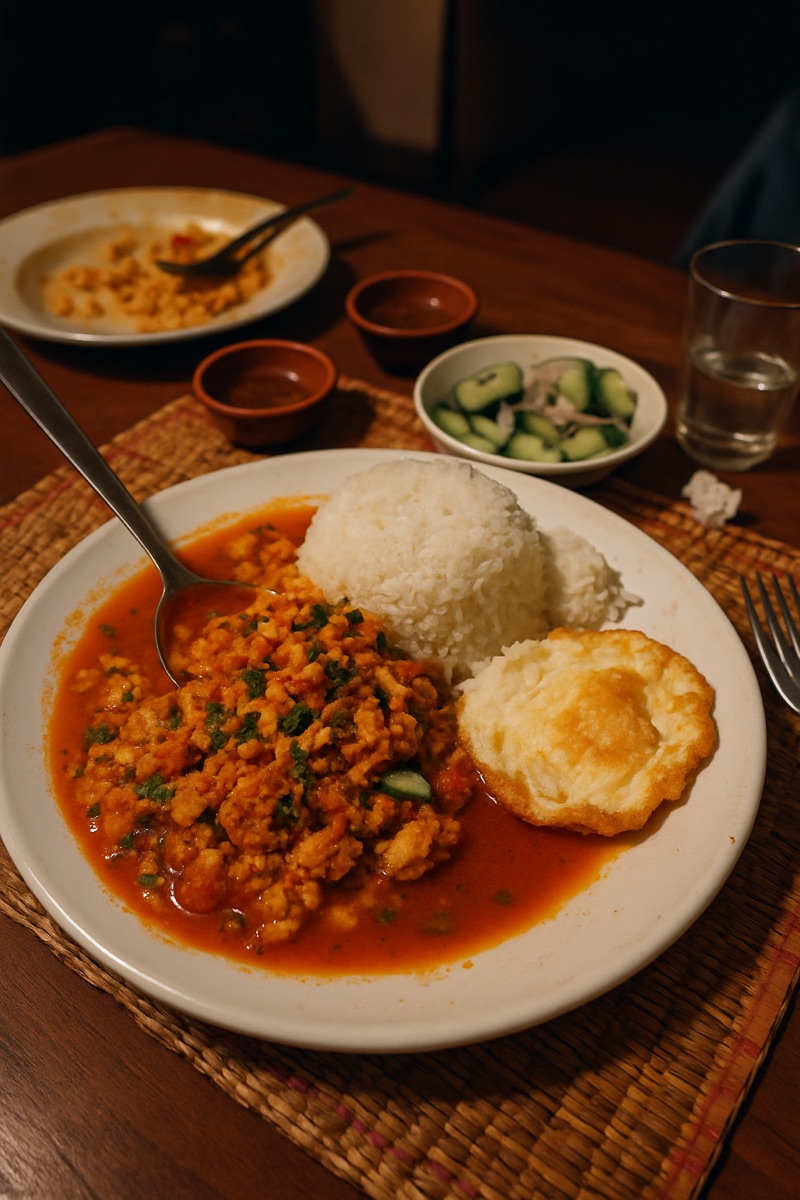 Jasha maroo🇧🇹 Bhutan · 1 hour
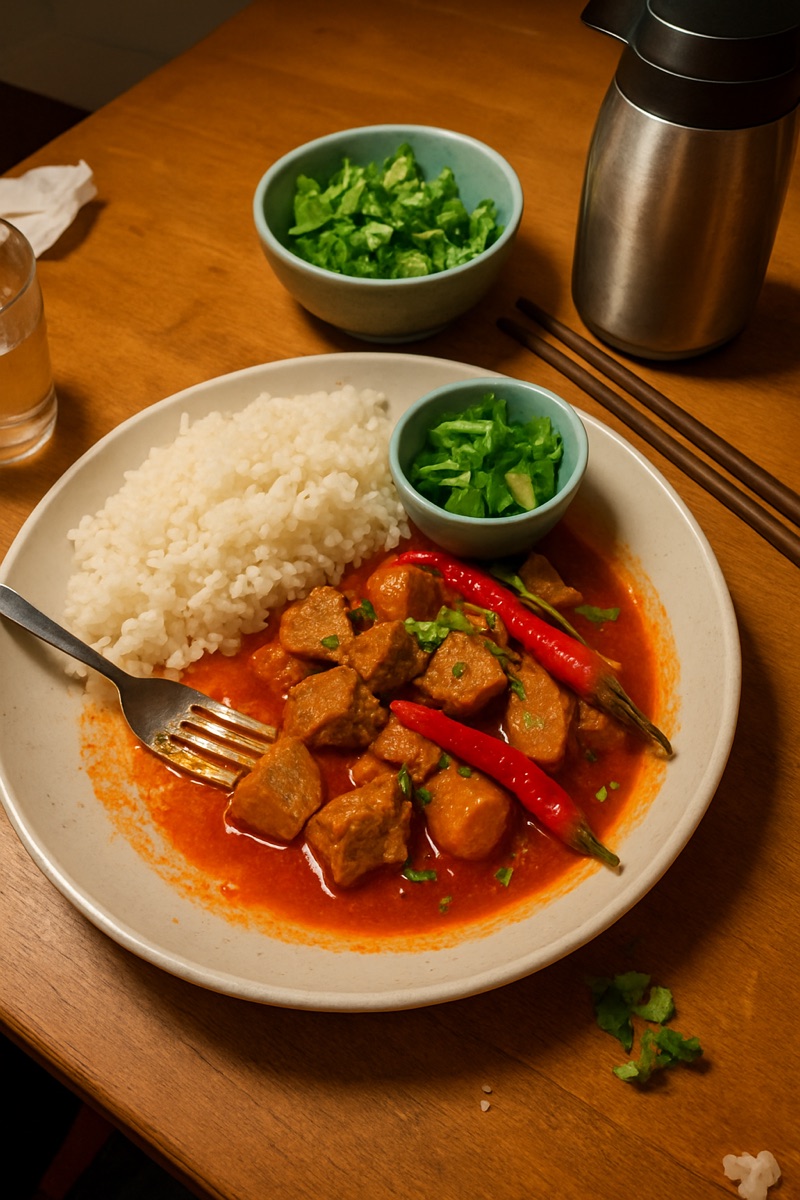 Phaksha paa🇧🇹 Bhutan · 1 hour and 5 minutes
Questions people ask
What is the national dish of Bhutan?
Ema datshi, a stew of chillies and datshi cheese served with red rice. It is not fixed by law, but it is universally described as the national dish for its ubiquity and the pride the Bhutanese take in it.
Is Bhutanese food spicy?
Very. Chillies are eaten as a vegetable, not just a seasoning, so dishes such as ema datshi and jasha maroo can be extremely hot. Red rice and cheese soften the heat, and kewa datshi or shamu datshi are milder choices.
What do people in Bhutan eat every day?
Red rice with one or two stews: ema datshi or another datshi dish, a meat dish such as phaksha paa, and often a soup. In Bumthang buckwheat is eaten more than elsewhere, and in the east maize is more common.
What is datshi?
Bhutanese cottage cheese, made at home from cow or yak milk. Milk is churned into butter and the leftover liquid is heated until it curdles; the curds are drained in a cloth and rolled into balls. It is the most produced dairy product in Bhutan.
What do Bhutanese people drink?
Suja (butter tea with salt), ngaja (milk tea), black tea, locally brewed ara and beer.
Keep reading
- What is the national dish of Bhutan?
- Traditional food of Bangladesh: 13 dishes to know
- Traditional food of India: 13 dishes to know
- Traditional food of the Maldives: 14 dishes to know
- Traditional food of Nepal: 13 dishes to know
- Traditional food of Pakistan: 13 dishes to know