 COPPER
What is the national dish of Bhutan?
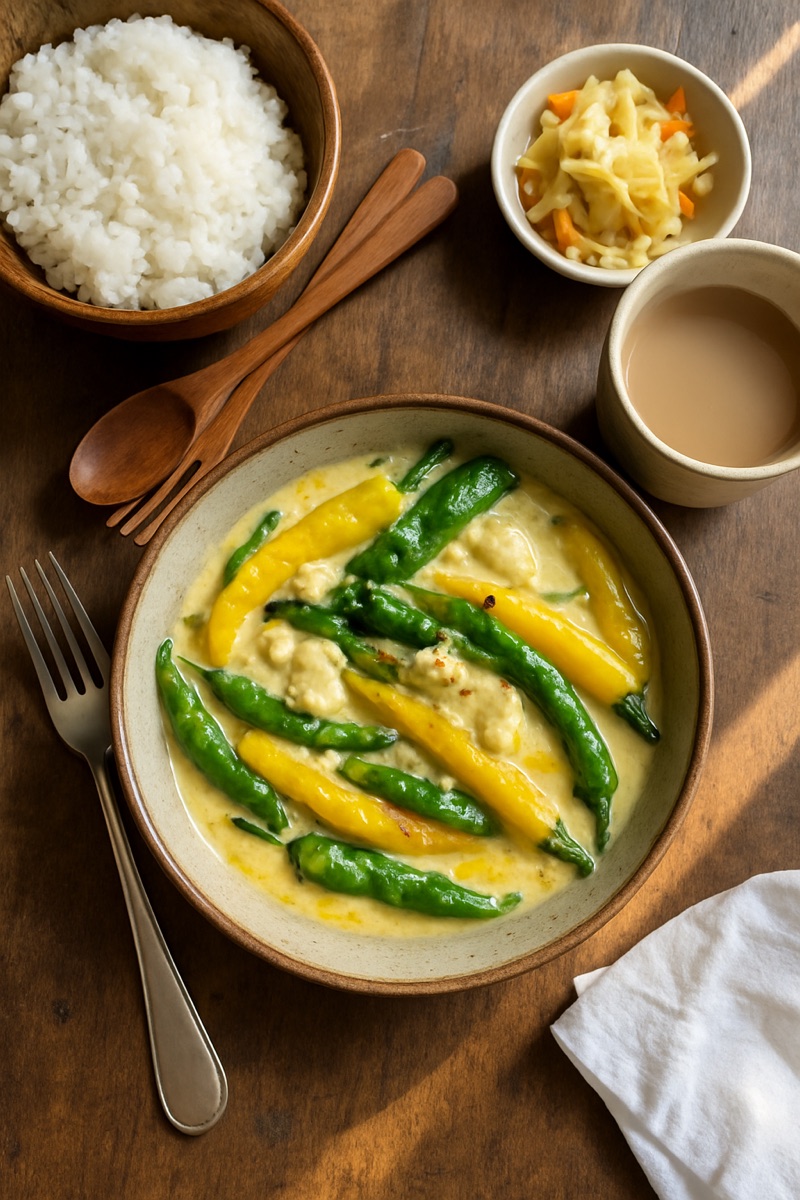
The national dish of Bhutan is ema datshi, a stew of hot chillies and cheese. Its name means "chilli cheese" in Dzongkha: whole green, red or dried chillies are simmered in water with spring onion, then bound with datshi, a soft cheese made at home from cow or yak milk. It is not fixed by law, but it is the dish universally described as Bhutan's national dish.
What is ema datshi?
Ema datshi is a stew in which the chilli is the vegetable, not the seasoning. A whole pot of chillies, split lengthwise, is simmered in water and finished with crumbled cheese until it forms a thick, lumpy sauce around them.
The name is Dzongkha, Bhutan's official language: *ema* means chilli and *datshi* means cheese. Wikipedia's article on Bhutanese cuisine says it might be called the national dish "for its ubiquity and the pride that the Bhutanese have for it". It is eaten across the country, usually with red rice.
Taste of Bhutan, a Bhutanese food site, puts it plainly: in Bhutan chillies are "not just considered a seasoning, but a true precious vegetable", and a meal without them is considered incomplete. In autumn, when red chillies are harvested in September and October, village roofs turn red with chillies laid out to dry in the sun.
What is in ema datshi?
The classic version has only five or six ingredients:
- Chillies: green, red, or white chillies, which are green chillies washed in hot water and sun-dried. The local variety is called sha ema.
- Datshi: Bhutanese cottage cheese, the ingredient that gives the dish its name.
- Spring onions, cut in long pieces with their greens.
- Water, vegetable oil and salt.
What is datshi?
Datshi is a fresh cheese made almost entirely at home. Milk is first fermented into curd and churned into butter; the liquid left behind is gently heated until the casein clumps. The curds are squeezed in a cloth to drain the whey, then rolled into small balls.
It is the most produced dairy product in Bhutan, ahead of butter, and the country does not export it because local demand exceeds supply. Matured datshi, called zoetay, develops a strong smell and is eaten too.
Outside Bhutan, the closest stand-in is an unsalted, crumbly farmer cheese or paneer with a little cream. Feta is brined and sour and does not behave the same way.
How ema datshi is made
Our ema datshi recipe follows the Bhutanese method, which uses no frying at all. 250 g of green chillies are split lengthwise and put in a pot with two spring onions, 200 ml of water, a tablespoon of oil and a teaspoon of salt.
Covered, the chillies simmer for 10 minutes until soft and the water has reduced by about half. Then 250 g of crumbled cheese goes in and cooks for 3 minutes without stirring, so that it softens rather than melts. A single gentle stir coats the chillies in a thick, lumpy sauce. It should never be whisked into a smooth cream.
Ema datshi is served at once with Bhutanese red rice, a nutty rice that, according to Wikipedia, is the only variety that grows at high altitude.
Households disagree on the details. Taste of Bhutan notes that some people like it cheesy with almost no liquid and others soupier, and that some add tomato, garlic, onion or leek while others keep only chilli, garlic and cheese. In Bhutan it is eaten with rice, fried rice, roti, puri or bread, and even as a snack with drinks.
Variations and where it comes from
Wikipedia traces ema datshi to Tibetan culinary roots. Before chillies reached Bhutan, a plant called namda was used for seasoning; chilli was possibly brought in later by Indian pilgrims. Today the same cheese sauce is used with other main ingredients:
- Kewa datshi: potatoes, boiled first, instead of chillies.
- Shamu datshi: mushrooms, a milder version.
- Semchung datshi: beans.
- Shakam datshi: dried beef.
- Sikam datshi: pork, with plenty of chillies.
Other dishes to know from Bhutan
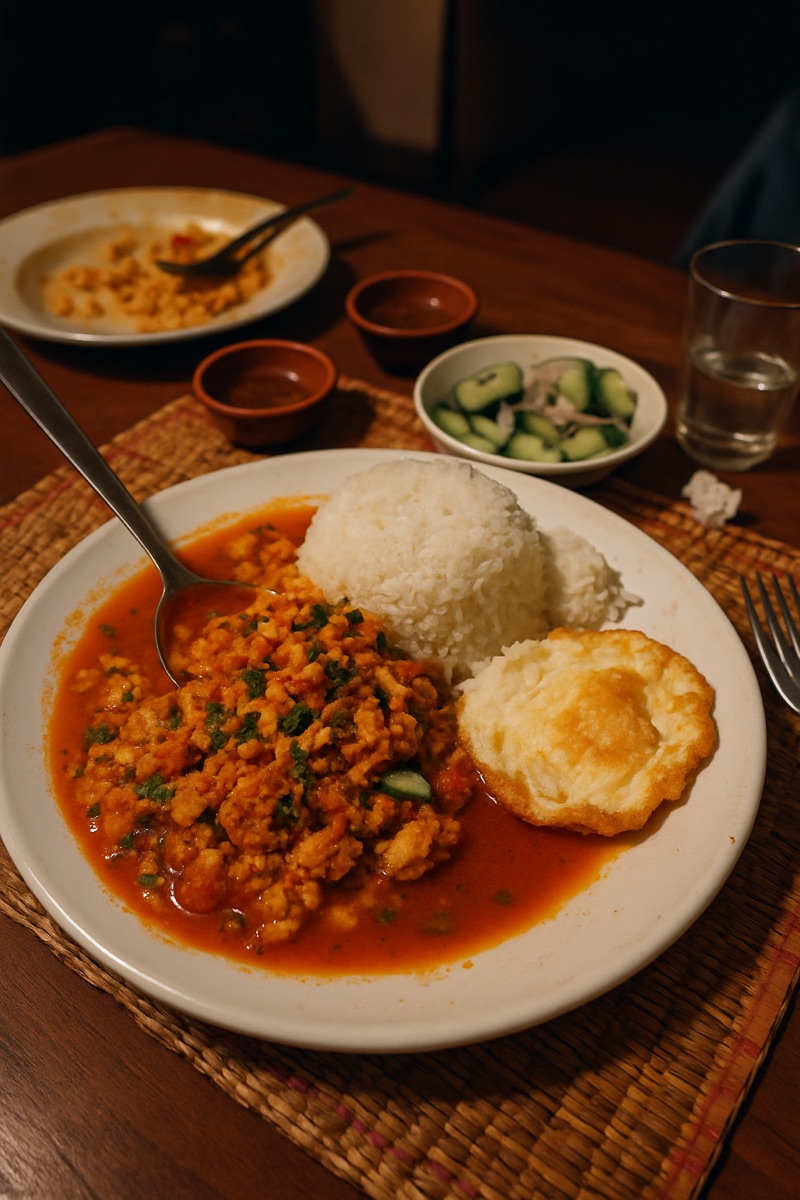
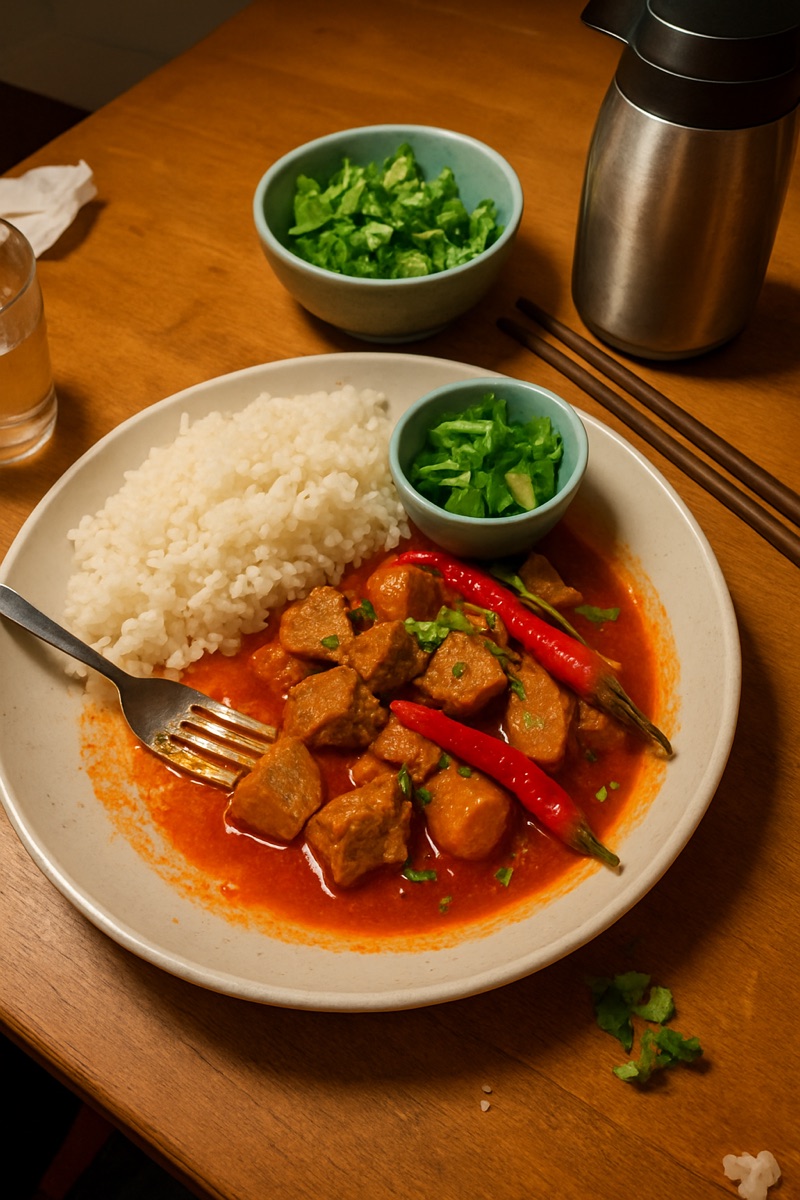
Ema datshi is usually served alongside other dishes. Jasha maroo is a thin, fiercely hot chicken broth made with bone-in pieces, tomato, garlic, ginger and split green chillies, finished with fresh cilantro. Phaksha paa is fatty pork belly rendered in its own fat, then stewed with whole dried red chillies and daikon until the radish turns translucent.
Dal bhat, rice with lentils, is also common in Bhutan, especially in the south; it is one of the two answers given for Nepal's national dish. For Bhutan's other large neighbour, see our guide to India's national dish.
You will find all three Bhutanese recipes, with ingredients and step-by-step methods, on our page about the food of Bhutan. For the wider region, see our guide to South Asian food.
The recipes
- Ema datshi🇧🇹 Bhutan · 25 minutes
 Jasha maroo🇧🇹 Bhutan · 1 hour
 Phaksha paa🇧🇹 Bhutan · 1 hour and 5 minutes
Questions people ask
How do you pronounce ema datshi?
Say "AY-ma da-CHEE": the stress falls on the first syllable of ema and the second syllable of datshi.
Is ema datshi very spicy?
Yes. It is made with whole chillies treated as a vegetable, so it is very hot. Removing some seeds makes it milder.
What cheese is used in ema datshi?
Datshi, a soft Bhutanese cottage cheese made at home from cow or yak milk. Outside Bhutan, an unsalted farmer cheese or paneer is the closest substitute.
What is ema datshi served with?
It is eaten with Bhutanese red rice, often next to dishes such as jasha maroo or phaksha paa.
Does Bhutan have an official national dish?
No law names one, but ema datshi is the dish universally recognised as Bhutan's national dish.
Keep reading
- Traditional food of Bhutan: 14 dishes to know
- What is the national dish of Bangladesh?
- What is the national dish of India?
- What is the national dish of the Maldives?
- What is the national dish of Nepal?
- What is the national dish of Pakistan?