 COPPER
What is the national dish of Nepal?
Nepal has no officially declared national dish, and two answers are given. Dal bhat, a lentil soup (dal) served with plain rice (bhat) and a vegetable curry, is the everyday meal eaten throughout the country. Dhindo, a stiff dough of millet, buckwheat or maize flour served with fermented greens called gundruk, is named as the national dish in some references, as the staple of the hills.
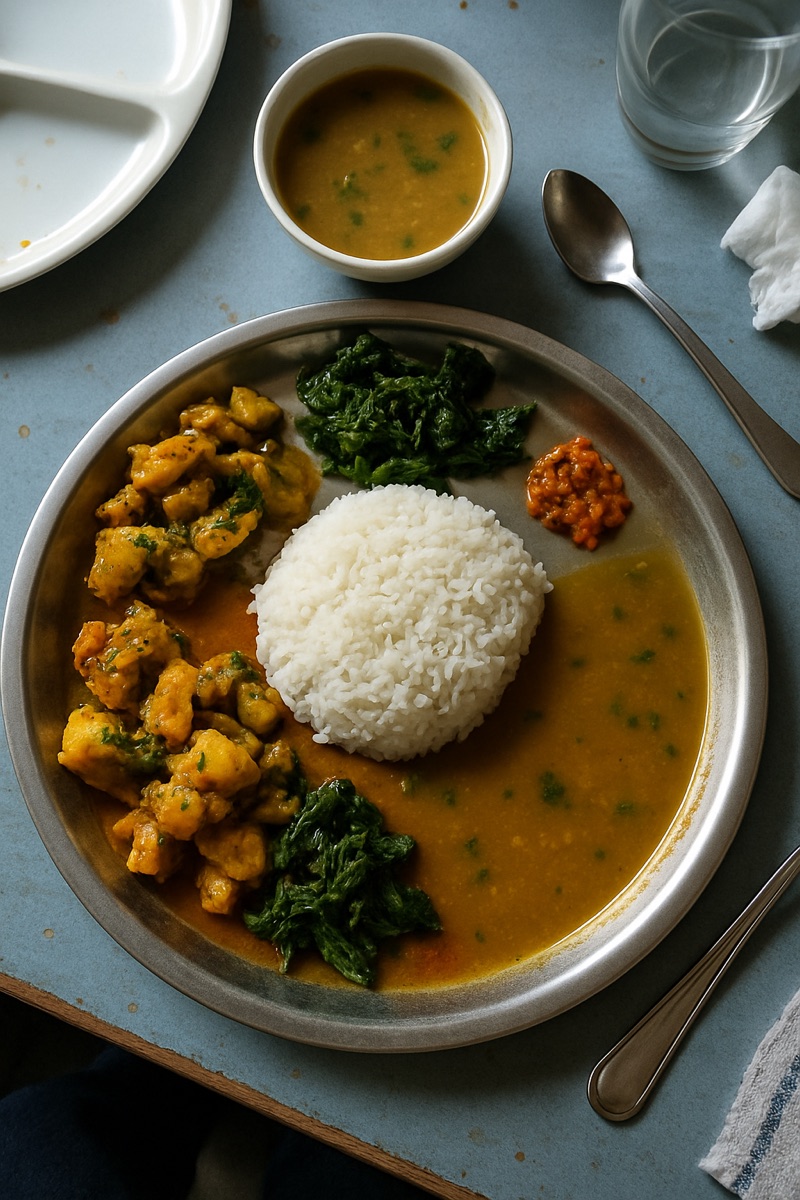
Dal bhat or dhindo: why two answers?
The two dishes reflect Nepal's geography. Rice needs warmth and irrigated paddies, so it grows in the Terai plains and fertile valleys such as the Kathmandu Valley. In the hills and the Himalayan regions, people traditionally ate dhindo made from grains that tolerate cold and altitude: millet, buckwheat, barley or maize.
As farming and trade improved, dal bhat spread across the whole country and became the standard meal, eaten twice daily in the traditional Khas diet. Dhindo, long seen as a poorer food than rice, has regained prestige as Nepal's indigenous grains are recognised for their nutrition, and it now appears on city restaurant menus.
So the honest answer is: dal bhat is the dish Nepalis eat most, while dhindo, often paired with gundruk, is the one some sources single out as national.
What is in dal bhat?
The full name is often dal bhat tarkari, for its three parts:
- Dal: a soup of lentils, here red lentils boiled with turmeric, ginger and salt until they collapse.
- Bhat: plain boiled rice, cooked without spices so it balances the dal.
- Tarkari: a vegetable curry, such as greens, potatoes, radish, green beans, cauliflower or pumpkin, or meat (masu).
- Achar: a small amount of spicy pickle, fresh or fermented, often of radish or of gundruk.
- Lemon or lime with fresh green chilli, and sometimes a fried papad.
How Nepali dal bhat is made
What makes the dal Nepali is the finishing step. Ghee is heated in a small pan, cumin seeds, dried red chillies and garlic go in, then onion until brown. Off the heat, dried jimbu, a Himalayan aromatic leaf, is crumbled in, and the sizzling fat is poured over the lentils and covered for a minute.
Jimbu scorches in seconds, which is why it goes in off the heat. If you cannot find it, leave it out rather than substitute. The full method is in our dal bhat recipe.
Rice with lentils is shared across South Asia: the same pairing is also known as dal chawal, and in Bengal, as in Nepal, the meal is called dal bhat. See the national dish of India and the national dish of Bangladesh.
What is dhindo?
Dhindo is made by pouring flour slowly into boiling water, about one part flour to three parts water, and stirring hard until the mass is stiff. The stirring is called maskaaune, done in an iron pan with a narrow iron spatula called a dabilo. Ghee, garlic or salt can be added.
It is eaten by pinching off a small ball with the fingers, dipping it in lentil soup, meat broth, milk or gundruk, and swallowing it without chewing. Gundruk is fermented leafy greens, such as mustard and radish leaves, packed into an earthenware pot, fermented for about a week without salt, then sun-dried.
Dal bhat at feasts and in the mountains
Dal bhat is the base, but Nepal's cooking changes with altitude and community. Three examples show the range:
Where irrigated rice land is short, other grains fill in: wheat becomes roti, while maize, buckwheat, barley or millet are cooked into dhido. That is the everyday logic behind Nepal's two national dish answers.
- Chaurasi byanjan: for weddings and pasni, the rice-feeding ceremony for a baby, rice is served on a large leaf platter (patravali) with 84 different dishes, each on its own small plate.
- The high Himalaya: daily food is dhido of millet or barley, potato curry, momo, thukpa, and yak, goat or sheep meat, with rice brought in from other regions. Dal bhat tarkari is the staple served to trekkers heading for Everest.
- Newar cooking: in the Kathmandu Valley, Newar feasts are far more varied than everyday hill food, use buffalo meat widely and rely on many fermented preparations.
Other dishes to know from Nepal
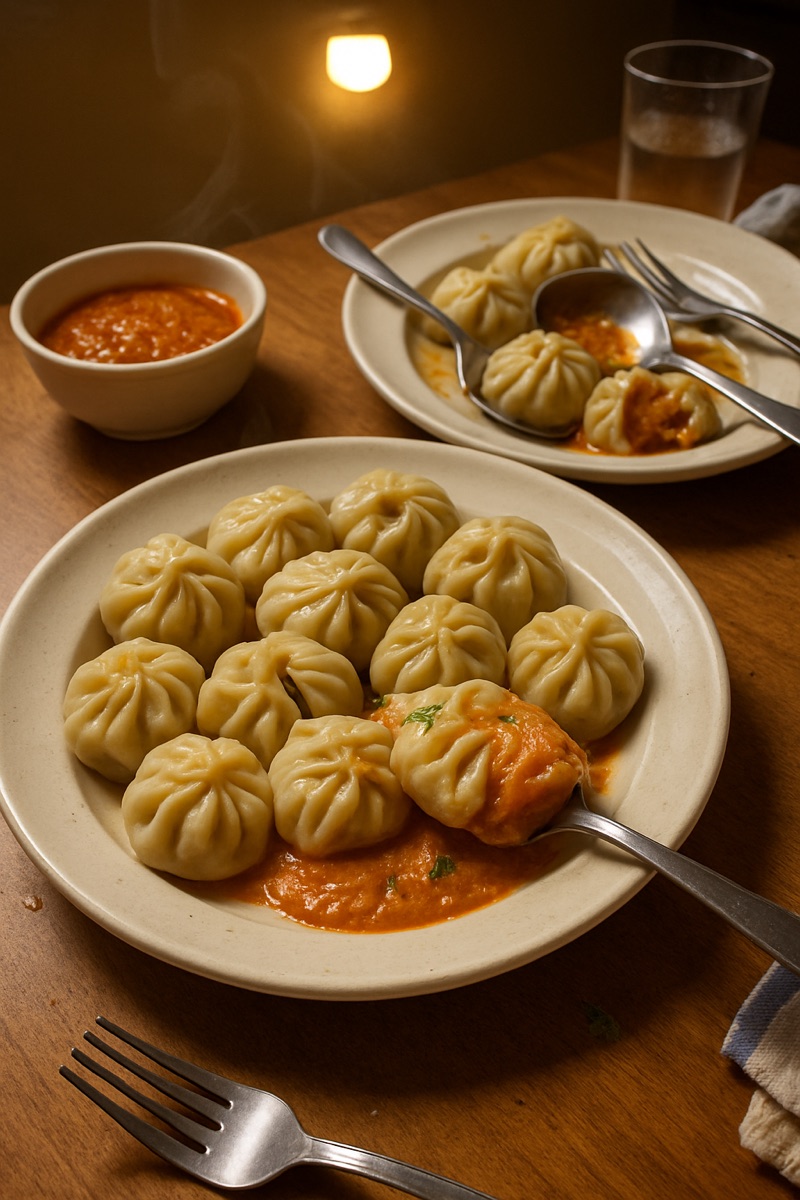
Momo are steamed Himalayan dumplings and one of the most popular foods in Nepal, and in the Nepali-speaking areas of Sikkim, Darjeeling and Kalimpong in India. They were originally filled with buffalo meat; goat, chicken and vegetarian versions are now common. The filling is about half onion by weight, and they are served with a sesame and tomato achar.
Sel roti is a sweet ring of fermented rice batter fried in oil or ghee, made at home for festivals such as Tihar.
All three recipes are on our page about the food of Nepal, and the neighbouring kitchens are in our guide to South Asian food.
The recipes
 Momo
Momo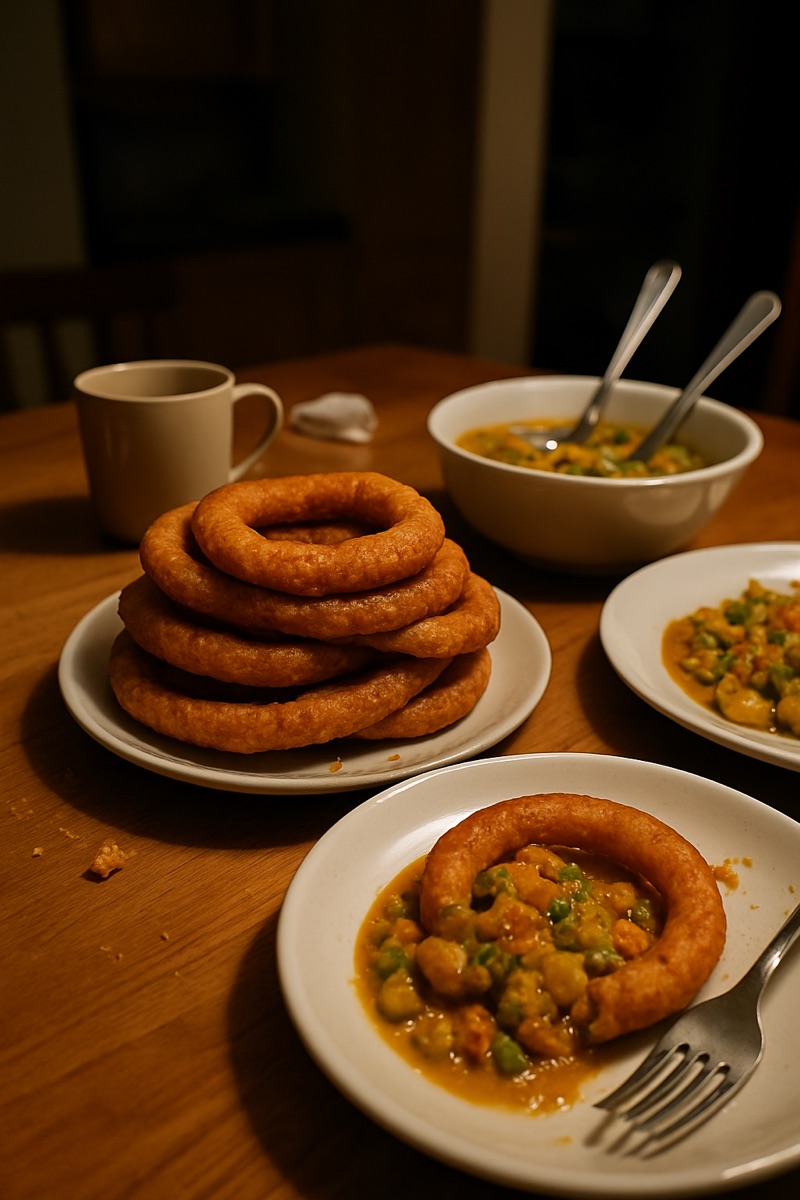 Sel roti
Questions people ask
Is dal bhat the national dish of Nepal?
It has no official status, but dal bhat is the meal eaten throughout Nepal and the most common answer. Some references name dhindo, the millet or buckwheat dough of the hills, as the national dish instead.
What does dal bhat mean?
Dal means lentils, cooked as a soup, and bhat means cooked rice. With a vegetable curry (tarkari) the meal is called dal bhat tarkari.
What is dhindo made of?
Flour of buckwheat or millet, or commonly corn meal, stirred into boiling water until stiff. It is served with gundruk, achar, lentils or curries.
Is momo the national dish of Nepal?
No. Momo is one of the most popular foods in Nepal, but the dishes named as national are dal bhat and dhindo.
What is jimbu?
Jimbu is a dried Himalayan aromatic leaf. In Nepal it is fried in ghee or oil and added to cooked dal.
Keep reading
- Traditional food of Nepal: 13 dishes to know
- What is the national dish of Bangladesh?
- What is the national dish of Bhutan?
- What is the national dish of India?
- What is the national dish of the Maldives?
- What is the national dish of Pakistan?