 COPPER
What is the national dish of Pakistan?
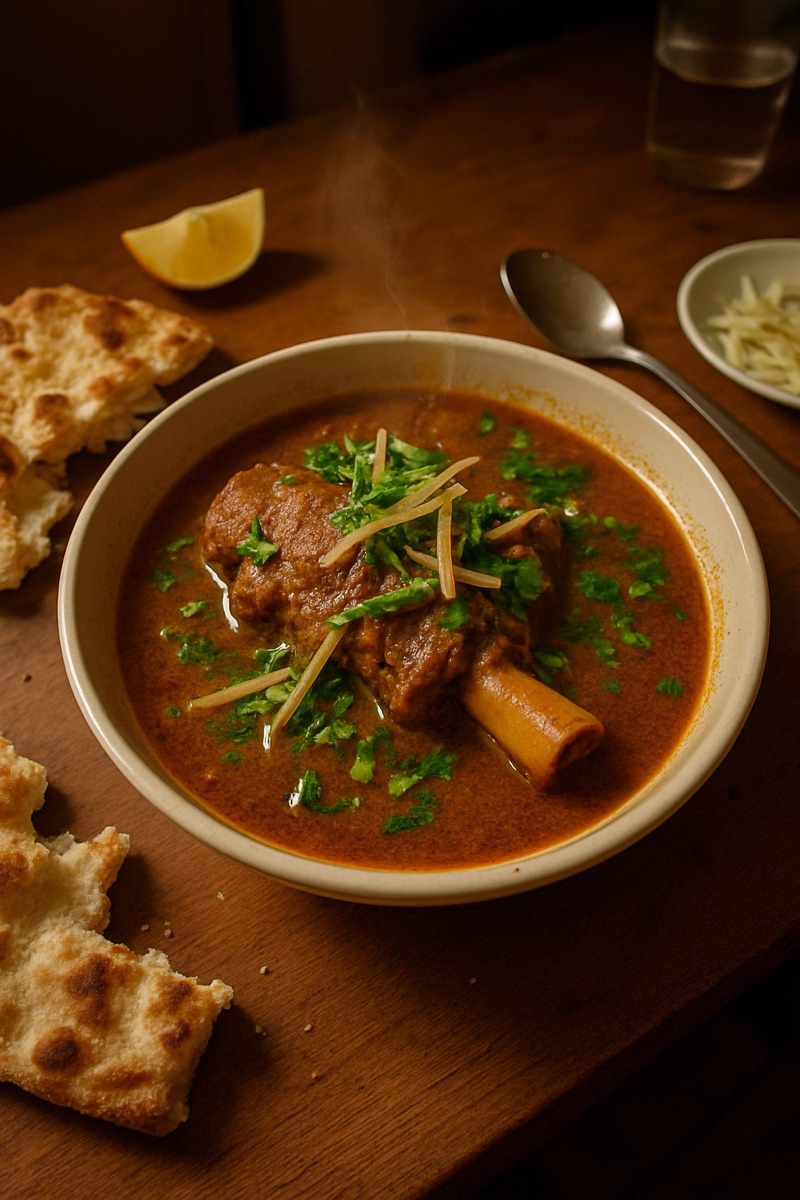
Pakistan has no official national dish, but nihari is the one most often given the title: beef shank and marrow bones simmered for six to eight hours with spices and long pepper, thickened with wholemeal flour and served under a layer of red spiced fat, with naan. Biryani and chicken karahi are the other dishes regularly named. Pakistan does have an official national dessert: gulab jamun.
Is nihari officially Pakistan's national dish?
No. No law or government decision names a national dish for Pakistan. Several dishes are put forward, and nihari is the one most often described as the national dish. The candidates usually named are:
- Nihari: slow-cooked beef shank stew, eaten with naan.
- Biryani: mixed rice with spiced meat, in regional styles such as Sindhi and Lahori biryani.
- Chicken karahi: chicken cooked in a karahi, a wok-like pan.
The national dessert that was put to a vote
The government has chosen a national food once, and it was a sweet. In a poll reported in January 2019, the Government of Pakistan asked people on Twitter to choose between jalebi, gulab jamun and barfi. Around 15,000 people voted and gulab jamun, small balls of reduced-milk dough deep-fried in ghee or oil, won.
No similar vote has been held for a savoury dish, so the national dish remains a matter of opinion rather than decision.
What every candidate shares is meat. Meat plays a larger role in Pakistani food than in other South Asian cuisines: a 2003 report found the average Pakistani ate three times as much meat as the average Indian. Goat, lamb, beef and chicken are the meats of choice for kebabs and for nihari.
What is nihari?
Nihari is a stew of slow-cooked meat, usually beef shank, with bone marrow. Its name comes from the Arabic nahar, meaning morning: it was first eaten by Mughal-era nawabs as breakfast after the dawn prayer, and it is still a breakfast dish in many parts of Pakistan, served with plain naan.
Its particular warmth comes from long pepper, a relative of black pepper. In some restaurants a few kilograms of each day's nihari are added to the next day's pot. This carried-over portion is called taar and is believed to deepen the flavour.
The naan that goes with it is rarely made at home, because it needs a tandoor oven.
How nihari is made
Nihari is an overnight dish. In our nihari recipe, 1 kg of beef shank and 3 marrow bones are seared in ghee with garlic, ginger and browned onion, then fried for 2 minutes with nihari spice mix and crushed long pepper. Three litres of water go in and the pot is held at the barest simmer for 6 to 8 hours, until the marrow slips out of the bones by itself.
Two things make it nihari rather than beef broth:
- The flour slurry: 5 tablespoons of wholemeal flour whisked smooth into slightly cooled broth, stirred back in and simmered 20 minutes for a glossy, clinging gravy.
- The fat layer: the red spiced fat that rises to the top is left there and served, not skimmed off.
- The garnish: fried onion, fine strips of fresh ginger and lemon, added at the table.
Where nihari comes from
Nihari was not born in Pakistan. The two main theories place its origin in Lucknow or Delhi, in the royal kitchens of the late Mughal era, which is why it is also eaten in India: see the national dish of India.
After partition in 1947, many Urdu-speaking Muslims from northern India moved to Karachi and opened restaurants serving it. Nihari became a large-scale success in Karachi and from there spread across Pakistan.
Other dishes to know from Pakistan
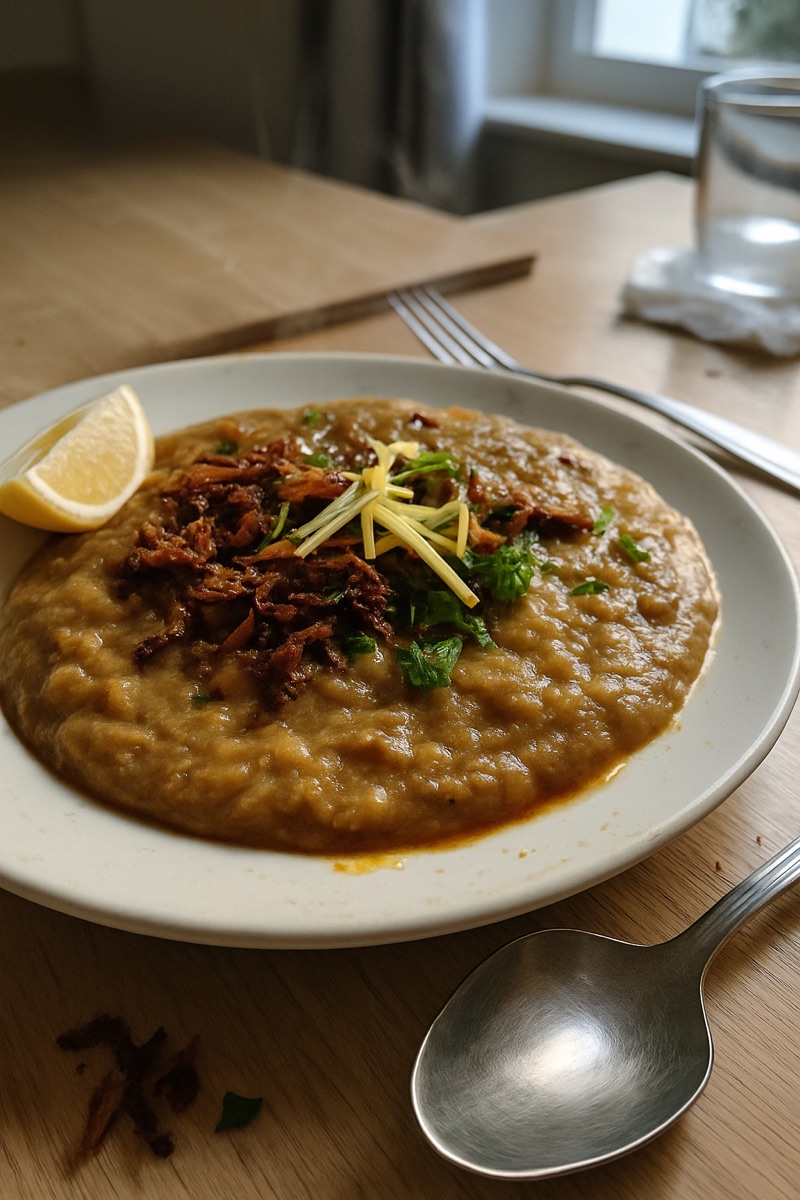
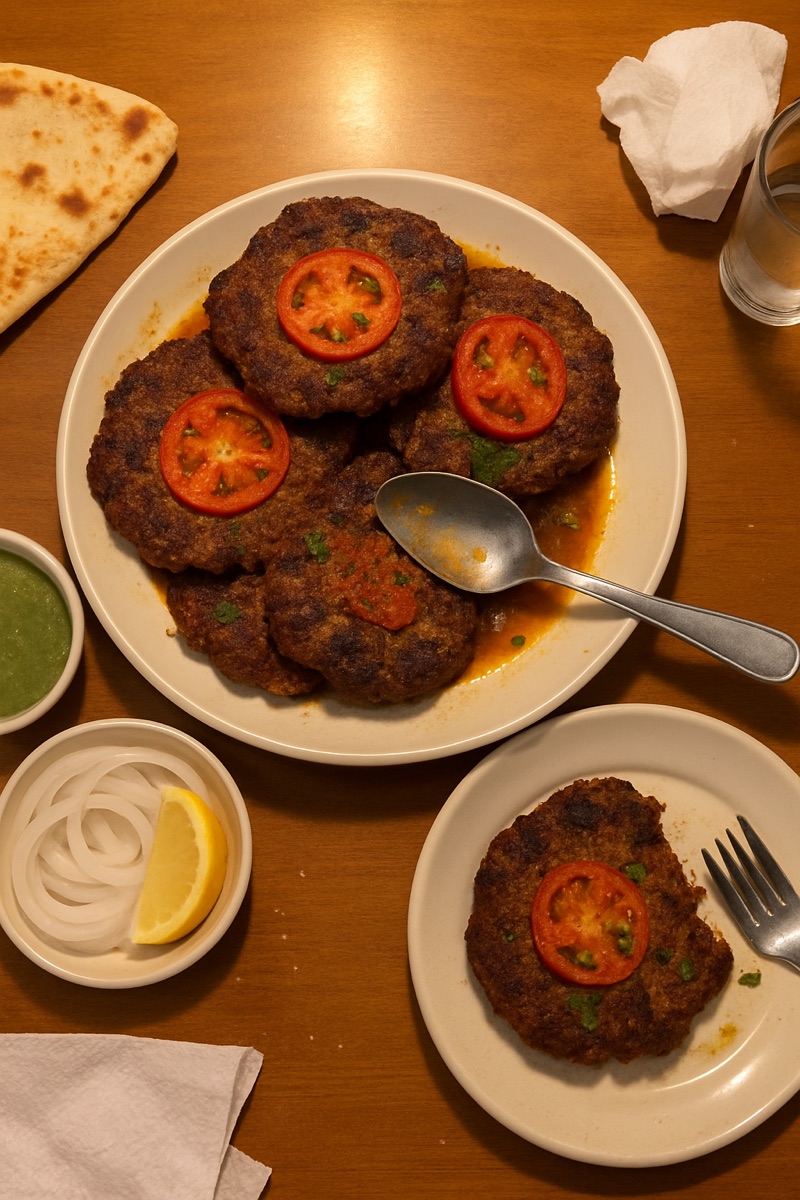
Haleem is the other great slow-cooked dish: wheat, barley and lentils cooked with beef, then beaten with a wooden pounder for hours until the grain dissolves and the meat breaks into long strands. Allow 5 to 6 hours in total; the meat is shredded by hand and never blended. Chapli kebab comes from Peshawar and Pashtun cooking: a wide, flat beef patty with coarsely crushed coriander and dried pomegranate seeds, fried in fat and eaten with naan. Its name may come from chappal, the Urdu word for sandal, after its shape. It is just as popular across the border, as the national dish of Afghanistan shows.
Biryani, the other big candidate, is the dish of celebrations: Islamabad and Karachi hold annual biryani festivals, and some versions take their name from the shop that made them famous, like Students biryani in Karachi. For more of the region, see our guide to South Asian food, and find all three dishes with step-by-step methods on our page about the food of Pakistan.
The recipes
- Nihari🇵🇰 Pakistan · 8 hours
 Haleem🇵🇰 Pakistan · 18 hours
 Chapli kebab🇵🇰 Pakistan · 1 hour and 15 minutes
Questions people ask
Is nihari Indian or Pakistani?
Both. Nihari is generally traced to Delhi or Lucknow in the late Mughal era, then became a large-scale success in Karachi after 1947 and spread across Pakistan, where it is most often called the national dish.
Is biryani the national dish of Pakistan?
Biryani is one of the candidates and is served all over Pakistan in styles such as Sindhi and Lahori biryani, but Pakistan has no official national dish. Nihari is named more often.
What is the national dessert of Pakistan?
Gulab jamun. It won a Twitter poll run by the Government of Pakistan and reported in January 2019, ahead of jalebi and barfi.
When is nihari eaten?
Traditionally at breakfast: the name comes from the Arabic word for morning. Some eateries also serve it in the afternoon.
What is served with nihari?
Nihari is served with naan, fried onion, fresh ginger strips and lemon wedges.
Keep reading
- Traditional food of Pakistan: 13 dishes to know
- What is the national dish of Bangladesh?
- What is the national dish of Bhutan?
- What is the national dish of India?
- What is the national dish of the Maldives?
- What is the national dish of Nepal?