 COPPER
What is the national dish of Afghanistan?
The national dish of Afghanistan is Kabuli pulao (qabili palaw): long-grain rice browned with caramelised sugar, steamed over lamb and its broth, then topped with sugar-glazed carrot strips, raisins and almonds or pistachios. There is no law or decree behind it, but it is the dish Afghan cuisine references name as national, and the one served at festive meals and banquets.
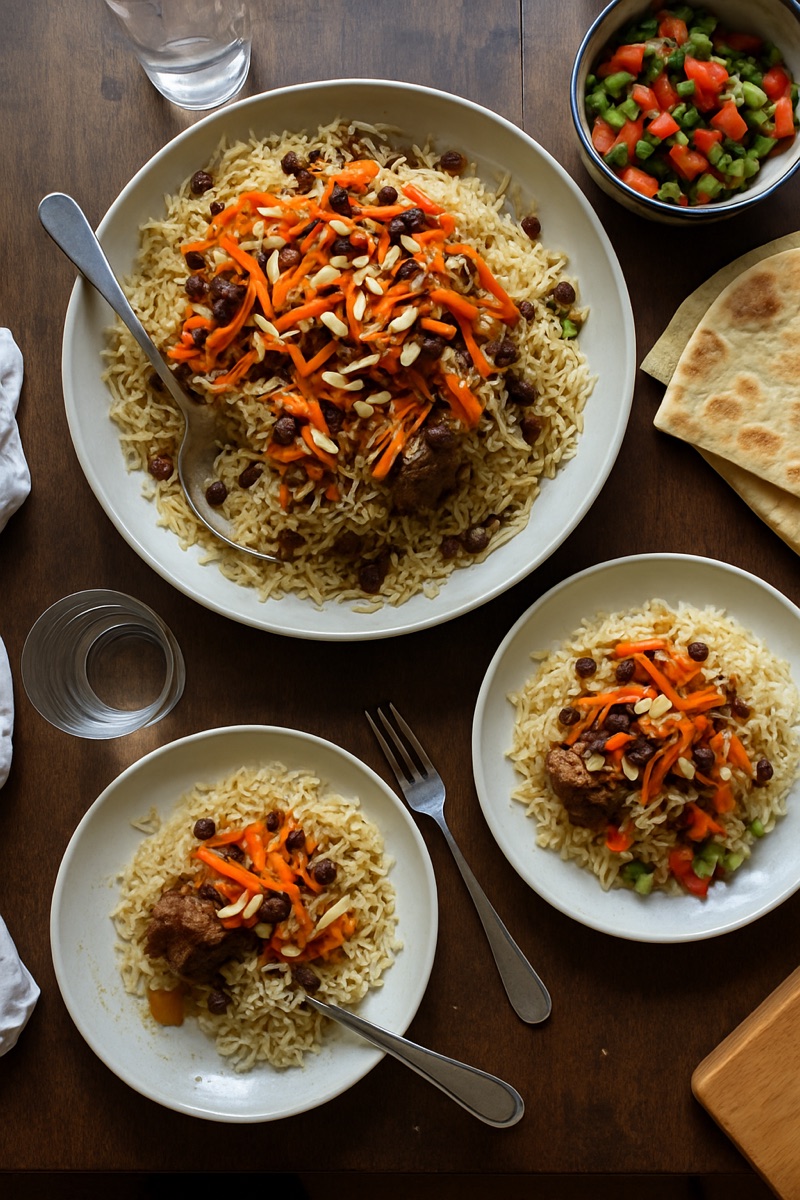
What is Kabuli pulao?
Kabuli pulao is a pilaf, but not a plain one. Rice is the centre of almost every Afghan meal, and cooks distinguish challow, white rice served with a stew, from palaw, rice cooked with meat, stock and spices. Kabuli pulao is the most elaborate palaw: the rice cooks in lamb broth, takes a brown colour from caramelised sugar, and is buried under a sweet topping.
The meat sits underneath or in the middle of the platter. The rice should be dry and separate, each grain coloured and coated, never sticky. Because of the quality of its ingredients, it is treated as a festive dish and often served as the main course of a banquet.
What is in Kabuli pulao?
The core ingredients are few, and each has a job:
- Basmati rice, rinsed until the water runs clear and soaked for an hour.
- Bone-in lamb shoulder, browned with onions and simmered about 1 hour 30 to make the broth the rice cooks in.
- Burnt sugar: sugar melted dry to dark amber, then loosened with hot broth. This caramel gives the rice its brown colour.
- Carrots and raisins, cut into matchsticks and fried with sugar until glazed, then the raisins added until they swell.
- Spices: ground cumin, crushed green cardamom and a cinnamon stick, used lightly.
- Almonds or pistachios, slivered, as the final garnish. Saffron is sometimes added to the rice, the sauce or the garnish.
How Kabuli pulao is made
Afghan cooks steam the rice rather than boil it dry. The soaked rice is parboiled in salted water for 5 to 7 minutes and drained while still firm. It is then layered over the lamb, the caramel and about 500 ml of broth are poured on, and the spices are dusted over the top.
The lid is wrapped in a cloth to catch the steam, and the pot sits on the lowest heat for 30 to 40 minutes without being opened. This is the sof method. The Uzbek version cooked in Afghanistan, often called Uzbeki palaw, instead boils the rice until it absorbs all the liquid, a method called dampokht.
To serve, the rice is heaped on a platter, the lamb set in the middle and the carrots, raisins and nuts spread over everything. Quantities and timings are in our Kabuli pulao recipe.
Where Kabuli pulao comes from
Despite the name, the dish did not start in Kabul. It most likely took shape on the border between northern Afghanistan and Uzbekistan, and the same rice-with-carrots family is the Uzbek national dish, covered in our article on the national dish of Uzbekistan.
"Kabuli" is probably an English misreading of qabili, from a Persian word. The name was used for an elaborate pilaf in Persian sources early on: the first written qabili recipes appear in Ali Bavarchi's manual of 1521, from the Safavid period, the oldest known cookbook in Persian. Related rice dishes are central to Iranian cooking too.
In Saudi Arabia, where communities of northern Afghans and Central Asian émigrés settled, the same dish is sold as Bukhari rice.
Kabuli pulao and the other Afghan palaws
Kabuli pulao is one dish in a large family. Afghan cooks give a palaw its name from whatever colours or flavours the rice, and the main ones are worth knowing:
At a gathering, the palaw rarely arrives alone. It is usually served with qormah e gosht, a meat stew built on onion caramelised until richly coloured, then tomato, spices and the meat added last. Plain white rice, challow, is the everyday partner for the hundreds of other qormahs.
- Zamarod palaw: spinach, dill and other green herbs mixed in, hence zamarod, "emerald".
- Bonjan-e-roomi palaw: a tomato qorma added during baking turns the rice red.
- Narenj palaw: a sweet rice with saffron, orange peel, pistachios, almonds and chicken.
- Mash palaw: a vegetarian sweet-and-sour pilaf with mung beans, apricots and bulgur.
- Albalo palaw: sweet rice with sour cherries.
Other dishes to know from Afghanistan
Mantu are steamed beef dumplings whose filling is close to half raw onion. They are laid on garlic yogurt with dried mint (chaka) and topped with a split pea and tomato sauce, a combination that sets them apart from other Central Asian dumplings.
Bolani is a thin flatbread folded over a filling of gandana leeks and potato, cooked dry on a tawa and eaten with salted yogurt. In the south and west of the country it is often called borogyen.
All three recipes, with ingredients and steps, are on our page about the food of Afghanistan. For the wider family of pilafs, dumplings and breads, see our guide to Central Asian food.
The recipes
- Kabuli pulao🇦🇫 Afghanistan · 2 hours and 40 minutes
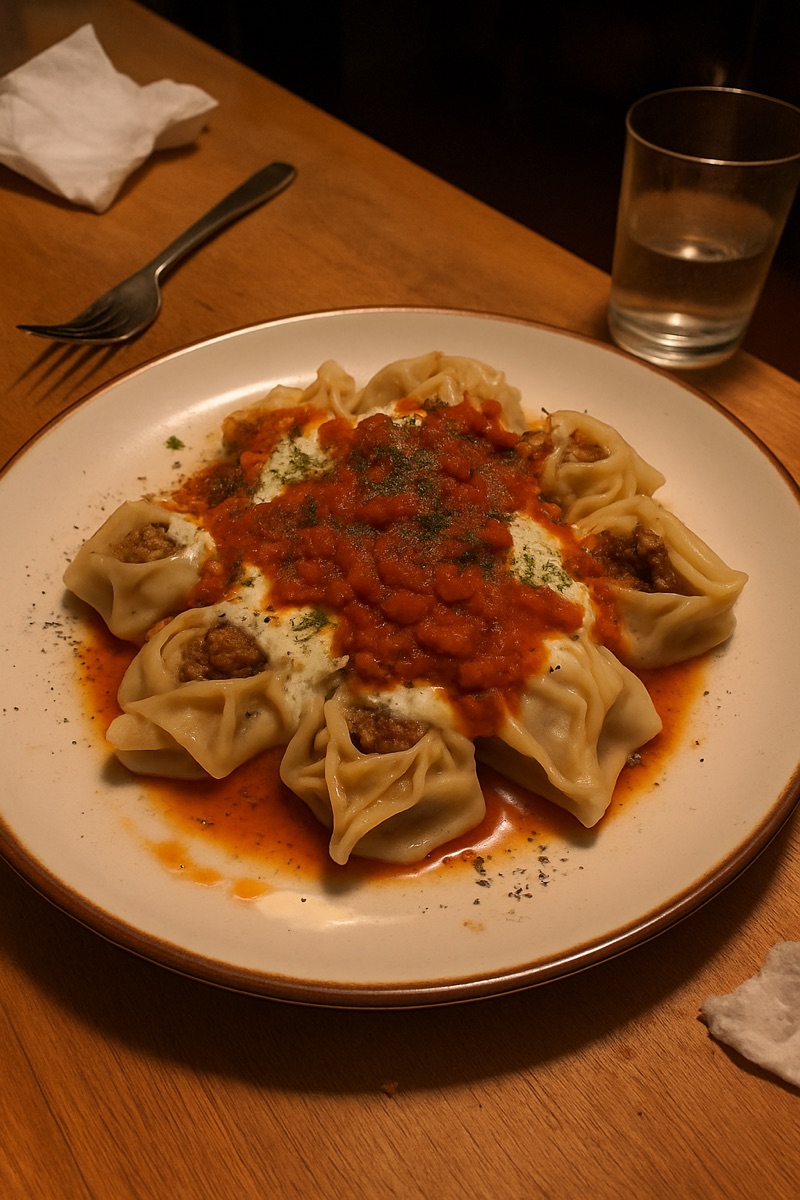 Mantu🇦🇫 Afghanistan · 1 hour and 40 minutes
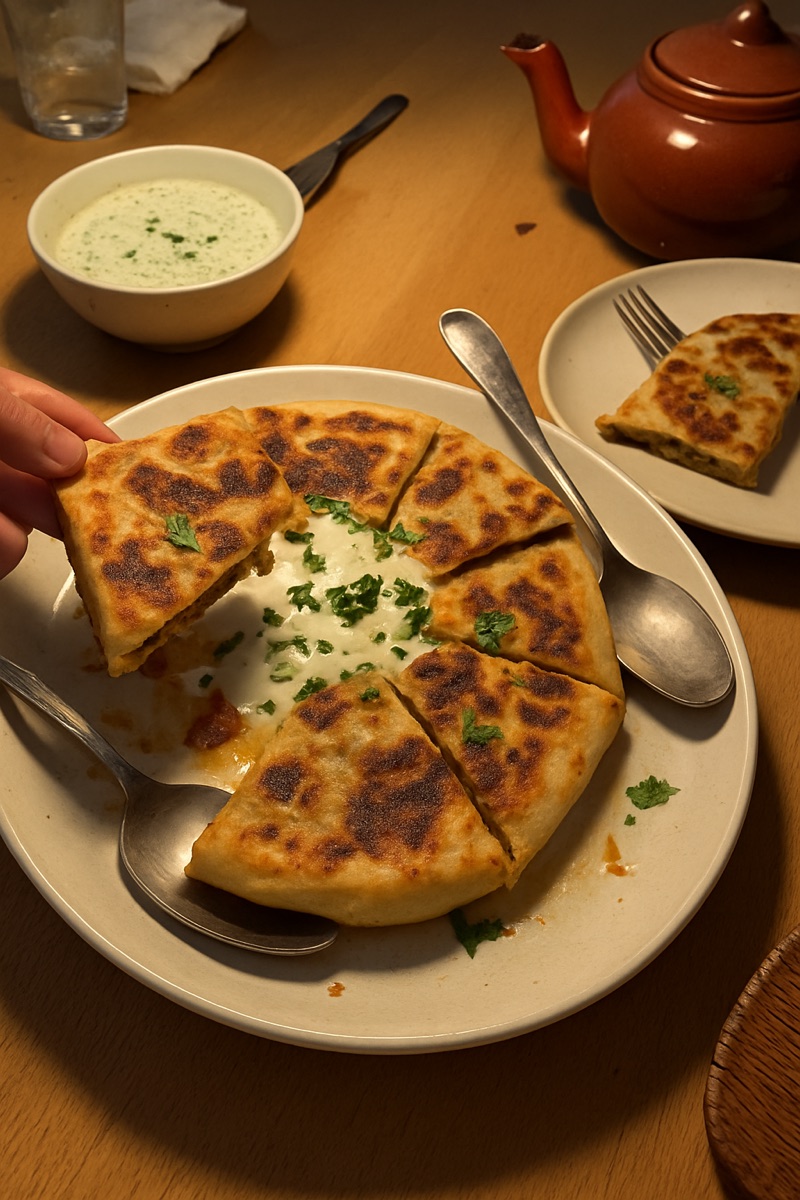 Bolani🇦🇫 Afghanistan · 1 hour and 25 minutes
Questions people ask
Is Kabuli pulao from Afghanistan or Uzbekistan?
Both countries cook it. It is known in Afghanistan as qabili palaw and is considered its national dish, while the closely related osh palov is Uzbekistan's. It most likely originated on the border between the two.
Is Kabuli pulao the official national dish of Afghanistan?
No law or decree makes it official. It is the dish that references on Afghan cuisine consistently name as the national dish, and the one served at festive meals.
Why is Kabuli pulao brown?
The colour comes from sugar melted dry until dark amber, then mixed with hot lamb broth and poured over the rice before steaming. The meat broth adds more colour.
What is served with Kabuli pulao?
At gatherings it is usually served with qormah e gosht, a meat stew, and it can be the main course of a banquet alongside other side dishes.
What does "Kabuli" mean in Kabuli pulao?
Despite the link to Kabul, the name is probably a misreading of "qabili", from a Persian word. Afghans call the dish qabili palaw.
Keep reading
- Traditional food of Afghanistan: 12 dishes to know
- What is the national dish of Kazakhstan?
- What is the national dish of Kyrgyzstan?
- What is the national dish of Mongolia?
- What is the national dish of Tajikistan?
- What is the national dish of Turkmenistan?