 COPPER
What is the national dish of Turkmenistan?
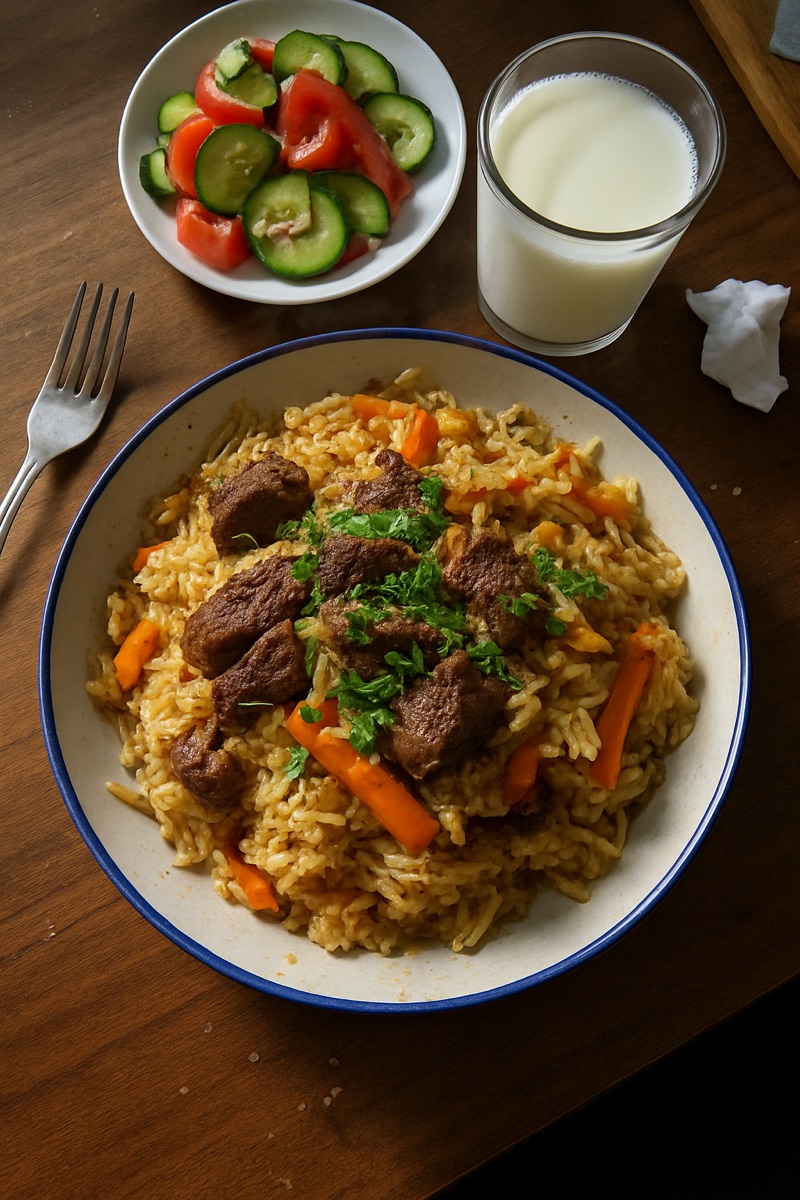
Turkmenistan has no official national dish. The one most often named is palaw, Turkmen plov: rice cooked with chunks of mutton, carrots, onions and garlic in a large cast-iron cauldron, served at celebrations and to honoured guests. The other contender is dograma, crumbled bread mixed with boiled lamb and raw onion, the dish of religious feasts.
Palaw or dograma?
No law or decree in Turkmenistan names a national dish, and the general list of national dishes on Wikipedia has no entry for the country. Two dishes come up again and again.
Palaw is the one most often cited: food guides call pilaf the national dish of Turkmenistan, and one source quoted on Wikipedia calls it "king in Turkmen cuisine". Dograma is described on Russian Wikipedia as one of the best-known dishes of Turkmen national cuisine, cooked for religious holidays and rituals.
What is in Turkmen palaw?
Turkmen palaw is rice with chunks of mutton, carrots, onions and garlic, cooked in one large cast-iron cauldron and traditionally eaten with the hands. Turkmen cooking uses few seasonings beyond salt and black pepper, and relies on cottonseed oil.
Variations add:
- Raisins (kişmiş) or other fruit.
- Fish, in the two palaws of the Caspian Turkmen, where the fish is cooked separately from the rice.
- Ground meat instead of chunks.
- Pheasant or other game, with rice harvested before it is fully ripe.
How palaw is made
In our Turkmen plov recipe, 700 g of lamb or mutton browns for 10 minutes in very hot oil, then onions fry golden and 600 g of carrot matchsticks cook 10 minutes more. Cumin, salt, pepper, water and a whole head of garlic go in, and this zirvak simmers 35 minutes.
The soaked rice is spread on top and not stirred. Boiling water covers it by about 1.5 cm and boils off on high heat in around 10 minutes; the pot is then covered and the rice steams for 25 minutes on the lowest heat. Only at the table are rice, meat and carrots brought together.
What is dograma?
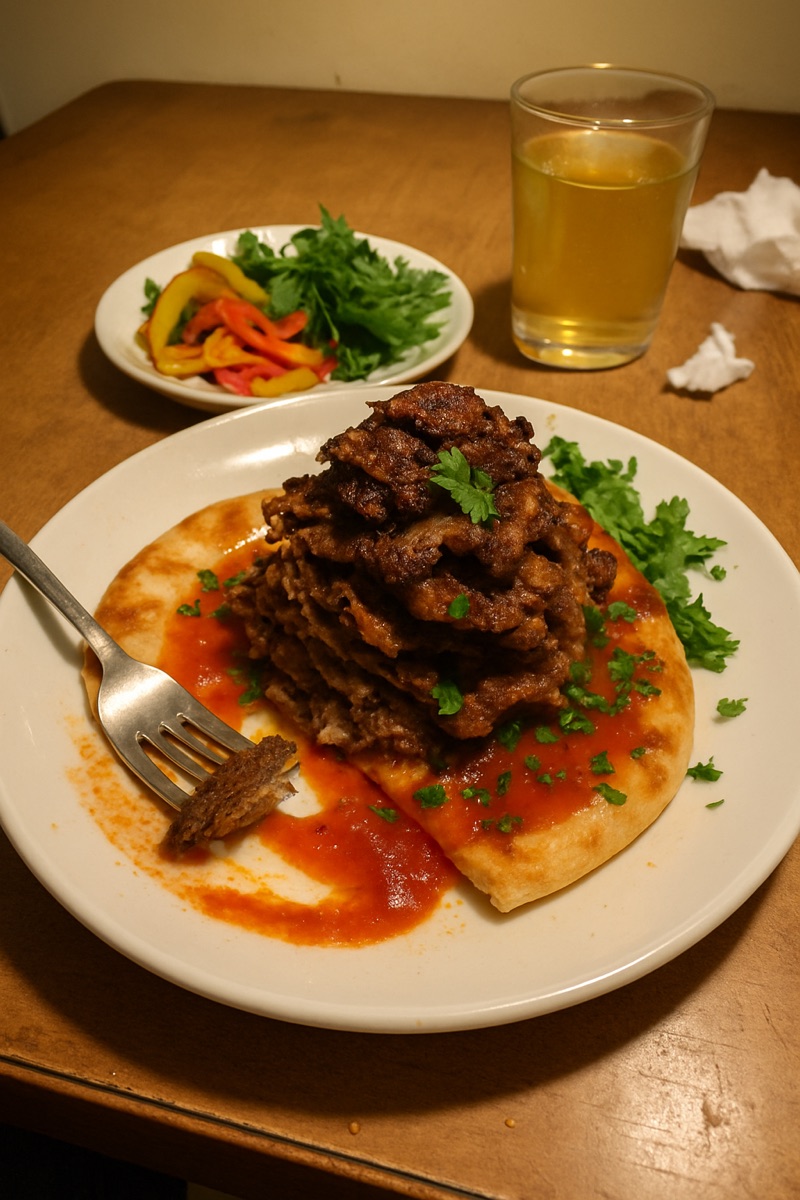
Dograma means "crumbs" in Turkmen, and the bread is the body of the dish. Lamb is boiled until it falls from the bone. Chorek-petir, a dense unleavened bread, is crumbled by hand, usually by the whole family, and mixed with finely cut onion and the shredded meat. Meat and onion make about a third of the mix, bread two thirds.
It is eaten dry or moistened with the lamb broth. Our dograma recipe simmers 1 kg of lamb on the bone for about 2 hours before the mixing. The dish is considered among the oldest in Turkmenistan, once part of sacrificial rites.
Wikipedia notes that beshbarmak, the national dish of Kazakhstan, is itself known as dograma in Turkmenistan: both are boiled meat cut small and mixed with a wheat base.
Regional palaw in Turkmenistan
Turkmen palaw has regional versions of its own. The Caspian Turkmen, the Ogurjaly, make two that stand apart. In Ogurjaly palaw, the meat is lifted out of the pot after frying with the onion and carrot, boiled separately and laid back on the rice 3 to 5 minutes before it is done. In fish palaw, the fish is cooked entirely apart from the rice and vegetables. In both, the rice cooks in the broth from the meat or fish.
Diet differs within the country too. The Teke Turkmen eat young camel and mutton; the Yomut, Saryk and other groups mostly mutton. Meat and bread are the two staples everywhere.
On Wikipedia's English pages, dograma also appears as a soup, dogramaly şurpa, made with diced organ meats, bread, onion and tomato: the bread-and-meat idea is the same, served wetter.
Other dishes to know from Turkmenistan
Palaw is cooked across the region; for the version recognised by UNESCO, see the national dish of Uzbekistan.
Turkmen markets and roadside stands sell manty, steamed dumplings, and fried pastries such as somsa, gutap, often filled with spinach, and ichlekli meat pies. Yarma, cracked wheat cooked in sheep fat with small pieces of mutton, is said to be at least a thousand years old. The drink Turkmenistan is known for is çal, fermented camel's milk.
Guests arriving at a Turkmen home are welcomed with pishme, small sweet fried breads. And no account of Turkmen food skips melons: they are a source of national pride with their own Melon Day holiday, and Turkmen sources claim up to 400 varieties.
Turkmen meals are almost always served with chorek, thick round bread baked in a tamdyr clay oven, and bread is treated with great respect. Both recipes are on our page about the food of Turkmenistan, and the neighbouring kitchens are in our guide to Central Asian food.
The recipes
 Dograma
Questions people ask
Does Turkmenistan have an official national dish?
No. Palaw, Turkmen plov, is the dish most often named, and dograma is the other dish most associated with Turkmen national cuisine.
What is the difference between Turkmen palaw and Uzbek plov?
Both steam rice over a base of meat, onion and carrot in a cauldron. Turkmen cooking uses few spices beyond salt and pepper, and Caspian Turkmen make palaw with fish.
What does dograma mean?
Dograma means "crumbs" in Turkmen, after the bread that is crumbled by hand to make it.
When is dograma eaten?
Dograma is prepared on religious holidays and for rituals, and the whole family usually takes part in crumbling the bread.
Do Turkmen eat horse meat?
Traditionally no. Turkmen cuisine is based on lamb, mutton and camel, unlike Kazakh and Kyrgyz cooking, where horse meat is prized.
Keep reading
- Traditional food of Turkmenistan: 13 dishes to know
- What is the national dish of Afghanistan?
- What is the national dish of Kazakhstan?
- What is the national dish of Kyrgyzstan?
- What is the national dish of Mongolia?
- What is the national dish of Tajikistan?