 COPPER
What is the national dish of Tajikistan?
The national dish of Tajikistan is oshi palav (osh, or plov): rice steamed over lamb, onions and carrot sticks in a deg cauldron, then shared from one large plate. UNESCO inscribed it as Tajik intangible heritage in 2016. Qurutob, flatbread soaked in dissolved dried cheese and topped with fried onions, is also often called a national dish, mainly in the south.
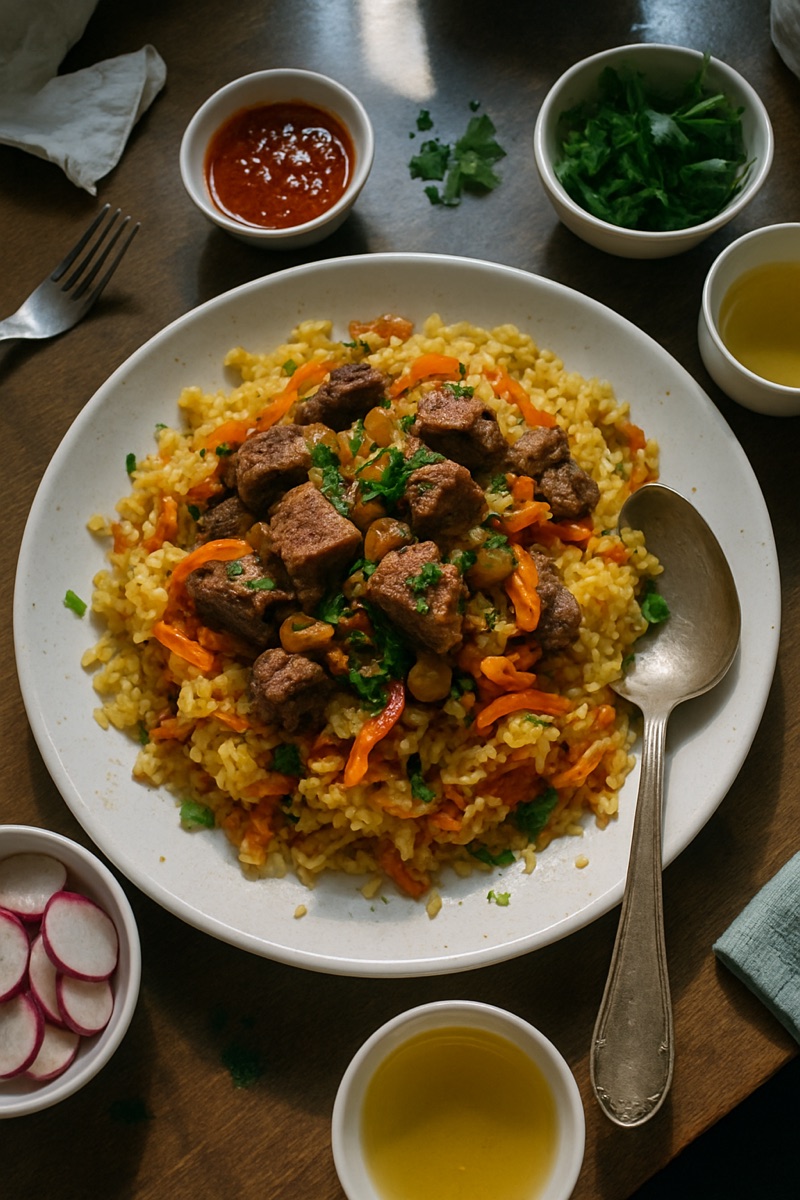
Two national dishes: palav and qurutob
Tajikistan has no law naming a national dish, and sources name two. Palav, also called osh, is described as the national dish of Tajikistan, as it is in neighbouring countries. Qurutob is also considered a national dish, eaten above all in the southern regions.
Palav has the stronger claim. In 2016 UNESCO inscribed "Oshi Palav, a traditional meal and its social and cultural contexts in Tajikistan" on its Representative List of the Intangible Cultural Heritage of Humanity. Its file calls palav the "King of meals" and counts up to 200 varieties.
Tajik cuisine shares much with Iranian, Afghan, Uzbek, Russian and Chinese cooking, which is why its palav sits so close to its neighbours' versions.
How oshi palav is made
Palav is cooked in a deg, a wok-shaped cauldron, over an open flame. In our Tajik plov recipe, lamb browns for 8 minutes in smoking oil, onions follow, then 500 g of carrots cut as thick as a pencil, never grated. With cumin seeds and salt, this becomes the zirvak; two whole heads of garlic simmer in it for 30 minutes.
The soaked rice is spread over the top without stirring, cooked on high heat until the water drops below the surface, then mounded, pierced and steamed for 25 minutes under a tight lid. Stirring turns it into porridge.
Why palav matters in Tajikistan
Palav is eaten communally from one large plate in the middle of the table, often with the hands. Two Tajik sayings quoted by UNESCO show its weight: "No Osh, no acquaintance", and "If you have eaten Osh from somebody, you must respect them for 40 years".
The skill passes from master to apprentice. When an apprentice has mastered palav, they host a dinner for their teacher: the teacher receives a skullcap and traditional dress, and the apprentice receives a skimmer, the tool for cooking palav, as a sign of independence.
Local versions add chickpeas, quince or garlic, and some are made with ugro, small wheat noodles, instead of rice.
Regional palav and what goes with it
Tajik palav is not one recipe. Some of the versions found across the country:
Almost every palav is eaten with a salad of mountain rhubarb, rivoch. The carrots can be yellow or orange, and the rice takes on their colour from the frying carrots and oil. Green tea, served in handleless piola cups, accompanies the meal.
- Dushanbe palav, cooked with eggs wrapped in a casing of minced meat.
- Khujand palav, cooked with stuffed vine leaves.
- Palav with ugro, where small wheat noodles replace the rice.
- Additions of chickpeas, quince and garlic, which appear in many family versions.
What is qurutob?
Qurutob is named after how it is made: qurut, dried balls of salty cheese, dissolved in ob, water. The salty liquid is poured over pieces of fatir, a flaky flatbread made with butter or tallow, then topped with onions fried golden in oil and fresh vegetables. No meat is added, and everyone eats with the hand from a shared plate.
In our qurutob recipe, 200 g of crushed qurut soaks 30 minutes in warm water until it turns into a smooth liquid like thin yoghurt. The onions go over the bread with all their hot oil, which acts as the dressing.
The bread used is properly fatir ravghani, fatir made flaky with butter or tallow. Qurut balls are also eaten on their own as a snack, and other dairy dishes, chakka, a sour milk preparation, thick yoghurt and kaymak, are scooped up with bread as part of a Tajik spread. Tomatoes, cucumbers and herbs are the usual toppings; meat or chilli peppers are sometimes seen as garnishes, although the classic dish has no meat.
Other dishes to know from Tajikistan
Samosa, also written sambusa, is a triangular pastry of knife-chopped lamb, tail fat and nearly as much onion, traditionally baked against the inner wall of a tandoor. It is baked, never deep-fried.
Meals are almost always served with non, the round flatbread of Central Asia. If a Tajik has food but no non, they will say they are out of food, and bread is never placed upside down. Other everyday dishes include shurba and laghmon soups, manti dumplings and tushbera, small dumplings like pelmeni.
Uzbekistan has its own UNESCO-listed plov, inscribed the same year; see the national dish of Uzbekistan. Turkmenistan cooks its own version, palaw; see the national dish of Turkmenistan.
All three recipes are on our page about the food of Tajikistan, and the neighbouring kitchens are in our guide to Central Asian food.
The recipes
- Plov🇹🇯 Tajikistan · 2 hours and 55 minutes
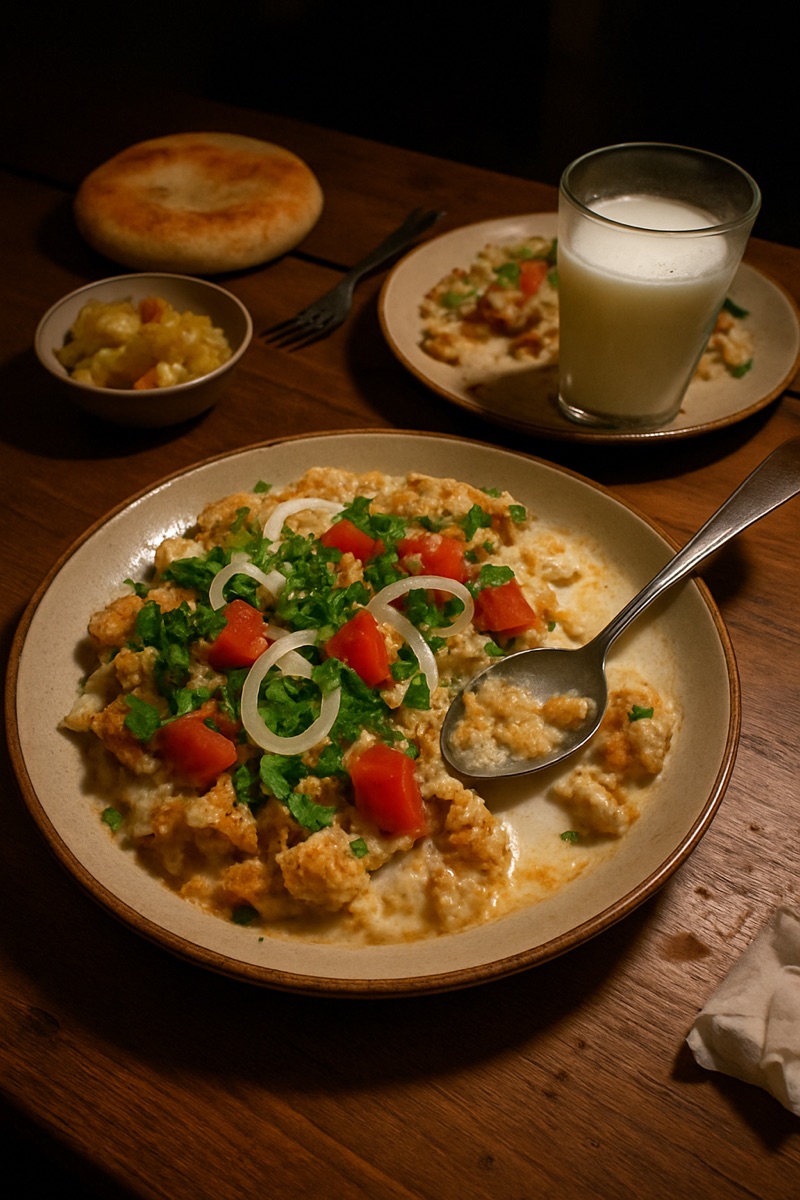 Qurutob🇹🇯 Tajikistan · 1 hour
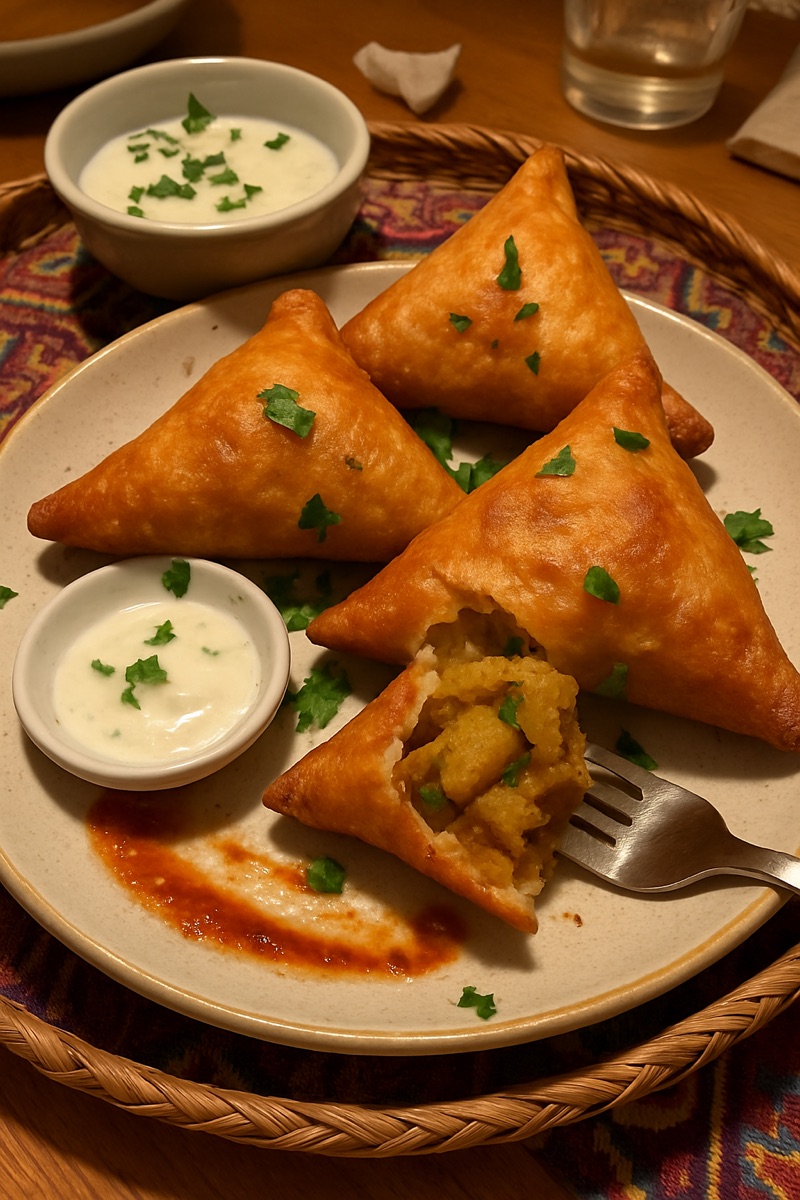 Samosa🇹🇯 Tajikistan · 2 hours and 35 minutes
Questions people ask
Is plov Tajik or Uzbek?
Both countries count it as a national dish, and UNESCO inscribed each country's tradition separately in 2016: oshi palav for Tajikistan, palov culture for Uzbekistan.
What does qurutob mean?
It combines qurut, dried salty cheese balls, and ob, water, which is how the dish is made: the qurut is dissolved in water and poured over flatbread.
Does qurutob have meat?
No. Traditional qurutob is meatless: fatir bread, dissolved qurut, fried onions and fresh vegetables such as tomatoes, cucumbers and herbs.
What is a deg?
A deg is the wok-shaped cauldron used in Tajikistan to cook palav over an open flame.
How is Tajik palav eaten?
From a single large plate set in the middle of the table, shared by everyone and often eaten with the hands.
Keep reading
- Traditional food of Tajikistan: 12 dishes to know
- What is the national dish of Afghanistan?
- What is the national dish of Kazakhstan?
- What is the national dish of Kyrgyzstan?
- What is the national dish of Mongolia?
- What is the national dish of Turkmenistan?