 COPPER
What is the national dish of Kazakhstan?
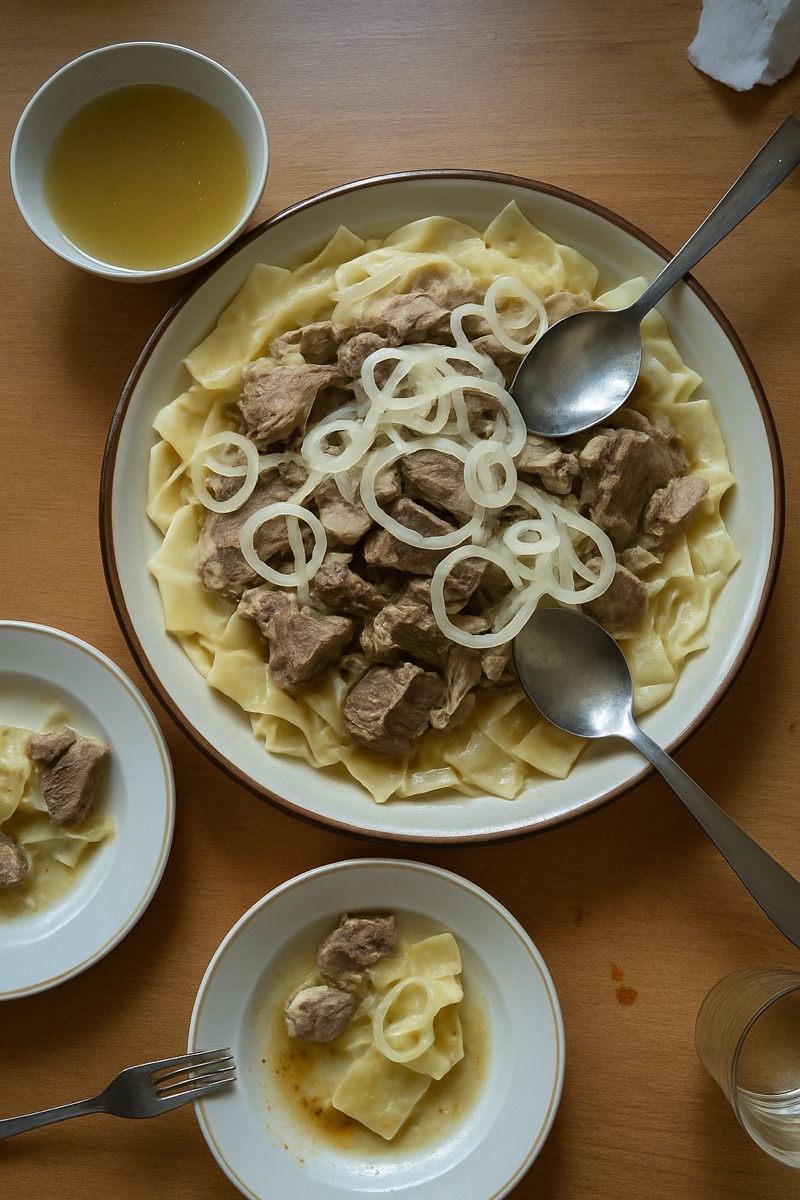
The national dish of Kazakhstan is beshbarmak, which Kazakhs often simply call et ("meat"): boiled horse meat or lamb served over broad, thin sheets of boiled dough, topped with onions softened in the broth and eaten with bowls of that broth, sorpa. No law makes it official, but it is the dish Kazakh sources and the press consistently name as the national dish.
What is beshbarmak?
Beshbarmak is a platter of boiled meat laid over large squares of noodle dough. Traditionally the meat is horse; today lamb is just as common, and the festive version adds kazy and shuzhyk, horse meat sausages. It is a feast dish, not an everyday one: for nomads, the wheat for the dough had to be bought and carried across the steppe, while meat and milk were at hand.
The name means "five fingers" in Turkic languages, because it was eaten with the hands. Many Kazakhs prefer et or et asy, "meat" or "meat treat". In 2003 the state language department in Astana refused to register a restaurant called "Beshbarmachnaya" after philologists argued the word was a borrowing, not Kazakh.
What is in beshbarmak?
The dish has four parts, and the onion sauce matters as much as the meat:
- Et: the boiled meat, horse, lamb or both, sliced into flat pieces.
- Zhaima (also shelpek): wheat dough with egg, rolled 1 to 2 mm thin and cut into squares of about 10 cm.
- Tuzdyk: sliced onion with black pepper, softened under hot skimmed fat and a ladle of broth, never fried.
- Sorpa: the strained broth, served in bowls called kese alongside the platter.
- Qurt: dried salted cheese, often served with the meal.
How beshbarmak is made
Everything happens in one pot. In our beshbarmak recipe, 1.5 kg of lamb on the bone goes into 3 litres of cold water, is skimmed and simmers uncovered for 2.5 to 3 hours; the kazy joins for the last 40 minutes.
The dough of 500 g flour, 2 eggs and water rests 40 minutes before it is rolled out. The squares boil in the strained broth for 4 to 5 minutes, in batches. The dough goes on a warm platter first, then the meat, then the tuzdyk. The most common mistake is frying the onions: they should only soften in the hot fat and broth.
How beshbarmak is served
Serving beshbarmak is a ritual. The host cuts the meat and hands out pieces in order of the guests' importance. The eldest or most honoured guest sits at the tör, the place of honour, and senior guests eat from the bas tabak, the big plate. Tea opens and closes the meal.
A lamb carcass yields twelve bone cuts, the zhilik, and only six are served at one table. A separate small plate goes to the eldest guest or to the in-laws, because the dishes are served in order from the head of the table down. The head of the sheep, cleaned and boiled in its own pot, is offered first.
The same dish is the national dish of neighbouring Kyrgyzstan, where the meat is chopped much finer; see our article on the national dish of Kyrgyzstan. Its status as "the" national dish of Central Asian peoples was shaped partly by Soviet-era cookbooks, notably William Pokhlyobkin's survey of the ethnic cuisines of the USSR.
Regional versions across Kazakhstan
Kazakhstan is large, and et changes from region to region. The meat can come from any of the "four kinds of livestock": sheep, cattle, horse and camel. Tradition says a sheep is slaughtered when a guest arrives, and a festive platter should include horse meat.
In the north, the north-east and in Jambyl region in the south, winter et is made mostly from horse. Horses are fattened for the winter slaughter, the soğym, traditionally shared by four people, one for each leg of the horse. In the south, chopped tomatoes are sometimes added on top, and sorpa is drunk from large bowls during the meal. In the west, the broth is prepared separately, and et can even be made with sturgeon.
The dough has local names too: shelpek or zhaima in the north, qamyr in the south. In winter, a second sauce, qurt-kozhe, is made by dissolving qurt in hot broth.
The dish is so central that Kazakhstan and Kyrgyzstan even have a "beshbarmak index": how many simplified beshbarmaks an average monthly wage can buy in each region.
Other dishes to know from Kazakhstan
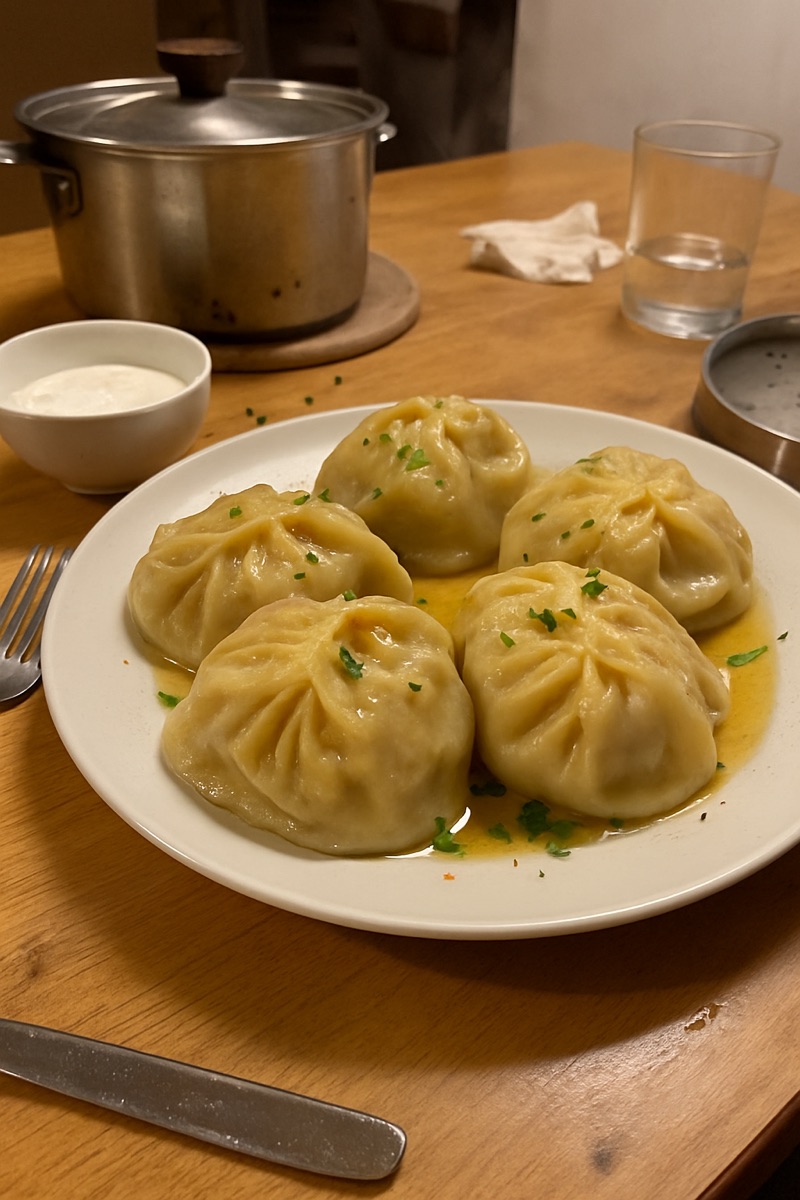
Manti are large steamed parcels of hand-diced lamb, fat-tail fat and almost as much onion, cooked for 40 to 45 minutes in a tiered steamer called a mantovarka and brushed with butter.
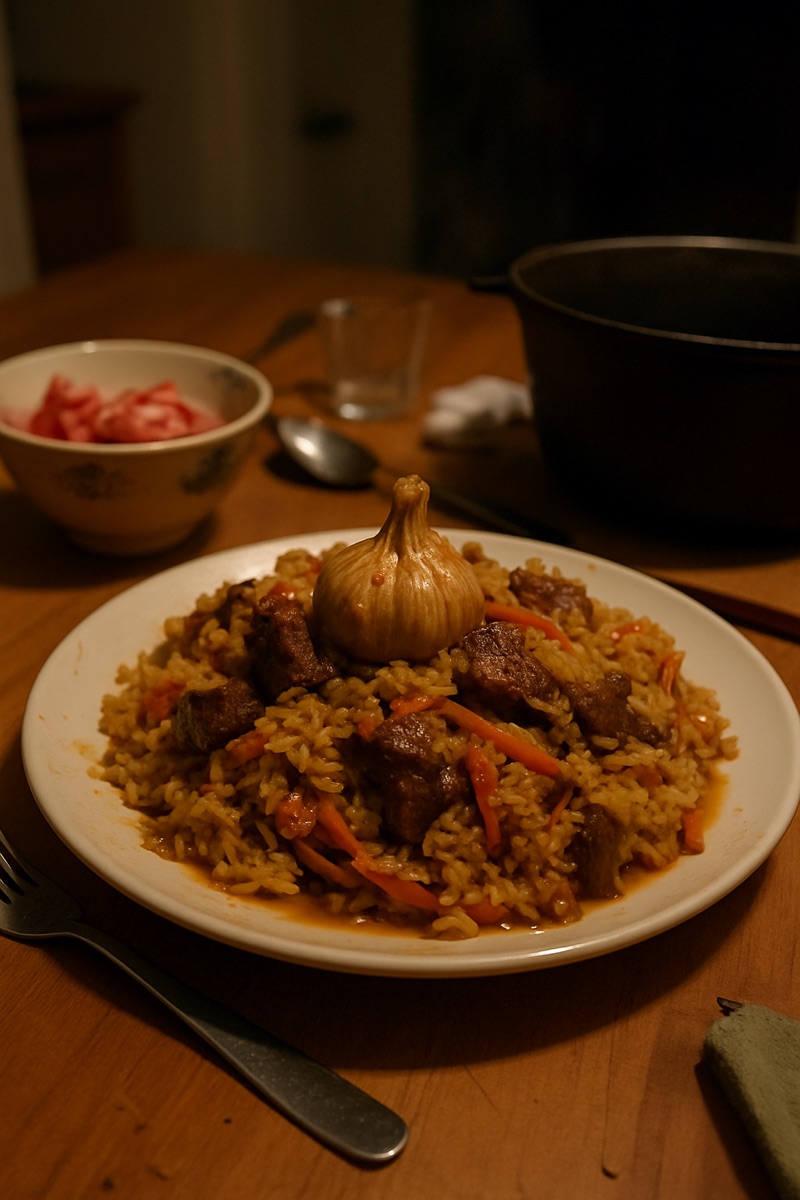
Plov, palaw in Kazakh, is especially widespread in the south of the country: carrots in thick matchsticks and lamb simmer into a zirvak, then the rice is spread on top and steamed without stirring. Uzbekistan treats it as its own national dish; see the national dish of Uzbekistan.
All three recipes, step by step, are on our page about the food of Kazakhstan, and the wider steppe and oasis kitchens are in our guide to Central Asian food.
The recipes
- Beshbarmak🇰🇿 Kazakhstan · 3 hours and 20 minutes
 Manti🇰🇿 Kazakhstan · 2 hours and 15 minutes
 Plov🇰🇿 Kazakhstan · 2 hours and 15 minutes
Questions people ask
Is beshbarmak Kazakh or Kyrgyz?
Both. Kazakhstan and Kyrgyzstan each regard beshbarmak as their national dish, and it is also eaten in Xinjiang as narin. The Kazakh version uses broad sheets of dough and sliced meat; the Kyrgyz one chops the meat finely.
What does beshbarmak mean?
It means "five fingers" in Turkic languages, because the dish was eaten with the hands. Many Kazakhs prefer the name et or et asy, meaning meat.
Is beshbarmak made with horse meat?
Traditionally yes, often with kazy horse sausage for festive meals. Lamb, or lamb and horse together, is just as common today.
What is served with beshbarmak?
A bowl of sorpa, the meat broth, and the onion sauce tuzdyk; qurt, dried salted cheese, is often served too. Tea is poured before and after the meal.
Does Kazakhstan have an official national dish?
There is no law naming one. Beshbarmak is the dish Kazakh sources, the press and reference works name as the national dish.
Keep reading
- Traditional food of Kazakhstan: 12 dishes to know
- What is the national dish of Afghanistan?
- What is the national dish of Kyrgyzstan?
- What is the national dish of Mongolia?
- What is the national dish of Tajikistan?
- What is the national dish of Turkmenistan?