 COPPER
Traditional food of Kazakhstan: 12 dishes to know
Kazakh food comes from a nomadic herding life: it is built on mutton and horse meat, boiled rather than fried, on sour milk products and on wheat dough. Meat is salted, dried or made into sausage so it keeps. The most emblematic dishes are beshbarmak, boiled meat over broad sheets of dough, the horse meat sausage kazy, fried baursak and fermented mare's milk, kumys.
What Kazakh food is built on
For centuries most Kazakhs were herders of fat-tailed sheep, horses and Bactrian camels, and their cooking followed the herds. Traditional Kazakh cooking is based on boiling, and many techniques aim at keeping food for a long time: meat is salted, dried and smoked, and milk is soured or dried rather than drunk fresh.
Kazakhs speak of the tört tülik mal, the four kinds of livestock: horses, camels, cattle and sheep. Horse and camel are the festive meats, horse above all; sheep and beef are eaten more in everyday life. Wheat came later, through trade, and gave the cuisine its breads, dumplings and fried dough. Russians, Tatars, Uyghurs, Uzbeks, Koreans and Germans living in Kazakhstan have added their own dishes since.
Meals are laid out on the dastarkhan, the low table, and the host cuts and hands out the meat. The centrepiece of that table is covered in depth in our article on the national dish of Kazakhstan.
Meat dishes and festive platters
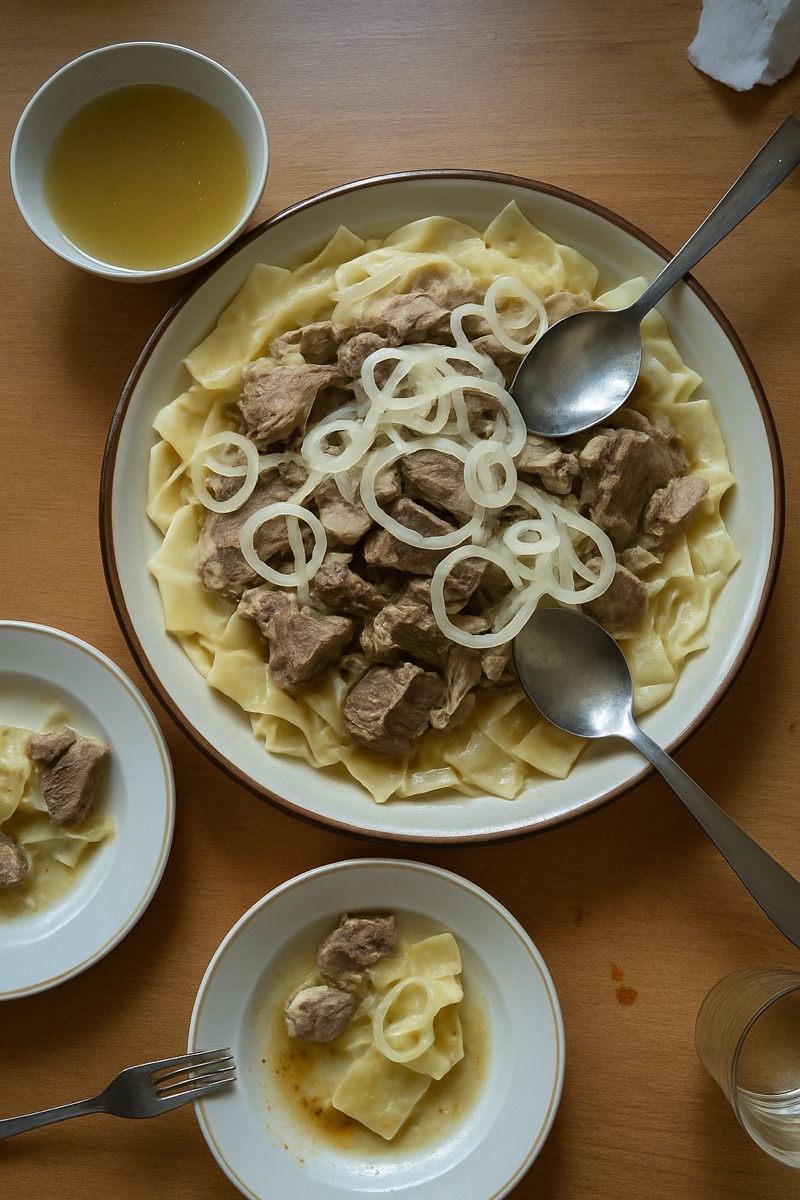
- Beshbarmak — Boiled horse meat or lamb laid over broad, thin squares of boiled dough, topped with onion softened in the broth and served with bowls of that broth, sorpa. Many Kazakhs simply call it et, "meat". It is the most popular Kazakh dish and the one served to honour guests, with the host handing out the cuts in order of the guests' importance.
- Kazy — A horse meat sausage made from the rib section with its fat, boiled or smoked. It was once a food only the wealthy could afford and is traditionally served with karta, dried horse meat. Sliced kazy goes on the festive beshbarmak platter.
- Kuyrdak — Kazakh quwyrdaq: horse, sheep or cow offal, with the heart, liver and kidneys diced and roasted with onions and peppers. Kazakh sources count it as another national dish.
- Plov — Palaw in Kazakh: meat fried with carrots and onions, then rice laid on top and steamed in the same cauldron, the kazan. It is especially common in the south of the country. Uzbekistan treats the same dish as its own national dish.
Dough, dumplings and noodles
Once flour reached the steppe, Kazakh cooks turned it into breads, dumplings and fried dough, much of it made in the kazan, the iron cauldron that nomads carried from camp to camp.
- Manti — Large dumplings filled with lamb or beef spiced with black pepper, cooked in a multi-level steamer and served with butter, sour cream or an onion sauce. Kazakh cooks dice the meat by hand and add fat-tail fat and almost as much onion, so the filling stays juicy.
- Lagman — Pulled wheat noodles with meat and vegetables in a broth or sauce. It is a popular dish in Kazakhstan, as it is across Central Asia, and a reminder of the Uyghur and Uzbek cooks who have long lived in the country.
- Baursak — Small pieces of dough, round or square, fried in boiling oil in a kazan. They were easy to make on the move and are still piled on the table at celebrations and served with tea.
Milk, sweets and drinks
Dairy is the other half of Kazakh food. Herders preferred sour milk because it keeps, and turned it into drinks, creams and dried cheeses.
- Kumys and shubat — Kumys is fermented mare's milk, mildly alcoholic because mare's milk is rich in sugar; shubat is fermented camel's milk, thick and sour, a staple summer drink of the Adai Kazakhs in the west. Both are considered good for health, and a traditional meal often ends with kumys before tea.
- Kurt — Small hard balls of dried, salted sour milk or cheese, pressed and dried until white. Drying was the nomads' way of keeping milk through the year, and kurt is still eaten as a salty snack or dissolved in hot broth.
- Zhent — A sweet that needs no baking: millet mixed with honey, sugar and butter. It was simple to make in a cauldron on the move and is prepared today for festive occasions.
- Nauryz kozhe — A soup cooked for Nauryz, the spring new year, from seven ingredients that vary by region, usually meat, fat, water, milk, grain and salt. The seven ingredients are meant to bring wealth and happiness for the coming year.
- Tea with milk — Black tea reached Kazakhstan from China along the Silk Road and has almost replaced the older drinks: every meal now comes with strong black tea, usually with milk or cream. Tradition says a good host pours only a little at a time, so the cup can be refilled again and again.
Regional differences
Kazakhstan is a very large country and its food changes from region to region. In the north, horse meat dominates winter cooking, with animals fattened for the winter slaughter. The south, closer to Uzbekistan, is where plov is most widespread, along with nan, the flatbread baked in a tandyr oven in the old Silk Road towns. Around the Caspian and Aral Seas and along the rivers, fish has always been part of the diet, and in the west shubat is a summer staple.
Kazakh food has much in common with its neighbours: compare it with the traditional food of Uzbekistan, where rice and bread take the place of horse meat, or with the traditional food of Russia, whose soups and pastries are part of everyday eating in Kazakh cities.
Cook Kazakh food at home
Beshbarmak, manti and plov have full recipes with ingredients and step-by-step methods on our page about the food of Kazakhstan. For plov, manti and lagman across the region, from Tashkent to Bishkek, see our guide to Central Asian food.
The recipes
- Beshbarmak🇰🇿 Kazakhstan · 3 hours and 20 minutes
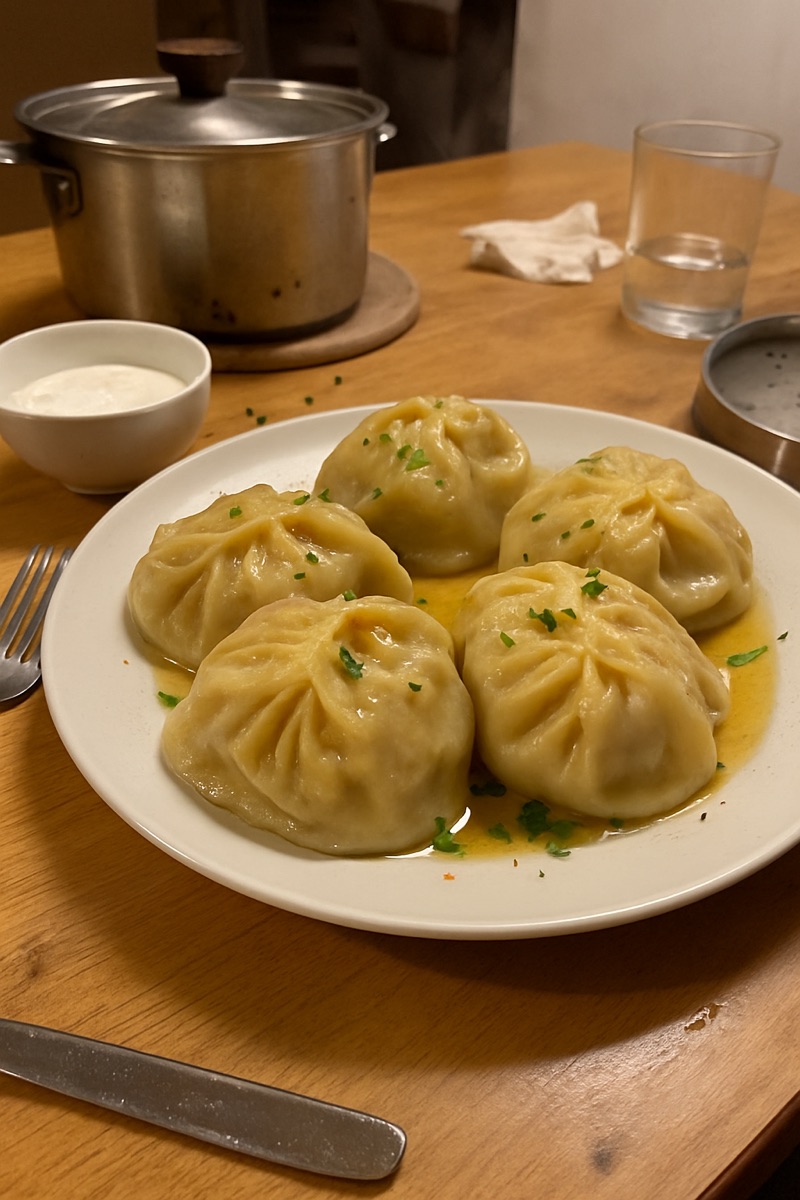 Manti🇰🇿 Kazakhstan · 2 hours and 15 minutes
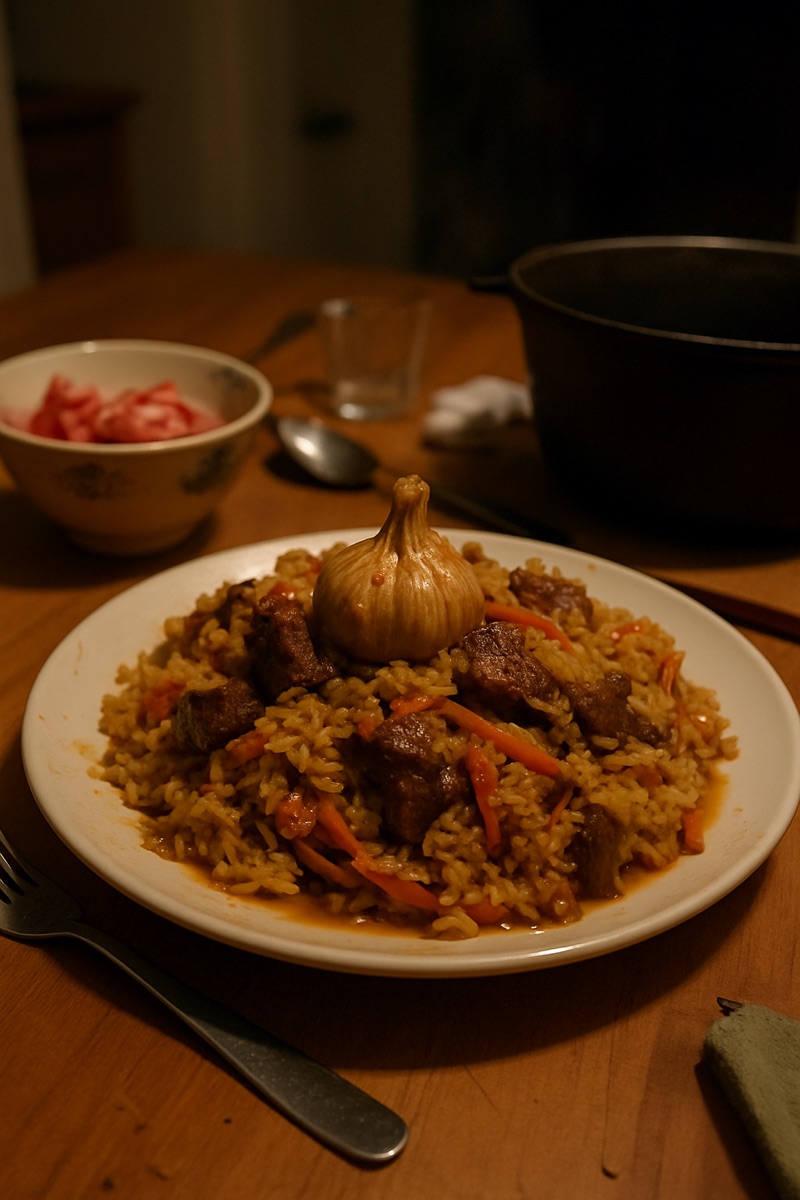 Plov🇰🇿 Kazakhstan · 2 hours and 15 minutes
Questions people ask
What is the most popular food in Kazakhstan?
Beshbarmak, boiled horse meat or lamb served over broad sheets of dough with onion sauce and broth, is the most popular Kazakh dish and the one served to guests. Plov, manti, lagman and baursak are everyday favourites.
Do Kazakhs eat horse meat?
Yes. Horse is the main festive meat in Kazakhstan, eaten boiled in beshbarmak and as sausage (kazy) or dried meat (karta). Lamb and beef are more common in everyday meals.
What is the national drink of Kazakhstan?
Traditionally kumys, fermented mare's milk, and shubat, fermented camel's milk. Today black tea with milk accompanies almost every meal.
Is Kazakh food spicy?
No. Traditional Kazakh food is based on boiled meat and is seasoned mainly with salt, onion and black pepper.
What is baursak?
Baursak are small pieces of dough fried in oil in a kazan. They are served at celebrations and with tea, and are found across Central Asia.
Keep reading
- What is the national dish of Kazakhstan?
- Traditional food of Afghanistan: 12 dishes to know
- Traditional food of Kyrgyzstan: 13 dishes to know
- Traditional food of Mongolia: 12 dishes to know
- Traditional food of Tajikistan: 12 dishes to know
- Traditional food of Turkmenistan: 13 dishes to know