 COPPER
Traditional food of Turkmenistan: 13 dishes to know
Turkmen food comes from a semi-nomadic herding life in the desert: it is built on mutton and lamb, camel milk and bread, lightly seasoned with salt and black pepper and cooked in cottonseed oil. Meat was dried in the sun to keep it. The most emblematic dishes are palaw, the crumbled bread and meat dish dograma, the sand-baked pie ishlekli and the round chorek bread.
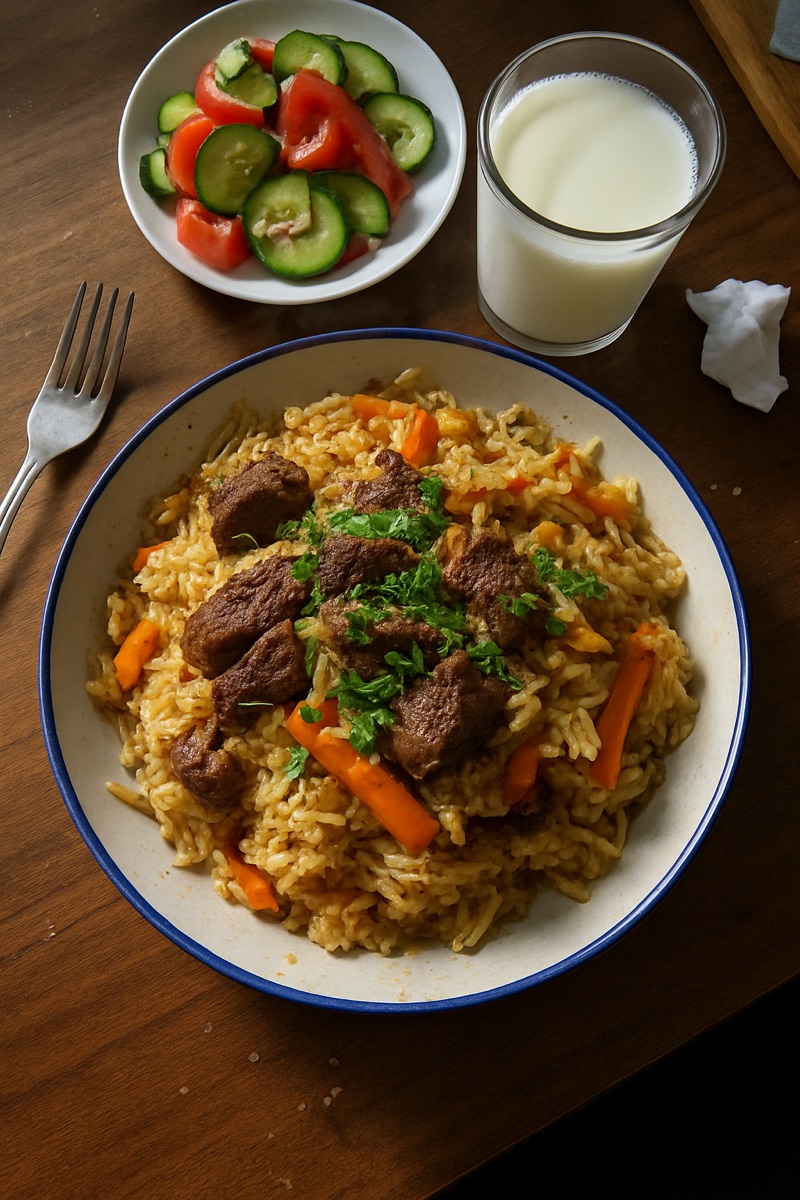
What Turkmen food is built on
Turkmen life long revolved around sheep herding, and meat and bread remain the two staples. Mutton and lamb come first, followed by camel, chicken and game; beef arrived on the table much later, and Turkmen do not eat horse meat. Camel's milk and cow's milk are turned into drinks, butter and cheese.
Turkmen cooking uses few seasonings beyond salt and black pepper, with onion, and is typically cooked in cottonseed oil, tail fat or camel-milk butter. Vegetables are few, mostly pumpkin, tomatoes, carrots and radish, but the oases grow apricots, pomegranates, grapes and the melons Turkmenistan is famous for.
The desert climate shaped how food is kept: meat is dried in the sun or fried and sealed in clay pots, and pies were once baked buried in hot sand. The dishes most often named as Turkmenistan's national dish, palaw and dograma, are covered in depth in our article on the national dish of Turkmenistan.
Meat dishes
- Palaw — Turkmen plov: rice cooked with chunks of mutton, carrots, onions and garlic in a large cast-iron cauldron, served at celebrations and to honoured guests and traditionally eaten with the hands. One source calls it "king in Turkmen cuisine". Versions add raisins, fruit, minced meat or, on the Caspian coast, fish.
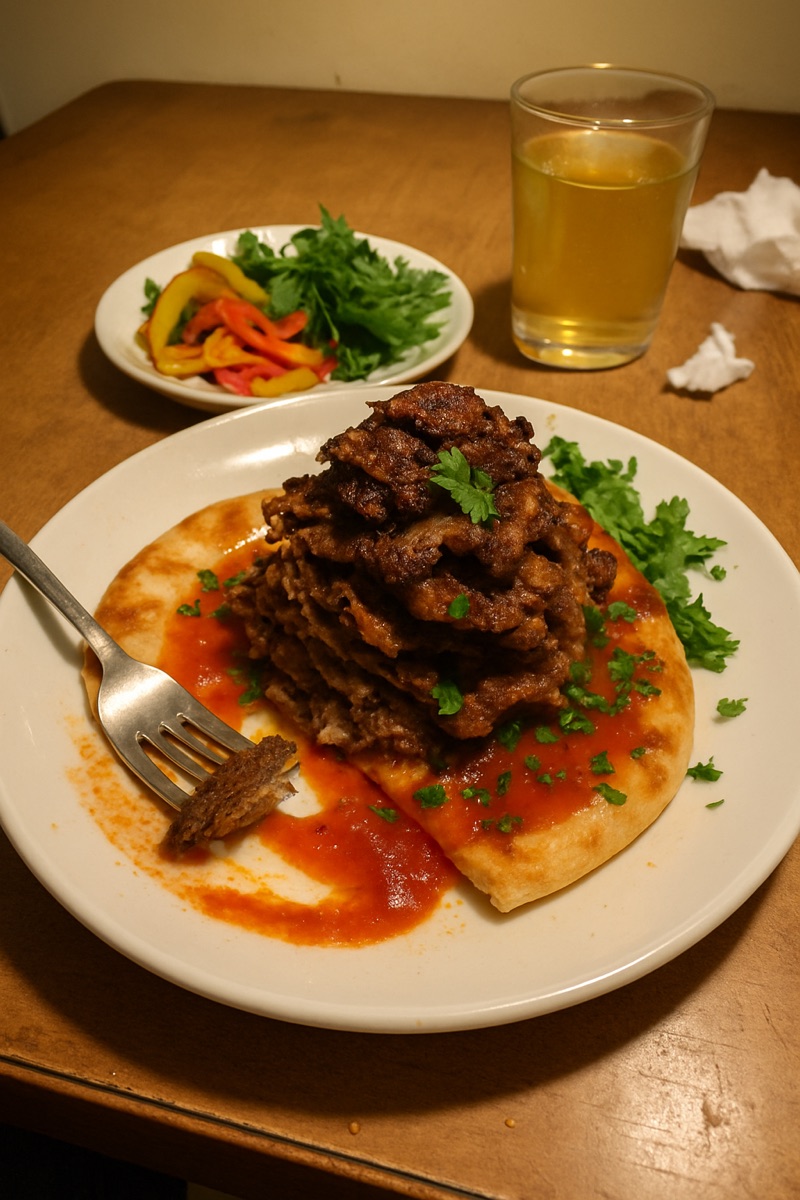
- Dograma — Dograma means "crumbs": chorek bread crumbled by hand, usually by the whole family, and mixed with shredded boiled lamb and raw onion, eaten dry or moistened with the broth. It is cooked for religious holidays and rituals and is considered among the oldest Turkmen dishes.
- Çişlik — Shashlik: skewered chunks of mutton, lamb, chicken or sometimes fish grilled over charcoal and served with raw sliced onion and a vinegar-based sauce. It is sold in restaurants and on the street, and Caspian Turkmen grill sturgeon the same way.
- Gowurma and kakmach — Two ways of keeping meat. Gowurma is meat fried in bite-sized chunks in a cauldron, then stored in its fat for soups and later meals; kakmach is meat dried like jerky in the desert sun, sometimes hung on a high pole for days.
Pies, dumplings and grains
Pastries and dumplings are sold at bazaars and roadside stands, popular with travellers and taxi drivers because they can be eaten on the move.
- Ishlekli — A closed pie of thin dough filled with minced meat, usually lamb, and onion, often compared to a pizza and prepared for honoured guests. It was once baked buried in hot sand; today it is cooked in a tamdyr or between two pans under hot ash.
- Gutap — Thin half-moons of dough with a filling, fried or cooked on a griddle. The Turkmen favourite is filled with spinach, and pumpkin gutap are made in Ashgabat and around Merv. Somsa, börek and fitchi are other common fried pastries.
- Manty — Steamed dumplings filled with ground meat and onion or with pumpkin. Turkmen often top them with gatyk, a thick drinking yogurt, in place of sour cream.
- Yarma — Cracked wheat cooked in sheep fat with very small pieces of mutton mixed in. The name comes from ýarym, "half, split", and the dish is claimed to be at least a thousand years old. Etli köje, a sorghum porridge with meat, is the traditional dish of Novruz, the spring new year.
- Unash — The most traditional Turkmen soups, made with noodles and milk or with noodles and beans. Most Turkmen soups start from şurpa, a meat broth, and a national culinary festival presented more than 15 kinds of soup.
Bread, sweets and drinks
- Chorek — Turkmen bread, baked in thick, round loaves in a tamdyr clay oven, and served with almost every meal. Etli chorek has meat baked inside and is a meal in itself; ýagly chorek is flaky and layered with butter. It is impolite to turn a loaf upside down or mistreat bread in any way, and the tamdyr itself was held sacred: an old saying judged it better to slit a horse's throat than to destroy one.
- Pishme — Small, soft fried breads of yeast dough, cooked for under two minutes in a kazan and dusted with sugar. They are presented to guests as a welcome and made for celebrations and holidays.
- Melons — Turkmenistan was once the main melon supplier of the Soviet Union and claims up to 400 varieties. Melons are a source of national pride with their own holiday, Melon Day.
- Çal — Fermented camel's milk, a white, sparkling drink with a sour taste, the drink Turkmenistan is known for. It spoils quickly and is hard to export, and Turkmen like to skim agaran, a kind of butter, from its surface. Green tea, drunk at all hours, is the everyday drink.
Regional food in Turkmenistan
The Caspian Turkmen, the Ogurjaly, stand apart from the rest of Central Asia with their fish dishes: they grill and fry fish and serve it with sesame, rice, apricots, raisins and pomegranate juice, and cook a palaw with fish. The Teke of the south and south-east eat young camel and mutton, while the Yomut, Saryk and others eat mostly mutton.
Tea differs too: in the Ahal and Mary regions people drink mostly green tea, in the Balkan region black tea with camel's milk, and in Dashoguz tea is drunk with milk to hide the salty taste of the water. Compare Turkmen food with the traditional food of Uzbekistan, its neighbour on the Amu Darya, and the traditional food of Iran, where many Turkmen also live.
Cook Turkmen food at home
Palaw and dograma have full recipes with ingredients and step-by-step methods on our page about the food of Turkmenistan. For plov, manti and lagman from Bishkek to Tashkent, see our guide to Central Asian food.
The recipes
 Dograma
Questions people ask
What is the most popular food in Turkmenistan?
Palaw, Turkmen plov, served at celebrations and to honoured guests, along with dograma, manty, gutap and chorek bread, which comes with almost every meal.
Do Turkmen eat horse meat?
No. Turkmen cuisine is based on mutton, lamb and camel, with chicken and game; horse meat is not eaten, unlike in Kazakhstan and Kyrgyzstan.
What do people in Turkmenistan eat for breakfast?
Breakfast is built around tea, so much so that the word çaý can mean breakfast itself, with chorek bread and gatyk, a thick drinking yogurt.
Is Turkmen food spicy?
No. Turkmen cooking uses few seasonings beyond salt and black pepper; the flavour comes from mutton, fat and onion.
What is the national drink of Turkmenistan?
Çal, fermented camel's milk, is the drink the country is known for. Green tea is drunk at all hours.
Keep reading
- What is the national dish of Turkmenistan?
- Traditional food of Afghanistan: 12 dishes to know
- Traditional food of Kazakhstan: 12 dishes to know
- Traditional food of Kyrgyzstan: 13 dishes to know
- Traditional food of Mongolia: 12 dishes to know
- Traditional food of Tajikistan: 12 dishes to know