 COPPER
Traditional food of Afghanistan: 12 dishes to know
Afghan food is built on rice and naan, with mutton, beef or chicken, yogurt, and fresh and dried fruit. It is seasoned with coriander, mint, dill, cumin, cardamom and saffron, and is typically mild rather than hot. The most emblematic dishes are Kabuli pulao, mantu, aushak and bolani.
What Afghan food is built on
Afghan cooking is halal and centres on mutton, beef and poultry served with rice and Afghan bread. Yogurt, whey and milk are everyday ingredients, as are fresh and dried fruit: apples, apricots, grapes, plums, pomegranates, melons and raisins. The usual herbs and spices are coriander, mint, dill, cumin, cardamom and turmeric, with locally grown saffron, and dishes are typically mild in flavour. Rice dishes often mix sweet and sour, with fruit, nuts and legumes cooked into the grain.
Rice is the most important part of any meal, and naan comes with almost every one. Food is traditionally served on a cloth spread on the floor, the dastarkhan, and eaten with the right hand. Most meals end with fresh fruit, then tea with something sweet; at festivals, tea comes with nuql, white sugared almonds.
Rice, stews and kebabs
Kabuli pulao is only one of many palaws, each named after what colours or flavours the rice: zamarod palaw is green with spinach and dill, bonjan-e-roomi palaw red with a tomato qorma, narenj palaw sweet with saffron, orange peel, nuts and chicken, mash palaw a vegetarian sweet-and-sour pilaf of mung beans, apricots and bulgur, and albalo palaw is made with sour cherries.
Side dishes come to the table with the rice: badenjan burani, fried eggplant slices with a garlic sour cream sauce and dried mint; torshi, eggplant and carrot pickled in vinegar with herbs; a fresh coriander chatni; and salata, a salad of tomato, onion and cucumber.
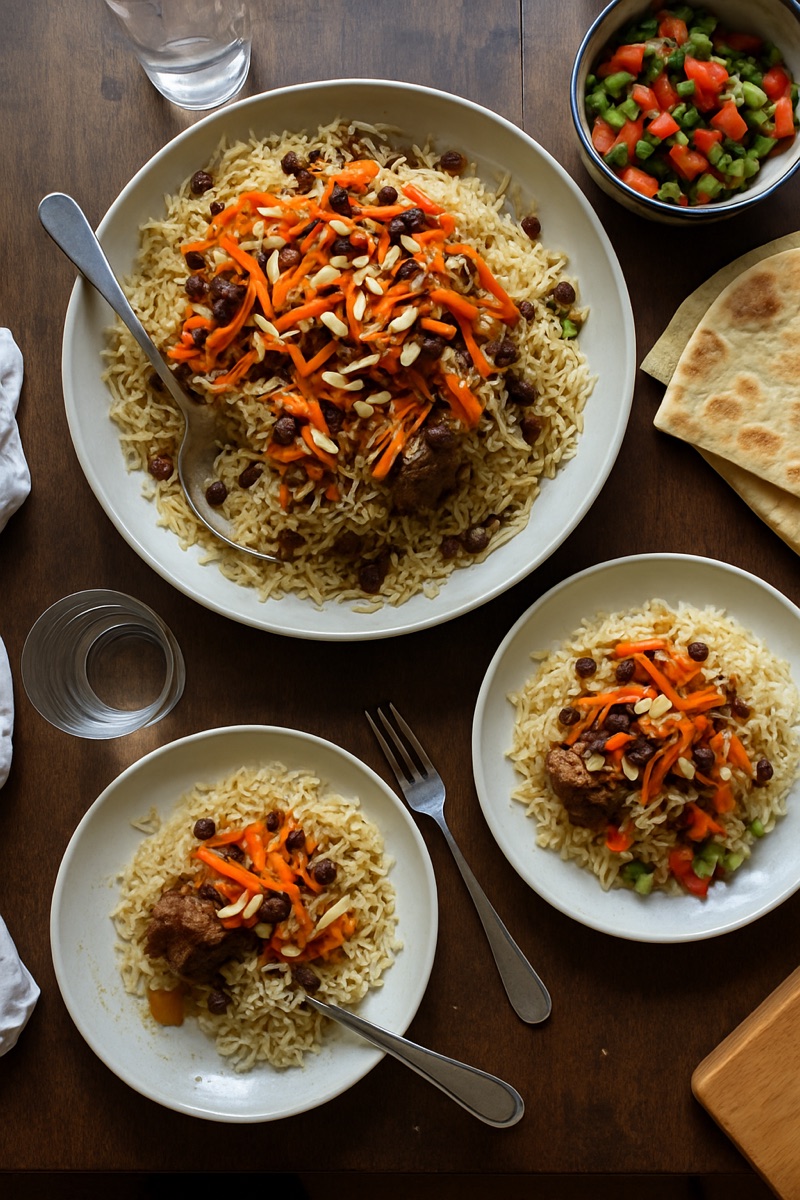
- Kabuli pulao — Long-grain rice browned with caramelised sugar, steamed over lamb and its broth, then covered with sugar-glazed carrot strips, raisins and almonds or pistachios. Afghans call it qabili palaw, and it is the festive dish of banquets and family gatherings.
- Challow with qorma — Challow is white rice cooked with mild spices, served with a qorma, a stew built on onions caramelised until deeply coloured, then tomato, spices and the main ingredient added last. There are hundreds of qormas, from qormah e sabzi with spinach, cilantro and fenugreek to qormah e alou bokhara with sour plums and lentils.
- Chopan kabob — Chopan means "shepherd": skewered lamb chops grilled over charcoal. Afghan kebabs are sold mostly in restaurants and at street stalls, come with naan rather than rice, and are often marinated in onion juice, lemon, yogurt and black pepper. Diners sprinkle on sumac or dried ground sour grapes.
- Chapli kebab — A flat, round patty of minced beef with herbs and sometimes chilli, served with naan. It is strongly tied to Pashtun cooking and is a specialty of eastern Afghanistan; it originated in Peshawar, across the border in Pakistan.
- Kichri qoroot — Sticky medium-grain rice cooked with mung beans and onions, served with qoroot, a hard, very sour dried cheese made from the buttermilk left after churning sheep's or goat's milk butter. Qoroot is also served with aushak and mantu.
Dumplings, breads and soups
- Mantu — Thin dough filled with minced beef or lamb and a large amount of onion, steamed, then laid on garlic yogurt and topped with a tomato sauce of split peas or kidney beans. A dusting of dried mint finishes the plate.
- Aushak — Pasta dumplings filled with chives or leeks rather than meat, topped with garlic yogurt or qoroot, a tomato sauce that is often meaty, and dried mint. They take a long time to make, so they are served on holidays and at special gatherings, and the dish is associated with Kabul.
- Bolani — A thin flatbread folded over a filling of potato, leeks, pumpkin, lentils or minced meat and cooked on a hot griddle or fried. It is eaten with plain or mint yogurt and often a glass of doogh, sold on the street, and made for birthdays, engagements and holidays.
- Naan — Afghan bread is flat and baked in a tanoor, a clay oven where the dough is slapped against the hot wall. It is the bread eaten with most meals, and tabakhai is a version cooked on an upturned pan.
- Shorwa — A soup of meat, potatoes and beans, cooked for a long time (today often in a pressure cooker) and eaten with bread broken into it on the dastarkhan. Aush, a soup of hand-made noodles with herbs and beans, is the other common soup.
Sweets and drinks
After a meal most Afghans simply eat fresh fruit, and dried fruit is sold in every market. Other sweets include gosh-e-feel, thin fried pastries covered in powdered sugar and ground pistachios, shir berenj, a rice pudding, and kolcha, cookies baked in clay ovens over charcoal.
Tea, chai, is drunk at all hours and is central to hospitality: most people take green tea without sugar, sometimes with cardamom or saffron, and sheer chai, a milk tea, mostly in the morning. Doogh, a cold savoury yogurt drink with mint and sometimes cucumber, is the second most widely drunk beverage, especially at lunch in summer.
- Firni — A milk pudding that Afghans usually thicken with cornstarch. Rose water and banana are the two most popular flavours, and it is finished with nuts such as almonds and pistachios.
- Sheer khurma — A vermicelli pudding with milk, dates, nuts and dried fruit, flavoured with cardamom or rose water. It is served on the morning of Eid after the prayer, and to every guest who visits during the day.
Regional and ethnic cooking
Afghan food is shared across the country, but each group adds its own dishes. Pashtuns, about 42% of the population, cook a meat-heavy cuisine with rosh, lamb cooked without spices, skewered sajji, chapli kebab and khaddi kebab, grilled on a spit over an open fire; in the south and west, bolani is called borogyen. Uzbeks in the north make Uzbeki palaw, boiling the rice until it absorbs the liquid instead of steaming it. Hazaras of central Afghanistan have their own fare, shaped by Central Asian, Persian and South Asian cooking.
Cook Afghan food at home
Kabuli pulao is the national dish of Afghanistan. Copper has full recipes for Kabuli pulao, mantu and bolani, with ingredients and step-by-step methods, on our page about the food of Afghanistan, alongside other Central Asian recipes.
Kebabs, naan and pilafs cross Afghanistan's borders. Compare with the traditional food of Pakistan and the traditional food of Iran.
The recipes
- Kabuli pulao🇦🇫 Afghanistan · 2 hours and 40 minutes
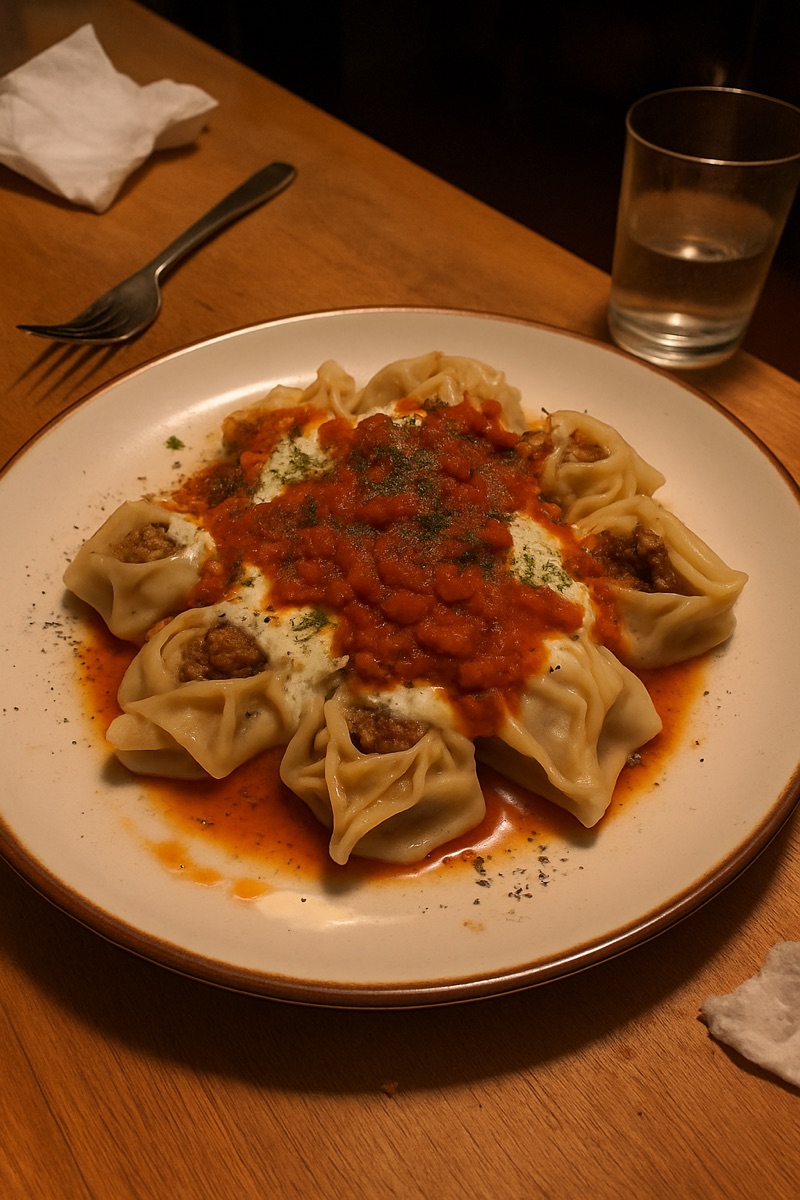 Mantu🇦🇫 Afghanistan · 1 hour and 40 minutes
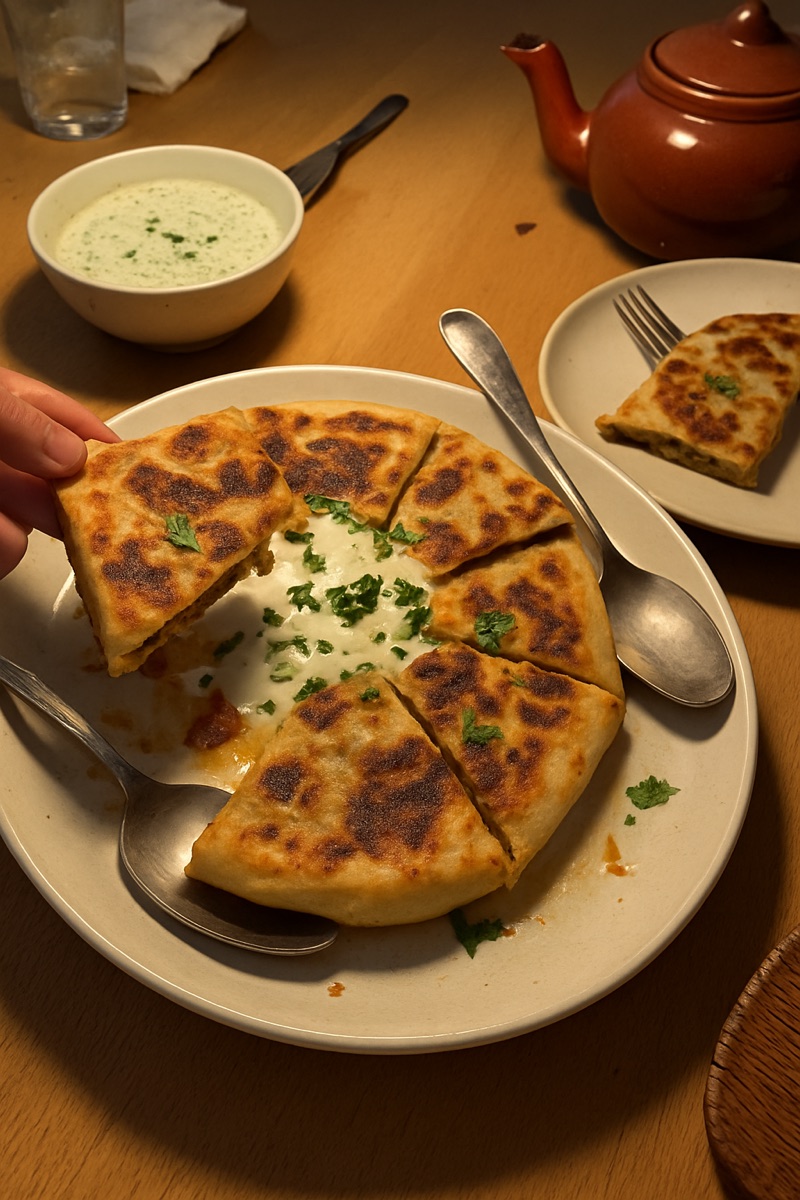 Bolani🇦🇫 Afghanistan · 1 hour and 25 minutes
Questions people ask
What is the most popular food in Afghanistan?
Rice dishes are at the centre of most meals, and Kabuli pulao is the best known. Mantu, aushak, bolani and kebabs with naan are the other dishes most people associate with Afghan food.
What is the national dish of Afghanistan?
Kabuli pulao, or qabili palaw: rice browned with caramelised sugar and steamed over lamb, topped with glazed carrots, raisins and nuts.
Is Afghan food spicy?
Not usually. Afghan dishes are typically mild, seasoned with coriander, cumin, cardamom and herbs; heat comes from a coriander chatni or from chilli in some kebabs.
What is the difference between mantu and aushak?
Mantu are filled with minced meat and onion; aushak are filled with chives or leeks. Both are topped with garlic yogurt or qoroot, a tomato sauce and dried mint.
What do Afghans drink with meals?
Tea, usually green and unsweetened, is drunk throughout the day. Doogh, a cold yogurt drink with mint, is the second most popular drink, especially at lunch in summer.
Keep reading
- What is the national dish of Afghanistan?
- Traditional food of Kazakhstan: 12 dishes to know
- Traditional food of Kyrgyzstan: 13 dishes to know
- Traditional food of Mongolia: 12 dishes to know
- Traditional food of Tajikistan: 12 dishes to know
- Traditional food of Turkmenistan: 13 dishes to know