 COPPER
Traditional food of Kyrgyzstan: 13 dishes to know
Kyrgyz food comes from a nomadic herding life: mutton, beef and horse meat, mostly boiled, dairy products and wheat dough, with techniques meant to keep food for a long time. Meat is shared at the table by strict custom. The most emblematic dishes are beshbarmak, chopped boiled meat over thin noodles, the fried meat dish kuurdak, fried boorsok and fermented mare's milk, kymyz.
What Kyrgyz food is built on
The Kyrgyz were herders who moved their flocks between valleys and high summer pastures, and their cooking followed that life. Traditional Kyrgyz food revolves around mutton, beef and horse meat and around dairy, and many techniques aim to preserve food: meat is made into sausage, milk is soured, fermented or dried. Horse meat dishes are prized as delicacies, and yak meat is eaten too.
The diet changes with the seasons: milk and plant foods dominate in summer, meat and flour in winter. Meat is usually boiled, in a kazan with water and no vegetables, and a sheep is butchered with a knife rather than an axe. Each bone with its meat, an ustukan, has its own meaning and goes to a particular guest according to age and rank.
Bread is treated as sacred, and a good host offers at least bread and tea to anyone who comes in, even for a few minutes. Uyghur, Dungan and Uzbek neighbours have added their own dishes, now part of daily eating. The great feast dish is covered in depth in our article on the national dish of Kyrgyzstan.
Meat dishes for feasts and guests
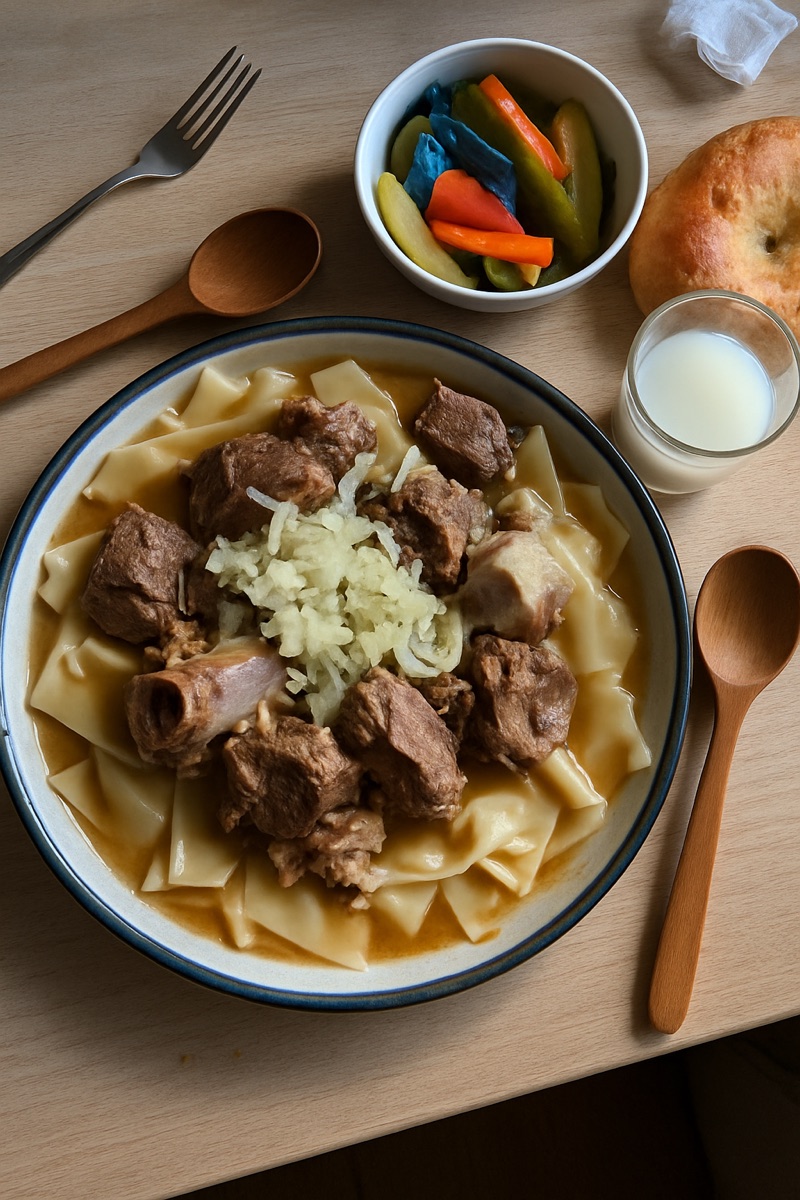
- Beshbarmak — Horse meat or mutton boiled for hours in its own broth, then cut small and served over thin hand-rolled noodles with chyk, onion softened in hot broth fat. Its other Kyrgyz name, tuuralgan et, means "chopped meat". It is cooked to celebrate a birth or an important birthday and to mourn a death, and is the dish cited everywhere as the Kyrgyz national dish.
- Kuurdak — Meat and offal fried with onions, its name coming from kuuruu, "to fry". Nomads made it from a freshly slaughtered sheep with its own fat and little or no oil; potatoes arrived in the 19th century and are now common. At a feast it is served to guests while the beshbarmak meat is still boiling.
- Chuchuk — A horse meat sausage made with the animal's fat, also called qazy. It is one of the delicacies of a festive table and is sliced onto the beshbarmak platter.
- Plov — Paloo in Kyrgyz: mutton or beef fried in a kazan with carrots cut into matchsticks, then rice cooked on top, garnished with whole fried garlic and hot peppers. It is the main festive dish of the south. Uzgen paloo, from the southern Uzgen District, is made with locally grown rice.
Soups, noodles and dumplings
Flour is the other half of the Kyrgyz kitchen, turned into noodles, steamed dumplings and pastries, some Kyrgyz, others brought by neighbouring peoples.
- Shorpo — A mutton broth, served in bowls before the meat at a feast. After the beshbarmak comes ak-serke, broth mixed with kymyz or ayran, thought to help settle the stomach.
- Lagman — Thick pulled noodles stretched from a simple flour dough, covered in chopped peppers and vegetables in a spicy, vinegary sauce. It is served everywhere in Kyrgyzstan but is considered a Dungan or Uyghur dish.
- Ashlan-fu — A cold dish of noodles in a broth made from meat and vegetables. Like lagman, it was borrowed from the settled peoples of the region and has become a popular part of Kyrgyz eating.
- Manty — Large steamed dumplings filled with ground meat and onion, cooked in a stacked steamer.
- Samsa — Pockets of flaky pastry filled most often with mutton and fat, and also with chicken, cheese, cabbage or pumpkin. They are baked and sold in every bazaar and on street corners in the cities. In the classic version the raw meat steams inside the pastry, which is where the juice comes from.
Bread, dairy and drinks
- Boorsok — Small pieces of yeast dough enriched with butter and milk, fried in oil. They are eaten with tea, dipped in honey or sometimes dropped into the tea itself; kattama, a layered fried bread, is the other traditional fried bread.
- Kurut — Small balls of strained sour milk, salted and dried until hard. Drying was a way of keeping milk for months, and kurut is still eaten as a salty snack.
- Kymyz — Mare's milk fermented until slightly alcoholic, the signature drink of Eurasian nomads. Fresh kymyz is only available from about May to August, when it is sold by the roadside in the mountains; in Batken it is also made from cow's milk.
- Maksym and chalap — Maksym is a slightly fizzy drink of fermented grain, usually malt, once made by women for the family and now sold everywhere in summer. Chalap is a fizzy drink made from ayran. Both are drunk chilled, above all in summer.
North and south
Kyrgyzstan's food differs between the north and the south, separated by high mountains and bordered by different neighbours. In the northern regions beshbarmak is the main festive dish; in Naryn the meat is diced very finely with a knife called a maki, and in Talas the dough is boiled before being cut into noodles. In the south, plov is more popular, and Uzgen rice is a point of pride.
Tea follows the same line: in the north people drink black tea with milk, brewed the Russian way in a samovar, while in the south it is drunk without milk, as in Uzbekistan. Compare with the traditional food of Kazakhstan, which shares beshbarmak and kumys, and the traditional food of Tajikistan, where rice and bread lead.
Cook Kyrgyz food at home
Beshbarmak, plov and samsa have full recipes with ingredients and step-by-step methods on our page about the food of Kyrgyzstan. For lagman, manti and plov from Tashkent to Almaty, see our guide to Central Asian food.
The recipes
- Beshbarmak🇰🇬 Kyrgyzstan · 3 hours
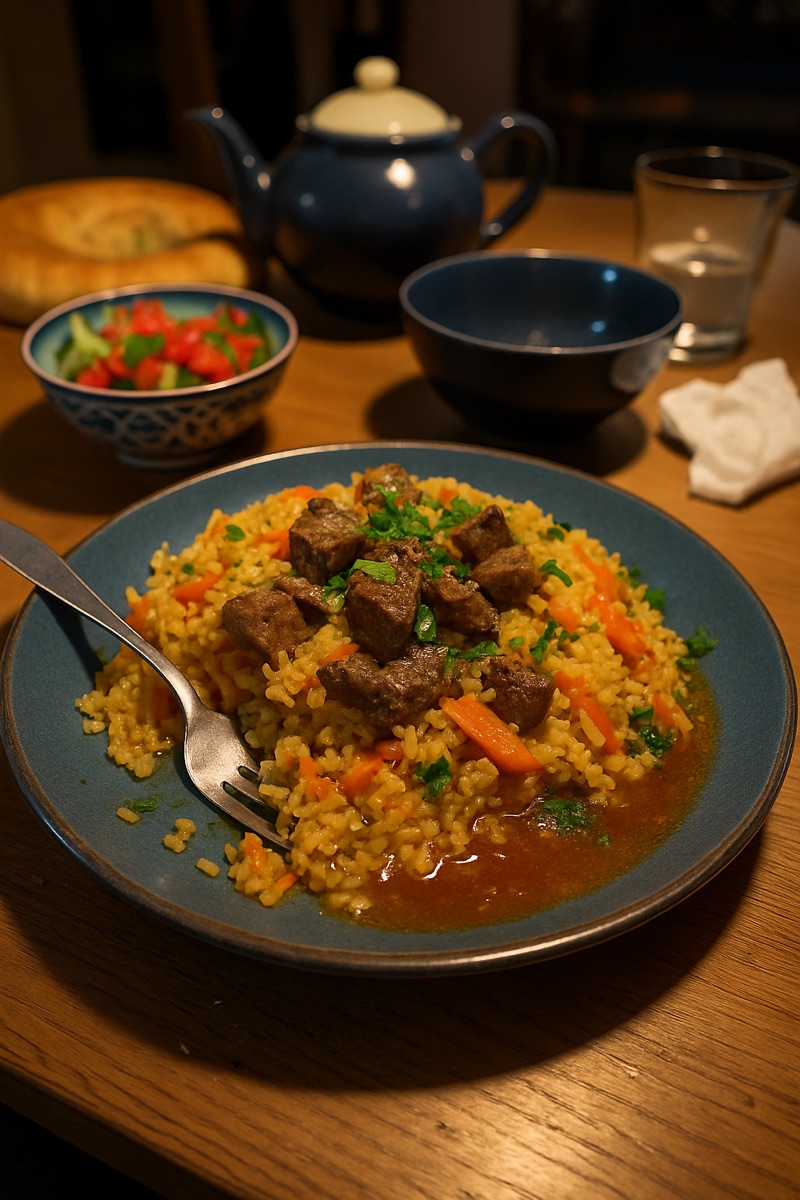 Plov🇰🇬 Kyrgyzstan · 1 hour and 55 minutes
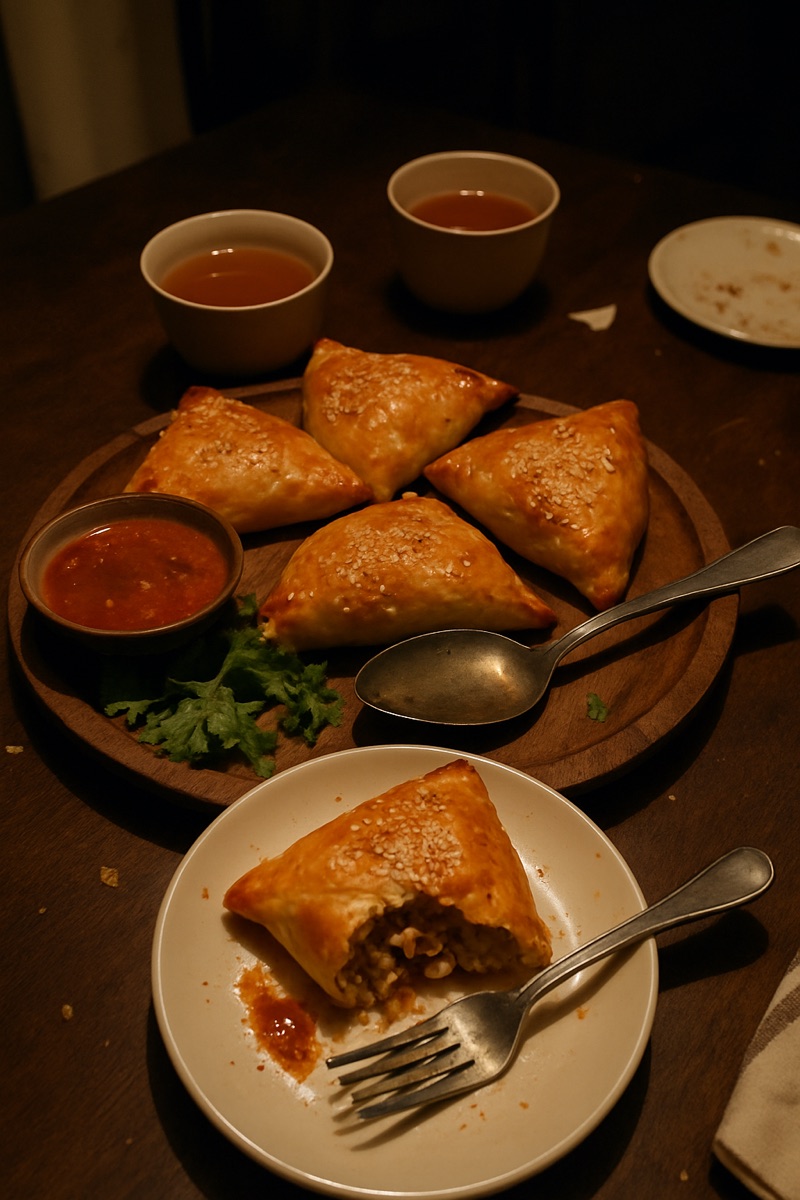 Samsa🇰🇬 Kyrgyzstan · 3 hours and 5 minutes
Questions people ask
What is the most popular food in Kyrgyzstan?
Beshbarmak, boiled horse meat or mutton chopped and served over thin noodles, is the festive dish everyone names. Plov, lagman, manty, samsa and boorsok are everyday favourites.
Do Kyrgyz people eat horse meat?
Yes. Horse meat is considered a delicacy, eaten boiled in beshbarmak and as chuchuk sausage. Mutton and beef are the most common meats day to day.
What is the national drink of Kyrgyzstan?
Kymyz, fermented mare's milk, available fresh from about May to August. Maksym, a fizzy fermented grain drink, and tea are drunk all year.
Is Kyrgyz food spicy?
Traditional Kyrgyz food is not; boiled meat is seasoned mainly with salt and onion. Lagman and some Dungan and Uyghur dishes come with chilli.
What bread do Kyrgyz people eat?
Mostly nan, a round flatbread baked in a tandoor, and fried breads such as boorsok and kattama. Bread is dipped in jam, kaymak cream or butter, and is always offered to guests with tea.
Keep reading
- What is the national dish of Kyrgyzstan?
- Traditional food of Afghanistan: 12 dishes to know
- Traditional food of Kazakhstan: 12 dishes to know
- Traditional food of Mongolia: 12 dishes to know
- Traditional food of Tajikistan: 12 dishes to know
- Traditional food of Turkmenistan: 13 dishes to know