 COPPER
What is the national dish of Kyrgyzstan?
The national dish of Kyrgyzstan is beshbarmak, also called tuuralgan et, "chopped meat": horse meat or mutton boiled for hours in its own broth, then cut up and served over thin hand-rolled noodles with chyk, onions softened in the hot broth fat. It is not official by law, but it is the dish cited everywhere as the Kyrgyz national dish.
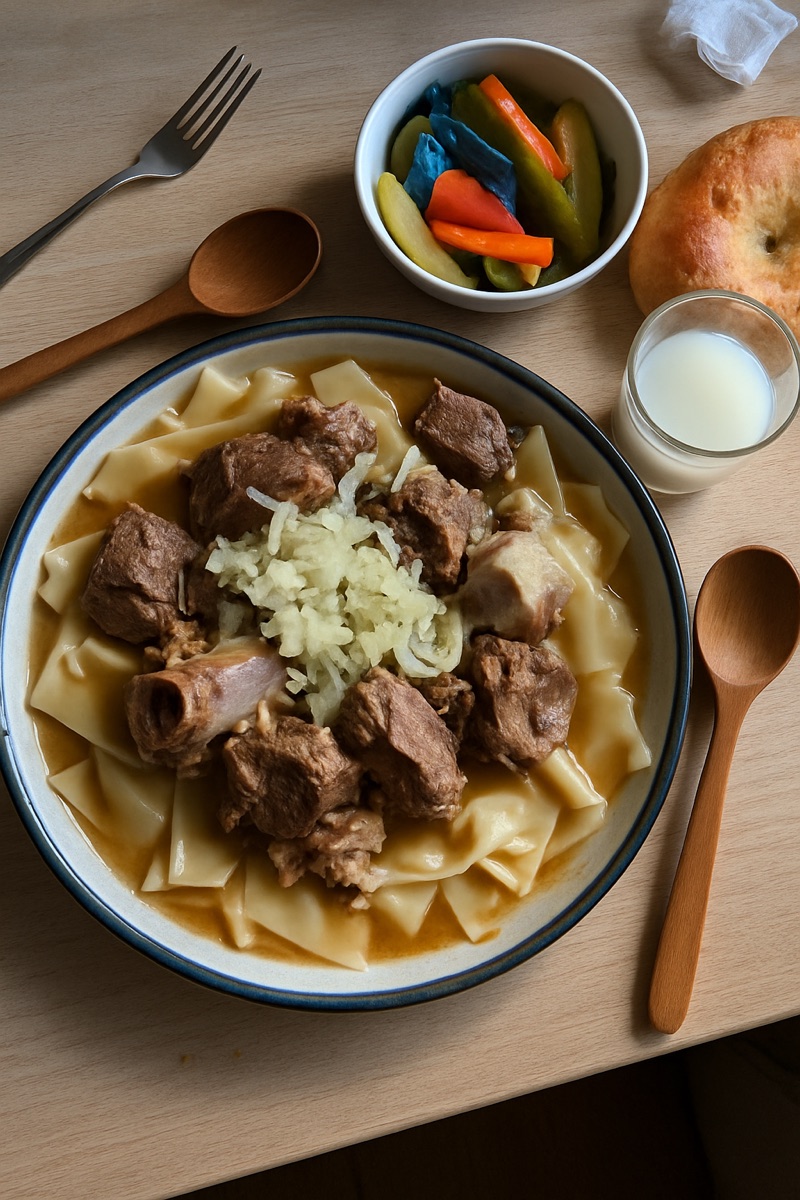
What is beshbarmak?
Beshbarmak means "five fingers" in Kyrgyz, probably because it is eaten with the hands. Its other Kyrgyz name, tuuralgan et, means crumbled or chopped meat, which describes the Kyrgyz version well: the boiled meat is cut small and mixed with the noodles rather than laid on top in large slices.
It is a dish for occasions. Kyrgyz families make it to celebrate the birth of a child or an important birthday, and to mourn a death, at the funeral or on its anniversary. The same dish is cooked in Kazakhstan and, as narin, in Xinjiang.
What is in Kyrgyz beshbarmak?
The ingredients are few, which is why each one is handled carefully:
- Meat: horse rump or chuchuk horsemeat sausage at a feast; mutton in warm seasons and in most homes.
- Noodles: flour, egg, water and salt, rested 40 minutes and rolled out very thin.
- Chyk: sliced onion covered with hot fat and boiling broth, left to soften, never fried.
- Shorpo: the meat broth, drunk from kese bowls before the platter.
How beshbarmak is made
In our beshbarmak recipe, 1.5 kg of bone-in lamb simmers gently for 2 to 2.5 hours with onion, bay leaves and peppercorns. The dough is rolled to 1 to 2 mm, thin enough to see the board through, and cut into 8 to 10 cm squares; thick noodles are the commonest mistake.
The squares boil 4 to 5 minutes in the strained broth and go onto one large communal platter. The meat is pulled off the bone, piled on top, and the chyk with its juices is spooned over. In the classic northern style of the Naryn region, a sharp knife called a maki is used to dice everything finely before it reaches the dastarkhan, the spread laid out for guests.
How beshbarmak is served
The meal follows an order. Shorpo, a mutton broth, comes first in bowls. Then the platter. Afterwards comes ak-serke, broth mixed with kymyz or ayran, thought to help settle the stomach.
If a sheep was slaughtered for a guest, the host distributes the cuts, called ustukan, by age, gender and rank. The boiled head goes to the guest of honour, who cuts pieces from it and shares them. The eldest men, the aksakals, receive the thigh bone; the spine goes to the children.
Kazakhstan names the same dish as its own national dish; see the national dish of Kazakhstan.
Who cuts the meat, and why it matters
Kyrgyz beshbarmak is part of a whole ritual of serving meat. While the meat boils, which takes 2.5 to 3 hours at high altitude, guests are served kuurdak, quickly fried meat. Before the platter, each guest gets a large bowl of shorpo and a piece of meat on the bone.
A sheep yields twelve ustukan cuts, and custom says that if there are more than twelve guests, the hosts must slaughter another sheep so that everyone receives one. The most respected woman, usually the wife of the most respected aksakal, receives the sacrum with its tail fat.
Men prepare the meat and women make the noodles. The younger men crumble the boiled meat at the table, holding it in one hand and cutting it finely across the grain with a sharp knife. A young man who cannot do it may hear "his father did not teach him", a reproach that also falls on his father.
In Talas region, the rolled dough is boiled first and only then cut into thin noodles.
Other dishes to know from Kyrgyzstan
Plov, called paloo in Kyrgyz, is rice steamed untouched over lamb and carrots cut into thick matchsticks, then turned out so the layers show. Uzgen paloo, from the southern Uzgen District, is made with locally grown rice. For the version Uzbekistan treats as its national dish, see the national dish of Uzbekistan.
Samsa are baked triangles of laminated dough around raw hand-diced lamb, tail fat and as much onion as meat; the meat steams inside the pastry, which is where the juice comes from.
Lagman, pulled noodles under peppers and vegetables in a vinegary sauce, is served everywhere in Kyrgyzstan but is considered a Dungan or Uyghur dish. Kymyz, fermented mare's milk, is the signature drink; fresh kymyz is only available from about May to August.
All three recipes are on our page about the food of Kyrgyzstan, and the wider region is covered in our guide to Central Asian food.
The recipes
- Beshbarmak🇰🇬 Kyrgyzstan · 3 hours
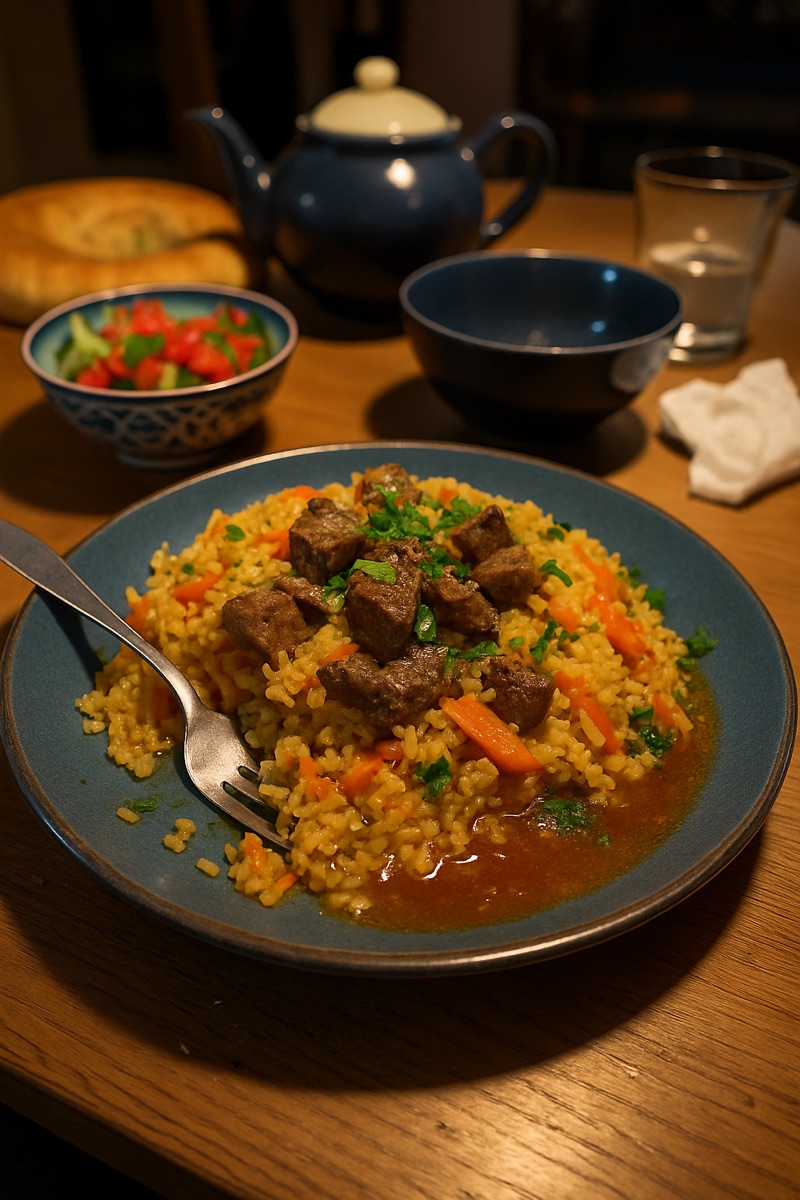 Plov🇰🇬 Kyrgyzstan · 1 hour and 55 minutes
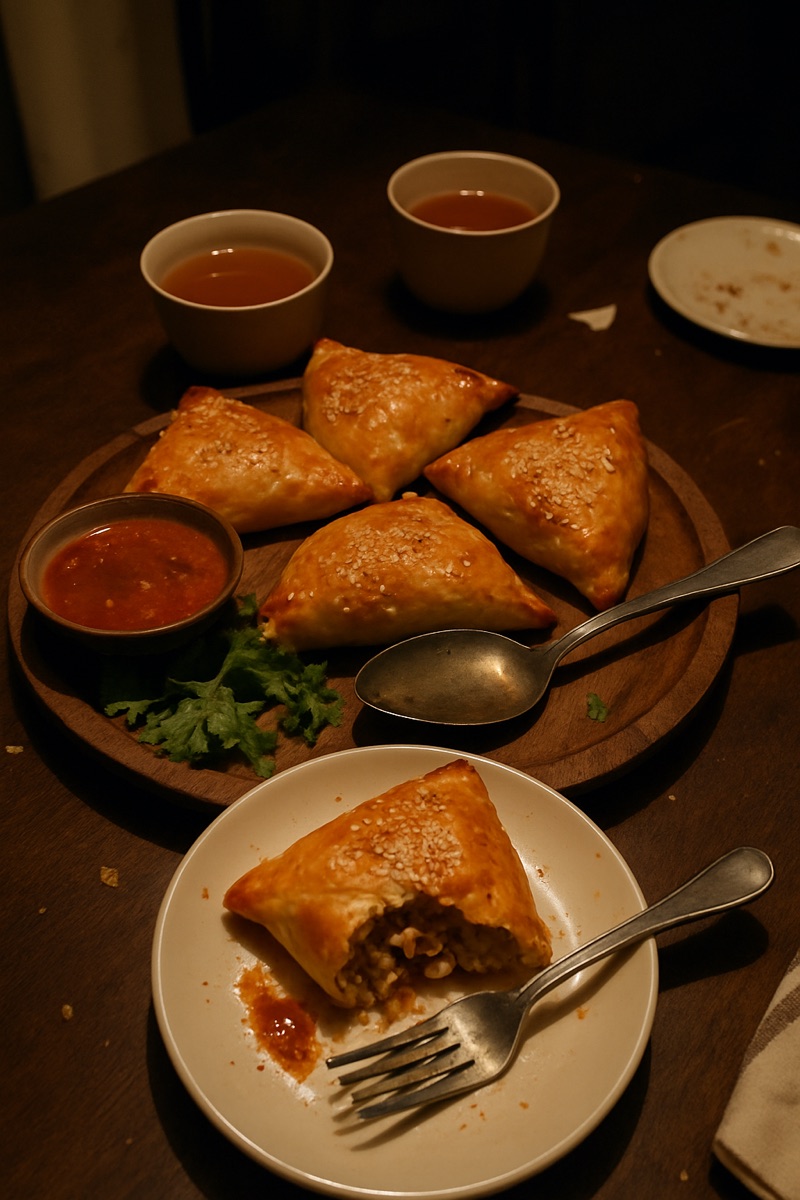 Samsa🇰🇬 Kyrgyzstan · 3 hours and 5 minutes
Questions people ask
Is beshbarmak from Kyrgyzstan or Kazakhstan?
Both countries treat it as their national dish, and it is also eaten in Xinjiang as narin. The Kyrgyz version chops the meat finely, which its other name, tuuralgan et, refers to.
What does beshbarmak mean?
Beshbarmak means "five fingers" in Kyrgyz, probably because the dish is eaten with the hands.
What meat is used in Kyrgyz beshbarmak?
Horse meat is the festive choice, sometimes with chuchuk horsemeat sausage. Mutton is common, especially in warm seasons, and beef is also used.
What is chyk?
Chyk is the onion sauce of beshbarmak: sliced onions softened under hot broth fat and a ladle of boiling broth, then spooned over the meat.
What is served with beshbarmak?
Shorpo, mutton broth, is served before it in bowls, and ak-serke, broth mixed with kymyz or ayran, often follows it.
Keep reading
- Traditional food of Kyrgyzstan: 13 dishes to know
- What is the national dish of Afghanistan?
- What is the national dish of Kazakhstan?
- What is the national dish of Mongolia?
- What is the national dish of Tajikistan?
- What is the national dish of Turkmenistan?