 COPPER
What is the national dish of Mongolia?
Mongolia has no official national dish, but buuz is the one most often cited. Buuz are steamed dumplings filled with chopped mutton or beef, onion and garlic, pleated around the filling with a small opening at the top, and eaten by hand so the juices stay inside. They are the centrepiece of Tsagaan Sar, the Mongolian Lunar New Year.
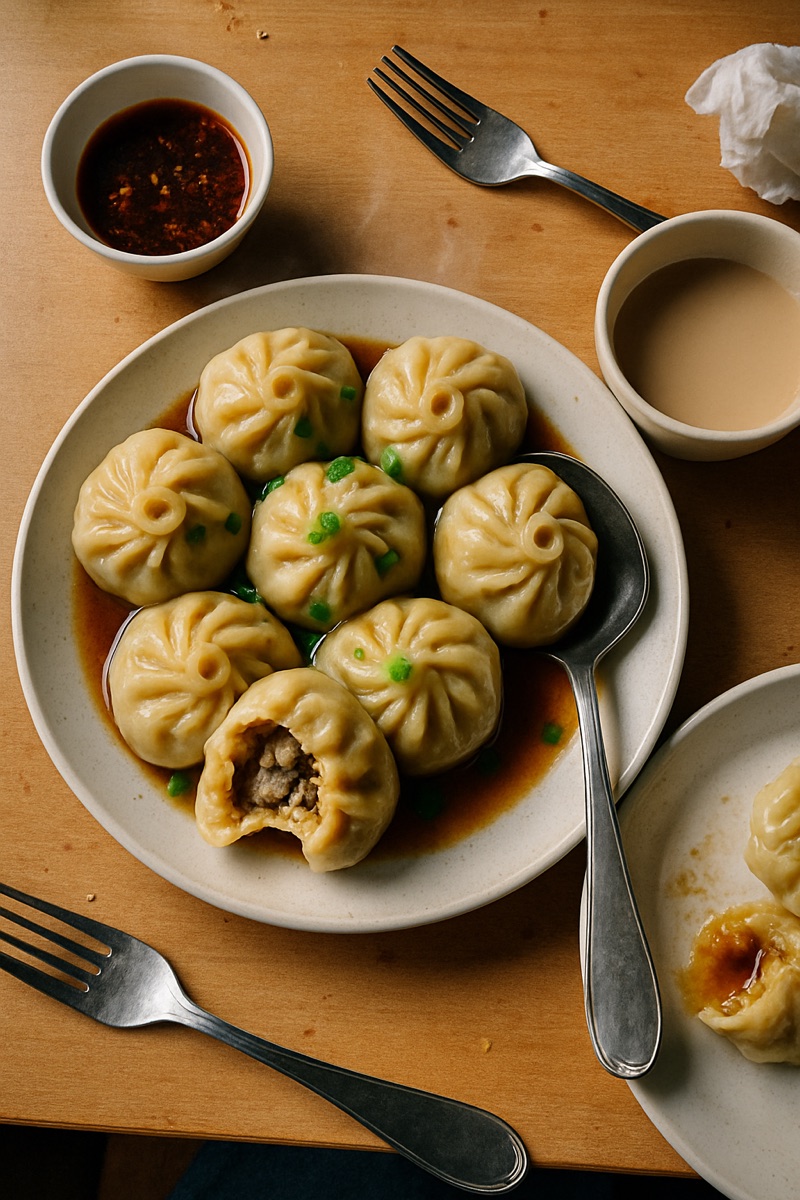
What are buuz?
Buuz are round steamed dumplings made from a plain flour-and-water dough and a filling of minced mutton or beef. The dough is pleated up around the meat and left with a small hole at the top, so steam can escape and the dumpling does not burst.
They are eaten in large quantities all year, at home and in city restaurants, but above all at Tsagaan Sar, the Lunar New Year, when buuz are on the festive table of every Mongolian household.
What is in buuz?
The filling is simple. What matters is the fat and the way the meat is cut:
- Mutton, chopped by hand. Beef works too, and some cooks mix in lamb.
- Mutton tail fat: it melts during steaming and turns into the broth inside the dumpling. Lean meat gives dry buuz.
- Onion and garlic, with salt and pepper. Caraway seeds are a traditional seasoning.
- A little cold water worked into the filling to keep it loose and juicy.
- Dough of plain flour, water and salt, with no yeast.
- Modern additions: carrots, cabbage or rice are sometimes mixed into the filling.
How buuz are made
The dough is kneaded for 10 minutes and rested for 30. Meanwhile 500 g of mutton and 100 g of tail fat are chopped by hand and mixed with onion, garlic, salt, pepper and 3 to 4 tablespoons of cold water.
The dough is cut into small pieces of about 15 g and rolled into 8 cm rounds, thicker at the centre than at the edge. A spoonful of filling goes in the middle and the edge is pleated around it, leaving the hole at the top. The buuz steam for 15 to 20 minutes on an oiled tray, apart so they do not stick. They are done when the dough turns glossy. The full method is in our buuz recipe.
To eat one, bite a small corner first and drink the broth, then eat the rest. Buuz are served with salads and fried bread, with suutei tsai, Mongolian milk tea, and often vodka.
Where buuz come from
The name gives the origin away: buuz comes from baozi, the Mandarin word for a steamed filled bun. Mongolian buuz, khuushuur and bansh are considered local adaptations of Chinese dumplings, reshaped around the meat of a herding country. All three share the same dough and filling; only their size, shape and cooking method differ. Compare with our article on the national dish of China.
Buuz are also part of Buryat cuisine, the cooking of the Buryat people of Siberia, in Russia.
Herding shaped the recipe. In rural Mongolia the most common dish is simply boiled mutton, and fatty meat is considered better than lean. Buuz carry the same logic: the fat in the filling is not a flaw to trim but the point of the dumpling.
Other dishes to know from Mongolia
Khuushuur uses the same filling as buuz, but the dough is folded into a flat half-moon, crimped shut and deep-fried at about 180 °C for 3 to 4 minutes per side, until golden and blistered. The crimped seam, which looks braided from the side, is a point of pride for the cook: it is what keeps the juices inside. It is the food of Naadam, the summer festival, when stalls fry it by the thousand.
Tsuivan is the everyday noodle dish: hand-cut noodles laid on top of a mutton and vegetable stew in a covered pot, steamed over the meat, then folded through it. It is a fixture of the guanz, Mongolia's roadside canteens, and can be served dry or as a soup.
Two ways of cooking meat with hot stones are central to Mongolian food culture. For khorkhog, ten to twenty fist-sized stones are heated in a fire and packed into a sturdy container, traditionally a metal milk jug, with mutton on the bone and a little water; the heat and steam cook the meat in up to an hour and a half. Khorkhog is a relatively modern variation of boodog, in which the meat is cooked inside the deboned carcass of a goat or marmot.
All three recipes are on our page about the food of Mongolia. For the wider steppe kitchen, see our guide to Central Asian food.
The recipes
- Buuz🇲🇳 Mongolia · 1 hour and 50 minutes
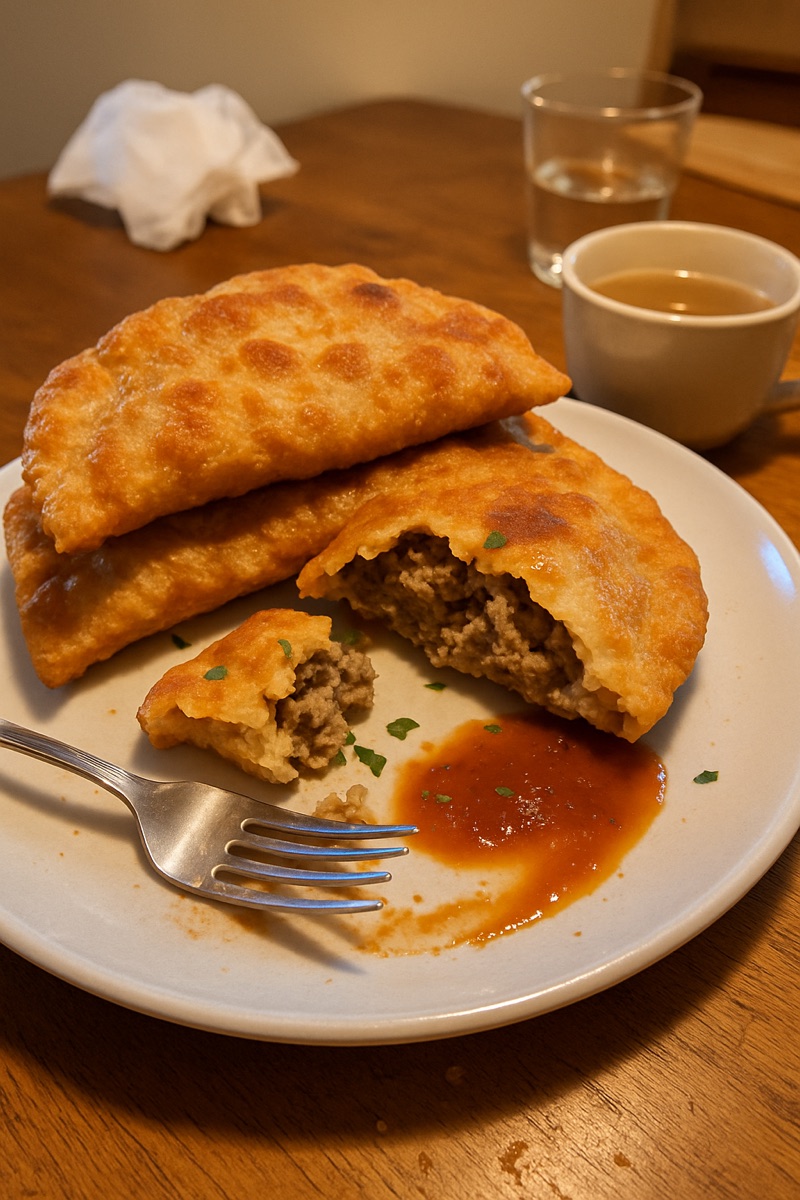 Khuushuur🇲🇳 Mongolia · 1 hour and 40 minutes
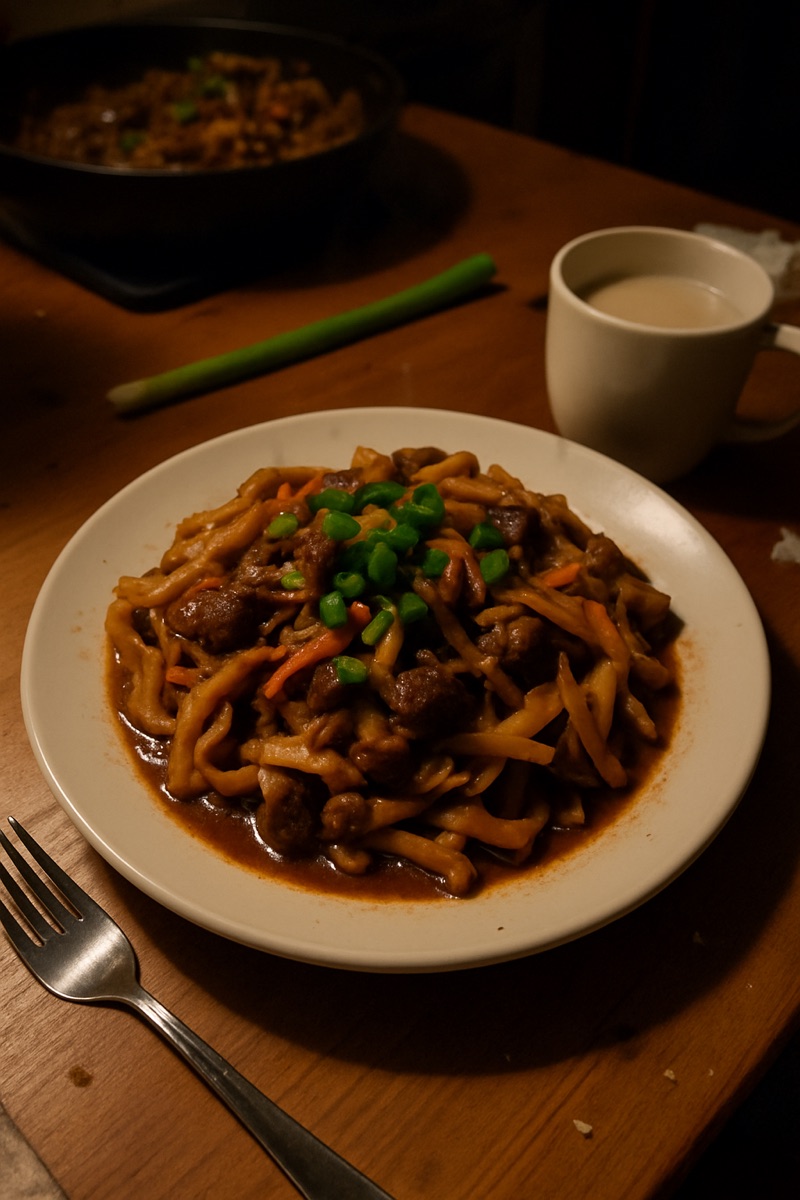 Tsuivan🇲🇳 Mongolia · 1 hour and 30 minutes
Questions people ask
Does Mongolia have an official national dish?
No. No dish has official status, but buuz is the one most often named as Mongolia's national dish.
What is the difference between buuz and khuushuur?
The filling is almost the same. Buuz are round and steamed; khuushuur are flat half-moons that are deep-fried.
When do Mongolians eat buuz?
All year round, but above all at Tsagaan Sar, the Lunar New Year, when they are prepared in large quantities.
How do you eat buuz?
With your hands, while hot. Bite a small opening first and drink the broth inside before eating the rest.
How do you pronounce buuz?
Roughly "booz", with a long "oo".
Keep reading
- Traditional food of Mongolia: 12 dishes to know
- What is the national dish of Afghanistan?
- What is the national dish of Kazakhstan?
- What is the national dish of Kyrgyzstan?
- What is the national dish of Tajikistan?
- What is the national dish of Turkmenistan?