 COPPER
Traditional food of Mongolia: 12 dishes to know
Traditional Mongolian food comes from nomadic herding: mutton and other meat, milk products and plenty of animal fat, with few vegetables or spices and little rice. Meat is boiled, steamed in dumplings, cooked with hot stones or air-dried for winter, and milk becomes salted tea, cheese, dried curds and fermented mare's milk. The dishes to know first are buuz, khuushuur, tsuivan and khorkhog.
What Mongolian food is built on
Mongolia's herders live from their animals: sheep above all, but also goats, cattle, yaks, horses and camels. Meat and milk are the two foundations. The diet carries a large share of animal fat, which Mongolians rely on to get through winters that reach minus 40 °C and long days of outdoor work. Vegetables and spices play a small part, and unlike most of Asia, rice is not the staple.
Cooking is simple by necessity. In a ger, the felt tent of the nomads, food is cooked in a cast-iron or aluminium pot on a small stove fuelled with wood or dried dung. Flour goes into dumplings, noodles and fried dough. Closeness to China and Russia has left its mark too: tsuivan takes its name from a Chinese word, and vodka spread during the socialist period.
Along the roads, gers marked guanz work as simple canteens, serving buuz, khuushuur and noodle dishes to travellers.
Dumplings and noodles
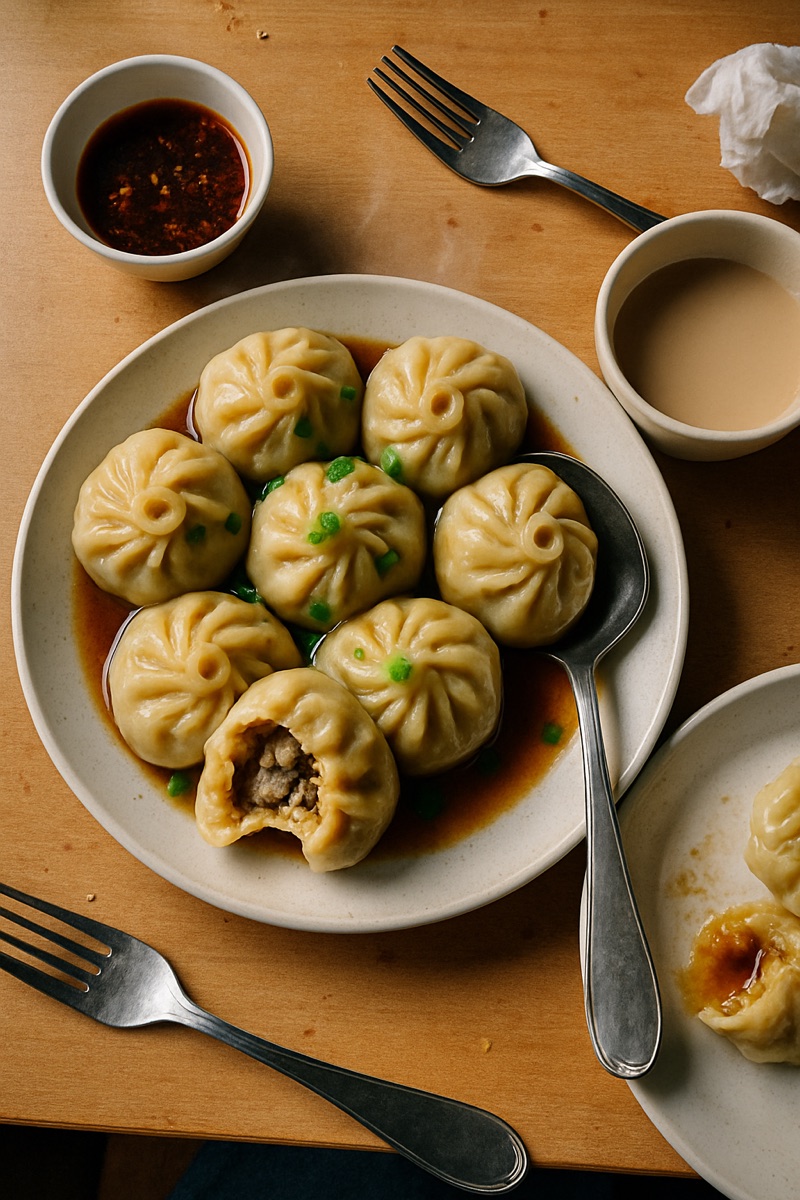
- Buuz — Steamed dumplings of chopped mutton or beef with onion and garlic, pleated around the filling with a small opening at the top. They are eaten by hand so the juices stay inside. Buuz are the centrepiece of Tsagaan Sar, the Lunar New Year, and the national dish of Mongolia most often cited.
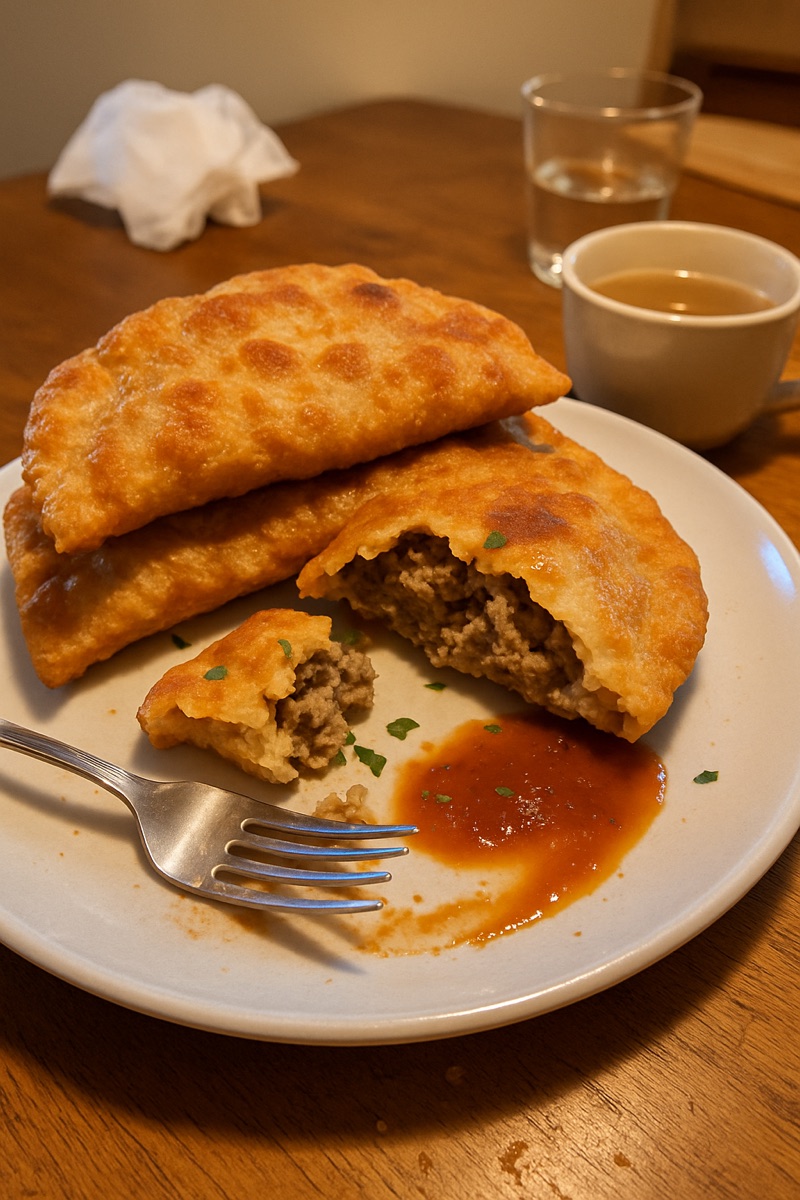
- Khuushuur — The same kind of mutton filling sealed in a flat half-moon of dough and deep-fried, traditionally in mutton fat, until golden and blistered. It is the food of the Naadam summer festival, when a slightly different festival version is made.
- Bansh — Small dumplings, smaller than buuz, filled with minced mutton or beef, onion and garlic. They are boiled in water or cooked in soup, and they can even go into salted milk tea to turn it into a meal.
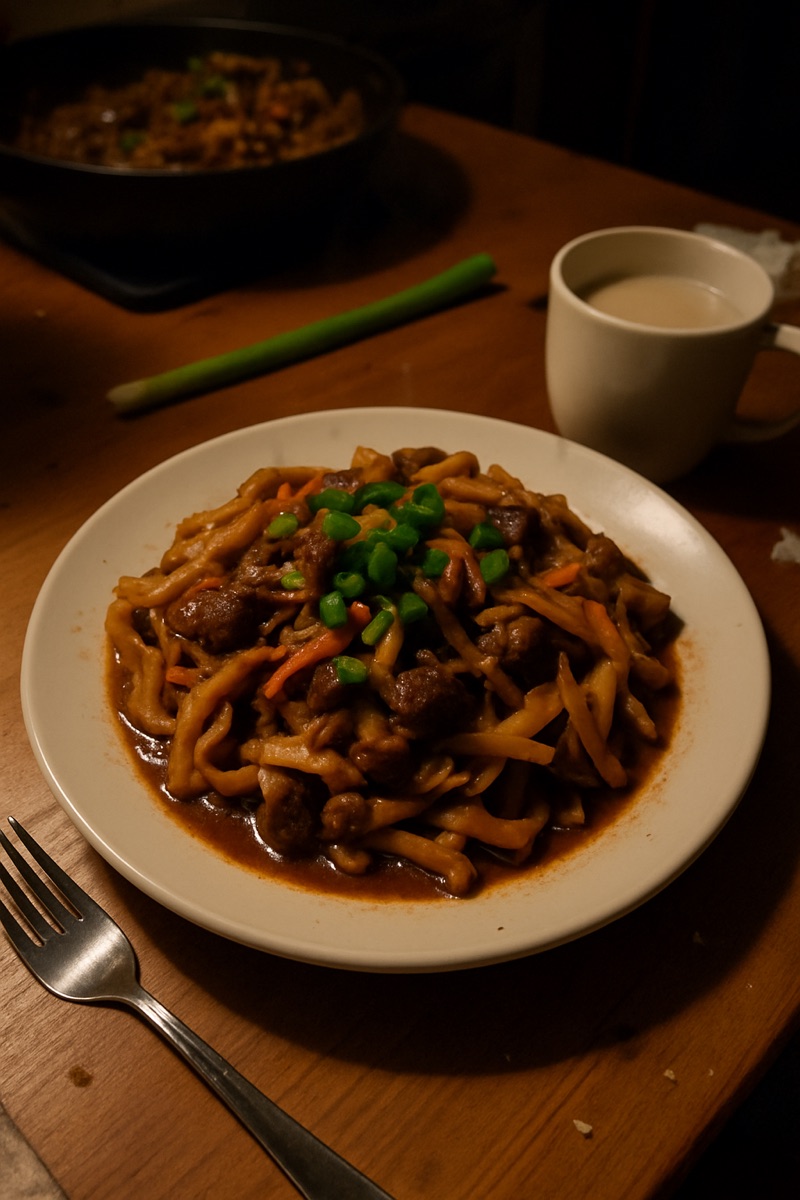
- Tsuivan — Hand-cut noodles cooked with mutton and vegetables, steamed on top of the stew in a covered pot and then folded through it. It is one of Mongolia's most popular dishes and a staple of the guanz; its name comes from the Chinese chaobing, fried shredded pancake.
Meat: boiled, stone-cooked and dried
- Boiled mutton — The most common rural dish: mutton boiled on the bone, usually with nothing else, though potatoes and carrots are added in better-off households. Boiled meat and innards are the everyday meal of a herding family.
- Khorkhog — Mutton on the bone, sometimes with carrots, potatoes and onions, cooked in a sealed container, traditionally a metal milk can, with water and ten to twenty fist-sized stones heated in a fire. It cooks in up to an hour and a half. Diners pass the hot, greasy stones from hand to hand, believing they do them good, and eat the meat with their fingers.
- Boodog — A whole goat or marmot, boned through the neck and filled with hot stones, onion and salt, then closed and singed on the outside. The meat cooks inside its own skin. It is kept for special occasions, and marmot is hunted in autumn, when the animals are fat before hibernation.
- Borts — Meat cut into long strips and hung to dry under the roof of a ger for about a month, until hard and brown. It is broken up or ground and stored in a linen bag, and keeps for months or even years; a little of it, added to water, makes a soup.
Dairy, tea and fried dough
- Suutei tsai (salted milk tea) — Tea chipped from a compressed block, boiled with milk and water and seasoned with salt, sometimes with butter, fried millet or tail fat. It is drunk with meals and throughout the day, and it is the first thing offered to a guest in a ger.
- Airag — Fermented mare's milk, the national drink. Mares are milked between mid-June and early October, and the milk is stirred for one to two days in a leather sack or wooden barrel as it ferments. It is slightly sour, lightly sparkling and contains up to about 2 per cent alcohol; a visitor is always offered a bowl.
- Aaruul — Dried curds made from the milk left after the cream has been skimmed off. They come in many shapes and sizes, sweetened or unsweetened, soft or rock-hard, and are kept as a snack for months.
- Boortsog — Pieces of flattened dough, often knotted into shapes, deep-fried until golden, traditionally in mutton fat. They are eaten on special occasions and served with milk tea, into which Mongolians often dip them.
Food for festivals and seasons
The Mongolian year shapes what is eaten. At Tsagaan Sar, the Lunar New Year, buuz are on the festive table of every household. At Naadam, the summer festival, khuushuur is the food everyone eats. Summer and early autumn are the season of mare's milk and airag, since mares are milked only from mid-June to early October, and of fresh dairy turned into cheese and dried curds. Meat, on the other hand, is air-dried as borts to keep for the winter, when fresh food is scarce and fat matters most. In late winter, historically, stores of dried curd and cheese ran low, and herders added hunting to the diet.
Hospitality is a strict custom: a guest who enters a ger is given milk tea and a bowl of snacks, and refusing an offered bowl of airag is considered rude; taking a sip is enough.
Cook Mongolian food at home
Copper has buuz, khuushuur and tsuivan with ingredient lists and step-by-step methods. The techniques that matter: keep the fat in the filling, since lean meat makes dry dumplings; crimp the khuushuur edge firmly so the juices stay sealed in during frying; and lay the raw tsuivan noodles on top of the stew to steam rather than stirring them in. You will find them on our page about the food of Mongolia.
Mongolian cooking belongs to the wider steppe tradition of Central Asian food. To compare, see the traditional food of China and the traditional food of Russia.
The recipes
- Buuz🇲🇳 Mongolia · 1 hour and 50 minutes
 Khuushuur🇲🇳 Mongolia · 1 hour and 40 minutes
 Tsuivan🇲🇳 Mongolia · 1 hour and 30 minutes
Questions people ask
What is the most popular food in Mongolia?
Buuz, the steamed mutton dumplings, are the most popular dish in the city and the one most often called the national dish. In the countryside, the most common meal is plain boiled mutton.
What do Mongolians drink?
Suutei tsai, salted milk tea, is drunk with meals and all through the day. Airag, fermented mare's milk, is the traditional national drink in summer, and vodka is the most popular spirit.
Is Mongolian food spicy?
No. Mongolian cooking uses very few spices, usually just salt, onion and garlic, and relies on the flavour of mutton and its fat.
Do Mongolians eat vegetables?
Less than most cuisines, because the climate and nomadic life limit what can be grown. Potatoes, carrots, onions and cabbage are the usual vegetables, cooked with meat in dishes such as tsuivan and khorkhog.
What is the difference between buuz and khuushuur?
They share the same kind of mutton filling. Buuz are pleated, closed dumplings cooked by steaming; khuushuur are flat half-moons sealed with a crimped edge and deep-fried. Bansh, a third type, are smaller and boiled.
Keep reading
- What is the national dish of Mongolia?
- Traditional food of Afghanistan: 12 dishes to know
- Traditional food of Kazakhstan: 12 dishes to know
- Traditional food of Kyrgyzstan: 13 dishes to know
- Traditional food of Tajikistan: 12 dishes to know
- Traditional food of Turkmenistan: 13 dishes to know